What a Heavy-Duty Lagged Pulley Does
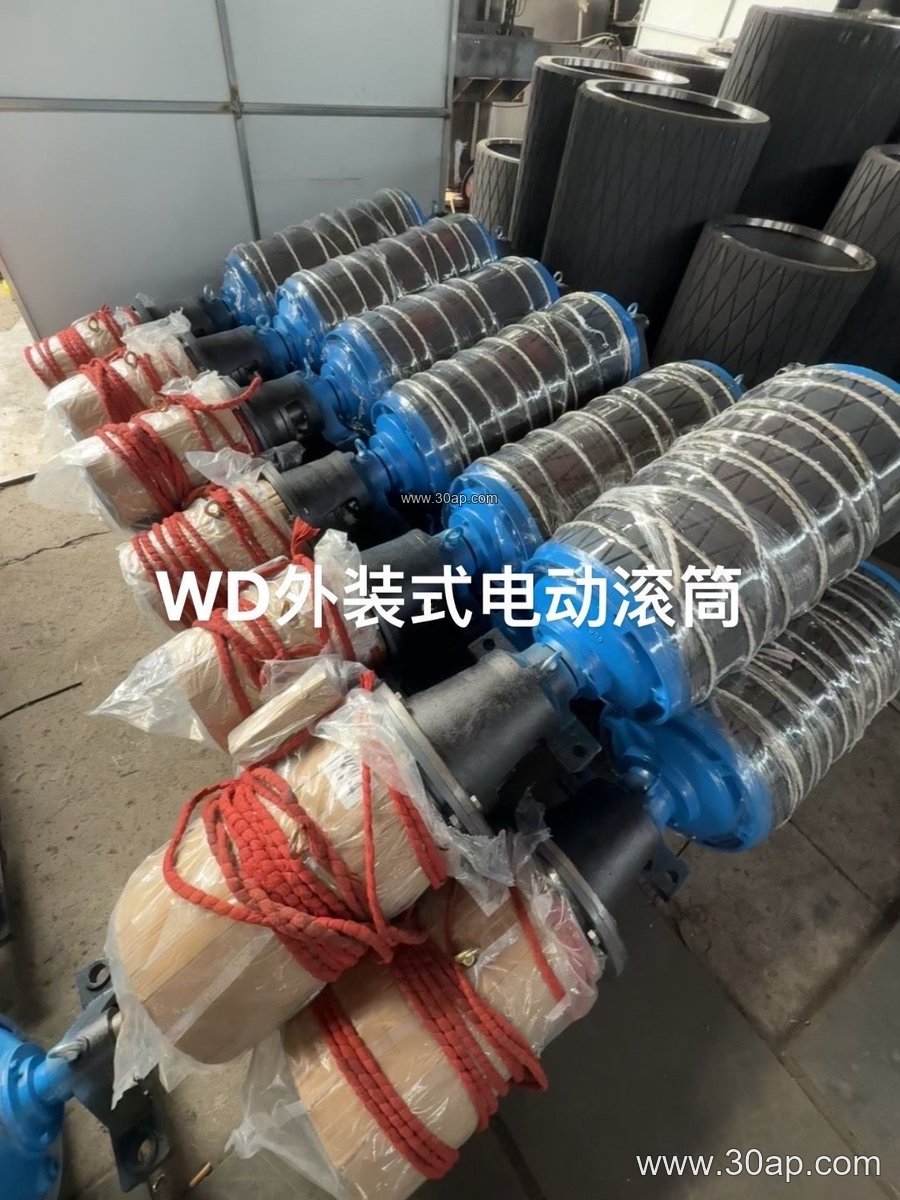
A heavy-duty lagged pulley is a conveyor pulley built with a thick, wear-resistant rubber or ceramic layer bonded to the drum surface. This lagging increases friction between the pulley and the conveyor belt, protecting the belt from slippage and the pulley shell from abrasion. In high-tonnage operations such as iron ore mines, coal washing plants, and cement clinker lines, this component often serves as the drive pulley at the head of the conveyor. The added grip helps transmit torque reliably even when the belt is wet or dusty.
The term “heavy-duty” refers to the pulley’s reinforced shell, larger shaft, and robust bearing assembly, not to a specific size. A heavy-duty lagged pulley may also be used as a tail pulley in rugged primary crushing circuits, where impact and grit demand extra surface protection. However, drive and tail positions are not interchangeable, and each pulley is designed for its specific role.
Construction and Lagging Options
The base pulley typically consists of a steel drum with welded end discs and a through shaft. Lagging is applied in several forms, each suited to different conditions:
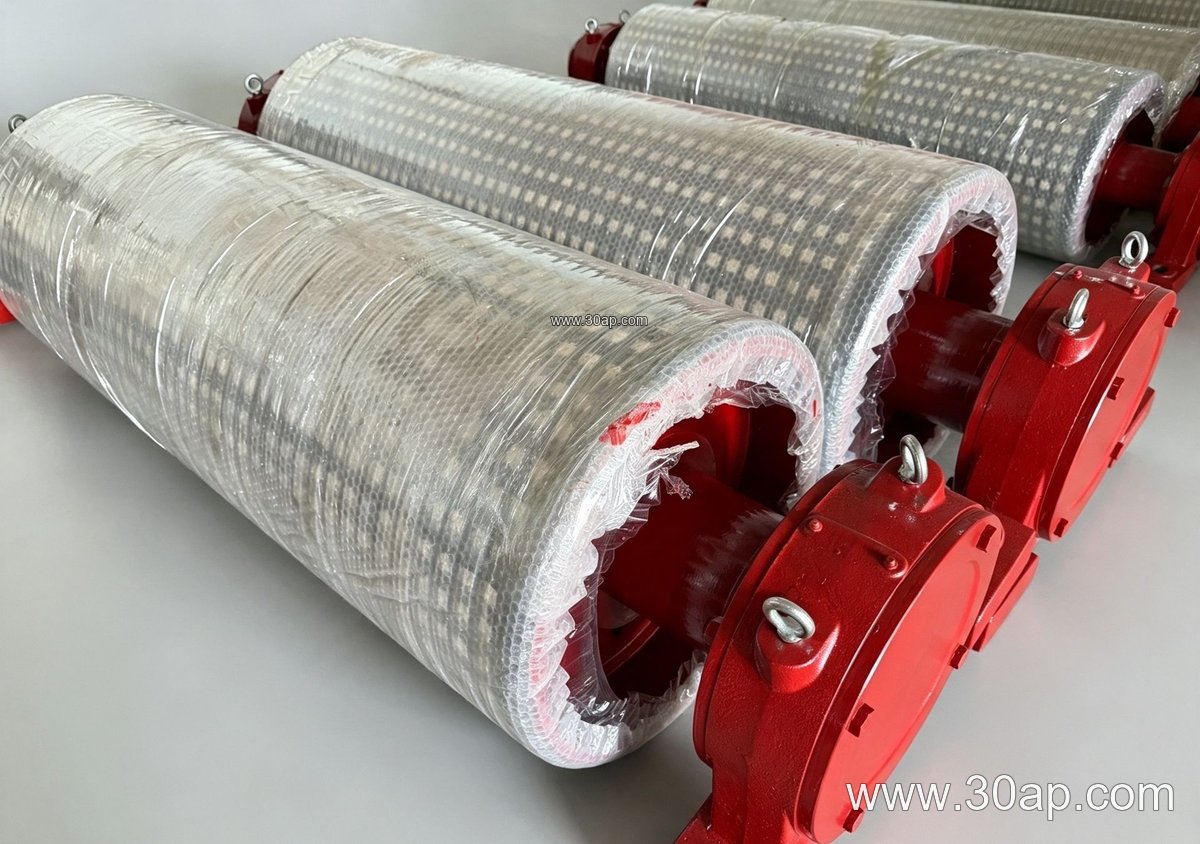
- Hot vulcanized rubber lagging – strong bond for high-torque drive pulleys
- Cold bonded rubber lagging – field-replaceable option
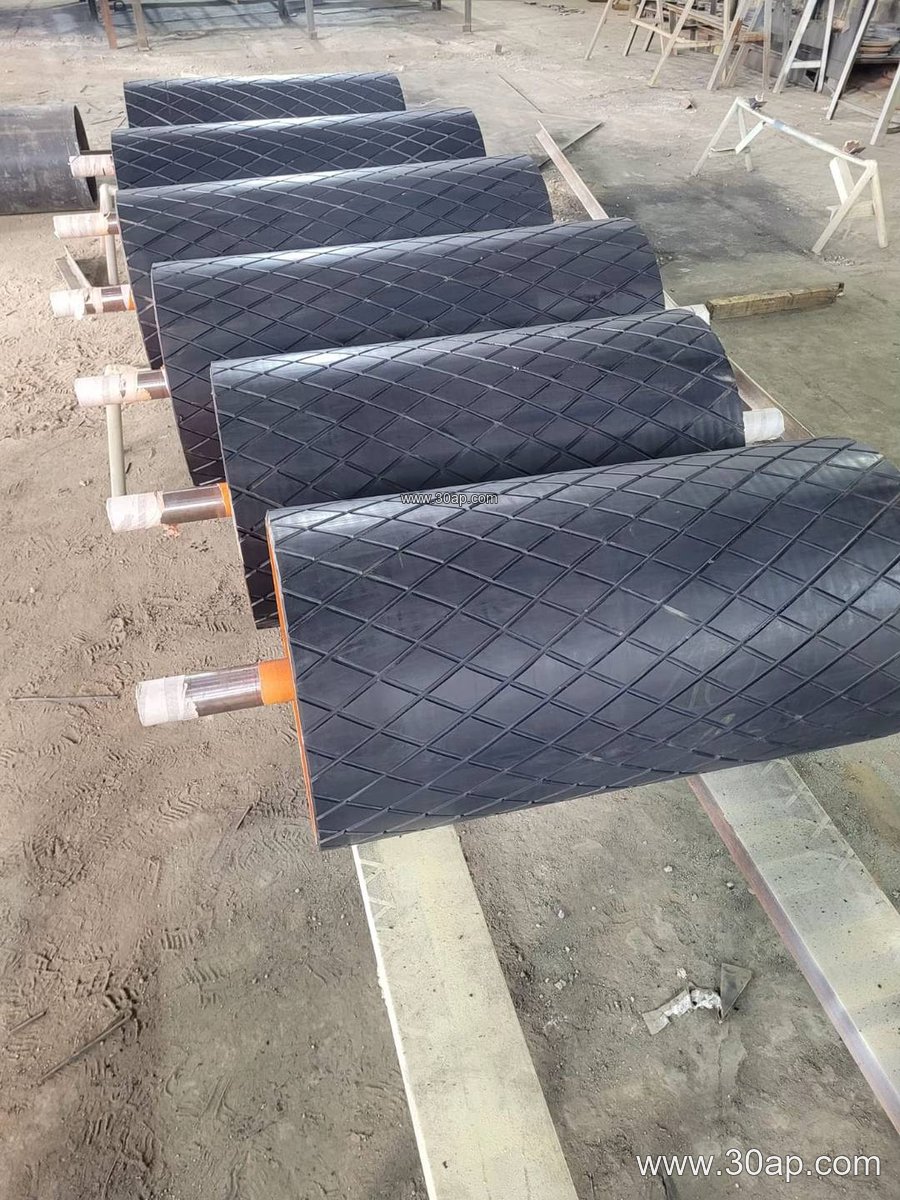
- Diamond grooved lagging – improves water drainage and grip
- Ceramic lagging – extreme abrasion resistance for sinter and ore applications
- Plain rubber lagging – general purpose with good wear life
Common lagging thicknesses are 8, 10, 12, 15, and 20 mm. Thicker lagging is often chosen for drive pulleys in heavy-duty mining conveyors, while thinner layers may suffice for bend or snub pulleys. The pulley face width usually exceeds the belt width to allow for belt tracking. For example, a B1200 belt typically runs on a pulley with roughly 1400 mm face width. Diameters range from Ø200 mm for smaller tail pulleys up to Ø1800 mm for large drive units.
Where It Fits in the Conveyor
Heavy-duty lagged pulleys are found in a variety of bulk material handling systems. In underground coal mining, flame retardant conveyor belts demand pulleys that resist slip and sparking. In power plant coal yards, lagged drive pulleys keep the belt moving through dust and weather. Aggregate quarries use them on primary and secondary conveyors where rock dust and moisture are constant. The pulley works together with the conveyor belt, idler rollers, and conveyor brackets to maintain tension and alignment. A properly lagged drive pulley reduces belt slip, which in turn lowers wear on the belt cover and minimizes downtime.
In tunnel boring and ore transport, heavy-duty lagged pulleys are often specified with ceramic or diamond lagging to handle sharp, abrasive materials. The same pulley type may be used as a bend pulley in long overland conveyors, where it redirects the belt without serving as the main drive.
Key Parameters for Selection
Buyers should consider belt width, pulley diameter, shaft diameter, lagging type and thickness, and bearing size. The table below shows typical reference combinations; actual values are determined by conveyor design and load calculations.
| Belt Width | Typical Pulley Face Width | Common Diameter Range | Shaft Diameter (example) |
|---|---|---|---|
| B800 | ~950 mm | Ø400–Ø630 | Ø80–Ø120 |
| B1000 | ~1150 mm | Ø500–Ø800 | Ø100–Ø140 |
| B1200 | ~1400 mm | Ø630–Ø1000 | Ø120–Ø160 |
| B1400 | ~1600 mm | Ø800–Ø1250 | Ø140–Ø180 |
| B1600 | ~1800 mm | Ø1000–Ø1400 | Ø160–Ø200 |
Shaft diameter is not derived from belt width alone; it depends on torque, radial load, and bearing life. A common mistake is to match a large belt width with an undersized shaft, which can lead to premature failure. Always confirm the pulley’s load rating with the manufacturer.
Maintenance and Buyer Tips
Inspect lagging regularly for wear, glazing, or embedded material. Worn lagging reduces friction and can cause belt slip, especially in wet conditions. For heavy-duty mining conveyor belts, ceramic lagging may offer longer service life but requires careful installation to avoid cracking. Keep the pulley clean and ensure that the conveyor belt is properly tensioned. When replacing a pulley, verify the shaft size, keyway, and bearing type match the original specification. Also check that the lagging thickness suits the application; too thick a layer on a small-diameter pulley can affect belt tracking.
Finally, consider the environment. In cold climates, cold resistant conveyor belts may be used, and the pulley lagging should remain flexible. In food or chemical plants, oil resistant or acid resistant belts may be present, and the pulley lagging must be compatible. Always source heavy-duty lagged pulleys from suppliers who provide material certificates and dimensional drawings.