What a Conveyor Pulley Does on a Belt System
A conveyor pulley is the rotating drum that carries the conveyor belt, sets its path, and transmits the drive force at the head of the machine. On a long overland or plant conveyor, several drums work together, but each one has a defined job. The head or drive pulley pulls the belt and is usually the largest and most heavily built unit. The tail pulley at the load end turns the belt back, while bend and take-up pulleys guide it around curves and hold tension. Because these positions see different loads, they are not interchangeable, and a buyer should match each drum to its duty rather than ordering one pattern for the whole line.
Construction and Main Components
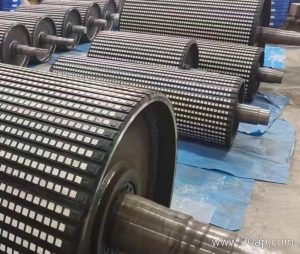
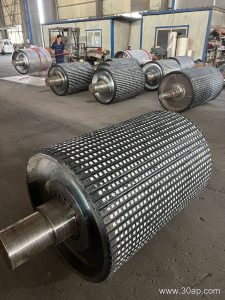
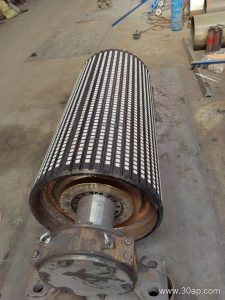
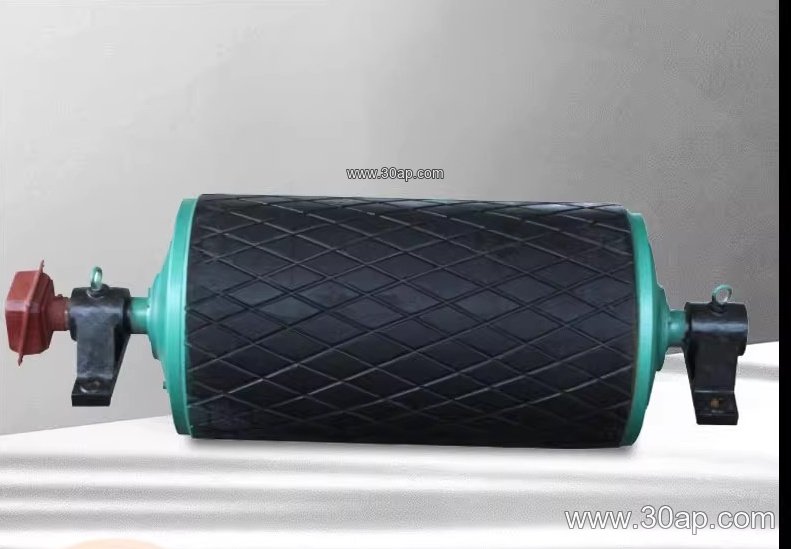
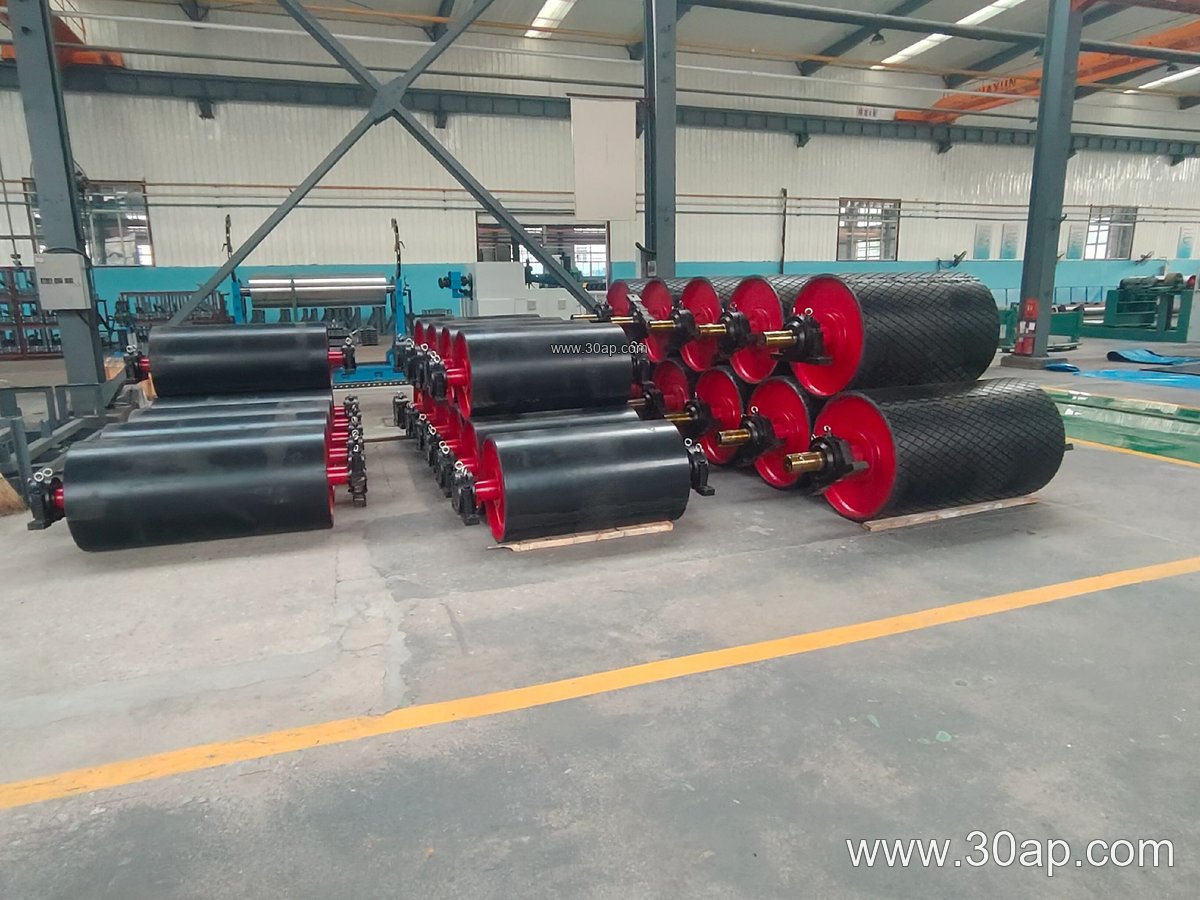
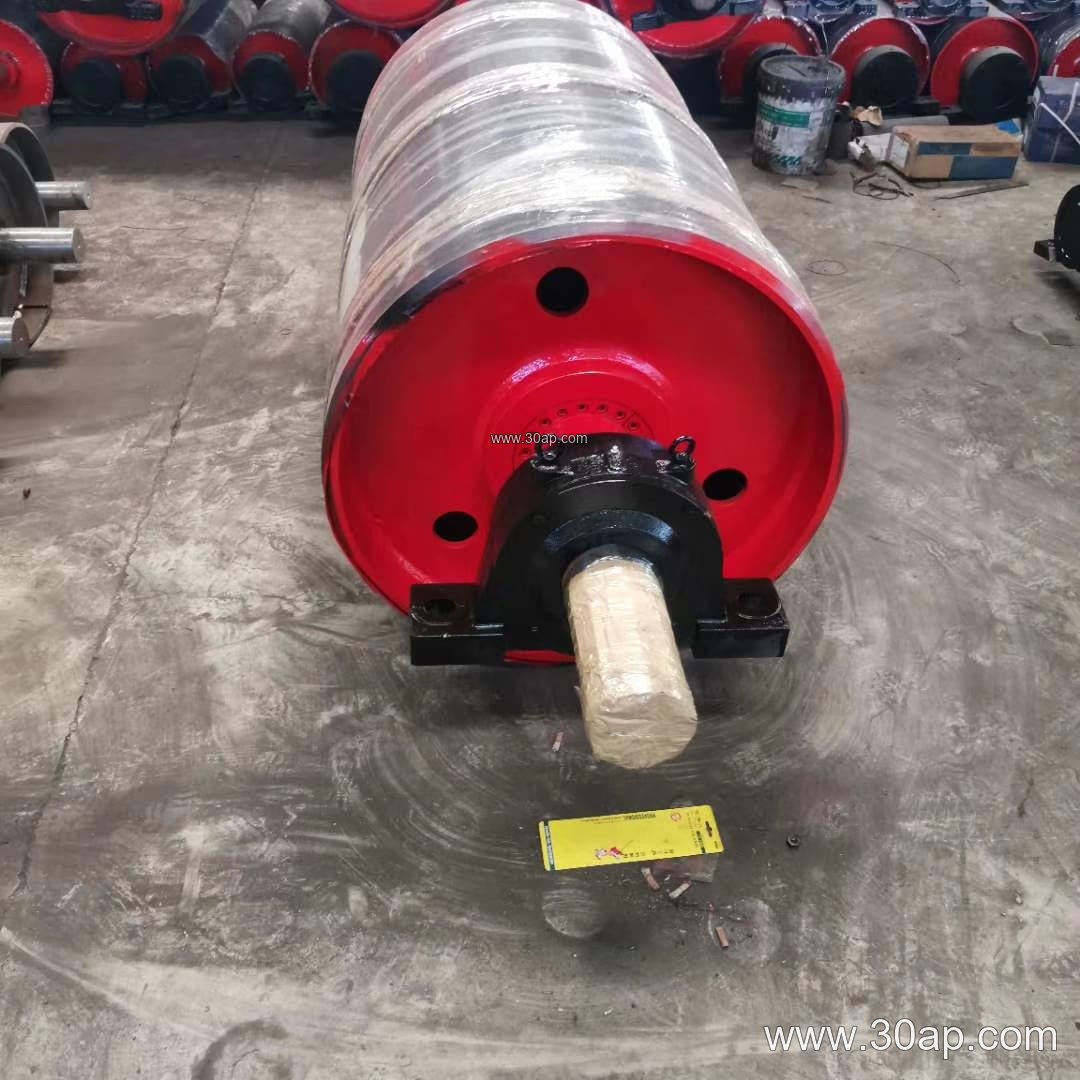
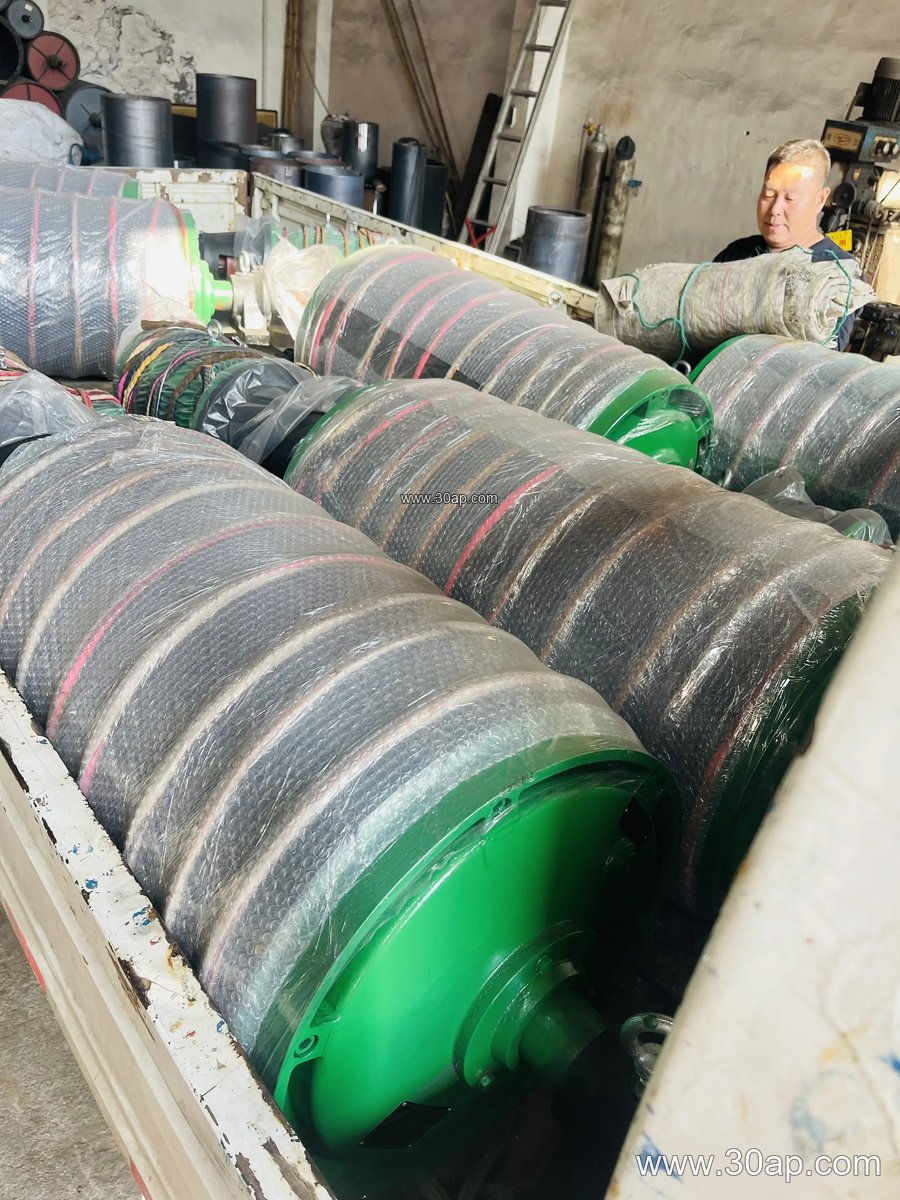
A typical drum is built from a rolled steel shell, welded end discs, a shaft, and bearing housings. The shaft is keyed or shrink-fitted to the shell so torque passes smoothly from the drive. Lagging is applied to the shell surface to raise friction and protect the belt; common forms include plain rubber, diamond grooved rubber, herringbone rubber, and ceramic tile. Lagging thickness is often 8, 10, 12, 15, or 20 mm depending on belt tension and slip risk. On heavy-duty mining conveyors, the drum often runs with a [Steel Cord Conveyor Belt](/) where starting torque and belt tension are high, so shell stiffness and shaft diameter are critical.
Common Sizes and Surface Options
Drum diameter and face width follow the belt width and the required wrap angle. Face width is normally a little wider than the belt, for example B800 with about 950 mm face, or B1200 with about 1400 mm face. Diameter is a design decision, not a fixed match to belt width. The table below shows representative combinations; final values depend on torque, belt tension, and space.
- B500 with Ø315 or Ø400, light plant duty
- B650 with Ø400 or Ø500, aggregate and sand lines
- B800 with Ø500 or Ø630, quarry and cement service
- B1000 with Ø630 or Ø800, coal handling and power plants
- B1200 with Ø800 or Ø1000, heavy mining duty
- B1400 with Ø1000 or Ø1250, high tension mainlines
- B1600 with Ø1250 or Ø1400, large bulk terminals
Shaft diameters commonly run from Ø50 up to Ø200 and beyond. They are calculated from torque and bearing load, so a belt width alone does not fix a shaft size. Surface choice also matters: diamond lagging sheds water and fines, plain rubber suits general service, and ceramic lagging resists wear where slip is frequent. In a coal mine or a [Flame Retardant Conveyor Belt](/) circuit, the drum lagging should be selected with fire and static behavior in mind.
Where These Drums Are Used
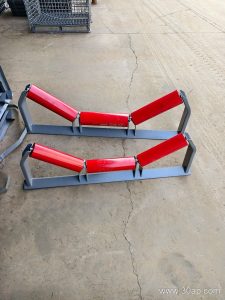
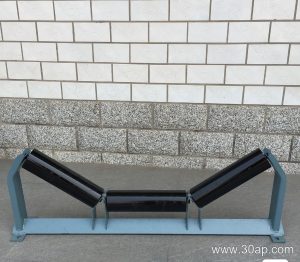
You will find them in quarries, limestone mines, iron and copper ore plants, coal washing plants, cement clinker lines, power station coal yards, and port bulk terminals. In a crushing and screening plant, the drive drum sits at the discharge end and works with idler rollers that support the belt along the run. In a tunnel or underground mine, compact bend pulleys route the belt around tight headings. In a concrete batching plant or grain silo, smaller drums handle short belts at lower tension. Each site sets its own duty: abrasive rock calls for thick lagging, while a food or chemical line may need a clean, oil resistant surface.
Buyer Checklist and Maintenance Notes
Before ordering, confirm the belt width, belt type, required wrap angle, and whether the drum is a drive, tail, bend, or take-up unit. Check the shaft and bearing size against the actual load, not just the belt width. Ask how the lagging is bonded, because cold-bonded and hot-vulcanized rubber behave differently under high tension. On abrasive duty, a [High Abrasion Resistant Conveyor Belt](/) pair with properly lagged pulleys reduces slip and belt wear. During service, inspect lagging for grooves and cuts, check bearing temperature, and confirm the drum is square to the belt. A drum that runs out of alignment will edge-damage a [Rubber Conveyor Belt](/) quickly. Keep spare bearing housings and mounting brackets ready, since a failed drum can stop an entire coal or ore line.