What a Tail Drive Pulley Does
A tail drive pulley is a driven pulley mounted at the tail end of a conveyor. Unlike a non-driven tail pulley that only redirects the belt, this unit both supports the returning belt and transmits torque to move it. In plants where the head area is crowded or where a second drive point helps balance belt tension, the tail drive pulley becomes a practical alternative to a single head drive. It is common in conveyor pulley layouts for mining conveyor belt lines, cement plant clinker transport, and power plant coal handling.
Because it sits at the tail, this pulley often works in a dusty or wet zone. Its job is not merely to turn; it must grip the belt without slip while keeping the belt centered. That makes the connection between pulley design, lagging choice, and belt type more important than the name alone suggests.
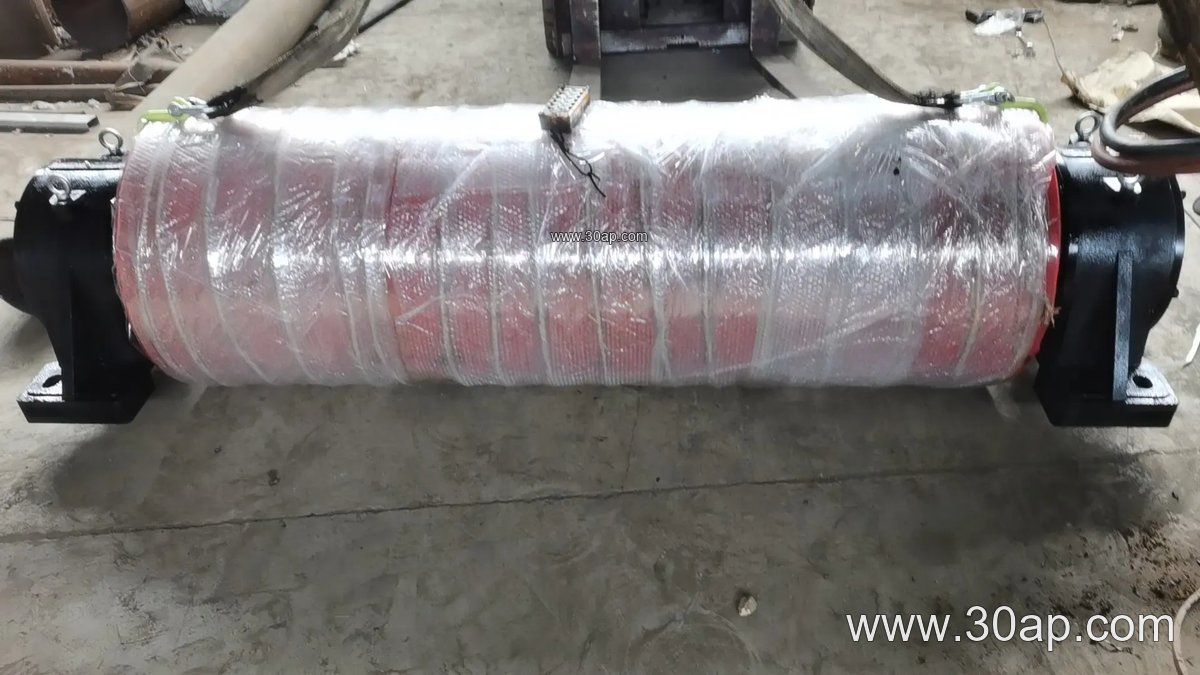
Construction and Key Parts
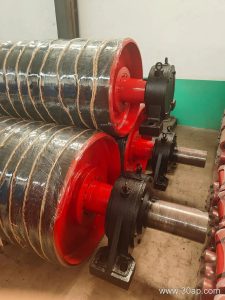
A typical tail drive pulley is built around a steel drum with welded end discs, a through shaft, and bearing housings that bolt to the conveyor frame. The shaft may be keyed for a gearbox or motor coupling. The shell is usually machined true so the belt runs flat, and the surface may be left plain or covered with rubber lagging.
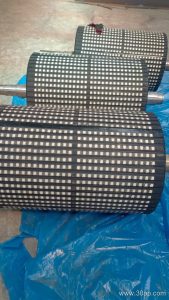
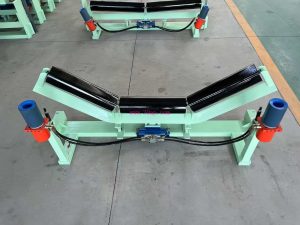
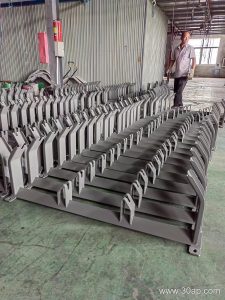
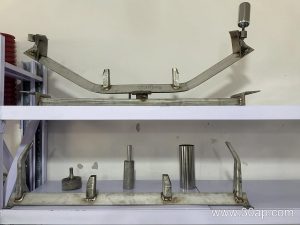
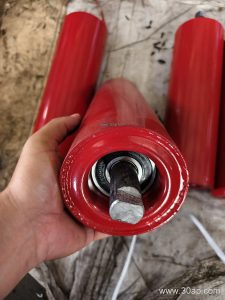
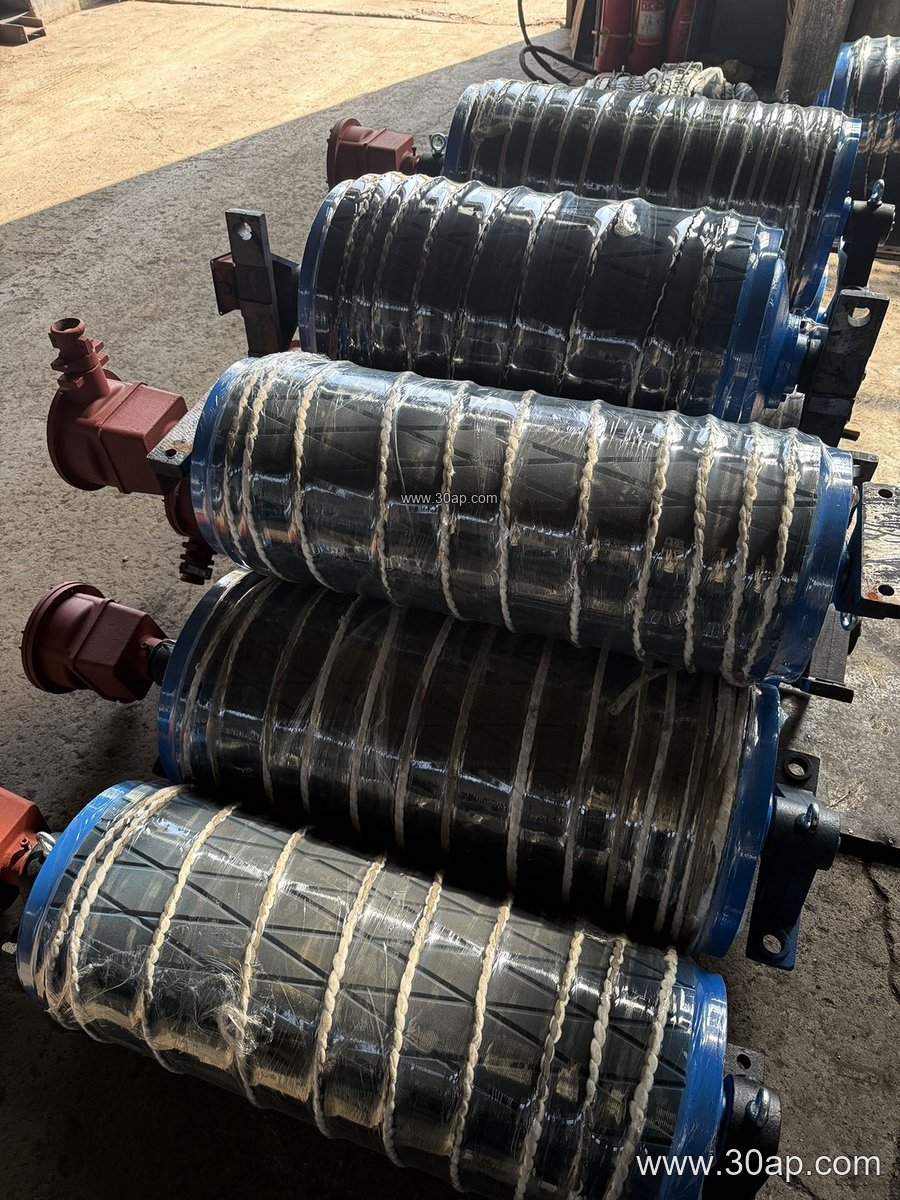
Lagging options include plain rubber, diamond pattern, herringbone, and ceramic tiles. Thickness commonly ranges from 8 mm to 20 mm depending on grip and wear needs. The pulley is supported by conveyor bracket assemblies or tension slides at the tail, and it works together with idler roller sets along the carry and return sides.
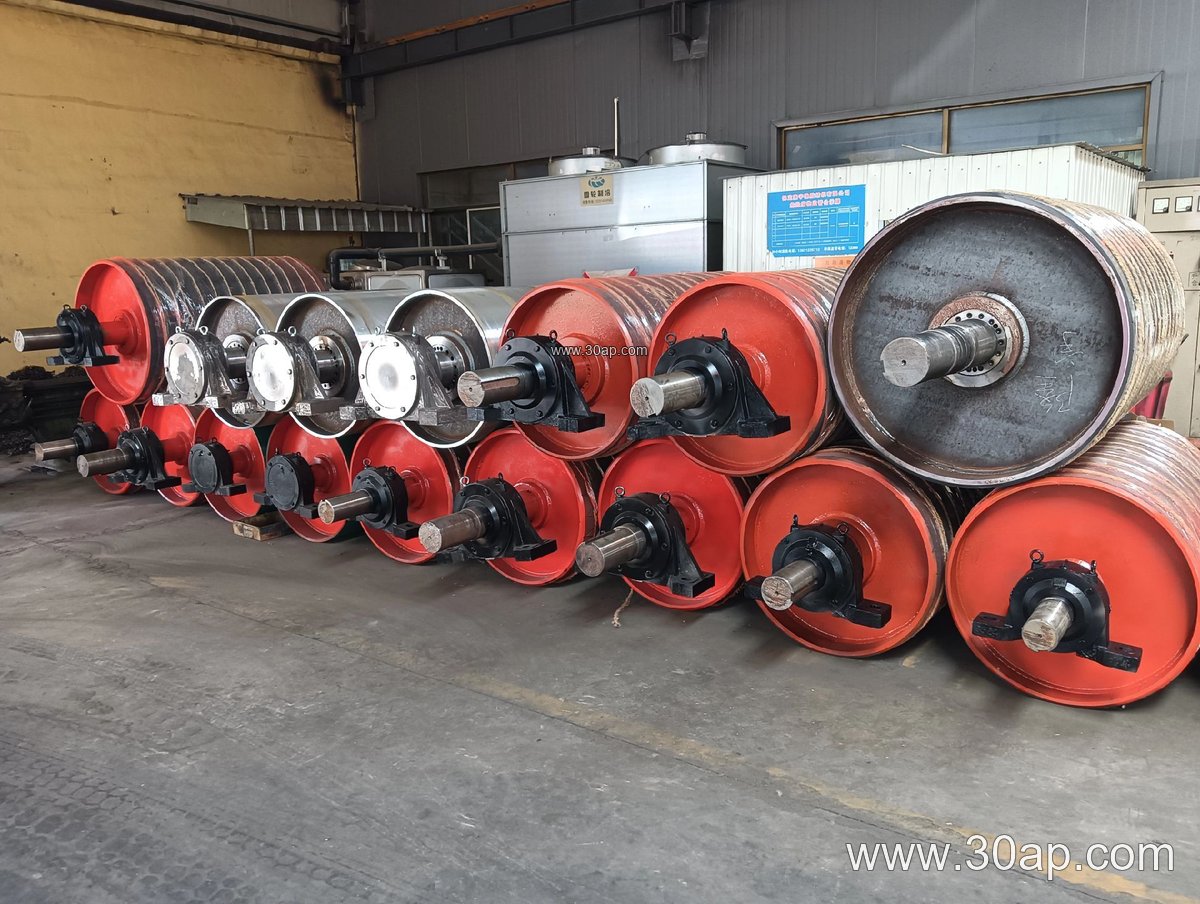
Common build choices
- Shell diameter: often Ø400 to Ø1250 for medium and heavy duty service; larger diameters may be used where belt stiffness or tension requires it.
- Face width: usually wider than the belt, for example about 1400 mm face for a 1200 mm belt, or about 950 mm face for an 800 mm belt.
- Shaft diameter: selected by torque and bearing load, not by belt width alone. Common sizes include Ø80, Ø100, Ø120, and Ø140.
- Surface: plain, rubber lagged, or ceramic lagged. Diamond and herringbone patterns help shed water and fines.
Where It Fits in the Plant
In a quarry or aggregate line, a tail drive pulley may be used on a secondary conveyor that discharges onto a screen. In a coal preparation plant, it can help keep the drive away from the head chute where space is tight. The same principle applies in a cement plant raw material section or a power plant coal yard. When the belt carries abrasive rock, an abrasion resistant conveyor belt paired with lagged pulleys reduces wear on both sides.
The tail drive pulley should not be confused with a bend pulley or a head drive pulley. A bend pulley changes belt direction without driving, while a head drive pulley usually carries the main torque at the discharge end. Each has its own place, and swapping them without redesign can upset belt tension and tracking.
Matching the Pulley to the Belt
There is no fixed rule that one belt width must use one pulley diameter. A 1200 mm belt may run on a Ø800 tail drive pulley in one conveyor and a Ø1000 unit in another, depending on belt tension, speed, and drive power. The table below shows reference combinations, not mandatory pairings.
| Belt width | Typical pulley face | Example diameter | Example shaft |
|---|---|---|---|
| B800 | about 950 mm | Ø500 | Ø80 |
| B1000 | about 1150 mm | Ø630 | Ø100 |
| B1200 | about 1400 mm | Ø800 or Ø1000 | Ø120 |
| B1400 | about 1600 mm | Ø800 | Ø140 |
| B1600 | about 1800 mm | Ø1000 | Ø160 |
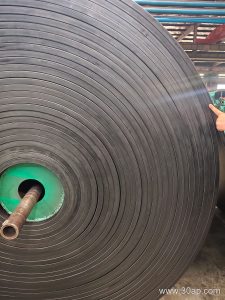
For heavy-duty mining conveyors, the belt may be an EP conveyor belt or a steel cord conveyor belt. In underground coal service, flame retardant grades are often specified. The tail drive pulley should be selected with lagging that suits the belt cover and the environment, whether the concern is oil, heat, or fine dust.
Buyer Checklist
- Confirm the drive position: tail drive, not head drive or bend pulley.
- Provide belt width, belt type, speed, and expected tension so the diameter and shaft can be calculated.
- State the lagging preference and thickness, for example 10 mm diamond rubber or ceramic lagging.
- Check the mounting interface: bearing type, bracket dimensions, and take-up travel.
- Ask for machining tolerances and balance quality if the pulley will run at higher speed.
- Plan inspection of lagging wear and bearing condition during scheduled shutdowns.
A well-chosen tail drive pulley keeps the belt tracking smoothly and spreads drive effort across the conveyor. When it is matched to the belt and the load, it supports steady operation from the quarry face to the plant silo.