What a Heavy-Duty Steel Conveyor Bracket Does
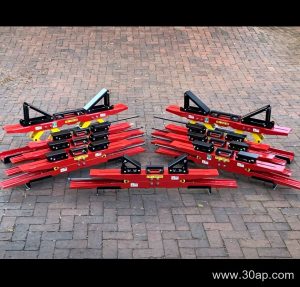
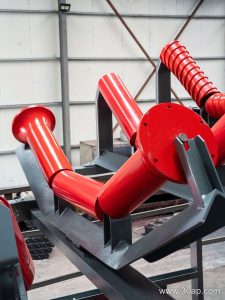
A heavy-duty steel conveyor bracket is the structural element that holds the idler roller in position and transfers belt and material loads into the conveyor frame. It is the mounting interface between the rotating parts and the stationary structure, so its stiffness, hole alignment and corrosion protection directly affect how smoothly a conveyor belt runs. In a stone crushing line or a cement plant, a weak bracket shows up quickly as vibration, misalignment and uneven belt wear.
The same product is often called a heavy-duty steel conveyor idler bracket or a heavy-duty steel belt conveyor bracket. All three names describe the same item: a reinforced steel support that carries idlers under a loaded belt.
How the Bracket Is Built
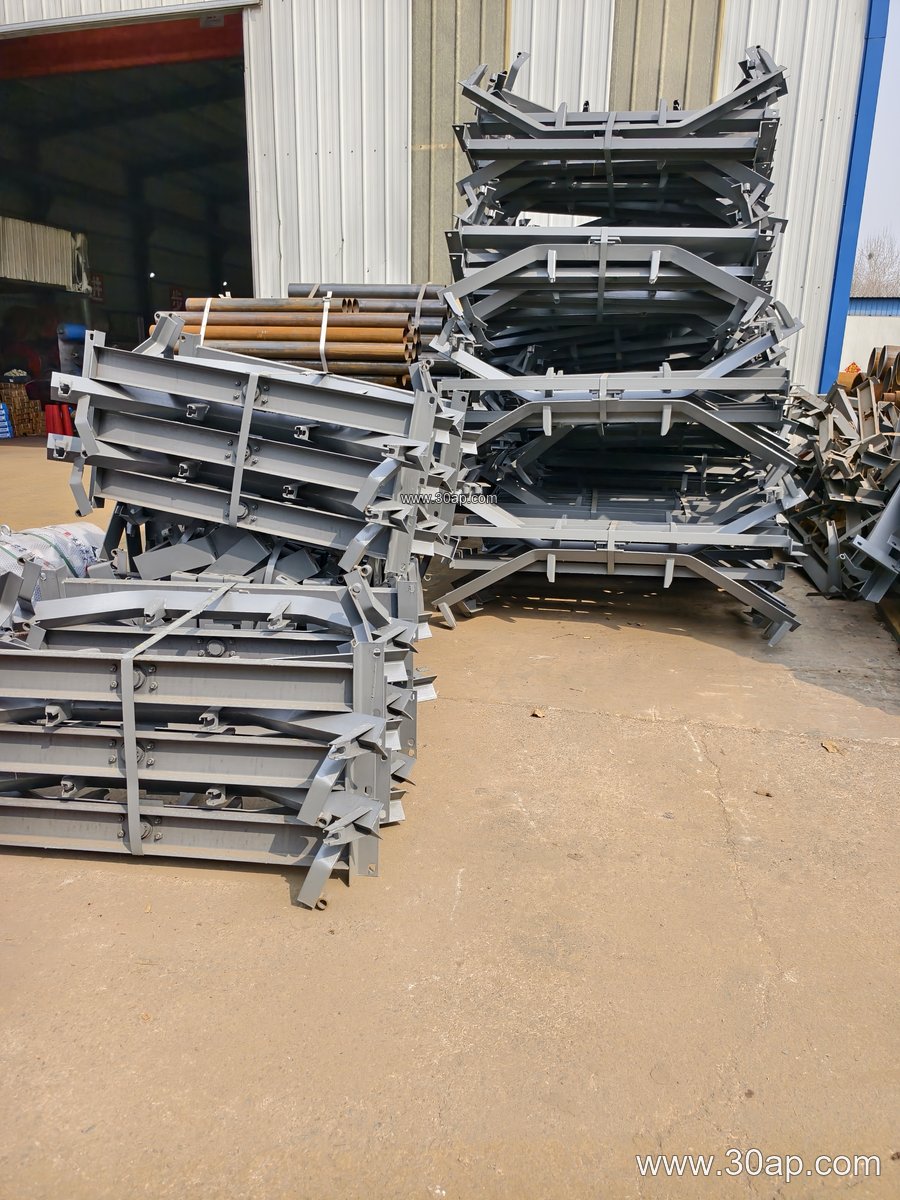
Most heavy-duty units are fabricated from angle steel, channel steel or folded steel plate. The material grade and plate thickness are usually selected according to the belt width, the idler spacing and the expected load. Fabricated brackets are welded and then drilled or punched so that the idler shaft sits at the correct height and angle. A properly built bracket keeps the mounting holes in line across the full frame, which prevents the idler roller from sitting skewed.
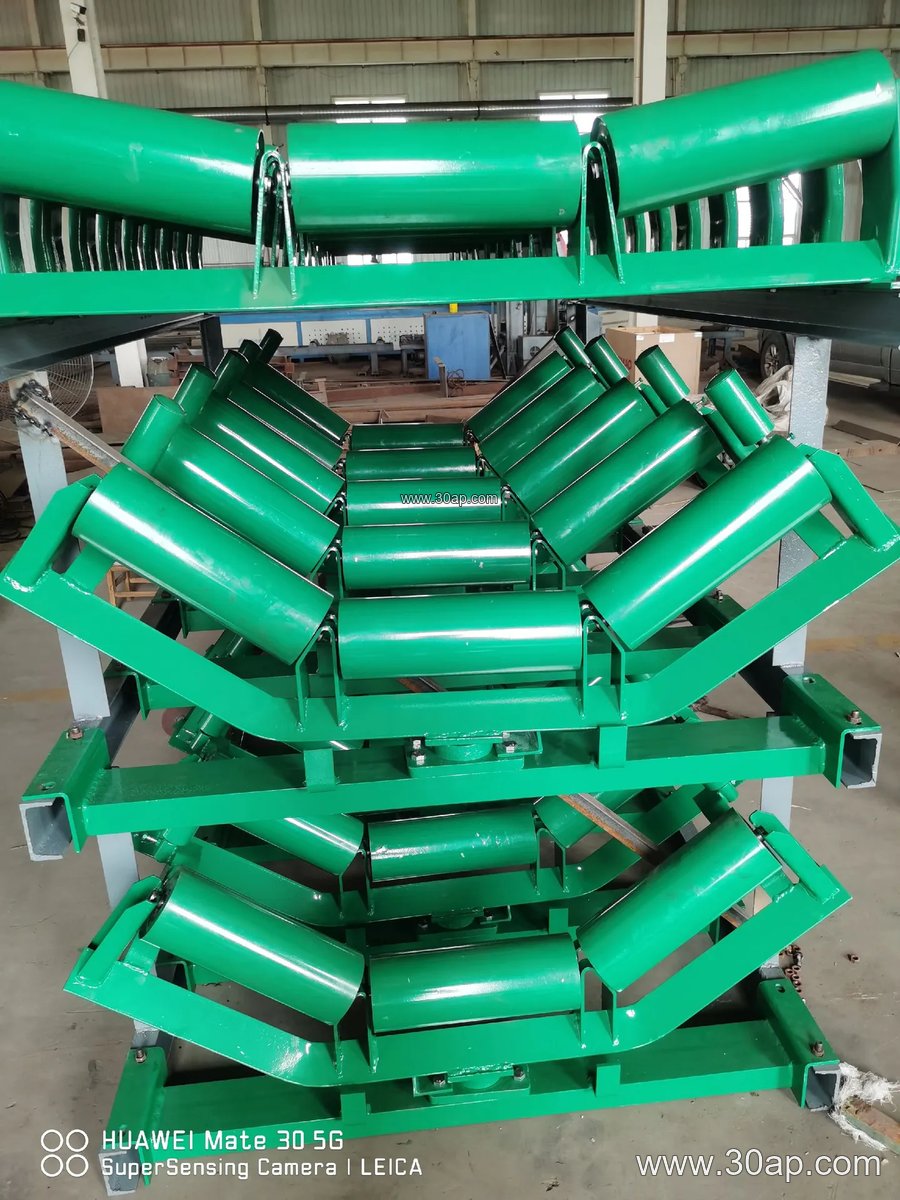
Surface treatment matters in dusty or wet environments. Painting, galvanizing or powder coating are common options for a heavy-duty steel conveyor bracket used in a quarry, a power plant coal yard or a fertilizer plant. Buyers should confirm the finish rather than assume it, because the right choice depends on humidity, dust and washdown practice.
Main Types and Where They Sit
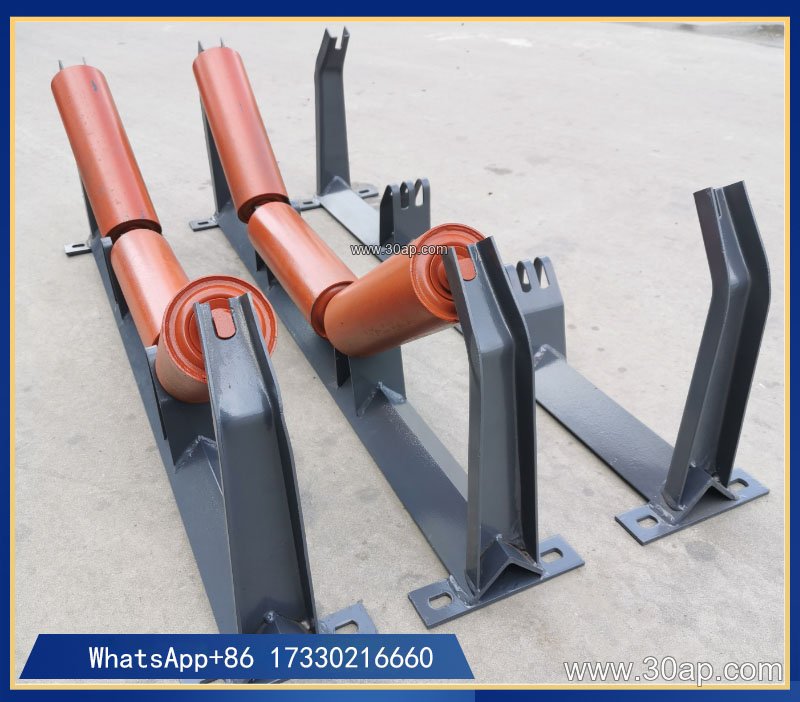
The bracket family covers several positions along the conveyor. The troughing bracket carries the upper carrying idlers; the return bracket supports the belt on its way back. Transition and impact brackets sit where material is loaded and where the belt changes shape. Self-aligning and forward-leaning designs help keep the belt centered on long runs.
- Troughing bracket (upper carrying position)
- Transition bracket near loading points
- Return bracket and V-return bracket
- Impact bracket under the hopper or chute
- Self-aligning bracket for belt tracking
- Forward-leaning bracket, commonly about 1.5 to 2 degrees
- Suspended and adjustable brackets
These are positions and functions, not interchangeable parts. A return bracket cannot substitute for a troughing bracket, and a drive pulley, tail pulley or bend pulley is a completely different component from any bracket.
Typical Size Combinations
Bracket dimensions follow the belt width, trough angle and idler diameter. The table below shows common reference combinations; actual hole spacing and crossbeam length are determined by design, not by a fixed rule.
| Belt width | Trough angle | Idler diameter |
|---|---|---|
| B500 | 20 degrees | Ø89 |
| B650 | 30 degrees | Ø89 |
| B800 | 35 degrees | Ø108 |
| B1000 | 35 degrees | Ø108 |
| B1200 | 45 degrees | Ø133 |
| B1400 | 35 degrees | Ø133 |
| B1600 | 45 degrees | Ø159 |
| B1800 | 35 degrees | Ø159 |
| B2000 | 45 degrees | Ø194 |
| B2200 | 35 degrees | Ø194 |
One belt width can work with more than one trough angle or idler diameter. A B1200 conveyor, for example, may use 35 or 45 degrees depending on the material and the required capacity. Adjustable brackets allow the trough angle to be changed on site within the range the design permits.
Where These Brackets Are Used
Heavy-duty steel conveyor brackets appear wherever bulk material moves continuously. In a limestone mine or an iron ore operation, they support the carrying side of a Mining Conveyor Belt under heavy lump loads. In a cement plant, they hold idlers beneath clinker and raw meal belts. In a power plant coal yard, they work alongside a Flame Retardant Conveyor Belt and are often specified with corrosion-resistant finishes.
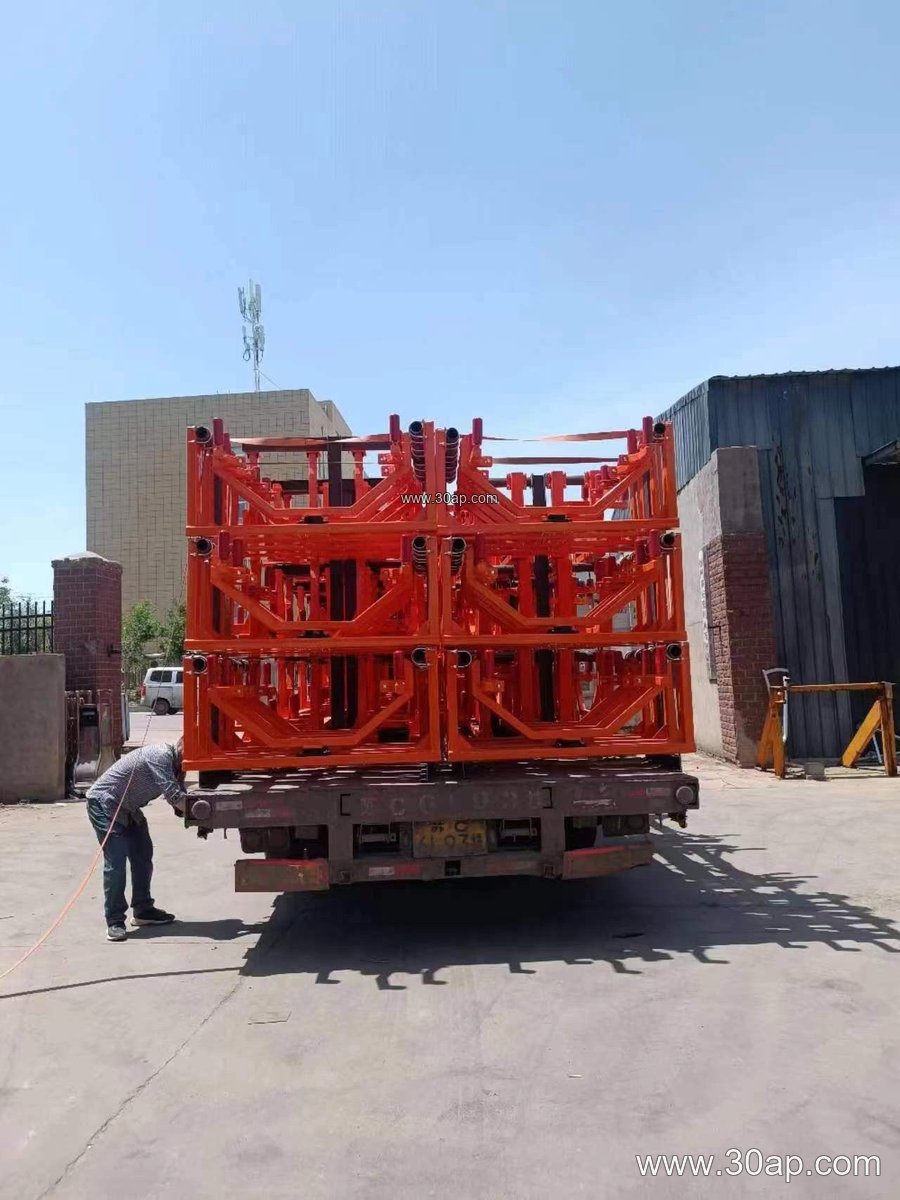
Aggregate and sand plants use them on crusher discharge and screening feed lines, where impact brackets protect the belt at the loading point. Ports and ship loading systems rely on sturdy troughing brackets to keep long overland runs stable. In each case the bracket works with the conveyor belt, the idler roller and the conveyor pulley, but it remains a separate, replaceable part.
What Buyers Should Check
Before ordering, confirm the belt width, trough angle and idler diameter as a set, and state the mounting hole spacing required by the existing frame. Ask about steel thickness, welding quality and surface finish. For abrasive duties such as a quarry or a copper ore line, a reinforced impact bracket at the transfer point is often worth the extra cost, and it pairs well with an Abrasion Resistant Conveyor Belt.
Also consider the environment. A coal handling system may call for a Fire Resistant Conveyor Belt and flame-retardant accessories, while a cold climate application may need a Cold Resistant Conveyor Belt. The bracket itself should match that duty through its coating and material selection. Finally, check that spare brackets match the original hole pattern; a mismatched bracket forces the idler out of line and shortens belt life.
Good bracket selection is simple in principle: match the load, match the frame, and match the environment. Done correctly, a heavy-duty steel conveyor bracket keeps the belt tracking straight and the whole conveyor running quietly for years.