What a Heavy-Duty Conveyor Bracket Does
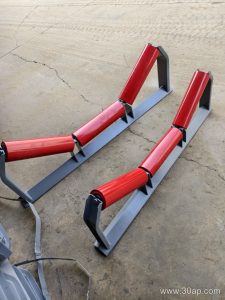
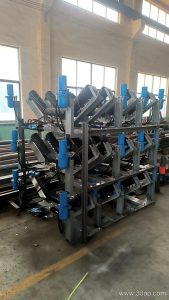
A heavy-duty conveyor bracket is the structural support that holds idler rollers in position along a belt conveyor. In a quarry, a coal preparation plant, or a cement kiln feed line, the bracket carries the weight of the conveyor belt, the material load, and the dynamic forces from continuous operation. The same product is often called a heavy-duty conveyor support frame or heavy-duty idler bracket, depending on the region and the manufacturer’s terminology. It is not a pulley. Drive pulleys, tail pulleys, and bend pulleys have completely different roles and are not interchangeable with this component.
The bracket keeps the idlers at the correct spacing and angle so the belt runs true. Without a rigid, well-aligned bracket, the belt can wander, spill material, or wear unevenly.
Construction and Materials
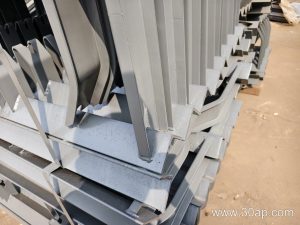
Most heavy-duty brackets are fabricated from angle steel, channel steel, or folded steel plate. The material thickness and the method of bending or welding determine the load capacity. A bracket used in a primary crusher discharge area may need a thicker frame than one on a light transfer point. The common surface treatment is painting or galvanizing, but the exact finish depends on the environment. In a wash plant or a port handling salt, corrosion resistance becomes a priority.
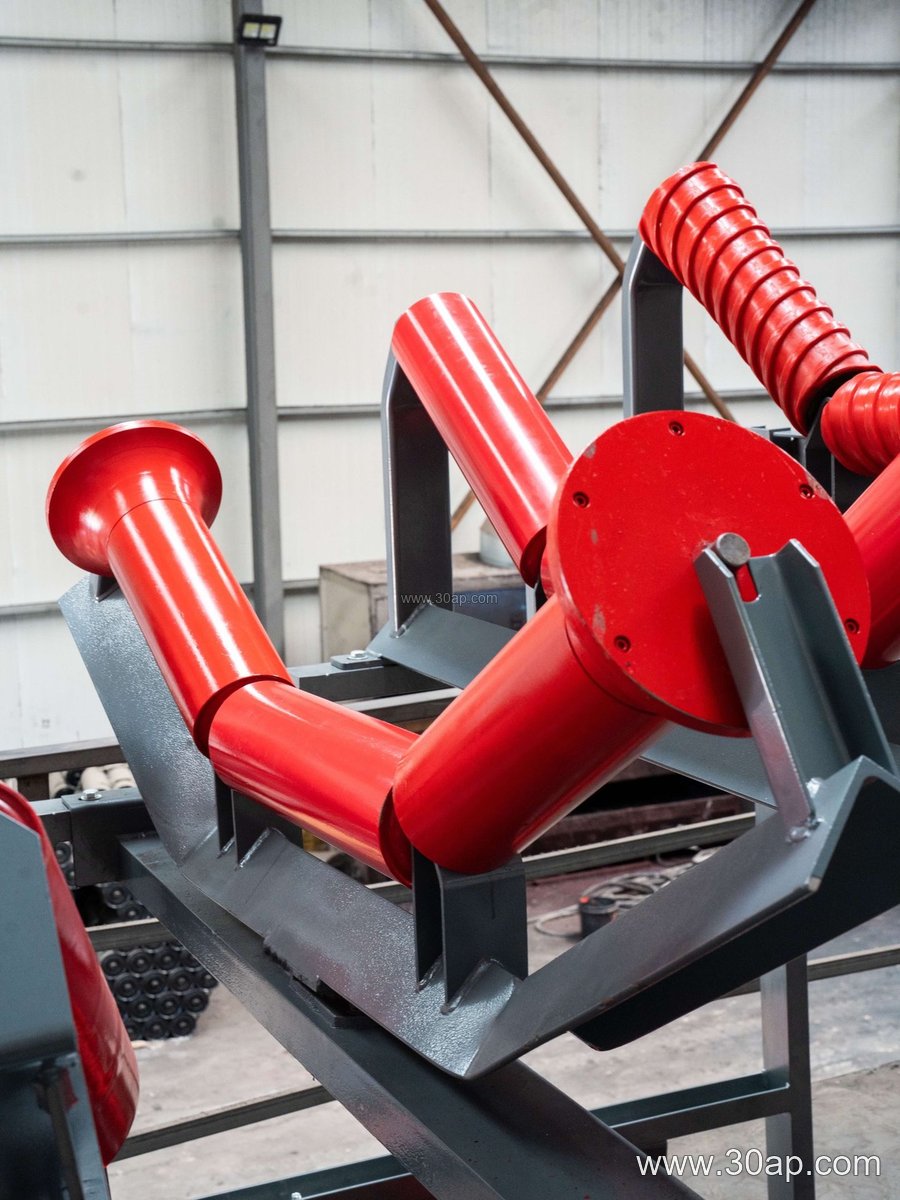
The bracket geometry is usually fixed for troughing, return, or transition positions. A troughing bracket holds three idlers at a defined trough angle. A return bracket holds a single flat or V-shaped idler. A transition bracket sits between the pulley and the first full troughing station to guide the belt from flat to troughed.
Common Types and Typical Parameters
Selection starts with the belt width, the trough angle, and the roller diameter. The following table shows common reference combinations, but these are examples, not mandatory pairings. A single belt width can accept different trough angles and roller diameters depending on the conveyor design.
| Bracket Type | Belt Width (mm) | Trough Angle | Roller Diameter (mm) |
|---|---|---|---|
| Troughing bracket | B800 | 35 degrees | Ø108 |
| Troughing bracket | B1000 | 35 degrees | Ø133 |
| Troughing bracket | B1200 | 45 degrees | Ø133 |
| Return bracket | B800 | Not applicable | Ø108 |
| Return bracket | B1400 | Not applicable | Ø159 |
| Transition bracket | B1000 | 20 to 35 degrees | Ø108 to Ø133 |
Adjustable brackets allow the trough angle to be changed between common values such as 20, 30, 35, and 45 degrees. This is useful when a conveyor handles different materials or when the belt needs fine tuning after installation. Forward-leaning brackets, typically around 1.5 to 2 degrees, help keep the belt centered on the troughing idlers.
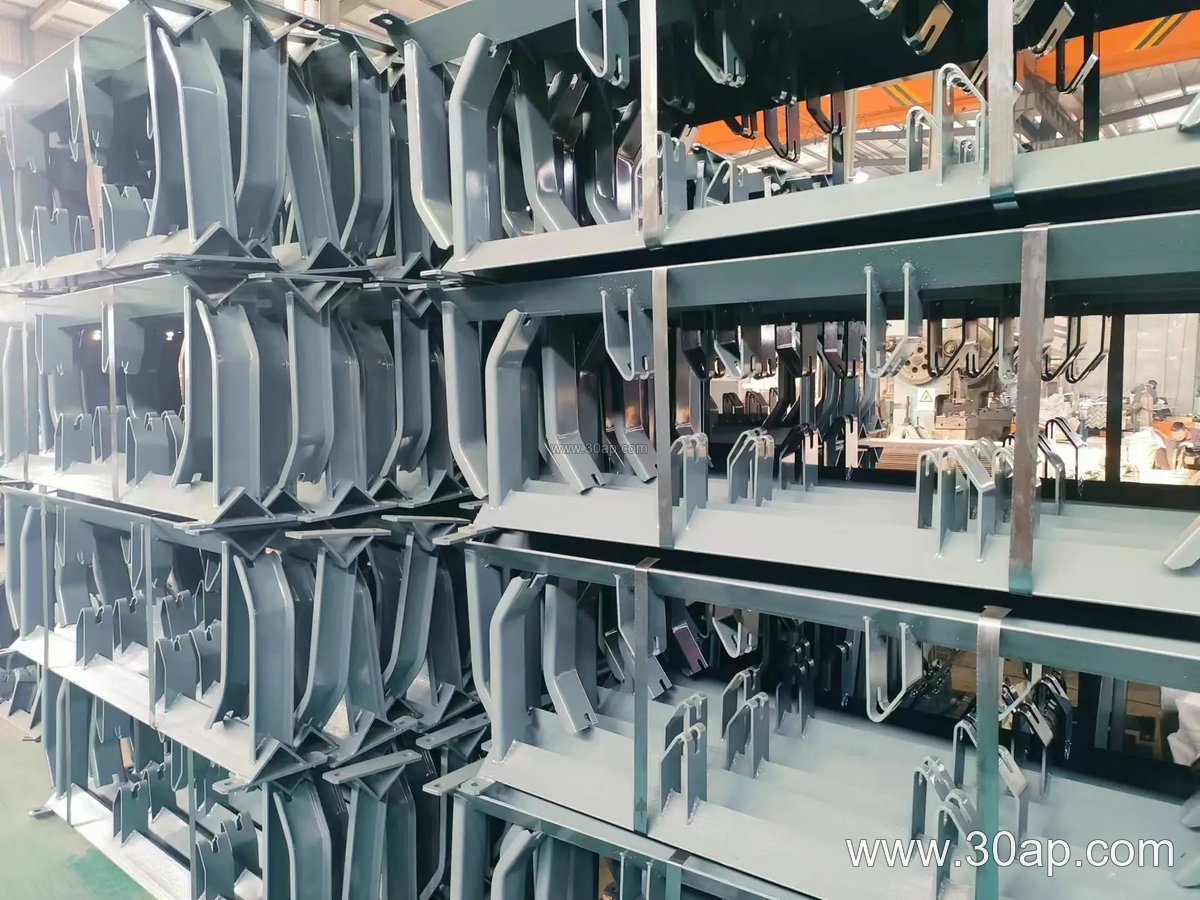
Mounting hole spacing and crossbeam length vary with belt width and trough angle. They are not fixed numbers. A bracket for B650 will not have the same hole pattern as one for B1800.
Where Heavy-Duty Conveyor Brackets Are Used
These brackets appear in many bulk material handling systems. In a limestone mine, they support the idlers under the primary crusher discharge. In a coal-fired power plant, they carry the coal conveyor belt through transfer towers and bunker feed lines. In a sand and gravel line, they handle the abrasive load from screening and washing. Other common locations include iron ore concentrators, sinter plants, fertilizer granulation lines, and tunnel muck removal conveyors.
The bracket works together with the conveyor belt, the idler roller, and the conveyor pulley. If the bracket is misaligned or too weak, the belt will not track properly, and the idler rollers will wear out faster.
What a Buyer Should Check
- Confirm the belt width and the required trough angle before ordering.
- Match the bracket’s roller mounting to the actual idler shaft diameter.
- Check the material thickness and the weld quality for the intended load.
- Decide between fixed and adjustable brackets based on how often the conveyor setup may change.
- Verify the hole spacing and crossbeam length against the existing conveyor structure.
- Consider the environment. A galvanized or painted finish may be needed in wet or corrosive locations.
A heavy-duty conveyor bracket is a simple component, but it affects belt life, idler life, and the overall reliability of the conveyor. Choosing the right type, angle, and material for the application is more important than picking the lowest-cost option.