What a Tail Bend Pulley Does at the Return End
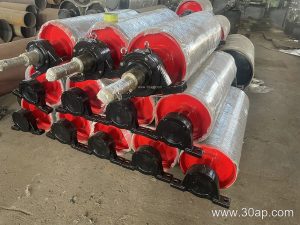
A tail bend pulley is a direction-changing roller mounted near the tail of a belt conveyor, usually to route the returning belt into the take-up zone or to wrap more belt around the tail pulley. It is a bend pulley in function, but its location at the tail makes it part of the tensioning and belt-training picture rather than a drive component. In a quarry, a coal washing plant, or a power plant coal yard, this roller often sits low and slightly forward of the tail pulley, where dust, fines, and occasional spillage collect, so its sealing and surface condition matter as much as its diameter.
The tail bend pulley is not a drive pulley and not a tail pulley. A drive pulley transmits torque through lagging and belt wrap; a tail pulley is normally the terminal roller that supports the belt at the loading end. The bend pulley only changes belt direction. Confusing these roles leads to wrong spare parts, wrong lagging choices, and misaligned take-up travel.
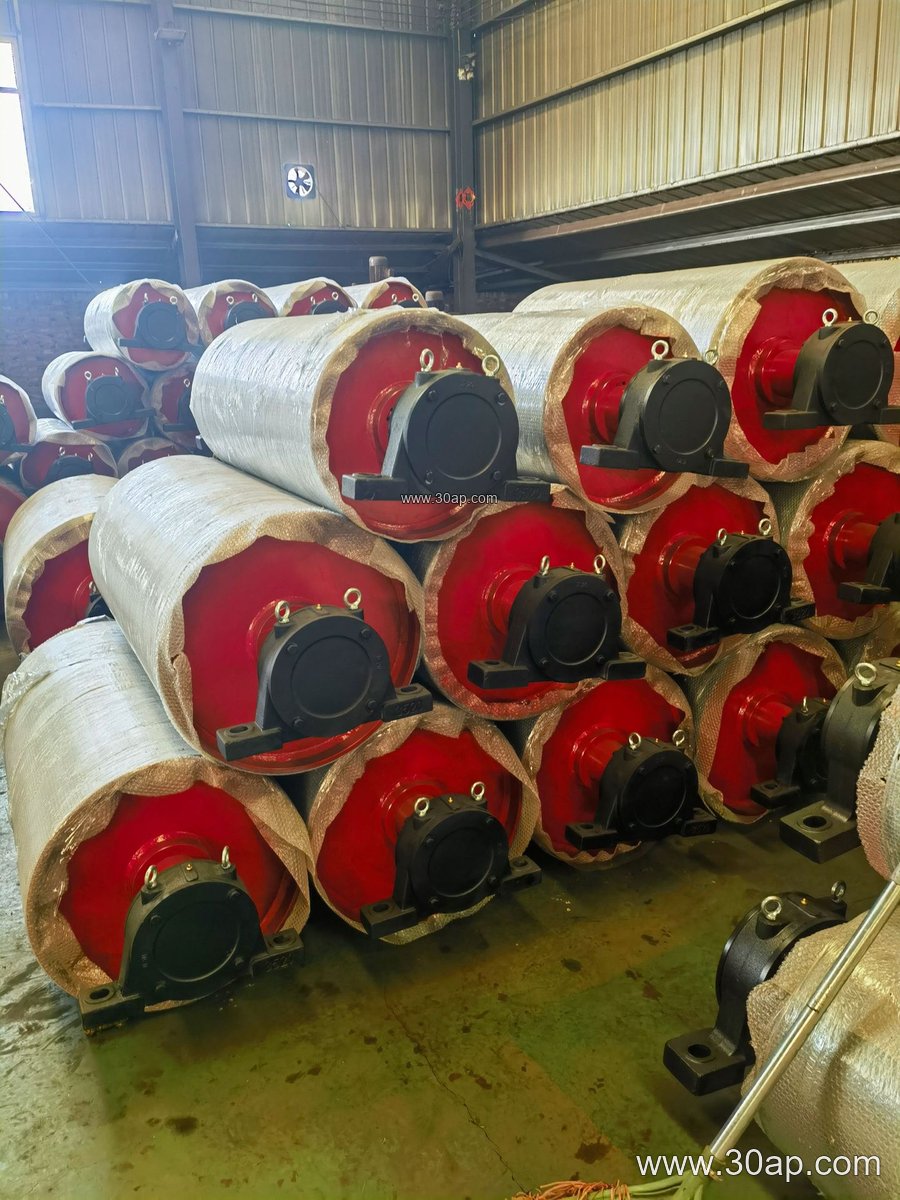
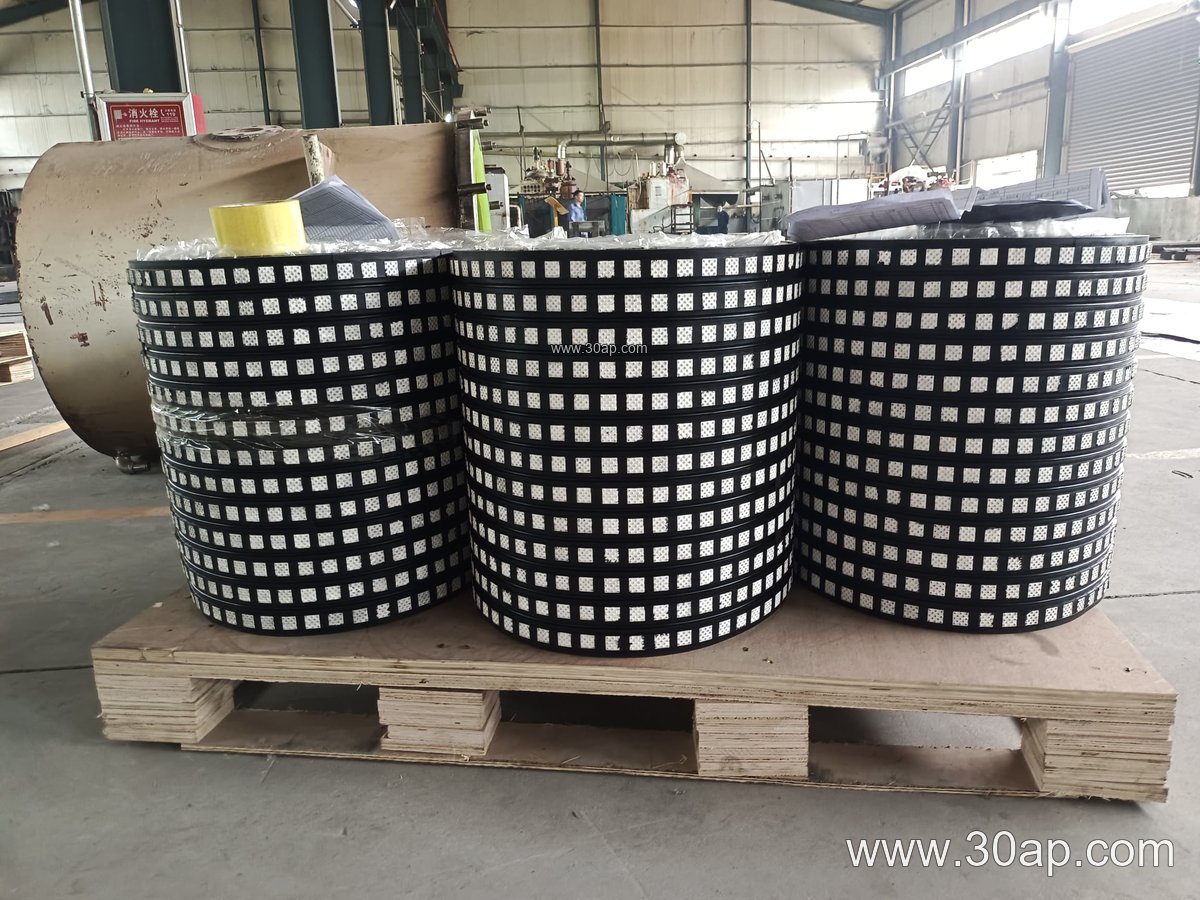
Construction and Surface Options
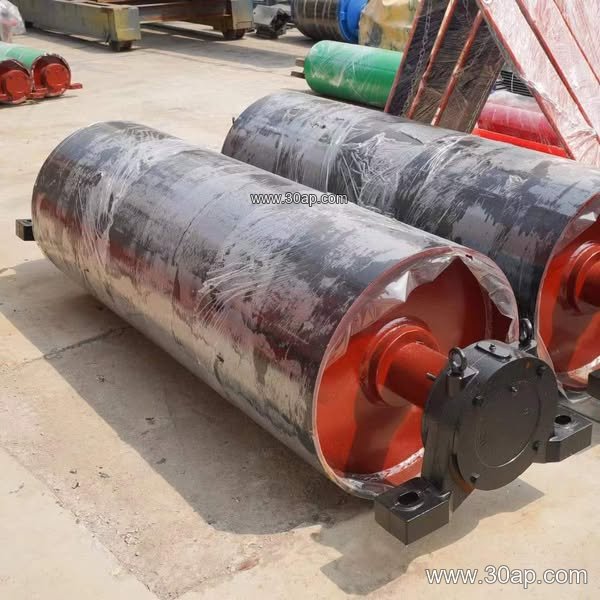
The body is typically a welded steel shell with a machined face, cast or fabricated end discs, a through shaft, and bearing housings bolted to the conveyor bracket. Shell diameter commonly ranges from Ø200 to Ø800 for this duty, with Ø315, Ø400, Ø500, and Ø630 appearing on medium-width lines. Face width usually exceeds belt width so the belt does not run on the shell edge. For example, a B800 belt is often paired with a face around 950 mm, and a B1000 belt with roughly 1150 mm. These are common references, not fixed rules, and the final shaft diameter is set by torque and bearing load, not by belt width alone.
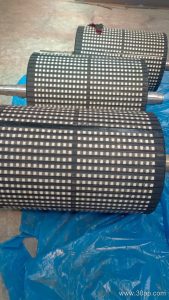
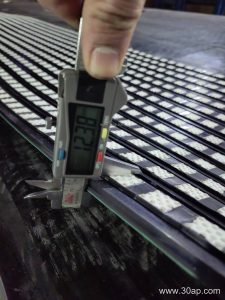
Surface treatment depends on whether the pulley needs friction, cleaning, or protection. Plain finish is common where the belt only needs gentle redirection. Rubber lagging in 8, 10, 12, or 15 mm helps grip and reduces shell wear. Diamond or herringbone grooving can shed water and fines, while ceramic lagging suits abrasive service in an iron ore or copper ore terminal. On a tail bend pulley, heavy lagging is not always needed, because wrap and tension are modest; a plain or lightly lagged face is often enough.
Common reference combinations
- B650 with Ø315 or Ø400 shell, face about 750 mm
- B800 with Ø400 or Ø500 shell, face about 950 mm
- B1000 with Ø500 or Ø630 shell, face about 1150 mm
- B1200 with Ø630 or Ø800 shell, face about 1400 mm
- B1400 with Ø800 shell, face about 1600 mm
Where It Fits in the Conveyor Layout
In a crushing and screening line, the tail bend pulley may sit just behind the loading chute to guide the return strand under the tail pulley and back toward the take-up. In a cement plant clinker transport line or a limestone quarry, it can also serve as a snub or wrap pulley. On a longer overland conveyor carrying Steel Cord Conveyor Belt, the bend pulley is usually part of the tensioning arrangement, so its alignment with the take-up carriage has to be checked at installation. A misaligned bend pulley will edge-damage the belt long before the tail pulley shows wear.
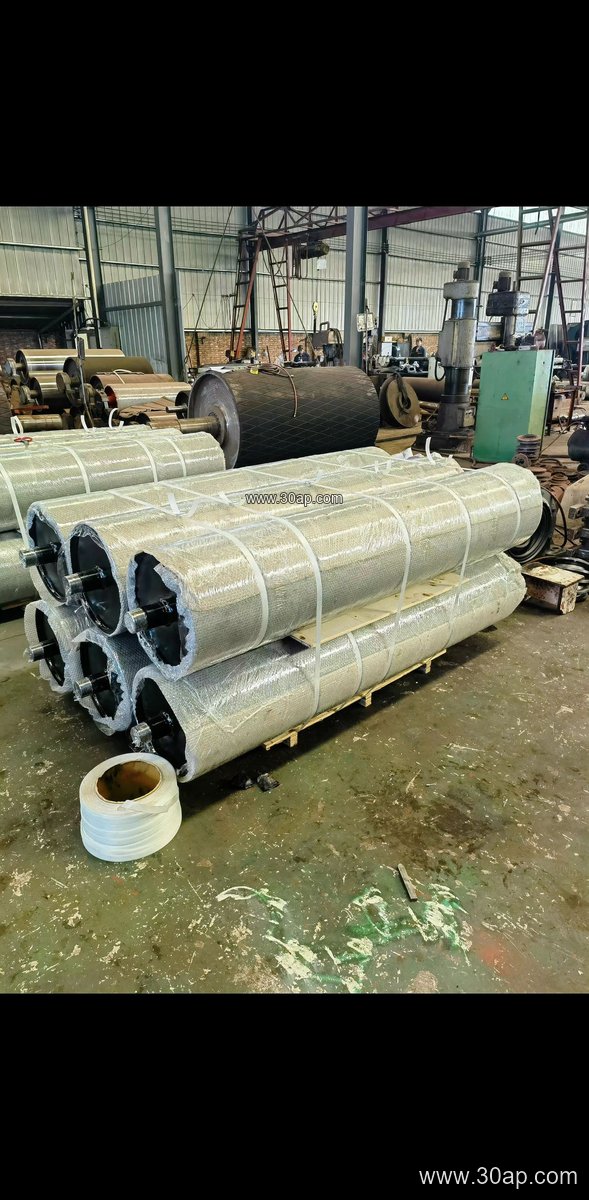
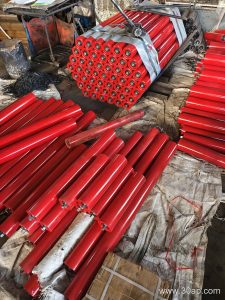
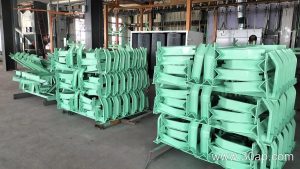
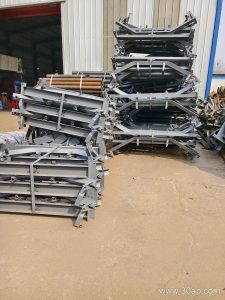
It works together with the conveyor belt, the conveyor pulley set, the idler roller string, and the conveyor bracket. On a coal mining conveyor or a port bulk terminal, keeping the return strand clean around this roller reduces carryback buildup on the shell.
Buyer Checklist
When specifying a tail bend pulley, confirm the belt width and the actual face width, the shell diameter, the shaft diameter and bearing type, the lagging type and thickness, and the mounting bracket hole pattern. Ask whether the pulley is balanced for the line speed and whether the bearing housings are sealed for dusty service. For a coal mining conveyor using a Flame Retardant Conveyor Belt, the pulley lagging should be compatible with the belt cover and the local fire-safety requirements. For a quarry line running an EP Conveyor Belt, a plain or diamond-lagged bend pulley is usually sufficient, but the face should be wide enough to allow normal belt tracking.
During maintenance, check shell wear, lagging lift, bearing temperature, and bolt tightness. A tail bend pulley that develops a flat spot or loose lagging will cause belt tracking drift and can damage the belt edge. Replace worn lagging before it exposes the shell, and keep the pulley face parallel to the tail pulley axis.