What a Drive Lagged Pulley Does
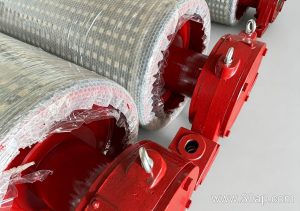
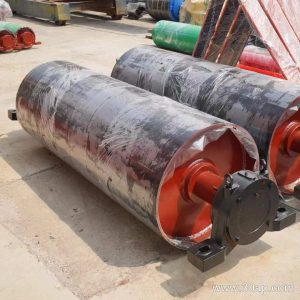
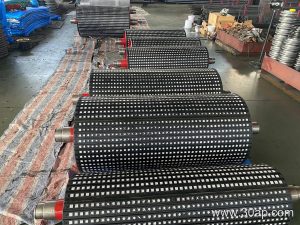
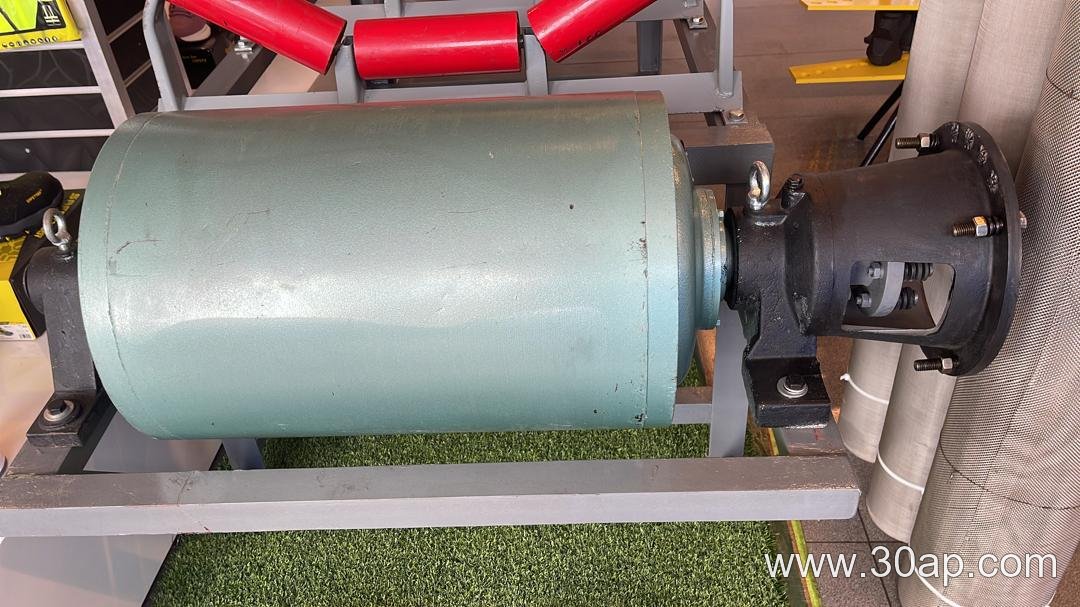
A drive lagged pulley is the powered drum at the head of a conveyor that turns the belt and moves the load. Unlike a tail pulley, which mainly redirects and tensions the belt, the drive pulley transmits torque from the gearbox to the belt. The lagging is the rubber or ceramic layer bonded to the drum surface. That layer raises friction between the pulley and the conveyor belt, so the drive can pull heavier loads without slipping.
People sometimes call this component a lagged head pulley or a rubber-lagged drive drum. Those are accurate equivalent names for the same product. The word “lagged” describes the surface treatment, not a different type of pulley. A drive pulley, a tail pulley, and a bend pulley are not interchangeable. Each has a different job in the conveyor layout.
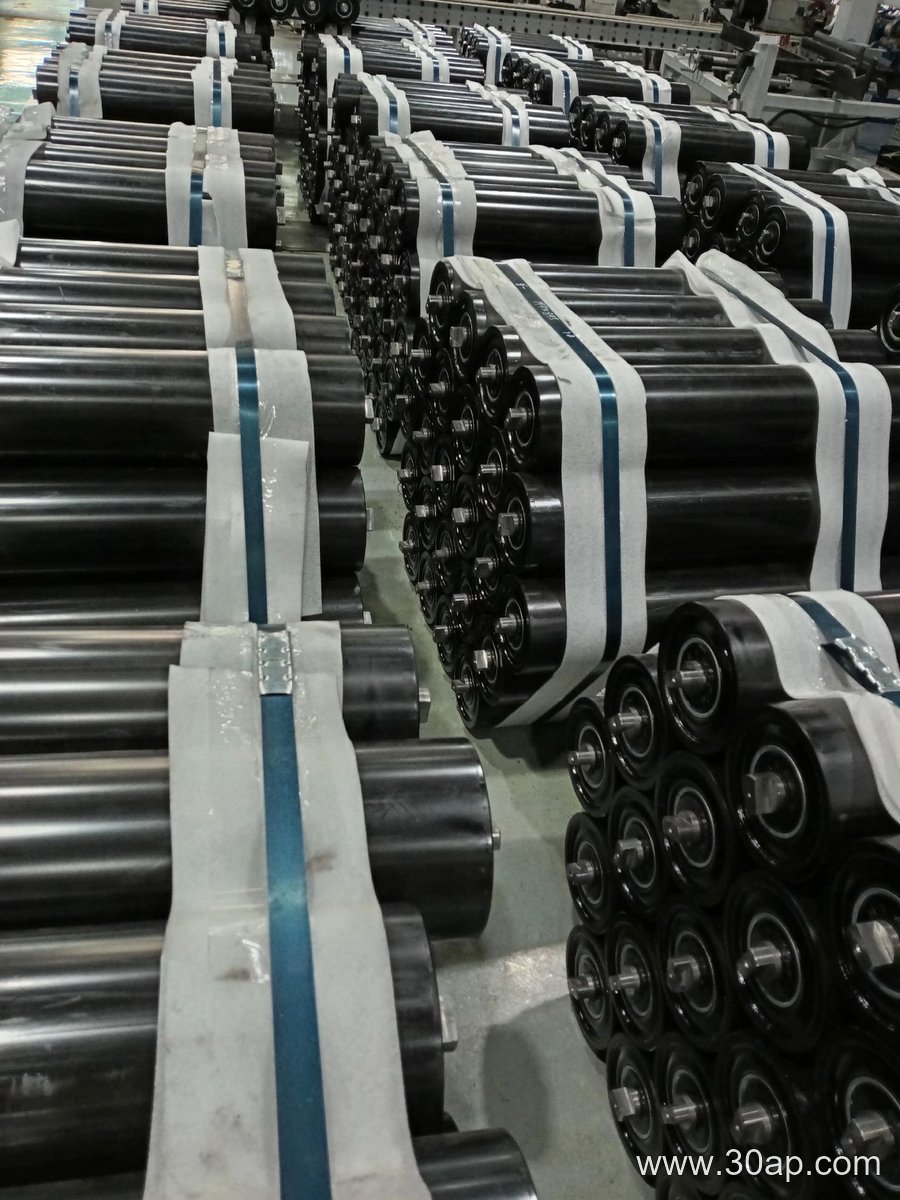
How the Lagged Drive Drum Is Built
The core is usually a steel cylinder with welded end discs and a shaft. After machining, the shell is balanced and prepared for the lagging. Common surface options include plain rubber, diamond grooved rubber, herringbone rubber, ceramic lagging, and cold-bonded or hot-vulcanized rubber. The choice depends on belt speed, material, moisture, and the amount of torque to transmit.
Lagging thickness is often 8 mm, 10 mm, 12 mm, 15 mm, or 20 mm. A thicker layer can absorb more wear and provide more grip, but it also changes the effective drum diameter. The pulley face width is normally wider than the belt. For example, a B800 belt may run on a drum face around 950 mm, and a B1200 belt may use a face near 1400 mm. These are common reference values, not fixed rules.
Shaft diameter is determined by torque and load, not by belt width alone. Typical shaft sizes include Ø50, Ø60, Ø70, Ø80, Ø90, Ø100, Ø120, Ø140, Ø160, Ø180, and Ø200. A larger drum, such as Ø1000 or Ø1250, often needs a larger shaft, but the final size comes from the conveyor design. A B1200 × Ø1000 drive pulley is a reasonable combination in some projects, while a B800 × Ø500 unit may suit a shorter or lighter conveyor.
Where It Fits in the Conveying Line
The drive lagged pulley sits at the discharge end or at an intermediate drive station. In a quarry or limestone mine, it powers the main haulage belt that carries crushed rock. In a coal washing plant, it moves wet coal and slurry-laden material where slip resistance matters. The lagging helps when the belt is wet, dusty, or oily.
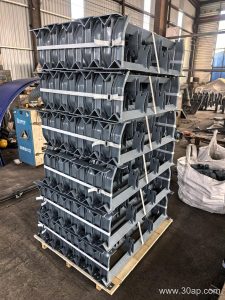
A conveyor pulley of this type works together with the conveyor belt, idler rollers, and conveyor brackets. The brackets hold the bearing housings and keep the shaft aligned. If the drive drum is misaligned, the belt may run off-center and wear the lagging unevenly. Proper alignment and tension are as important as the surface pattern.
Choosing the Right Lagging Surface
Plain rubber is a general-purpose choice for dry, clean belts. Diamond or herringbone grooves channel water and fines away from the contact area, which can improve grip in wet conditions. Ceramic lagging offers high wear resistance for abrasive materials and high-torque drives. Hot-vulcanized rubber generally bonds more strongly than cold-bonded rubber, but the best method depends on the workshop and the pulley size.
A buyer should match the lagging to the actual operating environment. For a sand and gravel line, abrasive dust may call for a wear-resistant rubber or ceramic surface. For a food or fertilizer plant, the rubber compound may need to meet specific hygiene or chemical requirements. The drive pulley should not be selected by belt width alone. Belt tension, starting torque, incline, and the weight of the material all affect the required traction.
Specification and Sizing Notes
When specifying a drive lagged pulley, provide the belt width, the required drum diameter, the shaft diameter, the face width, the lagging type, and the bearing centers. Common diameters range from Ø200 to Ø1800, but not every diameter is available for every belt width. The face width is usually a little wider than the belt to prevent edge damage. For instance, a B650 belt often uses a face around 750 mm, while a B1400 belt may use a face near 1600 mm.
Do not assume that one belt width can only match one pulley diameter. A B1000 belt might run on a Ø800 drum in one conveyor and a Ø1000 drum in another, depending on the speed and torque. Likewise, never derive a fixed shaft diameter from belt width alone. The shaft must be checked for bending stress, torsional load, and bearing life.
Maintenance and Buyer Checklist
Inspect the lagging for cracks, glazing, or missing chunks. Worn lagging reduces friction and can cause belt slip, especially under load. Check the conveyor bracket bolts and bearing seals for looseness or contamination. Keep the belt cleaner working so that sticky material does not build up on the drum face. If the lagging is damaged, re-lagging or replacing the pulley may be more economical than running a slipping drive.
Before ordering, confirm the shaft keyway, bearing type, and whether the pulley is for a head drive or an intermediate drive. Ask for the lagging thickness and groove pattern in writing. Remember that a drive lagged pulley is only one part of the conveyor. The tail pulley, bend pulley, and take-up system must work together with it to keep the belt tracking and tensioned.
- Confirm belt width and drum face width.
- State the required drum diameter and shaft diameter.
- Choose lagging material and surface pattern for the site conditions.
- Check bearing centers and bracket dimensions before installation.
- Review torque and starting conditions with the conveyor designer.