What the Conveyor Head Pulley Does
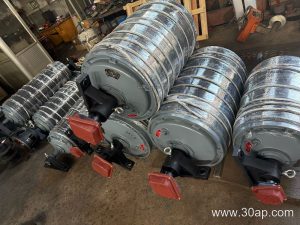
At the discharge end of a belt conveyor, the conveyor head pulley is the drum that pulls the belt and throws material off the trajectory. Often called the drive pulley or head drum, it is the powered wheel that transmits torque from the gearbox to the belt through friction and wrap. A quarry conveyor moving crushed stone, a cement plant clinker line, or a power plant coal handling system all depend on this single component to keep the belt tracking and the discharge point clean.
The head pulley is not a tail pulley and not a bend pulley. Those drums serve different positions and functions. The head drum sits at the delivery end, carries the highest belt tension, and usually has the largest diameter in the system.
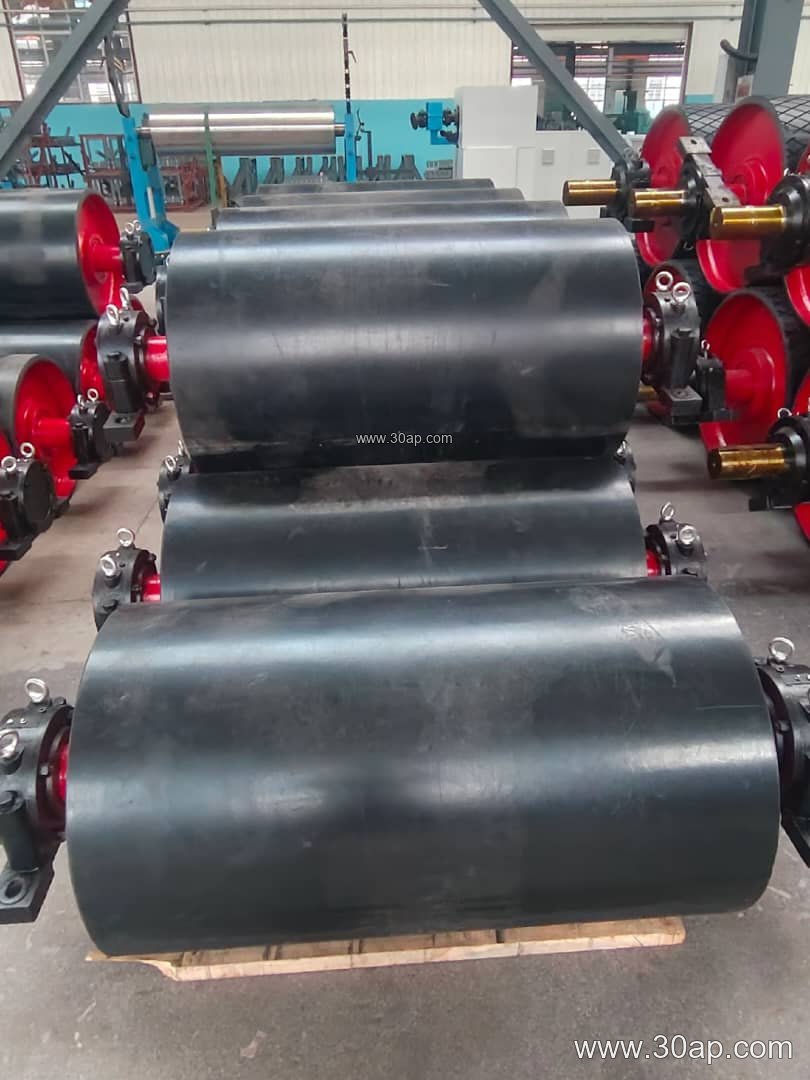
How a Head Drum Is Built
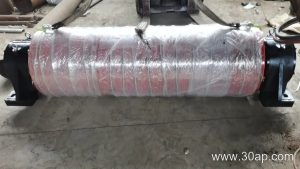
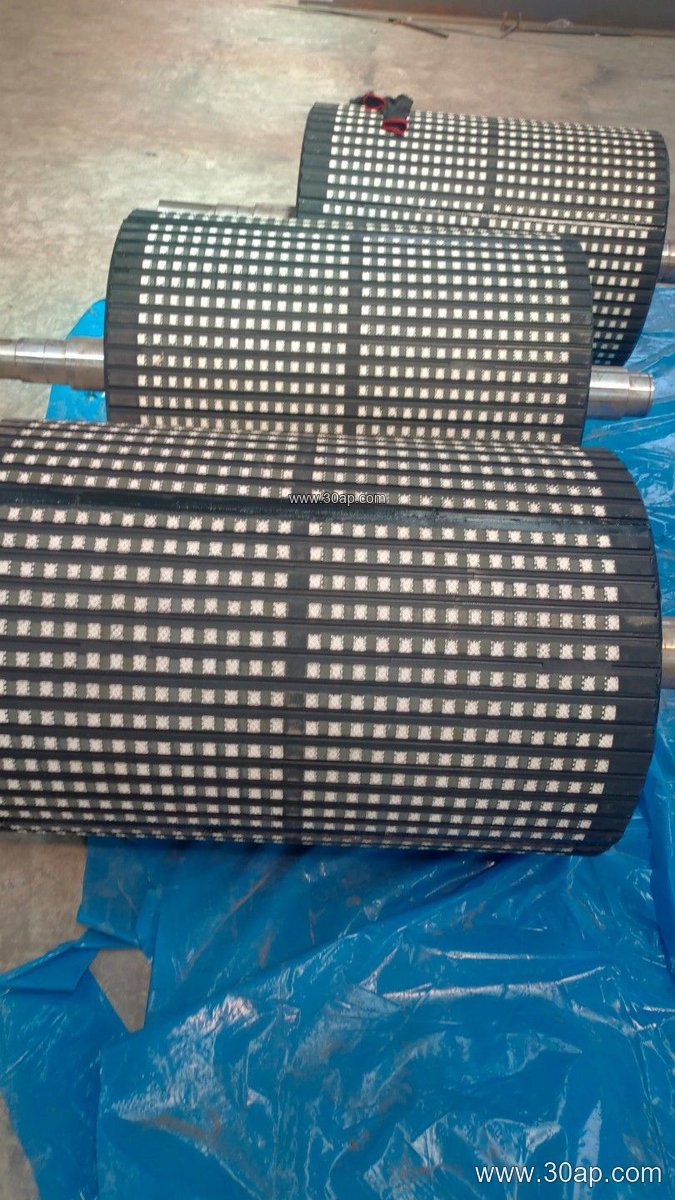
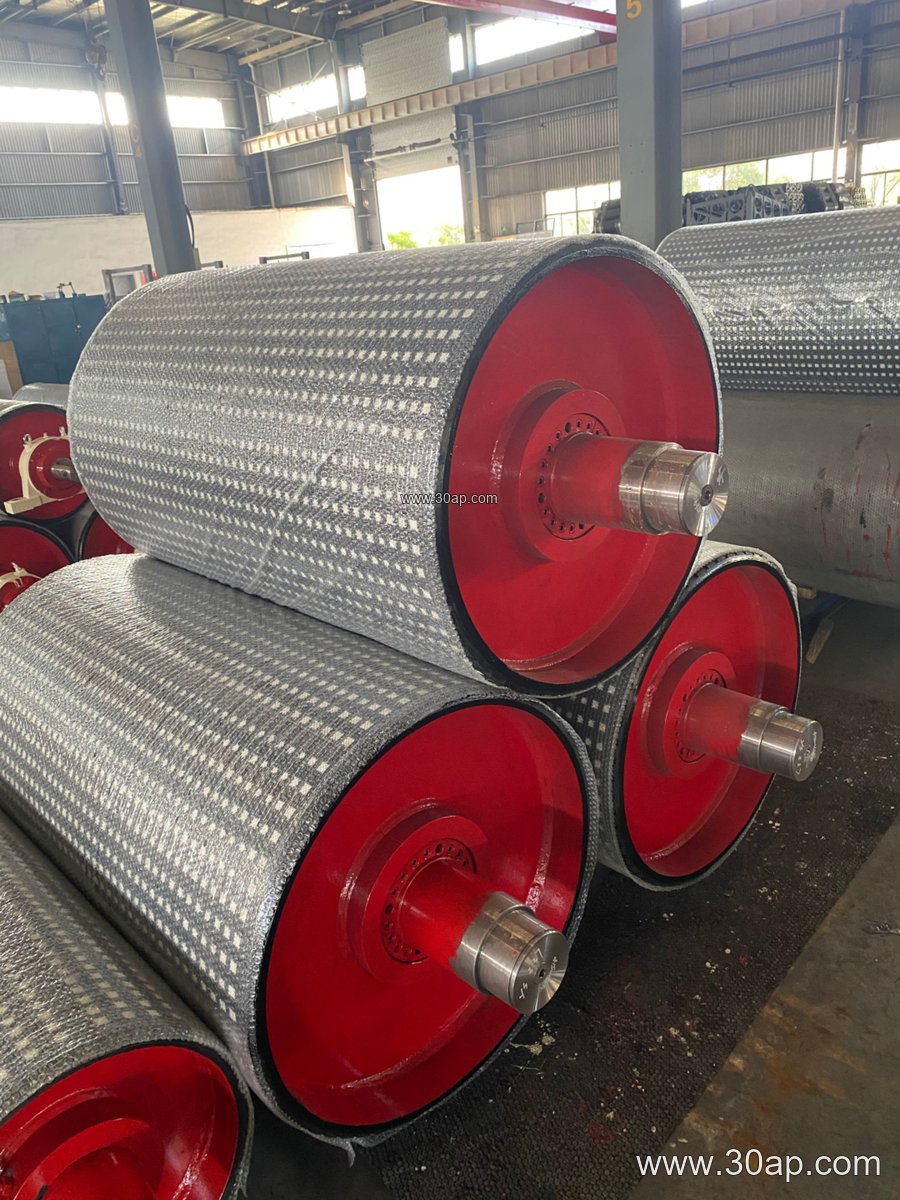
A typical head pulley assembly includes the shell, end discs, hub, shaft, and bearing housings. The shell is usually rolled steel, machined for balance and concentricity. The shaft is keyed to the hub and supported by self-aligning bearings mounted in conveyor bracket assemblies. Surface treatment is selected for grip: plain finish, cast rubber, cold-bonded rubber, hot vulcanized rubber, diamond grooving, herringbone grooving, or ceramic lagging. Lagging thickness commonly ranges from 8 mm to 20 mm depending on duty.
Shaft diameter is determined by torque and load, not by belt width alone. Common shaft sizes include Ø50, Ø80, Ø120, Ø160, and Ø200 mm. A B800 head pulley might use a Ø500 mm shell with a Ø100 mm shaft in one installation, while a different drive design with the same belt width could call for a Ø630 mm drum and a Ø120 mm shaft.
Common Size References
The table below lists reference dimensions often seen in project specifications. These are typical ranges, not fixed pairings; final sizing follows belt tension, wrap angle, and drive power.
| Belt Width | Typical Pulley Face Width | Common Diameter Range |
|---|---|---|
| B400 | about 500 mm | Ø200 to Ø400 |
| B650 | about 750 mm | Ø315 to Ø500 |
| B800 | about 950 mm | Ø400 to Ø630 |
| B1000 | about 1150 mm | Ø500 to Ø800 |
| B1200 | about 1400 mm | Ø630 to Ø1000 |
| B1400 | about 1600 mm | Ø800 to Ø1250 |
| B1600 | about 1800 mm | Ø1000 to Ø1400 |
| B1800 | about 2000 mm | Ø1250 to Ø1600 |
| B2000 | about 2200 mm | Ø1400 to Ø1800 |
A specification such as B1200 × Ø1000 or B1400 × Ø800 describes one possible combination. It does not mean every B1200 conveyor must use a Ø1000 mm drum.
Where It Fits in the Plant
In an iron ore concentrator, the head pulley at the transfer tower discharges onto a Steel Cord Conveyor Belt feeding the stockpile. In a sand and aggregate line, the head drum at the final screen deck often runs with a Chevron Conveyor Belt on an inclined section. The drum must match the belt surface, handle the material load, and keep the belt centered as it leaves the system.
Head pulleys also appear in port ship loading conveyors, tunnel muck removal lines, and fertilizer handling plants. In each case, the drive drum is the point where belt tension peaks, so lagging condition and bearing alignment matter more than at any bend or tail position.
Buyer Checklist
- Confirm the belt width and the required face width, usually wider than the belt.
- State the drive power, belt speed, and wrap angle so the drum diameter and shaft can be calculated.
- Choose lagging based on material: abrasive rock favors thick rubber or ceramic; oily bulk favors oil-resistant rubber.
- Check that the conveyor pulley bearing housings fit the existing conveyor bracket and that the shaft keyway matches the gearbox coupling.
- Ask for dynamic balancing records and shell runout data.
- Match the drum surface to the belt: a Heat Resistant Conveyor Belt may need a heat-tolerant lagging, and a food-grade line may require a different compound.
Whether the plant handles copper ore, limestone, or coal, the head pulley remains the anchor of the drive station. Specify it with the belt, the load, and the environment in mind, and the discharge end will run smoothly for years.