What a Conveyor Trough Idler Does
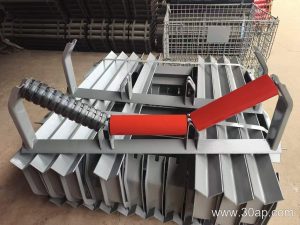
A conveyor trough idler is the idler assembly that supports the carrying run of a conveyor belt and shapes it into a trough. In a typical three-roll arrangement, the two side rolls are angled upward while the centre roll sits flat, so the belt forms a shallow channel that keeps bulk material centred during transport. This troughing idler set is one of the most common components on a bulk handling conveyor, and its condition directly affects belt tracking, spillage and power draw.
The same assembly is also called a troughing roller or troughing idler set. Those names describe the same product; they are not interchangeable with drive pulleys, tail pulleys or bend pulleys, which serve different functions at the ends and corners of the conveyor.
How the Assembly Is Built
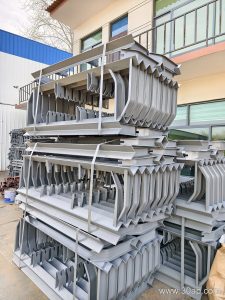
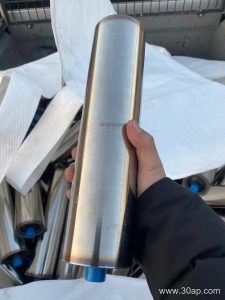
A troughing idler usually consists of two or three idler rollers mounted in a steel frame, with the rolls held at a fixed trough angle. Each idler roller has a steel shell, a shaft, bearing housings and a sealing arrangement. Roll surfaces may be plain steel, nylon, ceramic or rubber rings depending on the duty. The frame connects to the conveyor bracket on the main stringer, and the whole set can often be replaced as a unit.
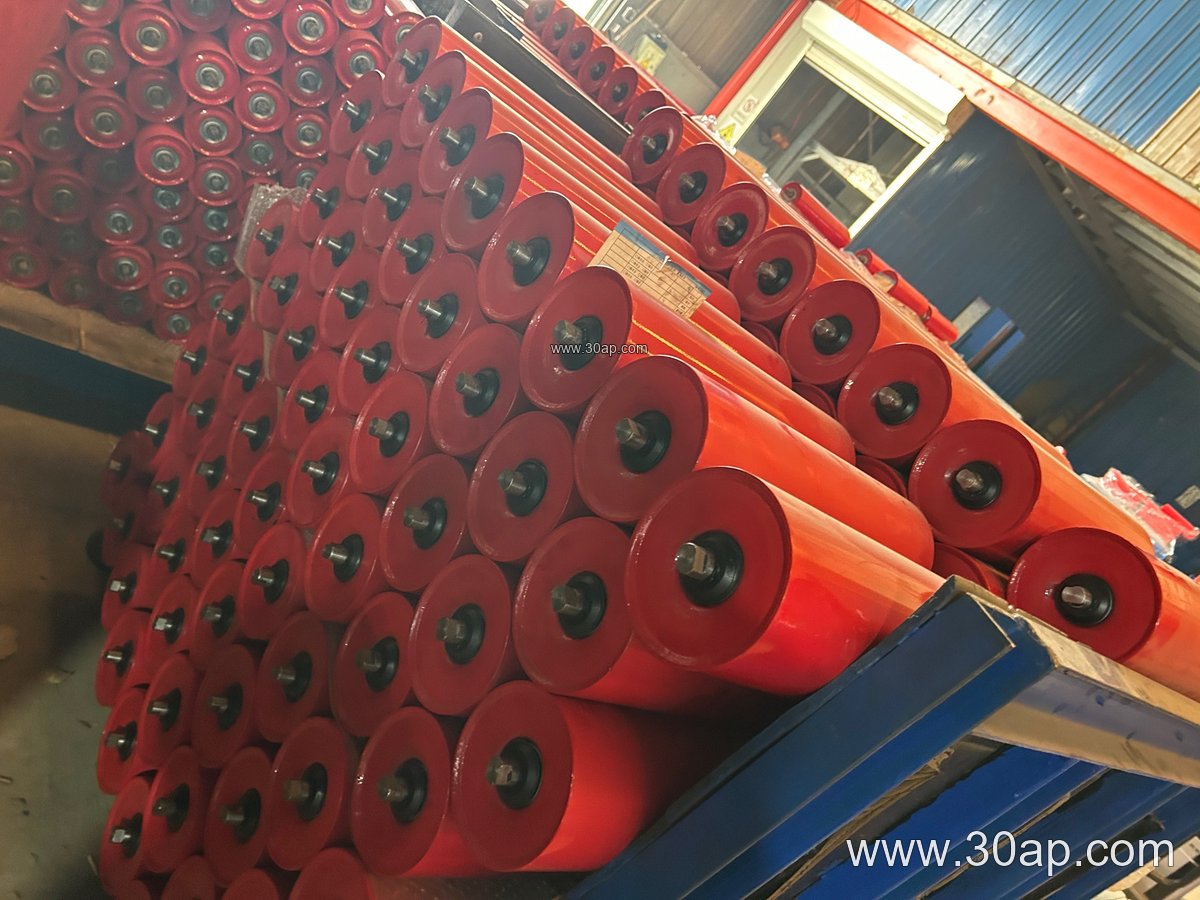
Common roll diameters for troughing positions include Ø89, Ø102, Ø108, Ø127, Ø133 and Ø159, with larger sizes such as Ø178 and Ø194 used on heavy-duty installations. Bearings are usually selected to match the load and shaft size; 6204, 6205, 6305, 6306 and 6308 are frequently seen, but the bearing choice should follow the idler manufacturer’s design rather than a fixed rule.
Trough Angle and Belt Width
The trough angle influences how much material the belt can carry and how stable the load stays. Common angles are 20, 30, 35 and 45 degrees. A deeper trough holds more material and reduces spillage on inclined or heavily loaded conveyors, while a shallower angle suits wider belts and certain free-flowing materials. The angle should be matched to the conveyor belt width, material characteristics and transition distances at the head and tail.
Roll length varies with belt width, trough angle and the number of rolls in the set. For reference, common three-roll troughing examples include roughly 200 mm rolls around B500, 250 mm around B650, 315 mm around B800, 380 mm around B1000, 465 mm around B1200 and 530 mm around B1400. These are examples only; side rolls and centre rolls can differ, and final dimensions are determined by the conveyor design.
Where Troughing Idlers Are Used
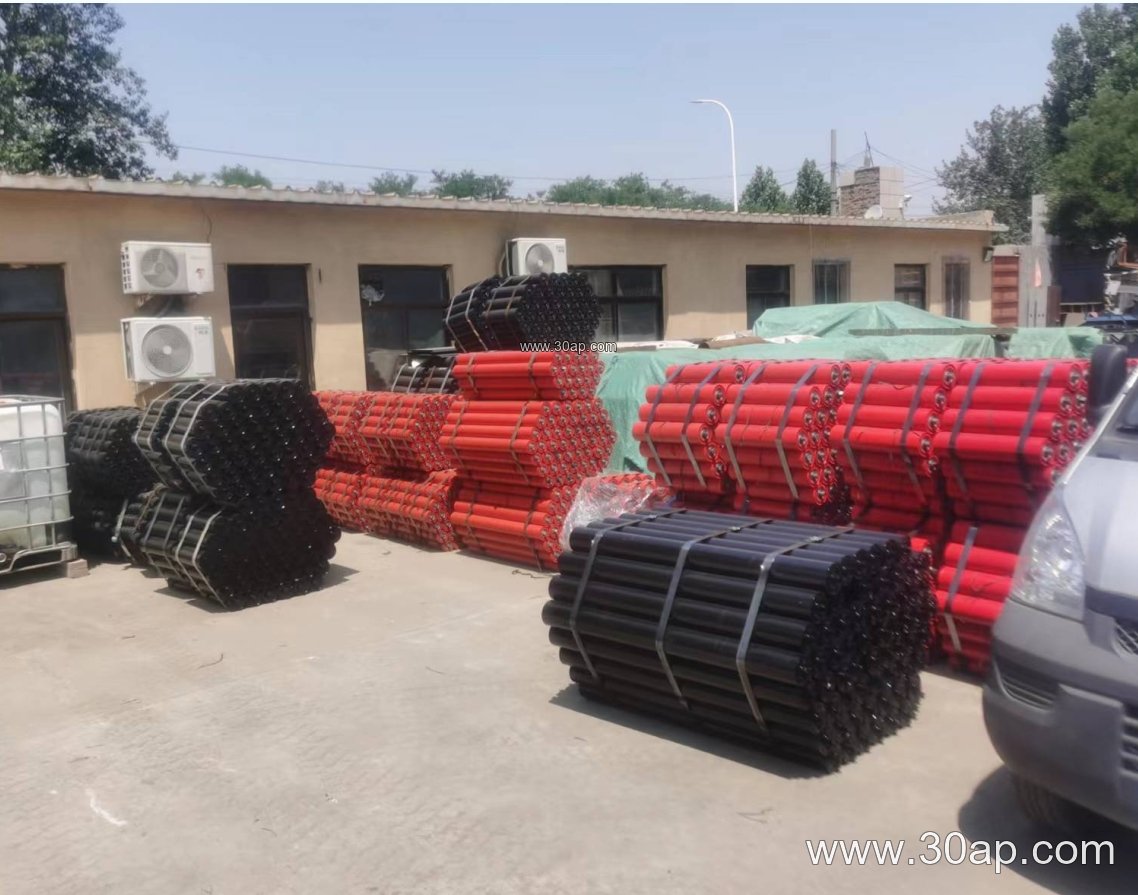
Troughing idlers appear wherever a conveyor belt carries bulk material. In a quarry or sand and gravel line they support crushed stone between the crusher and the screening plant. In a coal handling plant or power station coal yard they keep coal centred on long carrying runs. Cement plants use them on clinker and raw material conveyors, and they also appear in fertilizer plants, grain handling and tunnel spoil removal.
The idler set works together with the conveyor belt, the conveyor pulley at the drive and tail, and the conveyor bracket that anchors the frame. A worn or seized troughing roll can cause belt misalignment, edge damage and increased motor load, so periodic inspection of roll rotation, shell wear and seal condition is worthwhile.
Buyer Checklist
- Confirm belt width and trough angle before selecting a roll length.
- Check the load and belt speed to choose a suitable roll diameter and bearing size.
- Decide whether plain steel, nylon, ceramic or rubber-ring rolls suit the material and environment.
- Verify the frame and bracket mounting dimensions match the existing conveyor stringer.
- Ask about sealing and lubrication arrangements for dusty or wet conditions.
For comparison, a return idler supports the empty side of the belt and is a different subtype; it should not be substituted for a troughing set on the carrying run. Buying the correct troughing idler means matching the assembly to the belt, the material and the conveyor structure rather than relying on a single fixed size.