What an Automatic Self-Aligning Idler Does
An automatic self-aligning idler is a training idler that keeps a conveyor belt centered on its path. When the belt starts to drift toward one side, the idler responds by steering it back. This correction happens without an operator, which is why the design is valued on long runs where a wandering belt can rub the frame, spill material, or damage the edge.
The idler is not a drive pulley, tail pulley, or bend pulley. Those components transmit power or change belt direction. A self-aligning idler instead works on the carrying or return side and corrects lateral movement. In a typical conveyor line, it sits among standard carrying idlers, return idlers, and conveyor brackets, and it is selected to match the belt width and the load conditions.
How the Training Action Works
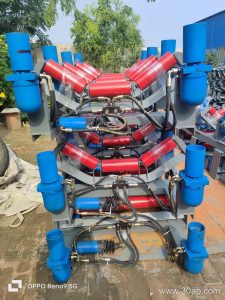
Most designs use a pair of rollers mounted on a pivoting frame. The frame is free to rotate slightly about a vertical axis. When the belt contacts one roller harder than the other, the frame swings, and the angled rollers push the belt back toward the center line. Friction-type and conical designs use the same principle with different roller shapes.
The pivot should move freely but without excessive play. Dust, fines, and moisture are the usual enemies of that movement, so the bearing and seal arrangement matters as much as the roller body. A stiff pivot turns a self-aligning idler into an ordinary roller that no longer corrects anything.
Common Construction Details
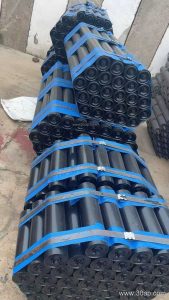
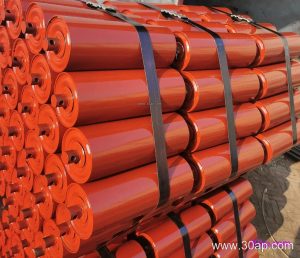
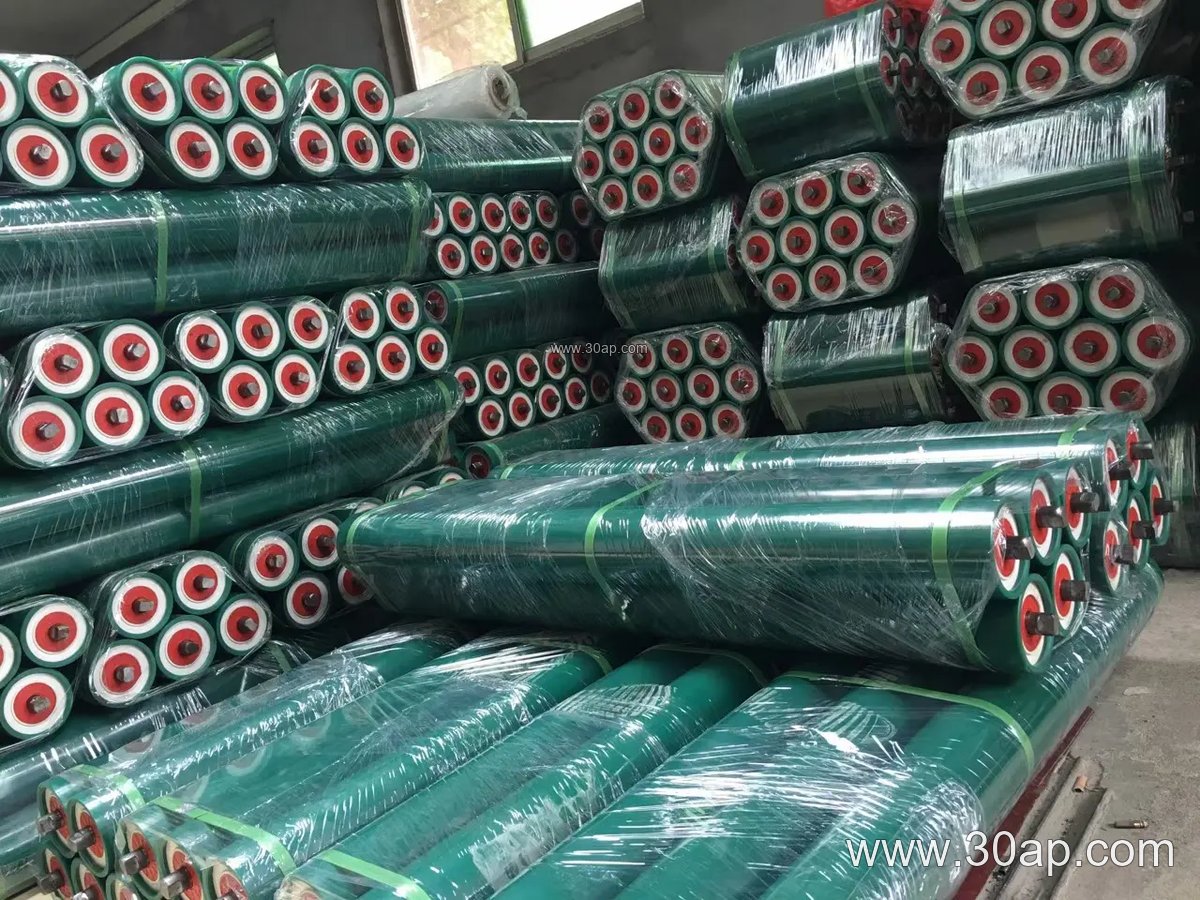
Roller shells are usually steel tube, with nylon, ceramic, or rubber-covered options where abrasion or material buildup is a concern. Bearings are commonly 6204, 6205, 6305, 6306, 6308, or 6310, matched to the shaft and load by the manufacturer rather than fixed by belt width alone. Shaft diameter depends on the frame and load, not on a single belt dimension.
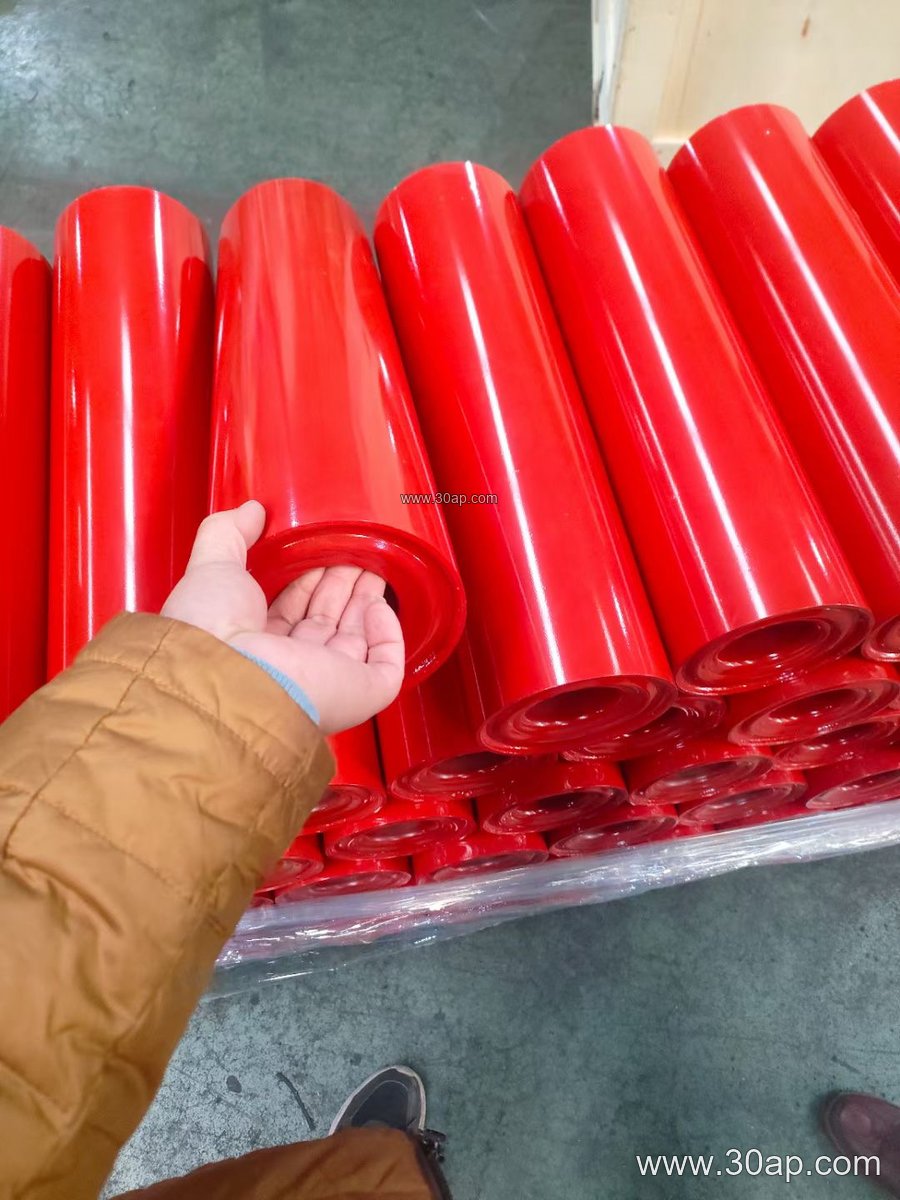
Roller diameter and length follow the conveyor design. Common roller diameters include Ø89, Ø108, Ø127, Ø133, and Ø159, and larger sizes such as Ø178, Ø194, and Ø219 appear on heavy-duty lines. For a three-roll carrying set, roller length is often related to belt width as shown below. These are typical examples only, and side rollers may differ from the center roller.
Typical Reference Values
| Belt width | Common roller length (three-roll set) |
|---|---|
| B500 | about 200 mm |
| B650 | about 250 mm |
| B800 | about 315 mm |
| B1000 | about 380 mm |
| B1200 | about 465 mm |
| B1400 | about 530 mm |
| B1600 | about 600 mm |
| B1800 | about 670 mm |
| B2000 | about 750 mm |
Trough angles of 20, 30, 35, and 45 degrees are common. Some training idlers are built with a slight forward tilt of about 1.5 to 2 degrees to improve correction, but this is a design choice, not a rule for every installation.
Where It Fits in the Plant
Self-aligning idlers are useful wherever belts are long, loaded unevenly, or exposed to side winds and off-center feed. In a limestone quarry or a sand and gravel line, they help hold the belt on the frame after a transfer point. In a coal preparation plant or a power station coal yard, they reduce edge wear on belts that carry variable loads. They also appear in cement plants, steel mills, and tunnel muck hauling, often paired with buffer idlers near the loading zone.
Placement matters. A training idler is usually installed a short distance after the loading point and at intervals along the run, with the exact spacing set by the conveyor designer. It should not replace a bend pulley or a tail pulley, and it should not be expected to fix a badly misaligned frame or an overloaded belt.
Buyer Checklist
- Confirm belt width and the carrying or return position, since the two use different frames.
- Check roller diameter and shaft size against the existing idler frames and conveyor brackets.
- Ask about seal type and bearing size for dusty or wet service.
- Specify roller surface: plain steel, nylon, ceramic, or rubber-covered.
- Verify the trough angle if the unit works on the carrying side.
- Keep spare pivots and rollers, because a seized pivot stops the self-aligning function.
During maintenance, inspect the pivot for free movement, check roller rotation by hand, and look for belt edge contact marks that show whether the unit is correcting or simply being pushed. A well-chosen automatic self-aligning idler reduces spillage and edge damage, but it works best as part of a straight, well-supported conveyor frame with correctly aligned pulleys.