What a Return Self-Aligning Idler Does
A return self-aligning idler is a training idler mounted on the return strand of a conveyor, where it touches the back of the conveyor belt rather than the carrying surface. Its job is to correct belt drift before it becomes a problem at the head or tail. On a long incline, a return self-aligning idler keeps the belt centered between the frames, reducing edge wear, spillage and the chance of the belt rubbing a conveyor bracket.
Unlike a fixed flat return idler, this training roller is free to pivot slightly about a vertical axis. When the belt wanders to one side, the skewed roller develops a small sideways force that steers the belt back toward the centerline. In a quarry, a cement plant or a power station coal yard, that self-correcting action saves a lot of manual adjustment.
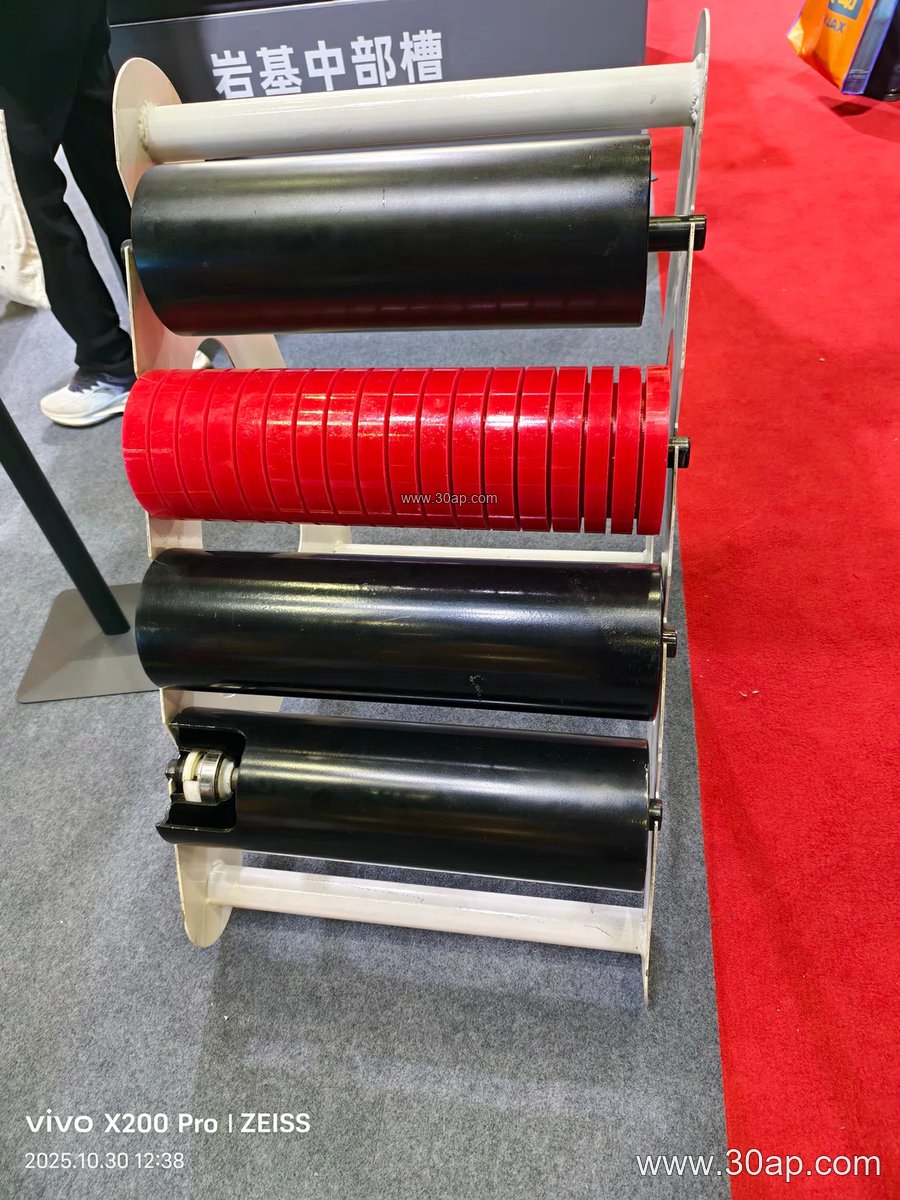
Construction and Working Principle
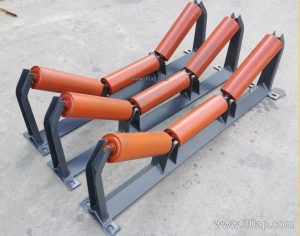
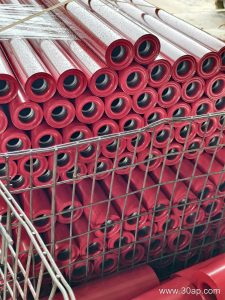
The assembly usually combines two or three rollers on a pivoting frame, with a central pivot pin and stops that limit swing. Rollers are commonly steel tube, and the shaft runs in sealed bearings such as 6204, 6205, 6305 or 6306, selected by load and speed rather than by belt width alone. A rubber disc or plain steel surface may be used depending on whether the return strand carries sticky fines.
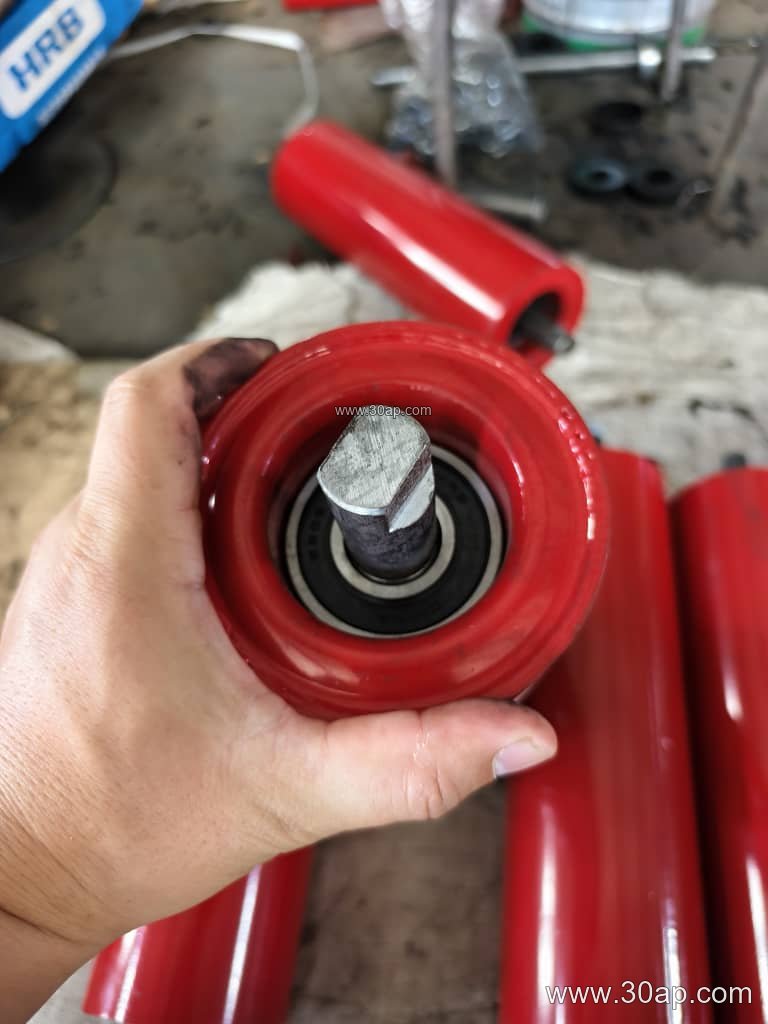
The training effect comes from friction and skew. As the belt contacts the angled rollers, the roller rotates and the frame swings so the roller axis is no longer square to the belt travel. The resulting friction component pushes the belt back to center. Vertical guide rollers or side rollers are often fitted to sense belt edge position and trigger the swing.
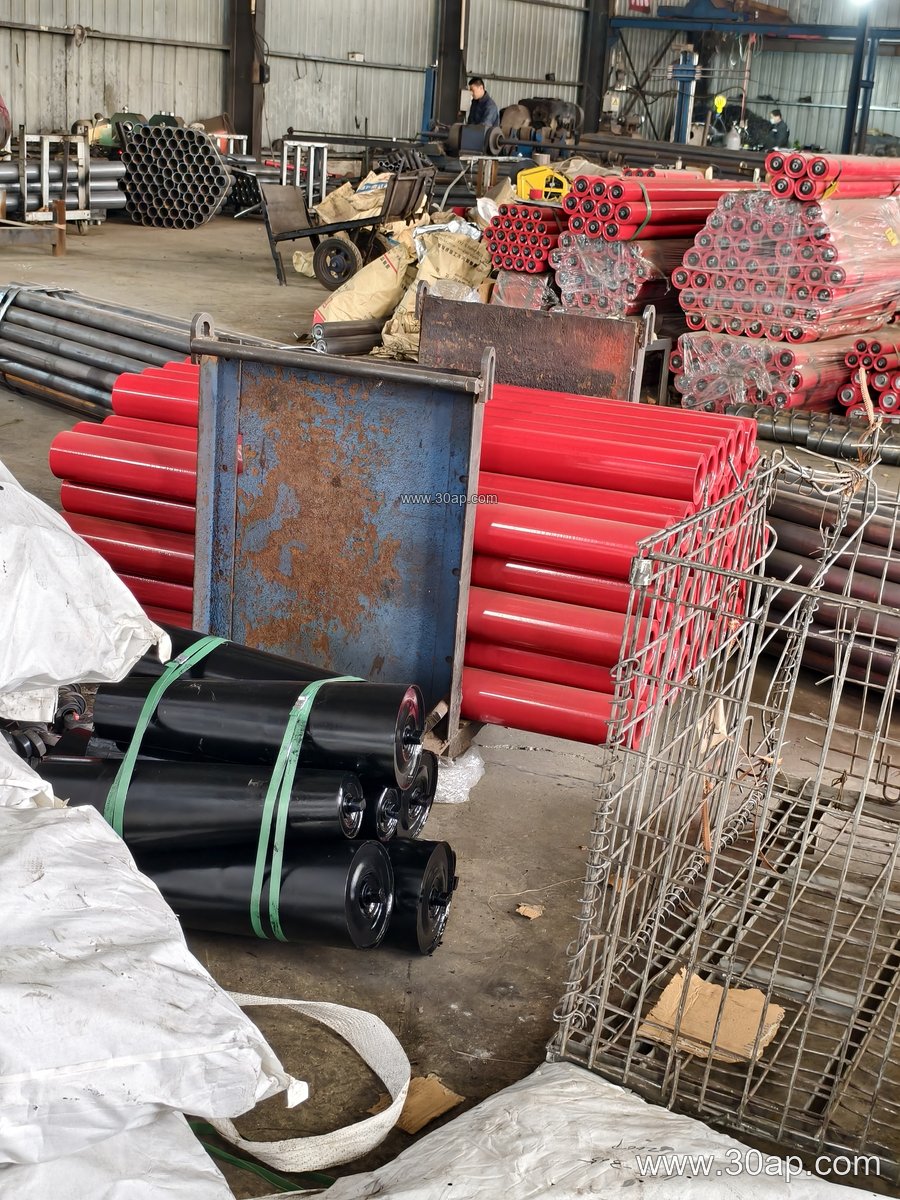
Where It Fits on the Conveyor
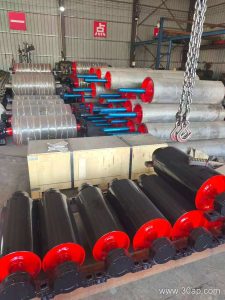
A return self-aligning idler is normally installed on the return run, spaced among the plain return idlers, often a short distance before the tail pulley or after a curve. It is not a substitute for a drive pulley, tail pulley or bend pulley, which have different duties at the ends and corners of the conveyor. It also differs from a carrying-side training idler, which contacts the loaded belt and must cope with material weight.
- Return strand tracking on long overland conveyors
- Boot end and take-up areas where belt wander is common
- Transfer points after a chute or feeder
- Curved sections in aggregate and ore handling lines
Common Sizes and Configuration Reference
Roller diameter and belt width are chosen together with the conveyor design, not as a fixed pair. The table below gives typical reference values only; final sizes should follow the conveyor specification.
| Item | Common reference values |
|---|---|
| Roller diameter | Ø89, Ø102, Ø108, Ø127, Ø133, Ø159 mm |
| Belt width | B650, B800, B1000, B1200, B1400, B1600 mm |
| Roller surface | Steel tube, rubber disc, nylon, ceramic |
| Bearing | 6204, 6205, 6305, 6306, 6308, 6310 |
| Roller length | Set by belt width, trough angle and frame form |
For example, a B800 conveyor may use a 315 mm roller length in a three-roll carrying set, but a return training idler may have a different roller length and frame. A B1000 line often uses around 380 mm in three-roll trough sets, while a B1200 line may use about 465 mm. These are common examples, not fixed rules, and side rollers can differ from the center roller.
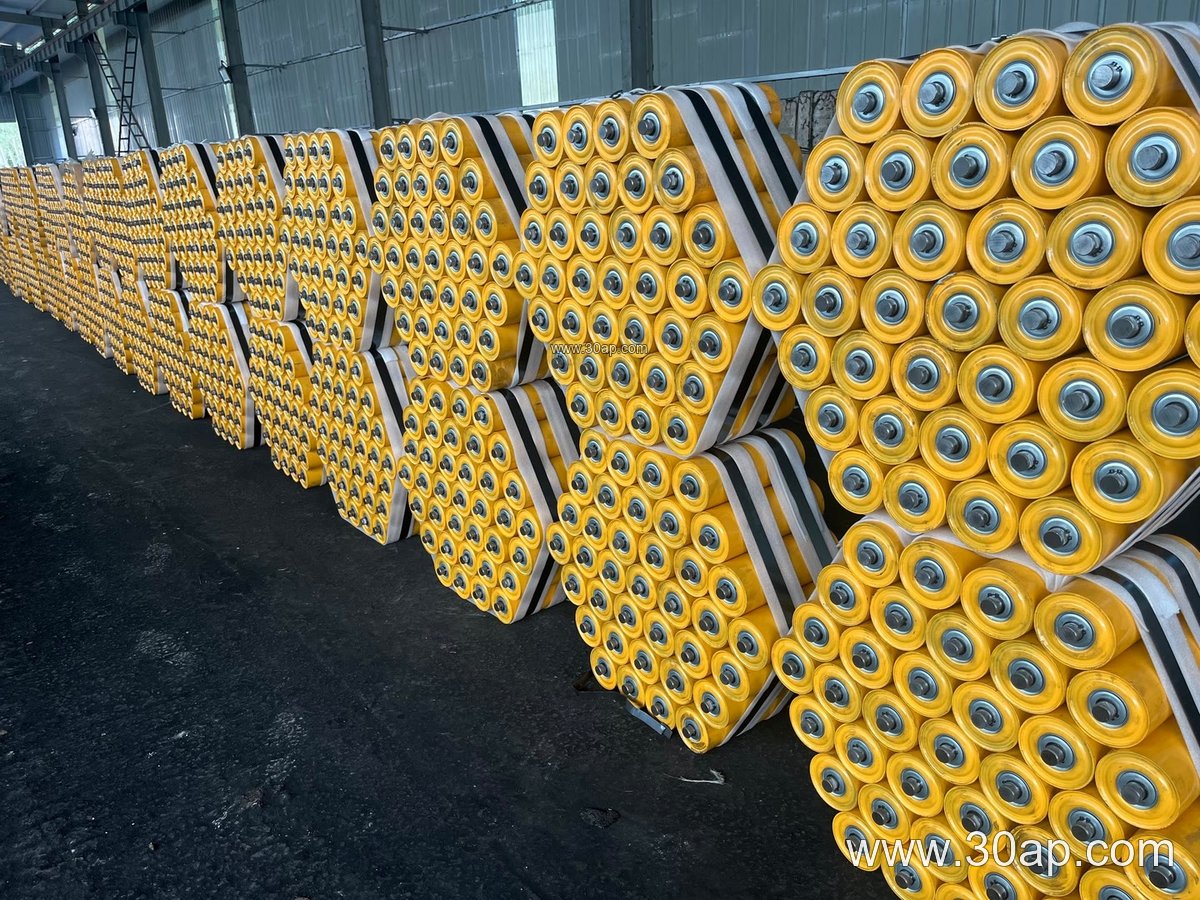
Buyer Checklist
Before ordering, confirm the belt width, return strand clearance, roller diameter, shaft end type and bearing size, and whether the frame must fit an existing conveyor bracket. Ask how the pivot is sealed and how much swing is allowed, since dust and fines in a coal plant or a limestone quarry can stiffen a poorly protected pivot. Check that the roller surface suits the material: rubber discs help with sticky carryback, while plain steel is easier to clean in dry aggregate service. Also confirm the mounting height so the idler supports the belt without lifting it off adjacent return rollers.
Regular inspection of the pivot, bearings and roller wear keeps the training action reliable. A return self-aligning idler is a small component, but on a busy conveyor it protects the belt, the pulleys and the structure from the cost of persistent misalignment.