What a Wear-Resistant Lagged Pulley Is
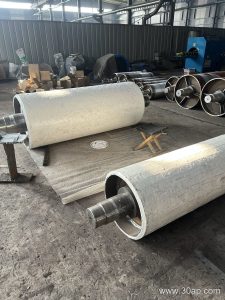
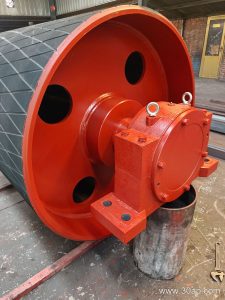
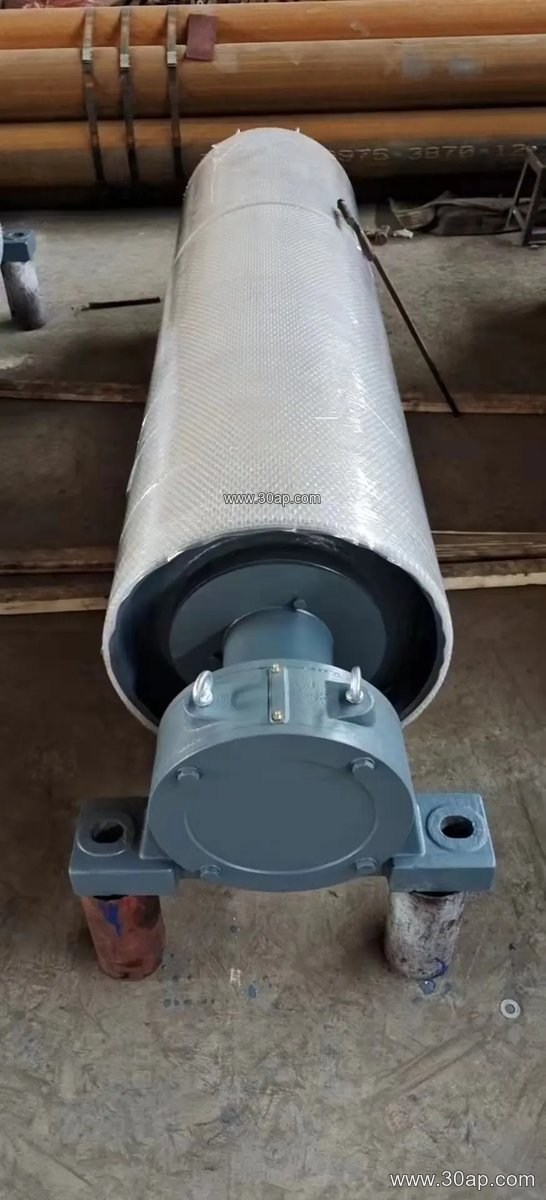
A wear-resistant lagged pulley is a conveyor pulley whose shell carries a rubber or ceramic lagging layer to protect the drum face and improve grip on the conveyor belt. In a sand and gravel plant or a cement clinker line, abrasive dust and sharp aggregate work on every rotating part. The lagging takes that punishment first, so the steel shell underneath keeps its shape and the belt keeps tracking. The same product is also called a rubber-lagged conveyor pulley or a lagged drum pulley, and those names describe the same component.
How the Lagging Is Built
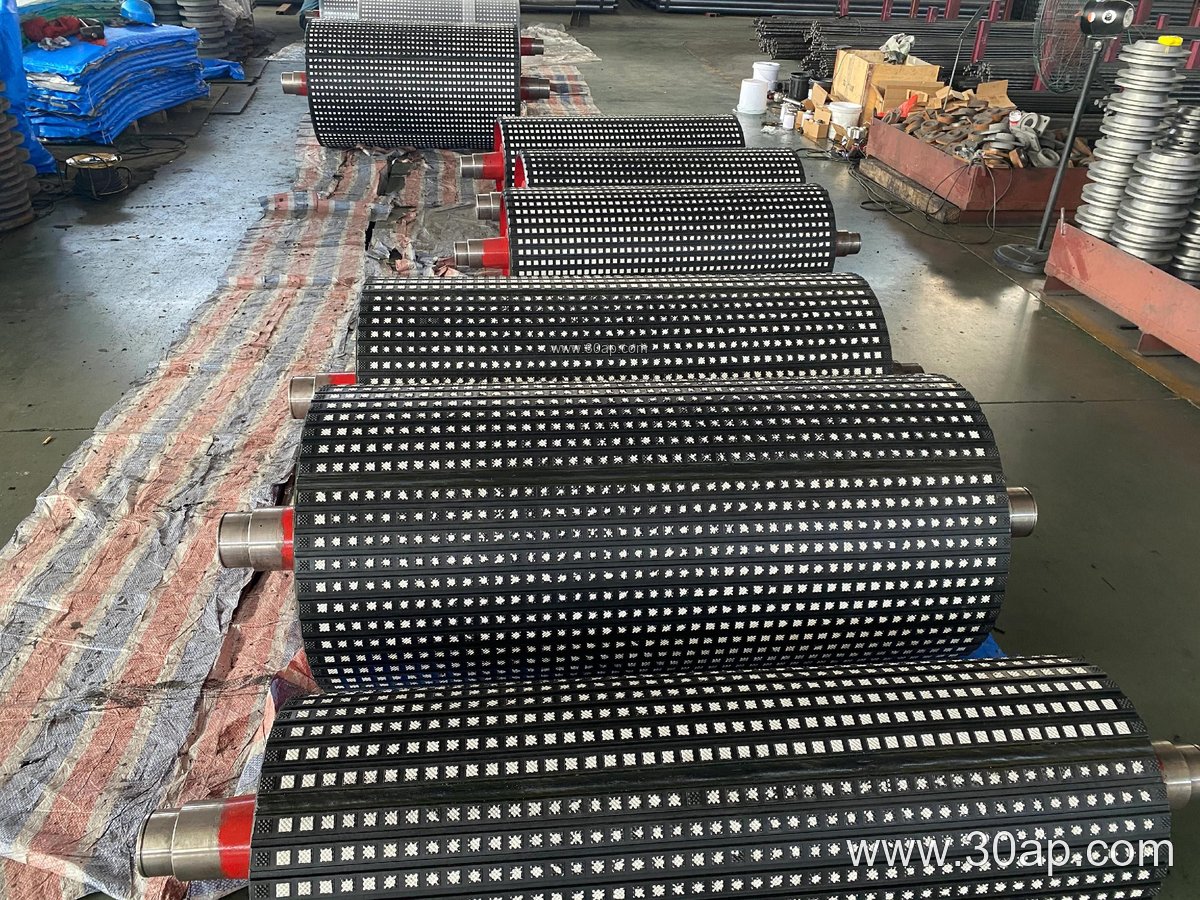
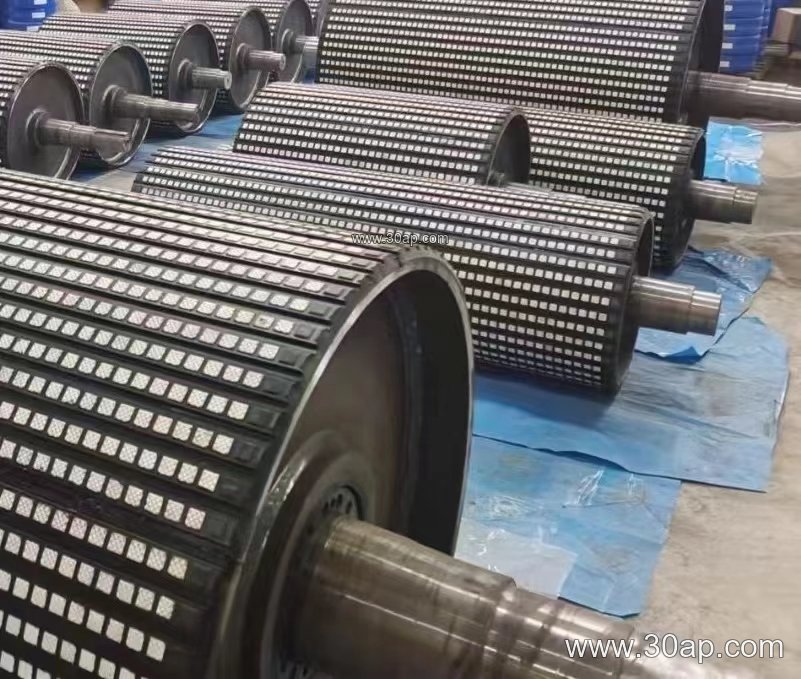
The shell is usually machined steel tube welded to end discs and a shaft. Lagging is then applied in one of several ways: hot-vulcanized rubber, cold-bonded rubber, cast rubber, diamond-grooved rubber, herringbone rubber, or ceramic tiles set in rubber. Common lagging thicknesses are 8, 10, 12, 15 and 20 mm. Thicker lagging suits high-torque drives and coarse, sharp material; thinner covers are often enough for a tail or bend position where the main job is belt support rather than power transmission.
Surface Forms and Where They Help
- Plain rubber lagging gives even contact and quiet running.
- Diamond lagging helps shed water and fines, which matters in a wash plant.
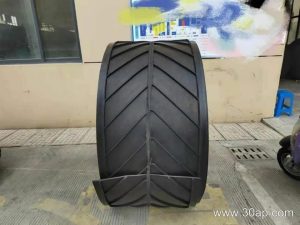
- Herringbone lagging pushes debris toward the pulley edges.
- Ceramic lagging resists severe abrasion on drive pulleys in iron ore or limestone service.
Where It Sits on the Conveyor
This is a drive-position component in most installations, because the lagging raises friction between the drum and the conveyor belt. That extra grip reduces slip when a fully loaded belt starts under a stockpile or a crusher discharge. A tail pulley and a bend pulley are separate subtypes with different duties: the tail pulley turns the belt at the loading end, and the bend pulley changes belt direction along the run. A wear-resistant lagged pulley is not a replacement name for either of them, though a plant may specify lagging on those positions too for abrasion protection.
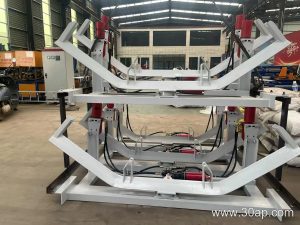
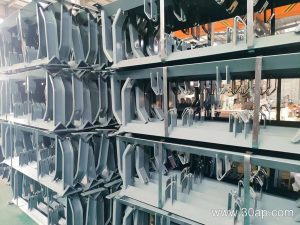
Typical sites include quarries, limestone mines, coal preparation plants, power station coal handling, port bulk terminals, and concrete batching plants. The conveyor belt, idler roller and conveyor bracket all work with the pulley, so alignment across the whole frame affects how long the lagging lasts.
Common Size References
Dimensions below are reference values, not fixed pairings. Diameter and shaft size follow torque, belt tension and load, and the shell face width usually runs wider than the belt.
| Belt width | Typical pulley face width | Example diameter range | Common lagging thickness |
|---|---|---|---|
| B400 | about 500 mm | Ø200 to Ø400 | 8 to 12 mm |
| B650 | about 750 mm | Ø250 to Ø500 | 8 to 15 mm |
| B800 | about 950 mm | Ø315 to Ø630 | 10 to 15 mm |
| B1000 | about 1150 mm | Ø400 to Ø800 | 10 to 20 mm |
| B1200 | about 1400 mm | Ø500 to Ø1000 | 12 to 20 mm |
| B1400 | about 1600 mm | Ø630 to Ø1250 | 12 to 20 mm |
| B1600 | about 1800 mm | Ø800 to Ø1400 | 15 to 20 mm |
| B1800 | about 2000 mm | Ø1000 to Ø1600 | 15 to 20 mm |
| B2000 | about 2200 mm | Ø1250 to Ø1800 | 15 to 20 mm |
Shaft diameters are commonly Ø50, Ø60, Ø70, Ø80, Ø90, Ø100, Ø120, Ø140, Ø160, Ø180 and Ø200, chosen from calculated load rather than belt width alone. Useful combinations such as B800 x Ø500 or B1200 x Ø1000 appear in real layouts, but no single belt width locks the pulley to one diameter.
What a Buyer Should Check
Confirm the mounting position first, since a drive pulley needs more grip than a bend pulley and may justify ceramic or thick rubber lagging. Match the lagging surface to the material: wet, sticky feed favors grooved patterns, while dry abrasive rock favors hard rubber or ceramic. Ask for the shell face width against the actual belt, verify shaft and bearing fit with the conveyor bracket drawing, and check that the lagging can be replaced without scrapping the drum. Finally, review belt cleaner and skirt contact points, because poor cleaning at the loading zone sends carryback into the pulley face and wears lagging faster than the material itself.
Regular inspection of lagging thickness, edge wear and groove depth keeps a wear-resistant lagged pulley in service longer and protects the conveyor belt it drives.