What the Carrying Idler Does on a Belt Conveyor
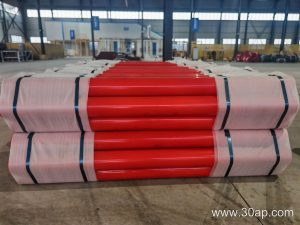
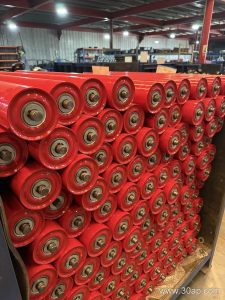
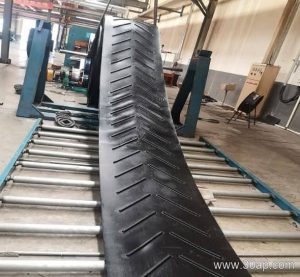
A conveyor belt carrying idler is the rotating roller assembly that supports the loaded run of the belt and shapes it into a trough. On a typical belt conveyor, these units sit on the load-carrying side of the frame and hold the conveyor belt up while material moves from the loading point to the discharge end. In a quarry, a coal preparation plant, or a cement kiln feed line, the carrying idler is often the most numerous component on the whole machine.
It is easy to confuse this item with other rollers on the same conveyor. The carrying idler works on the top strand, while the return idler supports the empty belt underneath. Drive pulleys, tail pulleys, and bend pulleys are different parts of the conveyor pulley family and are not interchangeable with any idler. Recognizing that difference matters when a maintenance team orders spare parts.
How a Carrying Idler Is Built
A carrying idler is usually made of a steel tube shell, a shaft, bearing housings, and sealed bearings. The shell is often called the roller body. Common roller surface options include plain steel pipe, nylon, ceramic, and rubber rings, depending on whether the user wants abrasion resistance, low friction, or extra grip. Bearing sizes such as 6204, 6205, 6305, 6306, 6308, and 6310 appear across different roller diameters, but no single bearing is tied to one shell size by rule.
Three main elements define the assembly:
- The roller shell, which contacts the belt and takes the load
- The shaft and bearing arrangement, which allow free rotation
- The bracket or frame connection, which fixes the roller at the correct angle
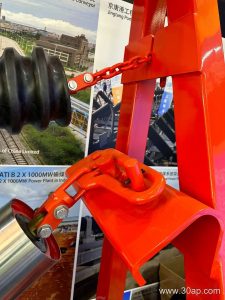
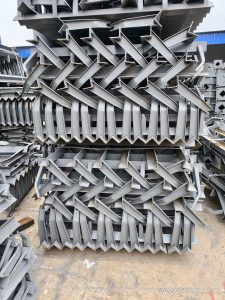
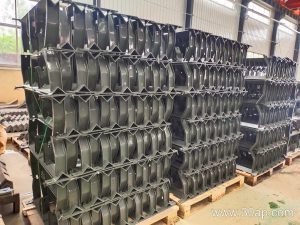
A conveyor bracket holds the idler in place and sets the trough angle. The bracket type and the roller length must match the belt width and the intended trough profile, so the two are normally selected together.
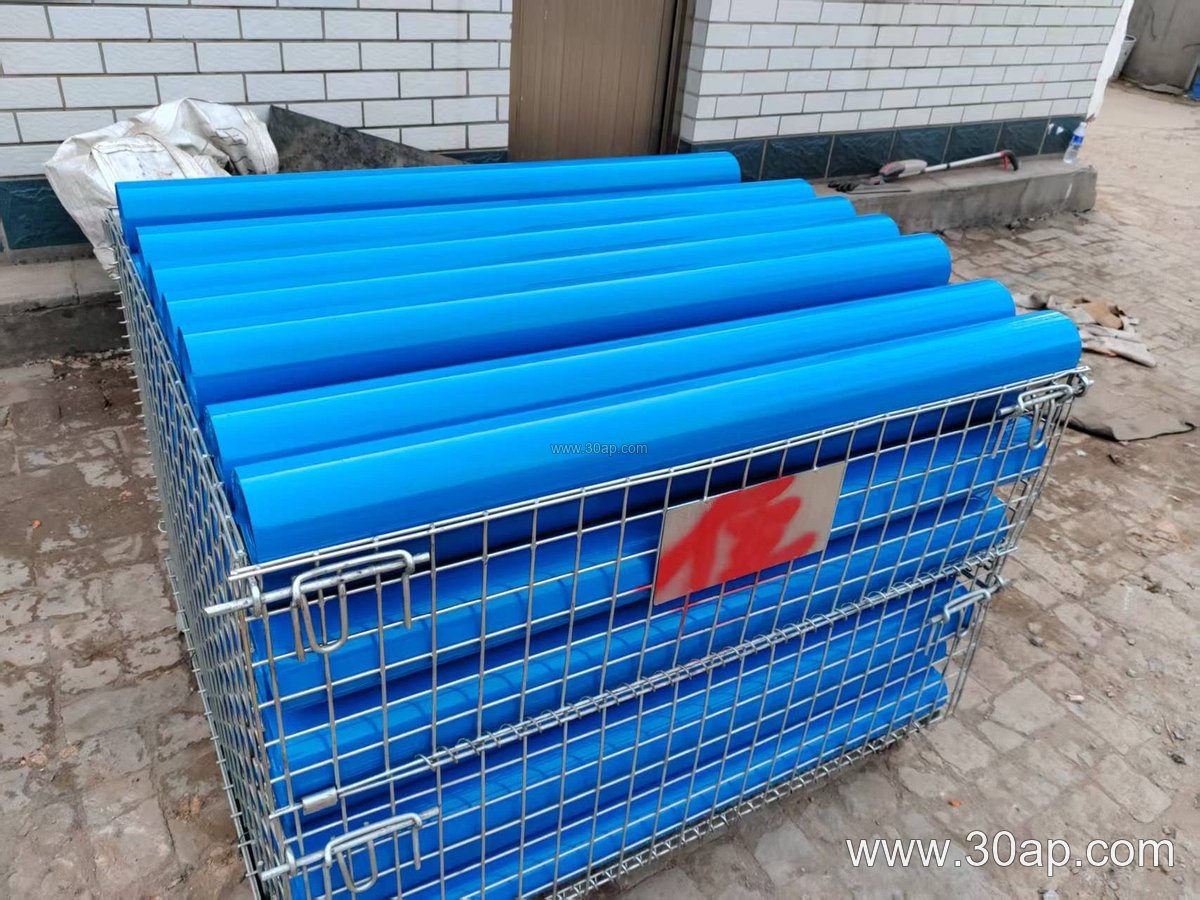
Common Types and Their Place in the Line
Carrying idlers appear in several forms. A single-roller flat idler is used where the belt runs flat. A two-roller or three-roller troughing set is used where the belt must be shaped into a trough to hold bulk material. A transition idler is placed near a pulley to ease the belt from flat to trough. Impact or buffer idlers, including rubber-ring buffer types, are installed at loading points to absorb the fall of lump material.
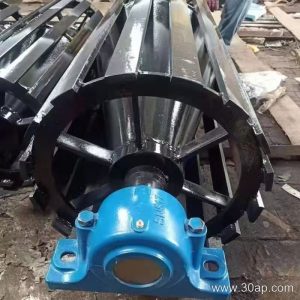
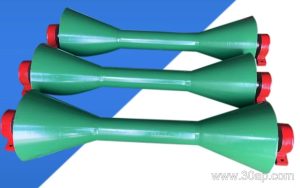
Self-aligning variants, such as friction self-aligning and tapered self-aligning idlers, are used on long runs where belt tracking is a concern. These are still carrying idlers; they simply add a correcting action. A spiral or comb-type roller may appear in sticky material handling, but it is a different design choice rather than a replacement for a standard troughing idler.
Where Carrying Idlers Are Used
These rollers are found in almost every bulk material handling line. In a limestone quarry or an iron ore concentrator, they support the conveyor belt through crushing and screening circuits. In a power plant coal yard, they carry the belt that feeds the boiler bunkers. In a cement plant, they handle clinker and raw meal. Sand and gravel plants, fertilizer granulation lines, and tunnel muck removal systems also rely on them.
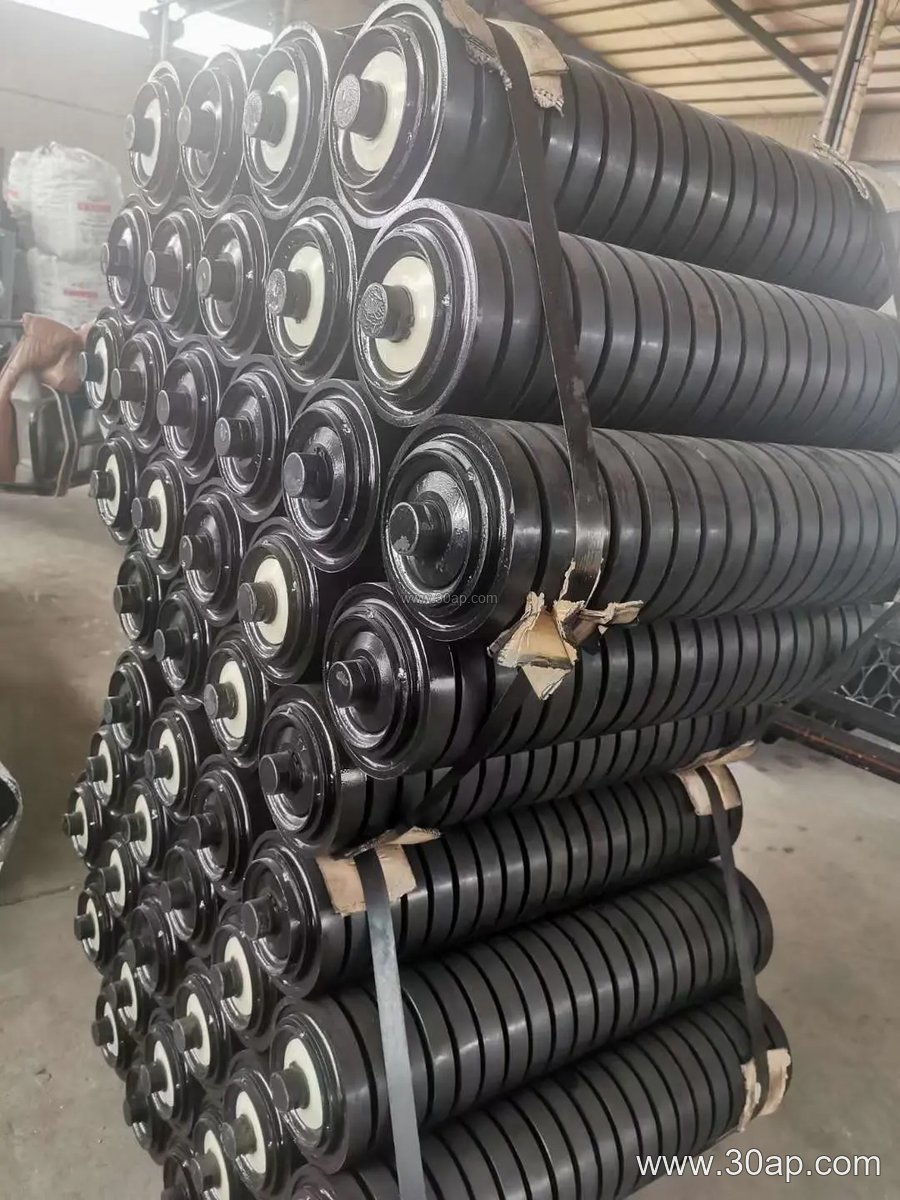
The working environment decides the surface and sealing choice. Dusty, wet, or abrasive conditions call for better bearing protection and a suitable roller surface. The goal is always the same: keep the belt moving with low friction and steady support.
Dimensions a Buyer Should Confirm
Roller diameter and belt width are the first two figures to check. Common roller diameters include Ø63, Ø76, Ø89, Ø102, Ø108, Ø127, Ø133, Ø159, Ø178, Ø194, and Ø219. Belt widths commonly run from B400 up to B2400. These are reference ranges, not a fixed pairing; a given belt width can be served by more than one roller diameter depending on load and speed.
Trough angle is another key number. Common angles are 20, 30, 35, and 45 degrees. A forward tilt of about 1.5 to 2 degrees is sometimes used on self-aligning or training idlers. Roller length changes with belt width, trough angle, and the number of rollers in the set. For a three-roller troughing set, typical roller lengths are roughly 200 mm at B500, 250 mm at B650, 315 mm at B800, 380 mm at B1000, 465 mm at B1200, 530 mm at B1400, 600 mm at B1600, 670 mm at B1800, and 750 mm at B2000. The side rollers and the center roller can differ, so these figures are examples rather than a rule.
| Parameter | Common Options |
|---|---|
| Roller diameter | Ø63, Ø76, Ø89, Ø102, Ø108, Ø127, Ø133, Ø159, Ø178, Ø194, Ø219 |
| Belt width | B400, B500, B650, B800, B1000, B1200, B1400, B1600, B1800, B2000, B2200, B2400 |
| Trough angle | 20°, 30°, 35°, 45° |
| Roller surface | Steel pipe, nylon, ceramic, rubber ring |
| Bearing | 6204, 6205, 6305, 6306, 6308, 6310 |
Selection and Maintenance Notes
When choosing a carrying idler, match the roller to the belt width, the material load, and the operating environment. Check that the shaft fits the conveyor bracket and that the bearing seal suits the dust and moisture level. During service, listen for noisy rollers, watch for a belt that wanders, and inspect for seized bearings. Replacing a worn carrying idler early is usually simpler than repairing the belt damage that follows.
For any project, the final specification should come from the conveyor design, not from a single table. The carrying idler is a small part, but it keeps the whole conveyor belt running smoothly in mines, power plants, cement works, and aggregate yards.