What the Head Pulley Does on a Conveyor
The belt conveyor head pulley sits at the discharge end of a conveyor and does two jobs at once. It drives the belt forward, and because of its position it also acts as the unloading point where material leaves the belt and falls into the next chute, screen, or stockpile. In a quarry or sand and gravel line, this single component often decides how smoothly the whole transfer point behaves.
In many plants the head pulley is also called the drive pulley or discharge pulley. Those names describe the same position and function, so a maintenance team may use any of them on a work order. A tail pulley, by contrast, turns freely at the loading end, and a bend pulley only changes belt direction. They are not interchangeable parts, even when they look similar on a shelf.
How the Head Pulley Is Built
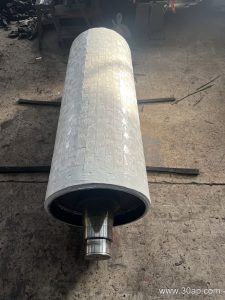
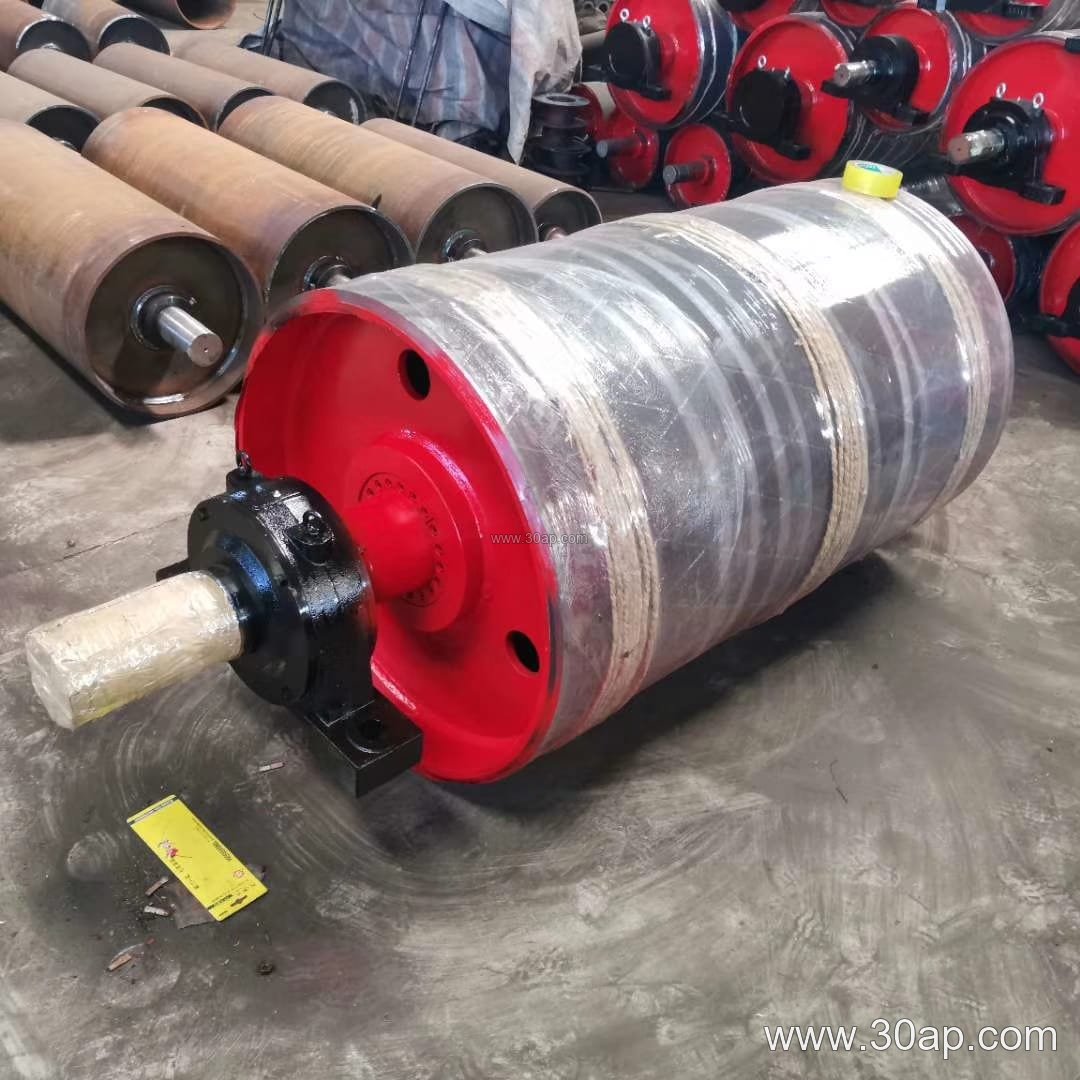
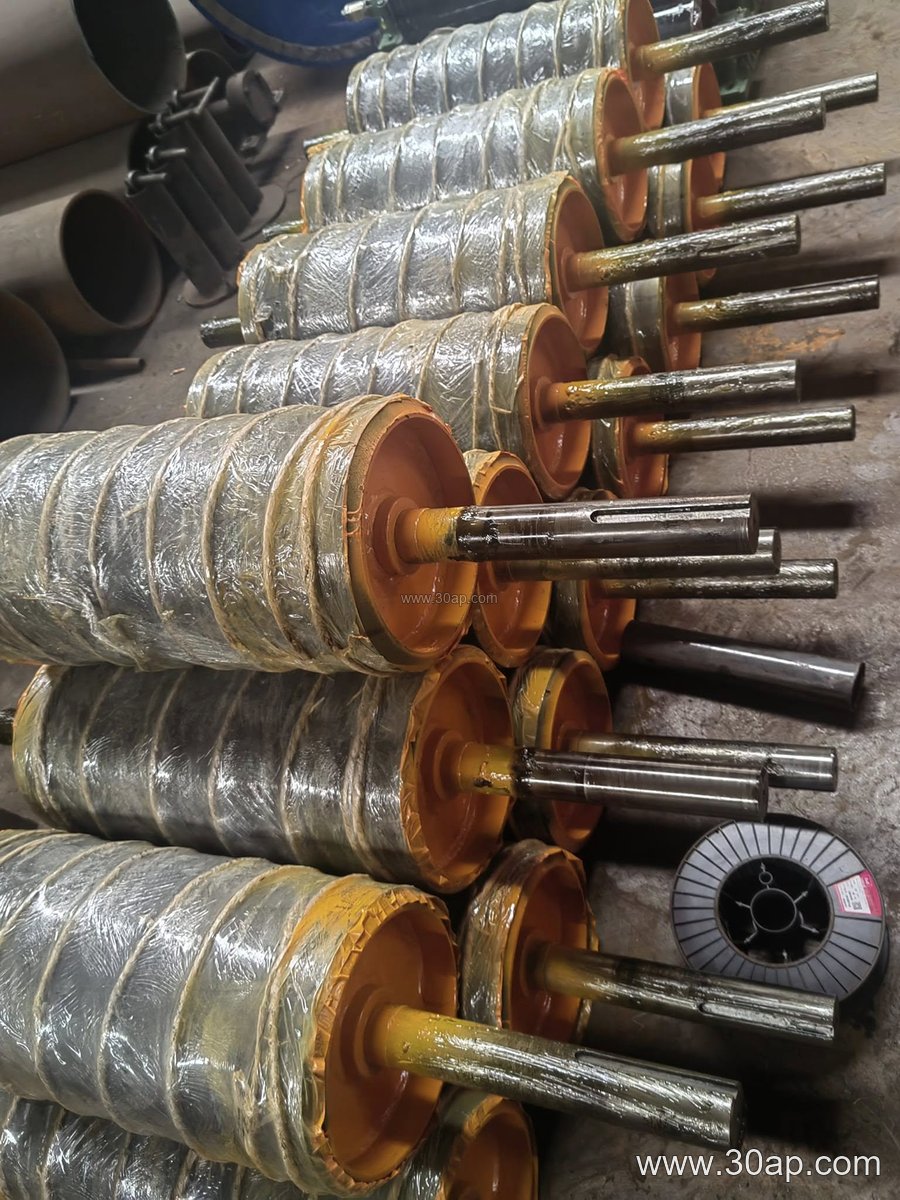
A typical belt conveyor head pulley is a cylindrical shell with end discs, a shaft, and bearing housings. The shell may be seamless pipe or rolled plate, and the shaft is sized by torque and load rather than by belt width alone. Common shaft diameters include Ø80, Ø100, Ø120, Ø140, and Ø160, but the final value comes from the drive calculation.
Surface treatment matters at the head station because torque has to pass from the pulley to the belt. Plain steel is used in light duty, while rubber lagging is common in dusty or wet conditions. Options include hot vulcanized rubber, cold bonded rubber, diamond grooving, herringbone grooving, and ceramic lagging. Lagging thickness is often 8 mm, 10 mm, 12 mm, 15 mm, or 20 mm depending on the duty.
| Item | Typical Range |
|---|---|
| Belt width | B500, B650, B800, B1000, B1200, B1400, B1600 |
| Pulley diameter | Ø250, Ø315, Ø400, Ø500, Ø630, Ø800, Ø1000 |
| Face width | About 100 to 200 mm wider than the belt |
| Shaft diameter | Ø60, Ø80, Ø100, Ø120, Ø140, Ø160 |
Face width is usually larger than the belt so the belt can track without rubbing the end discs. A B800 belt often runs on a pulley face near 950 mm, and a B1200 belt may use a face around 1400 mm. These are common references, not fixed pairings, because the same belt width can work with more than one pulley diameter.
Where It Fits in the Plant
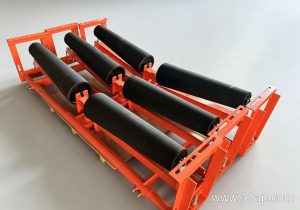
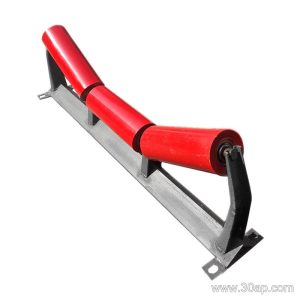
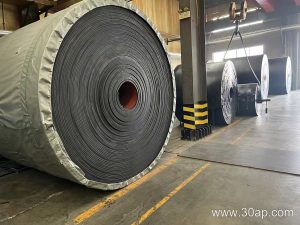
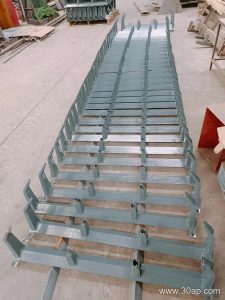
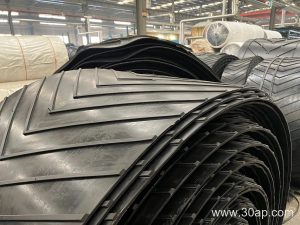
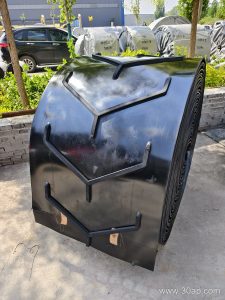
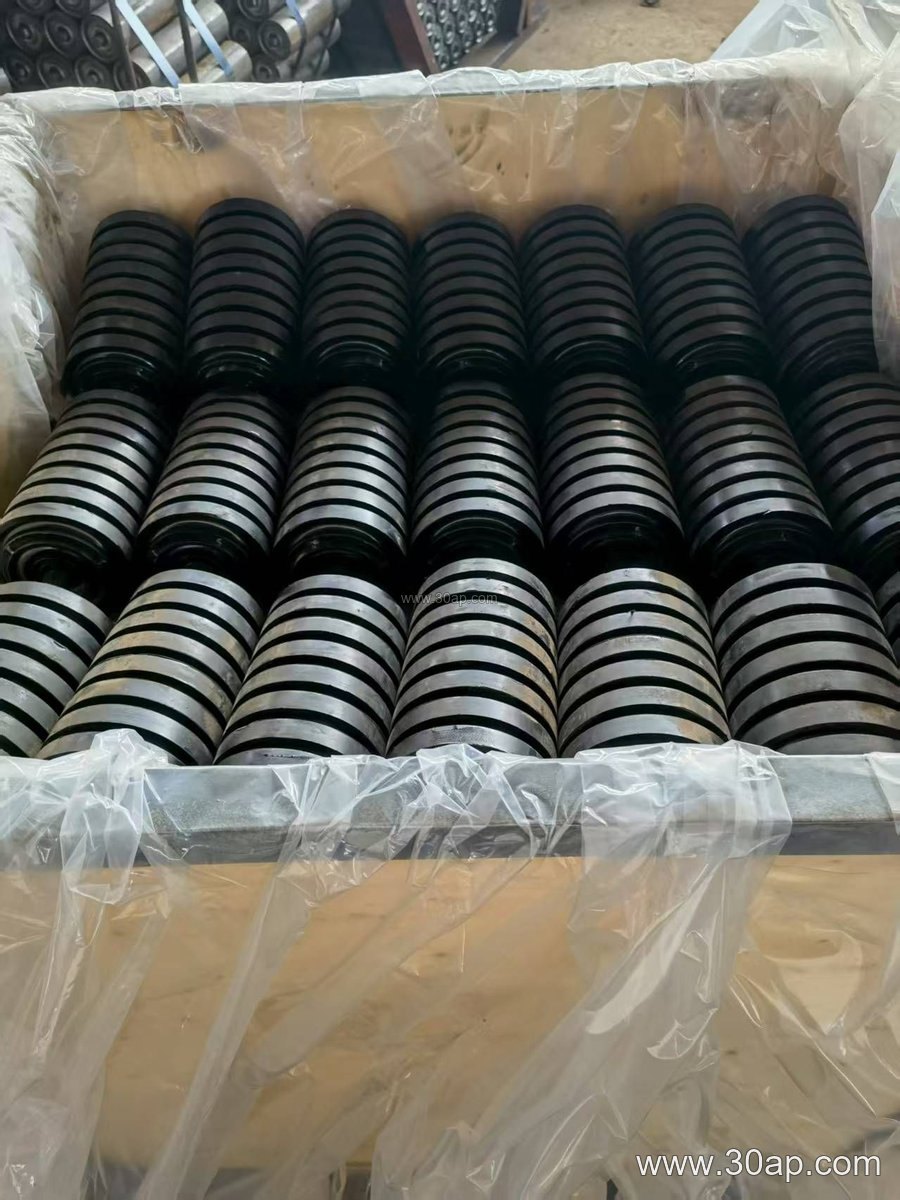
Head pulleys appear across bulk handling, including limestone mines, iron ore concentrators, coal preparation plants, cement clinker lines, power station coal yards, and port bulk terminals. In a crushing and screening circuit, the head pulley often discharges onto a vibrating screen. In a concrete batching plant or fertilizer warehouse, a smaller unit may feed a hopper or silo. The surrounding equipment usually includes the conveyor belt, idler rollers, conveyor brackets, and a conveyor pulley at the tail or take-up position.
Selection Points Buyers Should Check
- Confirm the belt width and the required face width, not just the pulley diameter.
- Match the lagging type to the material and moisture level; wet or oily conditions usually call for grooved or ceramic lagging.
- Check the shaft diameter against the actual torque and bearing load instead of copying a size from another conveyor.
- Decide whether a plain head pulley, an integrated motorized pulley, or a separate drive with a gearbox best suits the layout.
- Review the bearing type, sealing, and lubrication access, especially in dusty quarry or cement service.
- Ask how the pulley will be balanced and how the lagging will be bonded before shipment.
A B1200 × Ø1000 drive pulley and a B800 × Ø500 unit serve very different duties, and neither size should be treated as a universal rule. The right choice comes from the duty, the belt tension, and the space available at the head end.
Maintenance and Wear
Lagging wear, belt slippage, and material buildup are the usual reasons a belt conveyor head pulley is taken out of service. Regular inspection of the lagging surface, the bearing temperature, and belt tracking helps avoid unplanned stops. When the lagging is worn smooth, re-lagging is often more economical than replacing the whole pulley, provided the shell and shaft remain within tolerance.
For any project, the final pulley drawing, lagging specification, and shaft size should follow the current technical file supplied with the order, since site conditions and duty vary from one conveyor to the next.