What a Carbon Steel Idler Is and Where It Fits
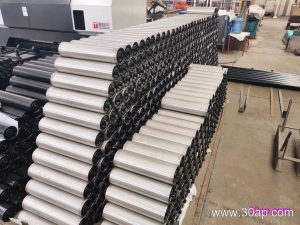
A carbon steel idler is the load-bearing roller that supports a conveyor belt along its carrying and return runs. In a quarry, a coal preparation plant, or an aggregate crushing line, these rollers sit under the belt and keep it tracking smoothly. The idler roller is not a drive pulley, a tail pulley, or a bend pulley; those are separate components that transmit power or change belt direction. A carbon steel idler simply rotates with the belt, carrying material weight and reducing friction.
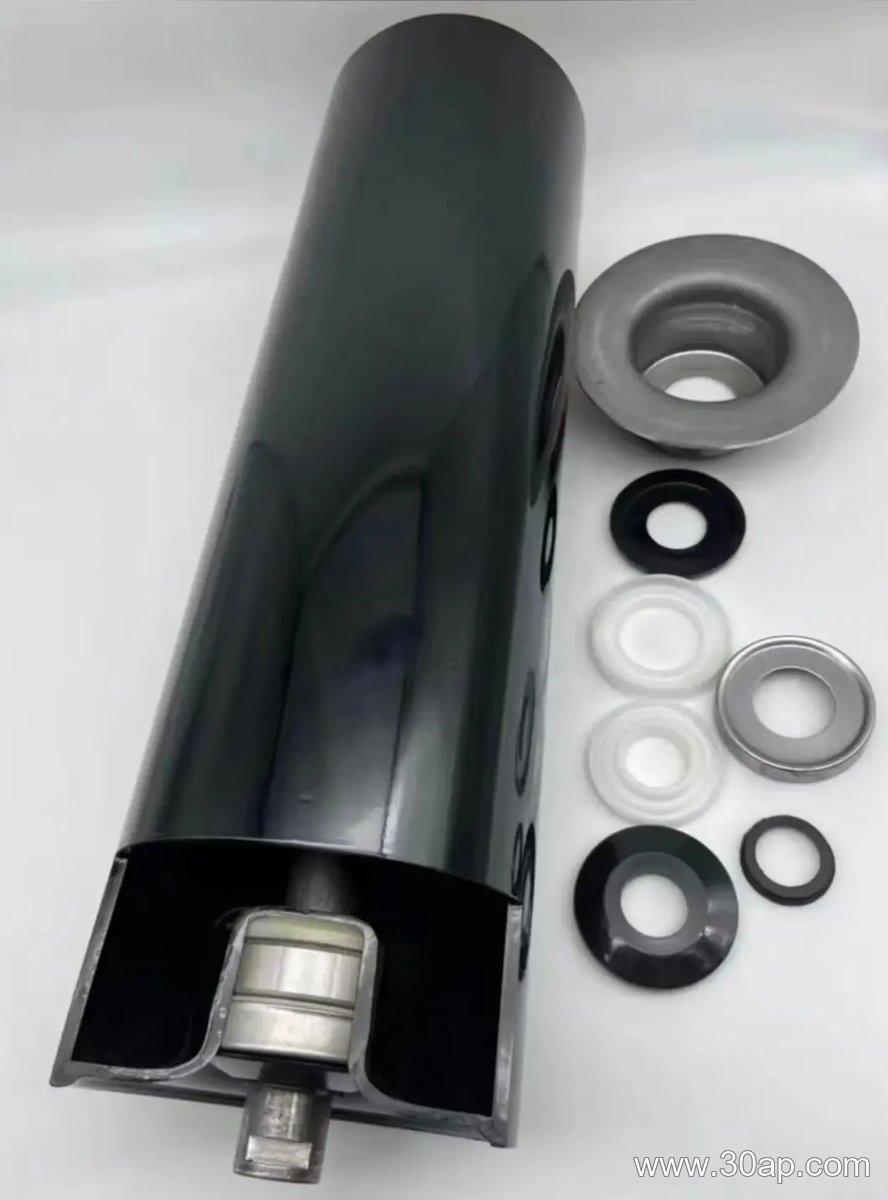
The tube is usually made from welded carbon steel, fitted with bearing housings at each end. Shafts are commonly cold-drawn or turned steel, and end caps are pressed or welded into the tube. The steel grade matters less than wall thickness, straightness, and dynamic balance, because a wobbly idler wears the belt edge and shortens bearing life.
Common Types and Roller Sets
Carbon steel idlers are supplied in several arrangements to match belt width and material behavior.
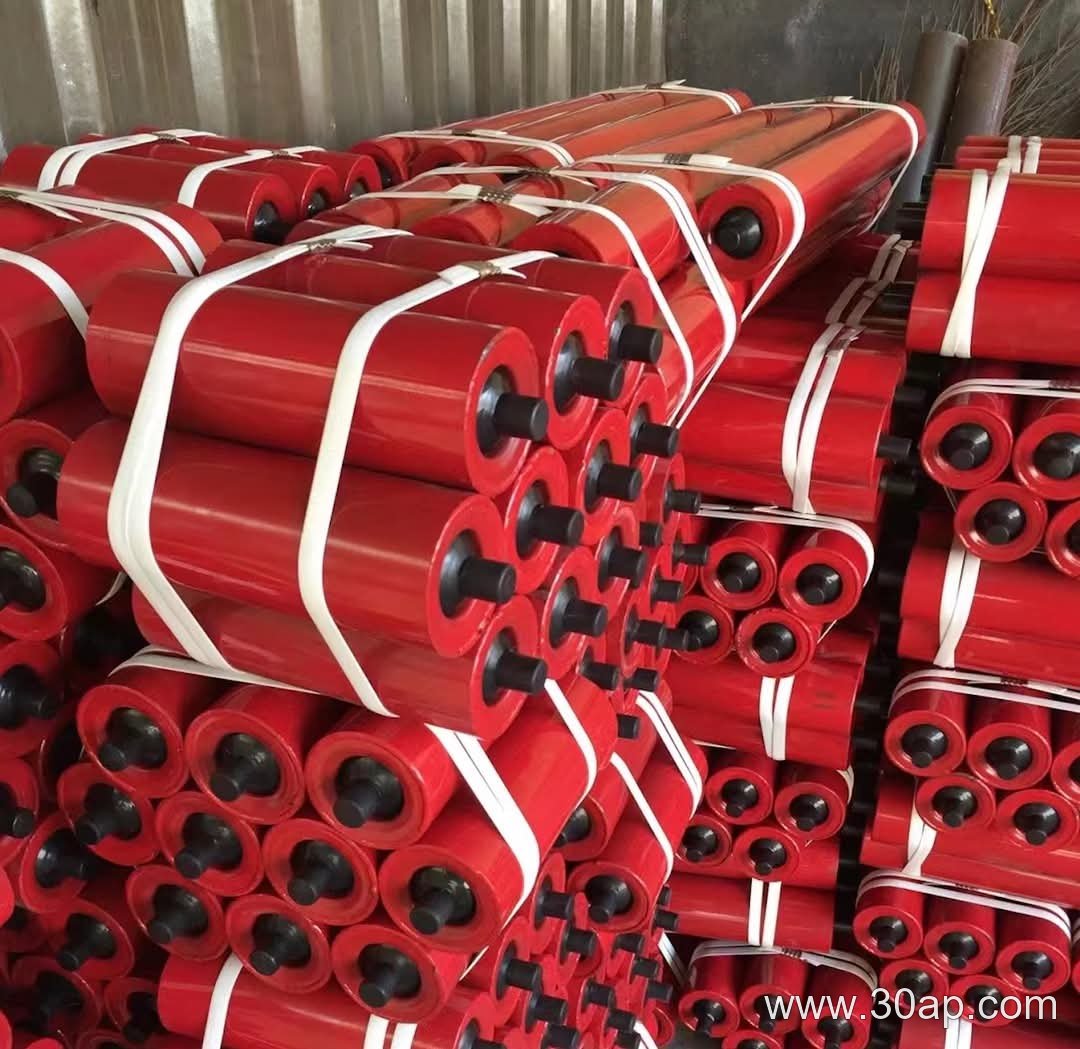
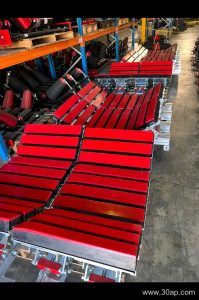
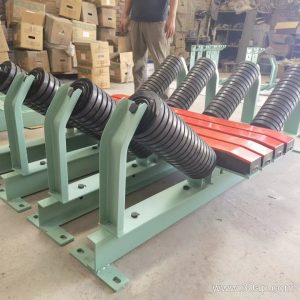
- Troughing idlers — single, two-roll, or three-roll sets that form the belt into a trough. Three-roll troughing idlers are common on wider belts.
- Return idlers — flat or V-shaped rollers that support the empty belt on the return strand.
- Impact idlers — rubber-disc or cushion rollers placed under the loading point to absorb falling material.
- Self-aligning idlers — friction or tapered types that correct belt drift on long runs.
- Spiral idlers — helical steel rolls used for sticky or wet material that tends to build up on the return side.
Each type may use different roller diameters, lengths, and bearing sizes. The choice depends on belt speed, load, and ambient conditions, not on a single fixed rule.
Typical Dimensions and Bearing References
Common roller diameters include Ø63, Ø76, Ø89, Ø102, Ø108, Ø127, Ø133, Ø159, Ø178, Ø194, and Ø219. Belt widths often referenced are B400 through B2400. Trough angle choices include 20°, 30°, 35°, and 45°. The table below shows common roller lengths for three-roll troughing sets; side rollers and center rollers can differ, so these are examples only.
| Belt Width | Typical Roller Length (mm) |
|---|---|
| B500 | 200 |
| B650 | 250 |
| B800 | 315 |
| B1000 | 380 |
| B1200 | 465 |
| B1400 | 530 |
| B1600 | 600 |
| B1800 | 670 |
| B2000 | 750 |
Bearings are frequently 6204, 6205, 6305, 6306, 6308, or 6310, but a given bearing number is not tied to one roller diameter. Selection should follow load rating and sealing requirements.
Surface and Sealing Choices
The roller surface may be plain steel, nylon-coated, ceramic-coated, or fitted with rubber discs for impact absorption. In dusty conditions such as a cement plant or a coal handling system, labyrinth seals and grease retention are critical. A carbon steel idler with a poor seal will fail early even if the tube is thick and straight.
Where Carbon Steel Idlers Are Used
These rollers appear in limestone mines, iron ore operations, power plant coal yards, sand and gravel pits, and tunnel muck removal. They are also found in fertilizer and grain handling, where belt cleanliness matters. The same basic steel roller can serve in a crusher discharge or a stacker, provided the diameter, bearing, and sealing suit the duty.
What Buyers Should Check
- Roller diameter and length must match the belt width and trough angle.
- Bearing size and seal type should fit the dust and moisture level.
- Shaft end design must match the conveyor bracket or frame.
- Tube wall thickness and straightness affect runout and belt wear.
- Balancing quality matters at higher belt speeds.
A carbon steel idler is a simple part, but it works hard. Matching it to the conveyor, the material, and the environment is what keeps a belt running straight and quiet.