What a PLC-Controlled Hydraulic Belt Tracker Does
A PLC-controlled hydraulic belt tracker is an automatic belt alignment system that combines hydraulic actuation with programmable logic control. It is designed to correct conveyor belt misalignment on the carrying or return side of a conveyor, where the belt tends to drift toward one side of the frame. Rather than relying on fixed training idlers or manual adjustment, the system detects belt position, processes the signal in a PLC, and commands hydraulic cylinders to reposition a tracking roller or steering frame. This closed-loop approach suits heavy-duty installations in mining, coal preparation, cement plants, power station coal handling, quarries, aggregate yards, and steel works, where a drifting conveyor belt can damage edges, spill material, and shorten the life of idlers and pulleys.
The tracker is sometimes described as a PLC-controlled hydraulic conveyor belt alignment device. Both names refer to the same product: a hydraulically driven, PLC-supervised belt tracker.
How the System Is Built
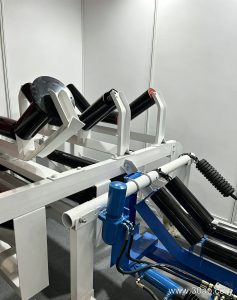
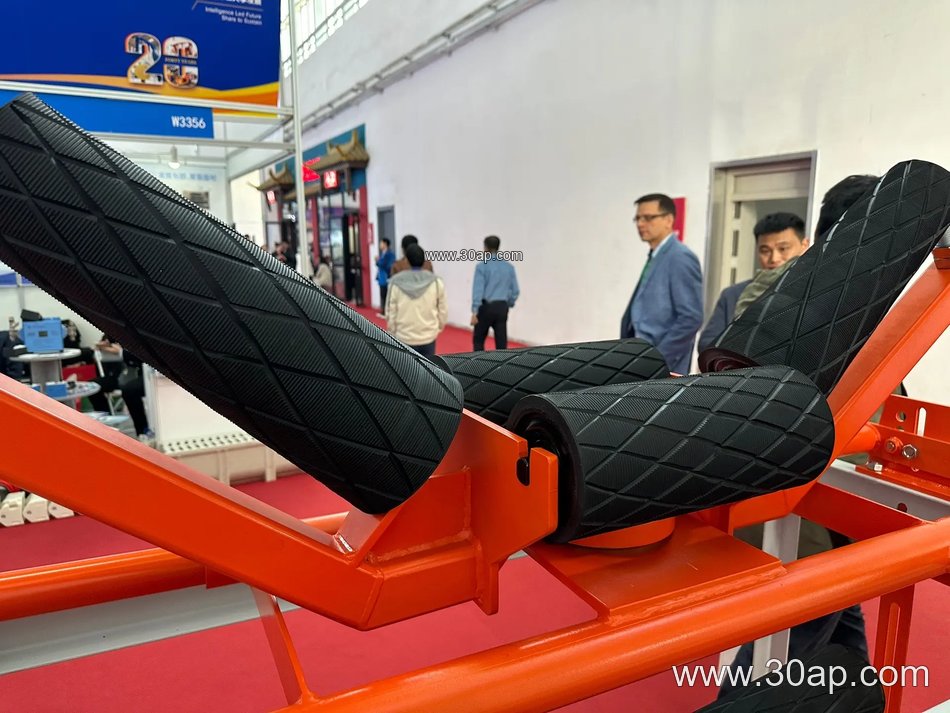
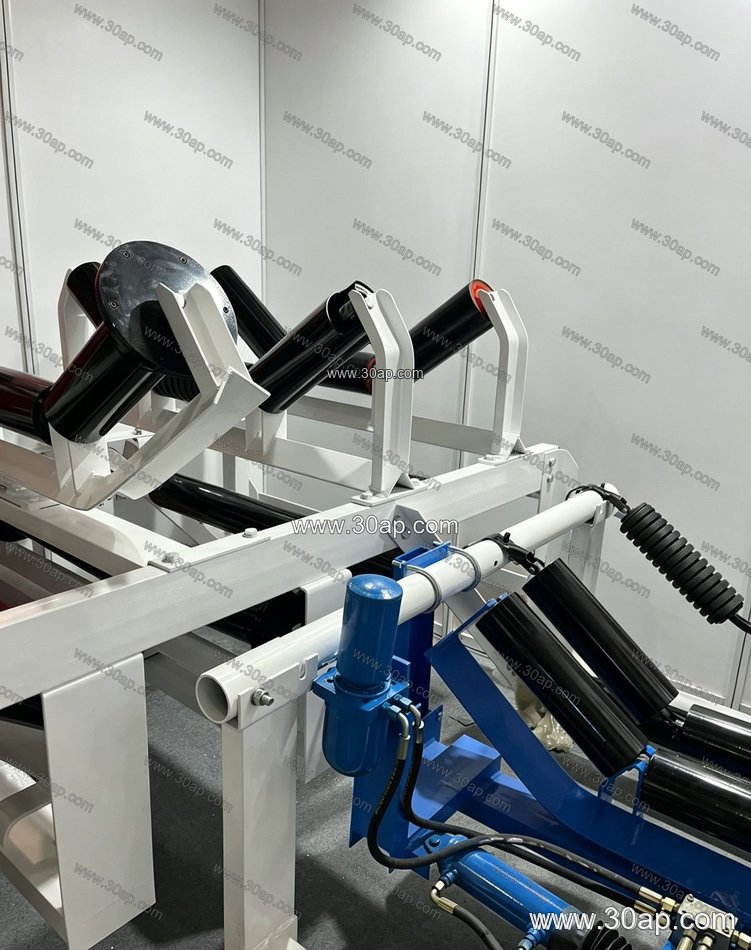
The assembly usually includes a sensing unit, a hydraulic power unit, control valves, one or more hydraulic cylinders, and a tracking frame that carries a roller or a short roller group. The sensing unit may use edge sensors, mechanical feelers, or position transducers. The PLC reads these signals, compares them with a target band, and drives the valve to extend or retract the cylinder. The tracking frame then applies a small steering action to the belt through contact with the belt surface or edge region.
- Hydraulic power unit with pump, tank, filter, and pressure relief
- Directional or proportional control valves
- PLC cabinet with operator interface and manual override
- Tracking frame, steering roller, and mounting bracket
- Position sensors and edge detection probes
Because the actuator is hydraulic, the tracker can generate substantial force in dusty, wet, or high-load conditions. The PLC layer adds repeatability and allows fault logging, limit setting, and remote monitoring when the plant network supports it. Mechanical and electric trackers remain common alternatives; a hydraulic PLC unit is often chosen where higher force or integrated automation is required.
Where It Fits in a Conveying Line
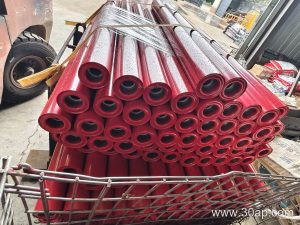
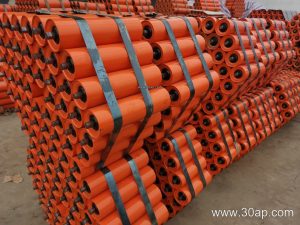
The tracker is commonly installed on the carrying run ahead of a transfer point, or on the return run where the belt has enough free length to respond. It works alongside the conveyor belt, idler roller, conveyor pulley, and conveyor bracket that make up the surrounding structure. On a long overland or underground mining conveyor, several tracking stations may be needed, but the exact number depends on belt length, belt speed, loading pattern, and the actual misalignment observed.
Typical service environments include:
- Coal mining and coal handling with flame retardant conveyor belt
- Cement and aggregate plants handling abrasive bulk material
- Power plant coal yards and limestone feed lines
- Iron ore, copper ore, and quarry conveyor systems
- Port stockyards and ship loading conveyors
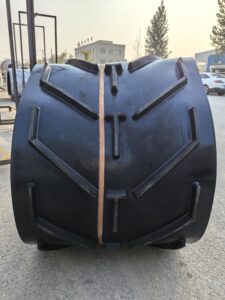
Where the belt is a steel cord conveyor belt or a heavy-duty fabric core type such as EP conveyor belt or NN conveyor belt, the tracker must be selected for the belt construction, tension, and stiffness. A thick, high-tension belt responds differently from a thin, flexible one, so the hydraulic force and steering geometry need to match the application.
Selection Details Buyers Should Confirm
Purchasing a PLC-controlled hydraulic belt tracker is not only a matter of belt width. The following information should be collected before quotation:
- Belt width, for example 800 mm, 1000 mm, 1200 mm, or 1600 mm
- Belt type and construction, including fabric core or steel cord
- Belt speed and running direction, including reversible operation
- Installation position: carrying side or return side
- Conveyor frame dimensions and available mounting space
- Hydraulic power availability and control voltage
- Required interface with the plant PLC or DCS
Parameters such as cylinder stroke, tracking force, response time, and sensor range should come from the actual product data for the selected model, not from belt width alone. A 1200 mm belt on one conveyor may need a different tracker from a 1200 mm belt on another if tension, speed, or frame design differs.
Maintenance and Safe Operation
Routine checks should cover hydraulic fluid level, filter condition, hose integrity, sensor cleanliness, and PLC alarm history. Dust and spillage around the tracking frame should be removed during planned shutdowns. Before any inspection or adjustment, stop the conveyor, isolate the drive, and lock out the hydraulic and electrical supplies. Do not touch moving belt edges, rollers, or cylinders while the conveyor is running. Observe belt tracking only from a safe position.
If misalignment persists after the tracker is installed, check for uneven loading, off-center material feed, damaged idlers, seized rollers, pulley misalignment, or a skewed belt splice. A PLC-controlled hydraulic belt tracker corrects belt drift, but it cannot compensate for every structural or loading fault in the conveyor.
For buyers comparing options, ask for the tracker’s control logic, sensor arrangement, hydraulic schematic, and mounting drawing. Matching these documents to the conveyor layout is more useful than comparing catalog numbers alone.