What a Bend Rubber Lagged Pulley Does
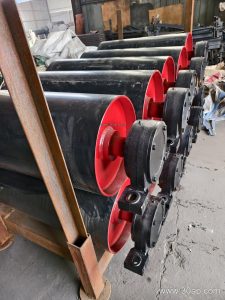
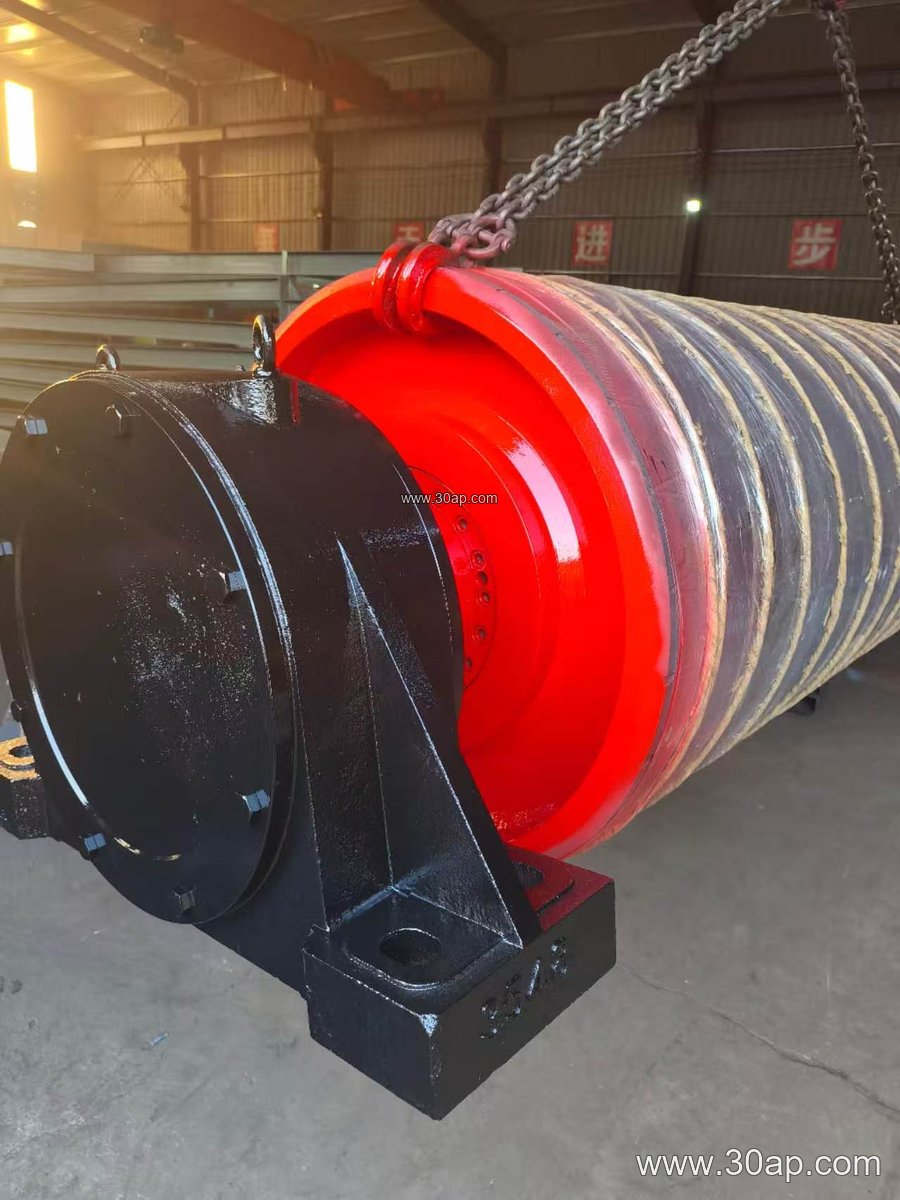
A bend rubber lagged pulley is a conveyor pulley placed at a change-of-direction point in the belt path, where the belt wraps the drum to gain wrap angle or to be routed around an obstacle. Unlike the drive pulley, it does not normally transmit the main driving torque; unlike the tail pulley, it does not sit at the loading end. Its job is to guide, tension, or redirect the belt smoothly while the rubber lagging protects both the drum shell and the belt cover.
Because the belt wraps the drum, friction and slip control still matter, but the priorities differ from a drive position. The lagging helps maintain traction on the belt back, cushions the carcass, and reduces the chance of belt tracking problems where the belt changes direction.
Construction and Lagging Options
The pulley is built around a welded or rolled steel shell with shafts, hubs, and end discs. The lagging is applied to the shell surface and is commonly available in several forms:
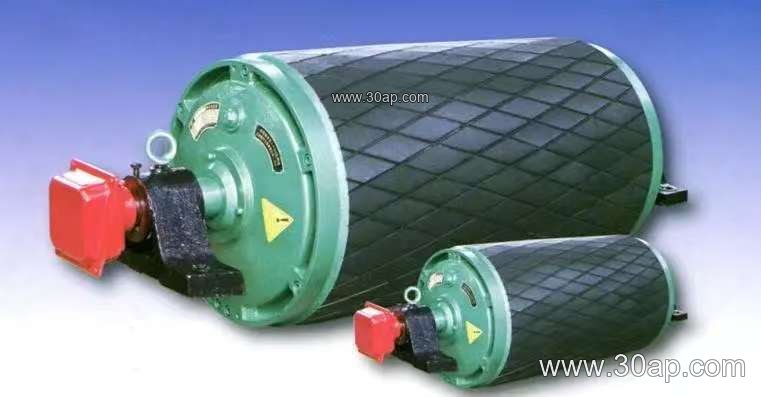
- Plain rubber lagging for general guidance duty
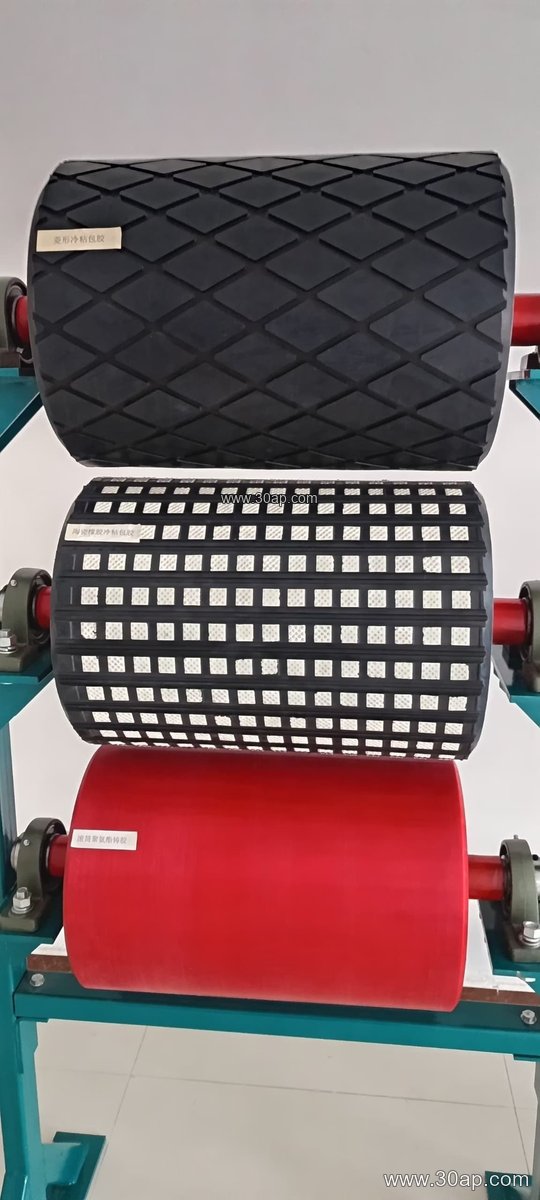
- Diamond pattern lagging for improved grip and water shedding
- Herringbone lagging for directional traction where needed
- Ceramic lagging for very abrasive or wet conditions
Common lagging thicknesses are 8, 10, 12, 15, and 20 mm, chosen according to belt tension and the amount of wrap. A bend pulley may be supplied with cold-bonded rubber or hot-vulcanized rubber, and the surface form should match the duty rather than simply copying the drive pulley specification.
Where It Fits in a Conveyor System
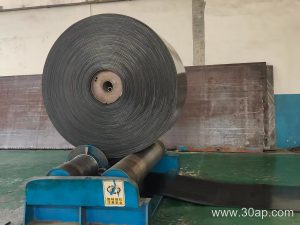
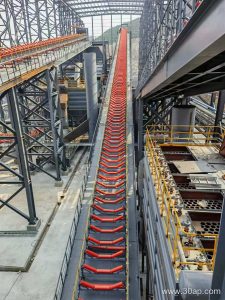
Bend pulleys appear in quarry and aggregate lines, cement plant clinker handling, power plant coal conveying, and port bulk terminals. In a long overland or inclined conveyor, a bend position is often used to route the belt around structures, to increase wrap on a drive pulley, or to shorten the return path. In a crushing and screening circuit, the same drum may be used to guide an abrasion resistant conveyor belt carrying crushed rock, while in a coal yard it may handle a flame retardant conveyor belt.
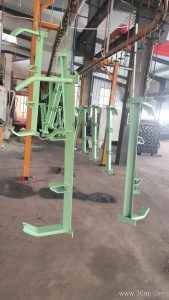
The pulley works together with the conveyor belt, the idler roller set, and the conveyor bracket that holds the bearing housings. A misaligned bracket or a worn idler roller can put extra side load on the bend pulley, so installation accuracy matters as much as the lagging itself.
Common Size Combinations and Reference Data
The shell width is usually wider than the belt to allow for mistracking. Reference values below are typical rather than fixed rules, and the final diameter and shaft size should be confirmed by the conveyor designer.
| Belt width | Typical shell face width | Example diameter pairing |
|---|---|---|
| B500 | about 600 mm | Ø315 or Ø400 |
| B650 | about 750 mm | Ø400 or Ø500 |
| B800 | about 950 mm | Ø500 |
| B1000 | about 1150 mm | Ø630 or Ø800 |
| B1200 | about 1400 mm | Ø1000 |
| B1400 | about 1600 mm | Ø800 or Ø1000 |
| B1600 | about 1800 mm | Ø1000 or Ø1250 |
| B1800 | about 2000 mm | Ø1250 |
Shaft diameters commonly fall in the range Ø50 to Ø200 mm, but the shaft is sized by torque and bearing load, not by belt width alone. A B800 bend pulley with a light duty may use a smaller shaft than a B800 unit on a heavy-duty mining conveyor belt line.
Buyer Checklist
Before ordering, confirm the belt width, the required wrap angle, the belt tension at that point, and the available space for the drum diameter. Specify the lagging type and thickness, the bearing type, and whether the pulley needs a keyed or shrink-disc shaft connection. For abrasive service such as iron ore or copper ore, ceramic or thick rubber lagging may be justified; for a clean food or grain application, a different cover grade may be more suitable.
Also ask how the pulley will be balanced and whether the lagging is bonded to a prepared shell surface. A bend rubber lagged pulley that is well matched to the belt and the structure will run cooler, track better, and last longer than one selected only by diameter.
Maintenance Notes
Inspect lagging wear at the edges, where belt mistracking often shows first. Check that the conveyor bracket bolts remain tight and that nearby idler roller bearings turn freely. If the belt begins to wander at the bend position, look at alignment and lagging condition before changing the drum. Replacing worn lagging on time protects the belt carcass and avoids unplanned stops in a quarry, cement plant, or coal handling system.