What the frame actually does
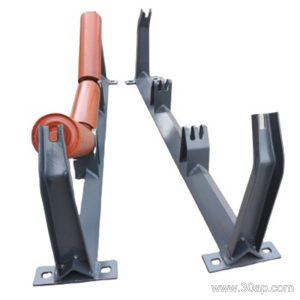
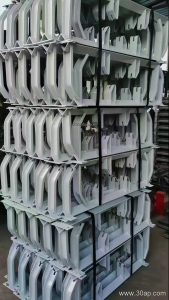
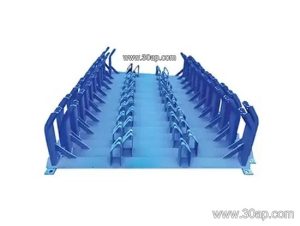
A Belt Conveyor Idler Frame is the steel support that holds the idler rollers in the correct position under the conveyor belt. It is not a glamorous part, but it sets the trough shape, keeps the rollers spaced evenly, and carries the load path from the belt into the conveyor structure. In a quarry, a cement plant or a coal handling system, a weak or badly aligned frame shows up quickly as belt wander, spillage and uneven roller wear.
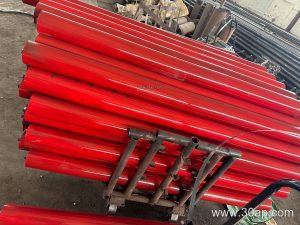
The frame works together with the conveyor belt and the idler roller set. The belt sits on the rollers, the rollers sit in the frame, and the frame bolts to the stringer or to a conveyor bracket on the main structure. If any of these three is out of line, the whole assembly suffers.
How it is built
Most frames are fabricated from angle steel, channel steel or folded steel plate. The cross beam length, the mounting hole spacing and the roller cradle positions are all determined by belt width, trough angle and roller diameter, so they vary from one design to another rather than following one fixed number.
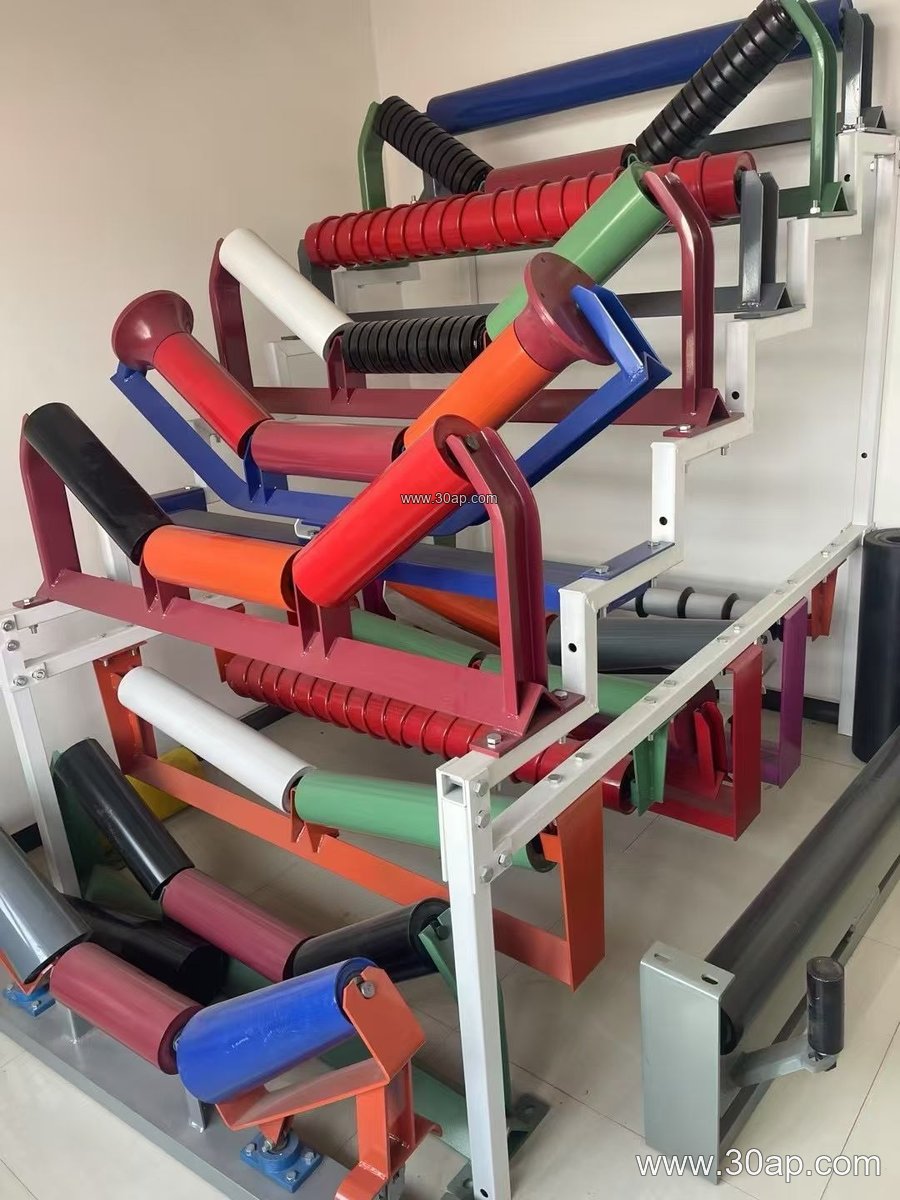
Common structural forms include:
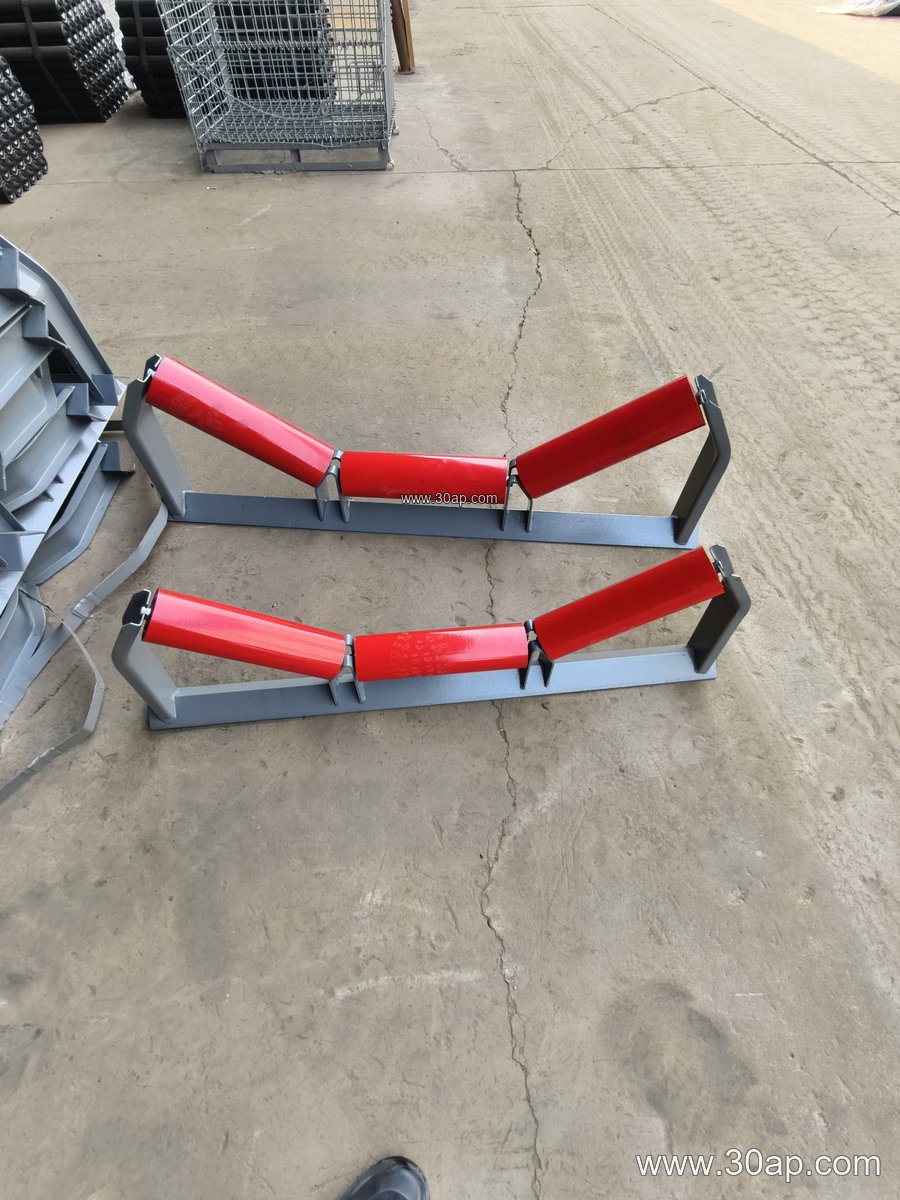
- Troughing frame for the carrying side, usually with 20, 30, 35 or 45 degree trough angles
- Transition frame near the pulleys, where the belt changes from flat to troughed
- Return frame, flat or V-shaped, supporting the belt on its way back
- Impact frame with cushion rollers below the loading point
- Self-aligning frame that helps correct belt tracking
- Adjustable frame that allows the trough angle to be changed on site
A typical combination might be written as B800, 35 degrees, Ø108, or B1200, 45 degrees, Ø133. These are reference examples, not fixed rules. A B650 line with 30 degrees and Ø89 rollers is just as normal in a small sand plant as a B1800 frame is in an iron ore terminal.
Where it is used
You will find these frames wherever bulk material moves on a belt. In a limestone quarry they sit under a crusher conveyor belt handling sharp rock. In a power plant coal yard they support the coal conveyor belt through long transfers. In a cement plant they carry clinker and raw meal, while in a fertilizer or grain silo the same basic frame may be built with smoother surfaces and better sealing against dust.
The choice of frame type often follows the material. A heavy-duty mining conveyor belt with a steel cord conveyor belt construction puts a different load on the frame than a lighter EP conveyor belt in a small aggregate line. Abrasion resistant conveyor belt and heat resistant conveyor belt applications also affect how often rollers and frames are inspected.
Matching frame, roller and belt
Buyers often ask for a frame by belt width alone. That is a useful starting point, but the frame also needs the roller diameter, the trough angle and the mounting arrangement. Common belt widths in the reference range run from B500 through B650, B800, B1000, B1200, B1400, B1600, B1800, B2000 and B2200, while roller diameters are usually Ø89, Ø108, Ø133, Ø159 or Ø194. The table below shows how these are often paired, but it should be treated as guidance, not a specification.
| Belt width | Typical trough angle | Common roller diameter |
|---|---|---|
| B500 | 20-30 degrees | Ø89 |
| B650 | 30 degrees | Ø89-Ø108 |
| B800 | 30-35 degrees | Ø108 |
| B1000 | 35 degrees | Ø108-Ø133 |
| B1200 | 35-45 degrees | Ø133 |
| B1400 | 35-45 degrees | Ø133-Ø159 |
| B1600 | 35-45 degrees | Ø159 |
| B1800 | 35-45 degrees | Ø159-Ø194 |
| B2000 and above | 35-45 degrees | Ø194 |
Forward-leaning frames, often around 1.5 to 2 degrees, are used to help centre the belt. Adjustable frames let the maintenance team fine-tune the trough angle between the common settings instead of replacing the whole unit.
What a buyer should check
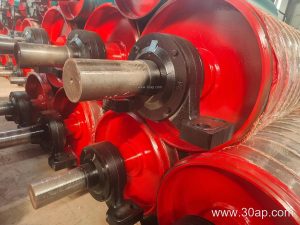
Before ordering, confirm the belt width, the roller diameter, the trough angle and the mounting hole spacing. Ask whether the frame is fixed or adjustable, and whether it is for the carrying side, the return side or a transition point. Check the steel section and the welding quality, because a frame that flexes will wear rollers faster. Also confirm that the frame is compatible with the conveyor pulley layout at the head and tail, since the transition distance affects belt stress.
On site, keep frames aligned and re-tighten bolts after the first weeks of running. A frame that is slightly out of square can cause the belt to drift, and no amount of roller adjustment will fully fix it. For long conveyors in mining or port service, a spare set of frames and a few idler rollers is a practical investment.
Whether the line runs an EP conveyor belt, a flame retardant conveyor belt underground or a pipe conveyor belt on a curved route, the idler frame remains the quiet base that keeps everything turning.