What a Spiral Return Idler Does on a Conveying Line
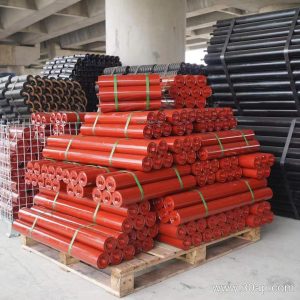
A spiral return idler is a lower-strand roller with a helical steel flight wrapped around its shell. Instead of a plain cylindrical surface, the roller presents a continuous spiral ridge that contacts the underside of the belt. The spiral promotes self-cleaning, because fines and sticky material that would otherwise build up on a smooth shell tend to be pushed sideways and fall away as the roller turns. In aggregate plants and quarry lines handling damp sand or crusher dust, that behavior can reduce the manual cleaning that plain return rollers sometimes need.
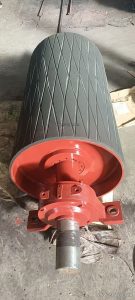
The product is also known as a helical return roller or spiral return roller, and these names describe the same item. It is a return-side component, so it should not be confused with a drive pulley, tail pulley or bend pulley, which are completely different parts of a conveyor drive system.
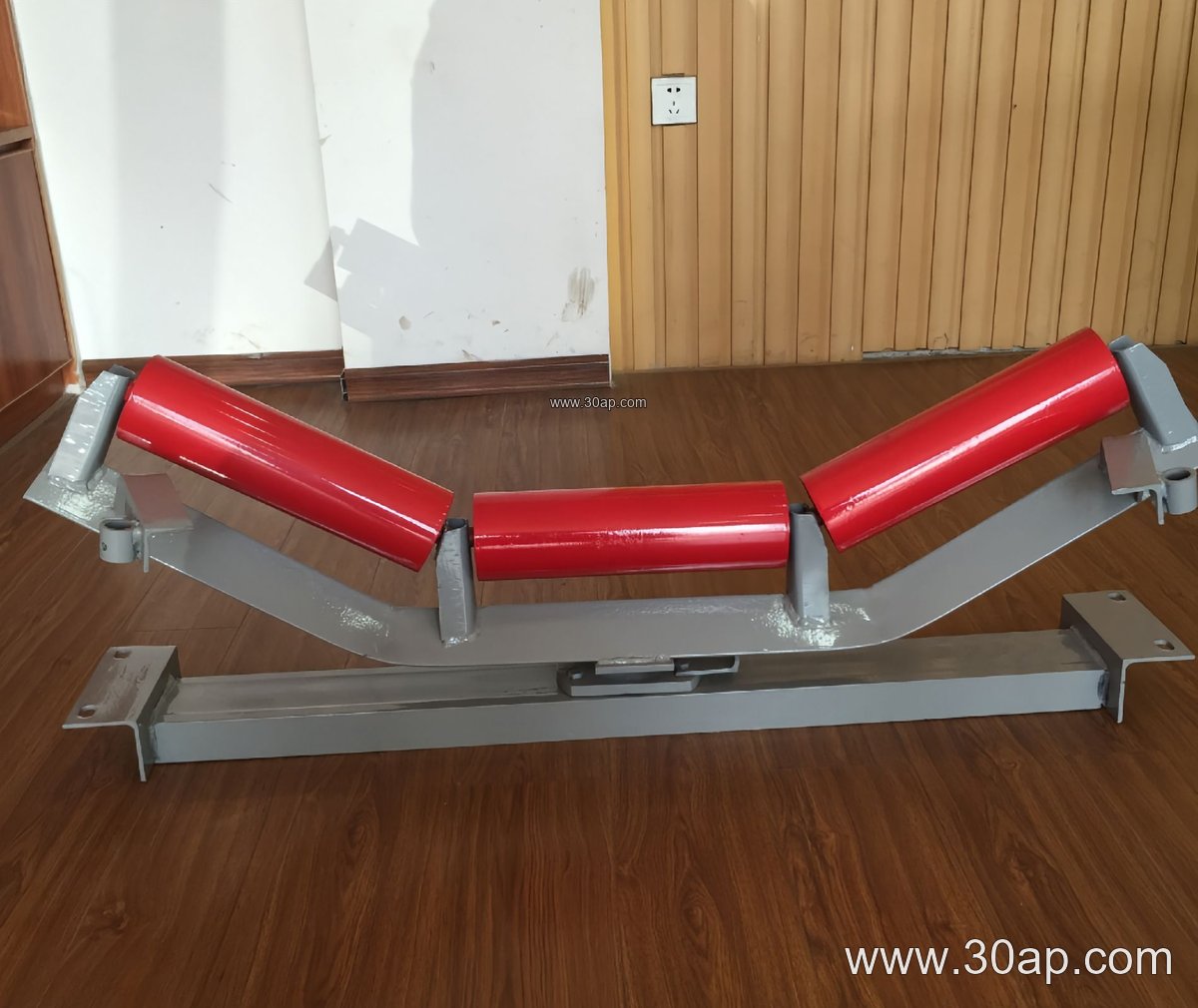
Construction and Working Principle
Most spiral return idlers combine a steel tube shell with a spiral flight welded or formed onto the outer surface. The shaft runs through the shell on bearing housings, and the end seals are the parts that decide how long the roller survives in a dusty environment. Common bearing sizes include 6204, 6205 and 6305 for lighter duties, with 6306, 6308 and 6310 appearing on larger roller diameters. Bearing selection should follow the actual load and speed rather than a fixed rule tied to belt width alone.
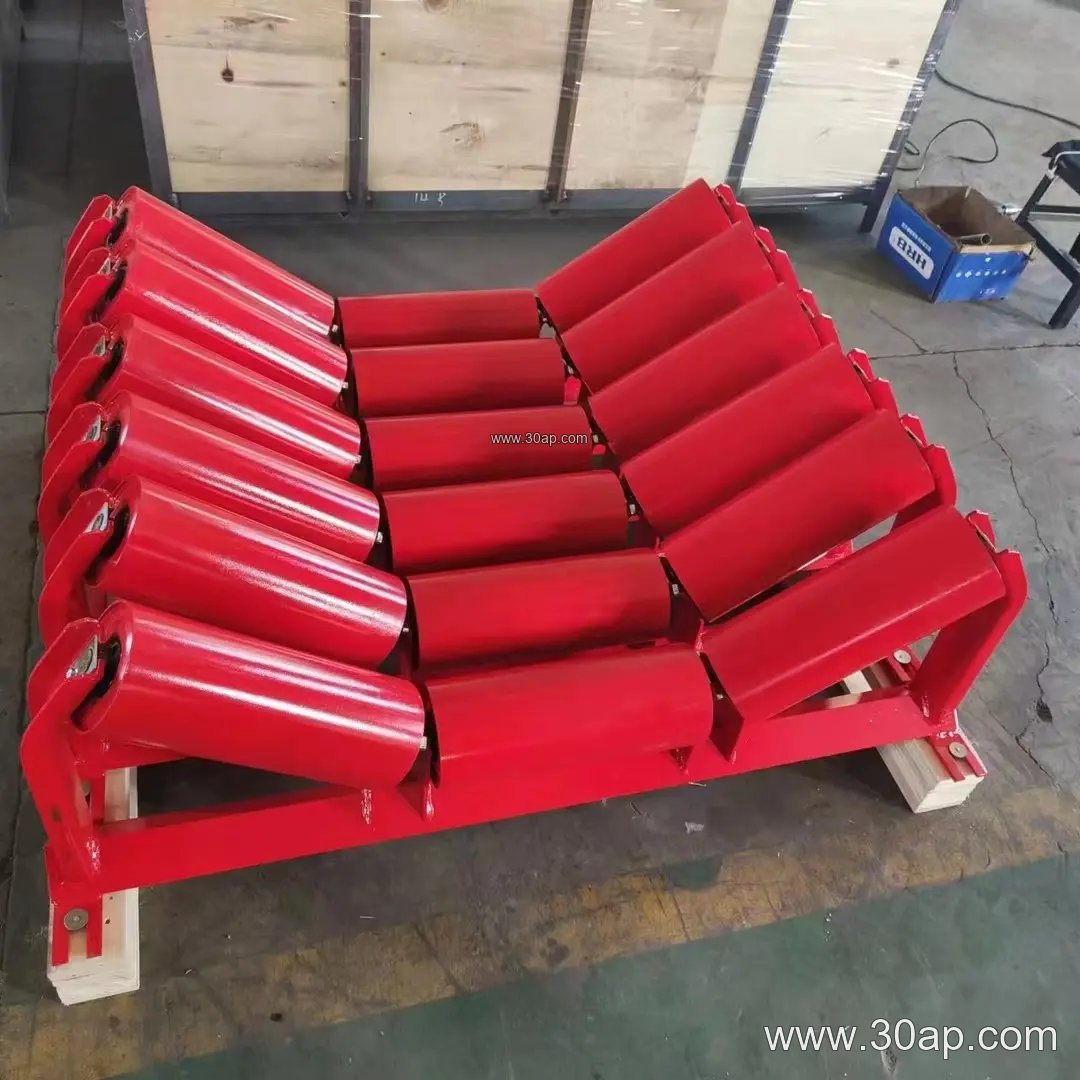
Typical roller diameters for return positions include Ø89, Ø102, Ø108, Ø127, Ø133 and Ø159 mm, with larger sizes such as Ø178 and Ø194 mm used on heavy installations. The spiral pitch and flight height vary by maker, and a coarse pitch generally clears material better while a fine pitch gives smoother belt support. Because the spiral touches the belt along a narrow band rather than a full face, belt contact pressure is higher than with a plain roller, so the belt cover quality matters. A robust Rubber Conveyor Belt or a heavy-duty Mining Conveyor Belt handles this contact pattern well, while a thin cover may wear faster.
Where Spiral Return Rollers Fit Best
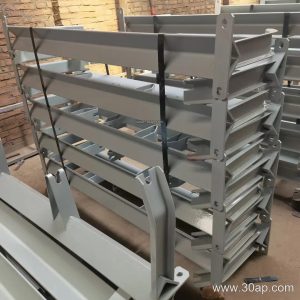
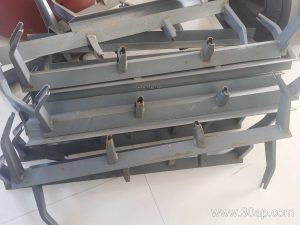
These rollers are usually mounted on the return strand of a belt conveyor, supported by a conveyor bracket or return frame in the same way as a standard flat return idler. Two settings suit them particularly well:
- Wet or sticky bulk handling. Sand and gravel lines, concrete batching plants and limestone quarries often see material carryback that cakes onto smooth rollers. A helical roller sheds much of it.
- Dusty transfer points in cement plants and power plant coal yards. Fine dust that passes the skirt rubber can accumulate on return rollers, and the spiral shape limits that buildup.
They are not a replacement for a training idler when belt misalignment is the real problem, and they are not a substitute for a bend pulley at a curve in the conveyor route. Use them where cleaning and material shedding are the priorities.
Sizing Notes for Buyers
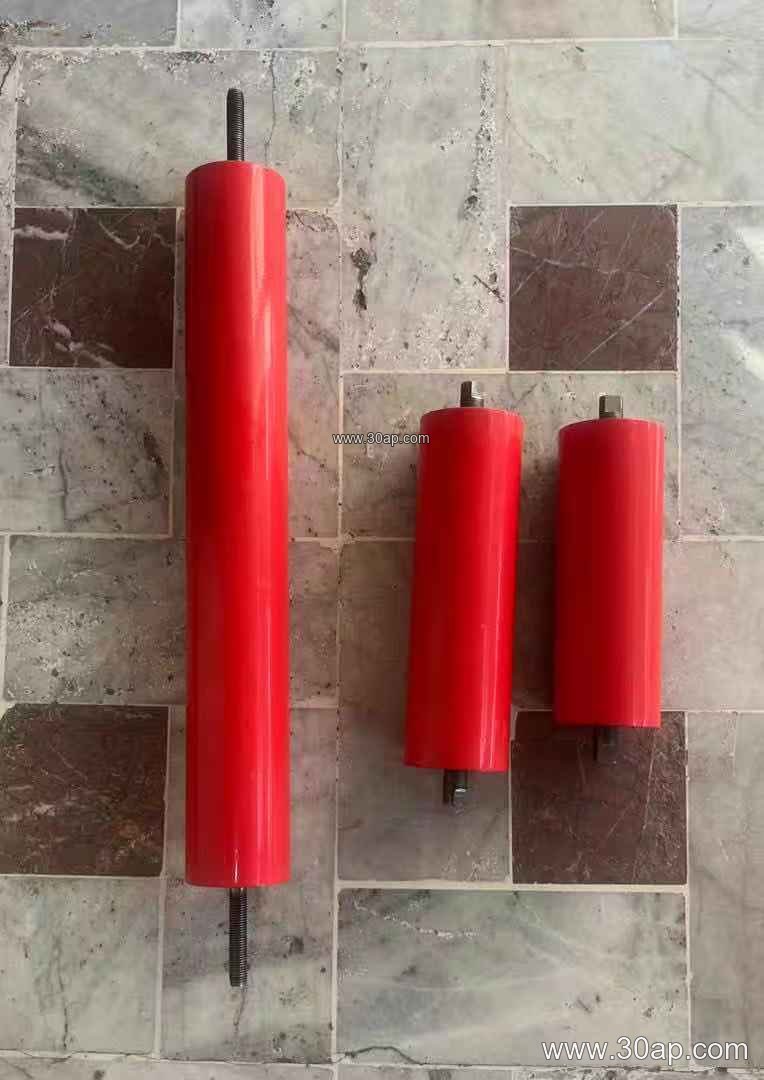
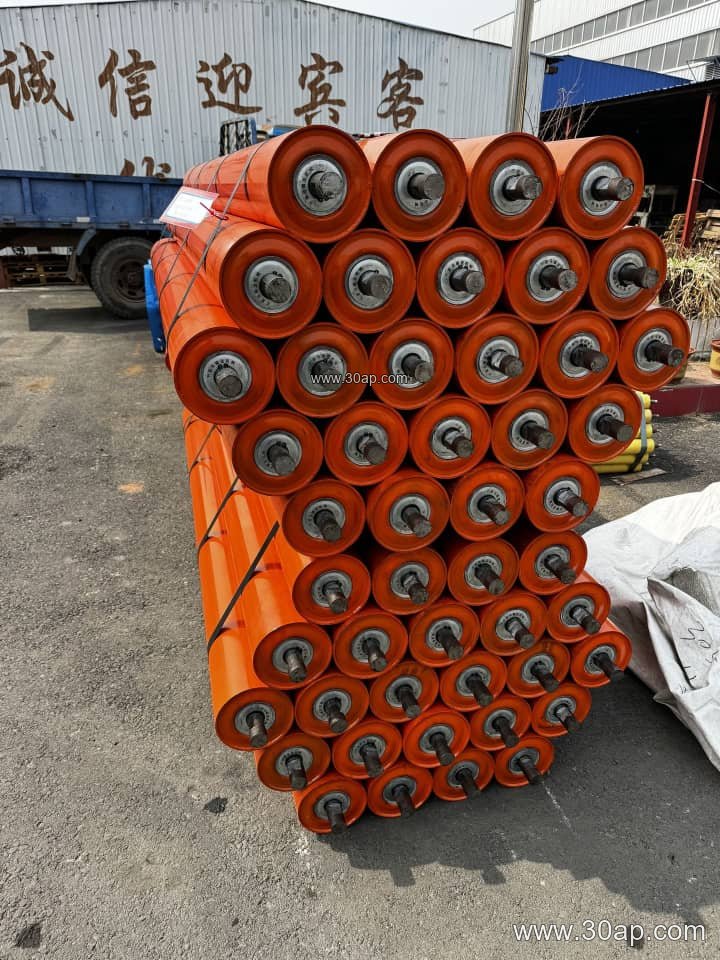
Roller length is set by belt width, trough form of the carrying side and the return frame design. As a general reference, common face lengths for return rollers on standard widths run roughly as follows. These are examples only, not fixed pairings.
| Belt width | Typical return roller face length | Common roller diameters |
|---|---|---|
| B500 | approx. 600 mm | Ø89, Ø102 |
| B650 | approx. 750 mm | Ø89, Ø108 |
| B800 | approx. 950 mm | Ø102, Ø108, Ø127 |
| B1000 | approx. 1150 mm | Ø108, Ø127, Ø133 |
| B1200 | approx. 1400 mm | Ø127, Ø133, Ø159 |
| B1400 | approx. 1600 mm | Ø133, Ø159 |
| B1600 | approx. 1800 mm | Ø159, Ø178 |
| B1800 | approx. 2000 mm | Ø159, Ø178, Ø194 |
When specifying, give the belt width, the return frame opening, the shaft end type, the desired roller diameter and the bearing class. State the material being conveyed, since an abrasive Abrasion Resistant Conveyor Belt application may call for a thicker shell and better seals, while a food or fertilizer line may need a particular surface finish. On long overland runs with a Steel Cord Conveyor Belt, return roller spacing and roller load rating deserve more attention than the spiral pattern itself.
Installation and Maintenance Points
Check that the spiral orientation matches the belt travel direction recommended by the supplier. Some designs are handed, and fitting one the wrong way can affect cleaning performance. Align the roller square to the belt centerline, confirm the bracket bolts are tight, and verify that the roller turns freely by hand before start-up. During service, listen for bearing noise and watch for a stopped roller, because a seized spiral roller will flat-spot the belt cover quickly. Greaseable designs should follow the maker’s interval, and sealed-for-life types should be replaced rather than forced to run dry. On lines carrying hot material with a Heat Resistant Conveyor Belt, keep the return roller clear of hot carryback that could distort the spiral flight.
For most plants, a modest stock of spare rollers in the two or three sizes used on the return side is enough to keep a shutdown short. Match the spare to the actual frame and shaft, not just to the belt width.