What a Wear-Resistant Lagged Pulley Does
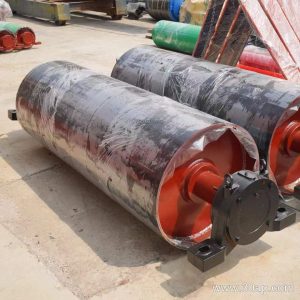
A wear-resistant lagged pulley is a conveyor pulley whose shell is covered with a durable rubber or ceramic layer to protect the drum and improve grip on the conveyor belt. In a crushing and screening line, the head pulley often works under constant grit, moisture and high tension, so the lagging becomes the first line of defence. The same product is also called a rubber-lagged conveyor pulley or abrasion-resistant lagged drum, and it is normally specified by its position in the conveyor, not as a generic roller.
The lagging raises friction between the shell and the belt, reduces slip, and shields the steel shell from abrasive material. On a heavy-duty mining conveyor, this can mean fewer belt tracking problems and longer intervals between shell repairs.
Construction and Surface Options
The base is a welded steel drum with a shaft, hubs and end discs. Lagging is applied in several ways:
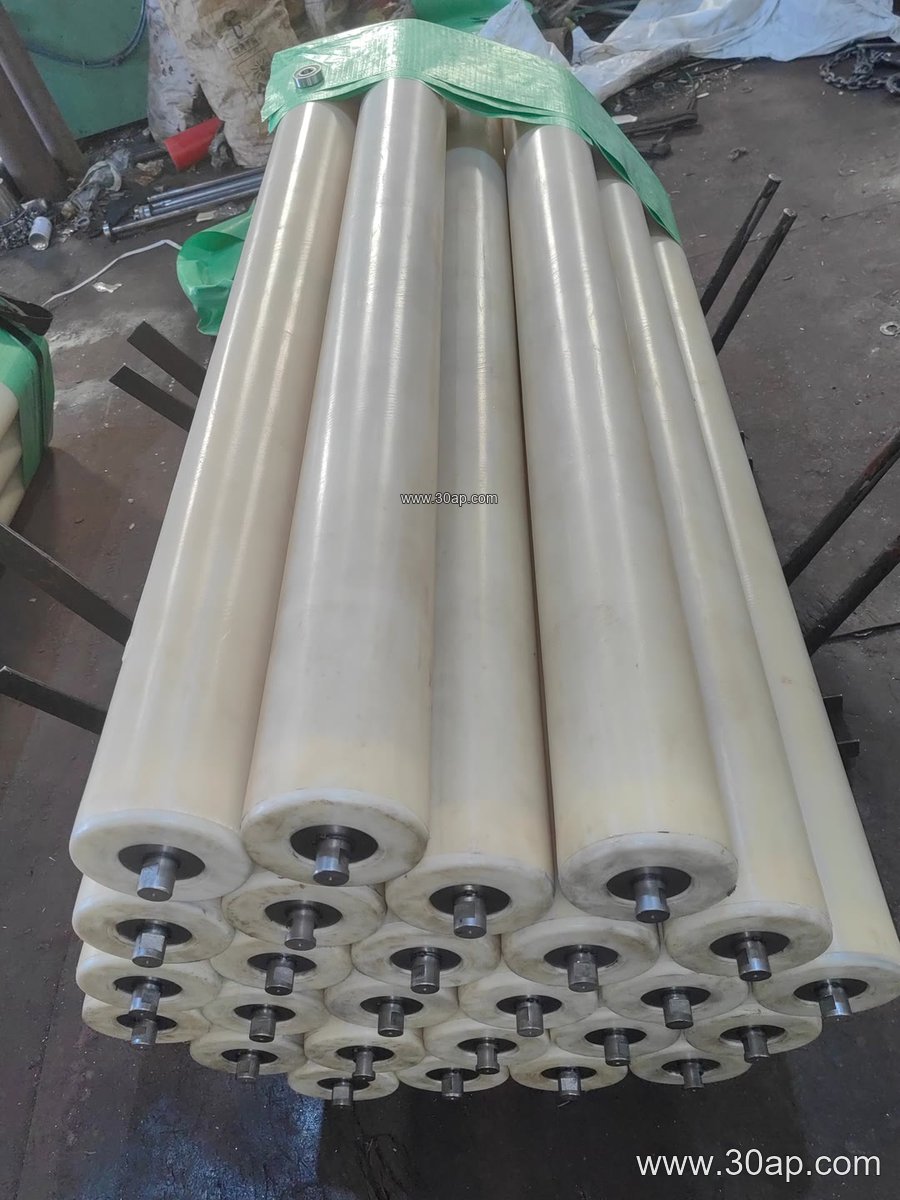
- Hot-vulcanised rubber, bonded under heat and pressure for a smooth, tight finish.
- Cold-bonded rubber, often chosen for field replacement or smaller drums.
- Diamond or herringbone grooved rubber, which helps shed water and fines.
- Ceramic tiles set in rubber, used where abrasion is severe and slip risk is high.
Common lagging thicknesses are 8, 10, 12, 15 and 20 mm. Thicker covers suit high-tension head pulleys, while thinner covers are often enough for a bend or snub position. The surface form should match the duty: plain rubber for general grip, grooved rubber for wet or dusty conditions, and ceramic for the toughest abrasive service.
Where It Fits in the Conveyor
Position matters. A drive pulley transmits torque and needs reliable traction, so lagging is almost always specified here. A tail pulley at the loading end may use lagging to resist build-up and wear from falling material. A bend pulley changes belt direction and usually carries lower tension, so its lagging is selected more for wear protection than for grip. These are distinct roles: drive, tail and bend pulleys are not interchangeable, and each has its own load and wrap angle.
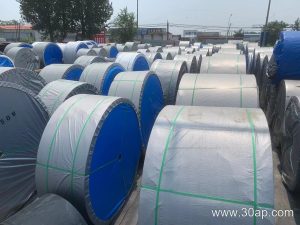
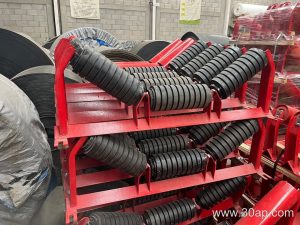
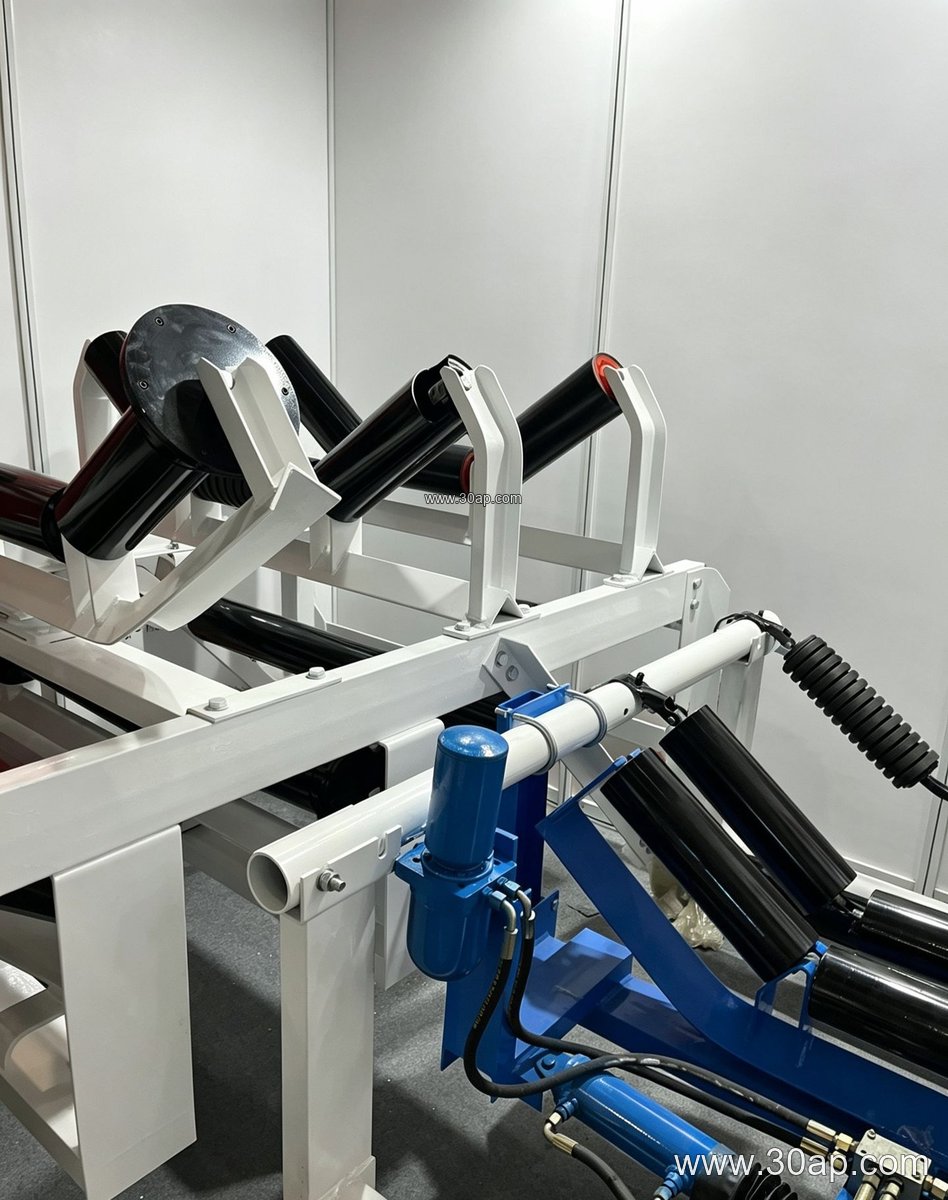
In a coal handling plant or a cement clinker line, the drive pulley may be paired with an abrasion resistant conveyor belt and a set of conveyor idler rollers that keep the belt aligned. A worn lagged drum can cause belt slip, heat and edge damage, so matching the pulley surface to the belt and the material is part of the design.
Typical Sizes and Combinations
Pulley dimensions follow belt width, tension and shaft load. The table below shows common reference combinations; they are examples, not fixed pairings.
| Belt width | Typical shell width | Example pulley size | Common lagging |
|---|---|---|---|
| B500 | About 600 mm | B500 x Ø400 | 10 mm rubber |
| B650 | About 750 mm | B650 x Ø500 | 10-12 mm rubber |
| B800 | About 950 mm | B800 x Ø500 | 12 mm diamond rubber |
| B1000 | About 1150 mm | B1000 x Ø630 | 12-15 mm rubber |
| B1200 | About 1400 mm | B1200 x Ø1000 | 15 mm rubber or ceramic |
| B1400 | About 1600 mm | B1400 x Ø800 | 15 mm rubber |
| B1600 | About 1800 mm | B1600 x Ø1000 | 15-20 mm rubber |
Shaft diameters are usually Ø50 to Ø200 mm and are determined by torque and load, not by belt width alone. A wider belt does not automatically require a larger shaft, and one belt width can work with several pulley diameters depending on wrap angle and speed.
Buyer Checklist
- Confirm the pulley position: drive, tail, bend, take-up or snub.
- State belt width, belt type and maximum tension so the shell and shaft can be sized correctly.
- Choose lagging by material: ceramic for iron ore or quarry rock, grooved rubber for wet coal, plain rubber for general aggregate.
- Check compatibility with the conveyor belt, especially on steep or high-torque drives.
- Plan inspection of lagging wear together with idler roller and conveyor bracket checks.
For a quarry conveyor belt or a power plant coal conveyor belt, a wear-resistant lagged pulley is a small component with a large effect on uptime. Specify it by duty, not by habit.