What a Rubber Lagged Pulley Does
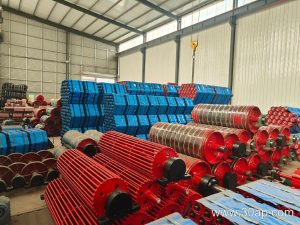
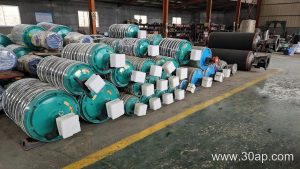
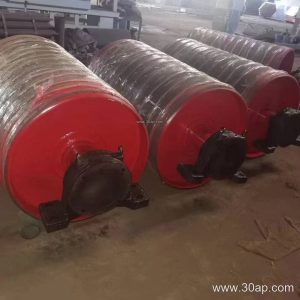
A rubber lagged pulley is a conveyor pulley whose steel drum surface is covered with a rubber layer before the belt wraps around it. That cover changes how the pulley behaves at the point of contact. Instead of bare steel slipping against the belt, the rubber increases friction, cushions the belt carcass, and helps shed fine material that would otherwise build up on the shell. In a quarry, a cement clinker line, or a power plant coal handling system, this difference often decides whether a conveyor starts smoothly under load or stalls.
The product is also called a rubber-coated conveyor pulley or a lagged drum pulley. These names describe the same item; they are not separate drive, tail, or bend types. A rubber lagged pulley can serve in any of those positions, and the lagging is chosen to suit the duty rather than the position name alone.
How the Lagging Is Built
Most lagged pulleys begin as a welded or cast steel drum with machined end discs and a shaft. The rubber is applied in one of several ways. Cold-bonded rubber is glued on and is common for general service. Hot vulcanized lagging is cured onto the shell for a stronger bond and is preferred where the pulley works hard or the belt is heavy. Bolt-on or interchangeable lagging strips allow replacement without removing the pulley from the frame, which matters in a busy aggregate plant.
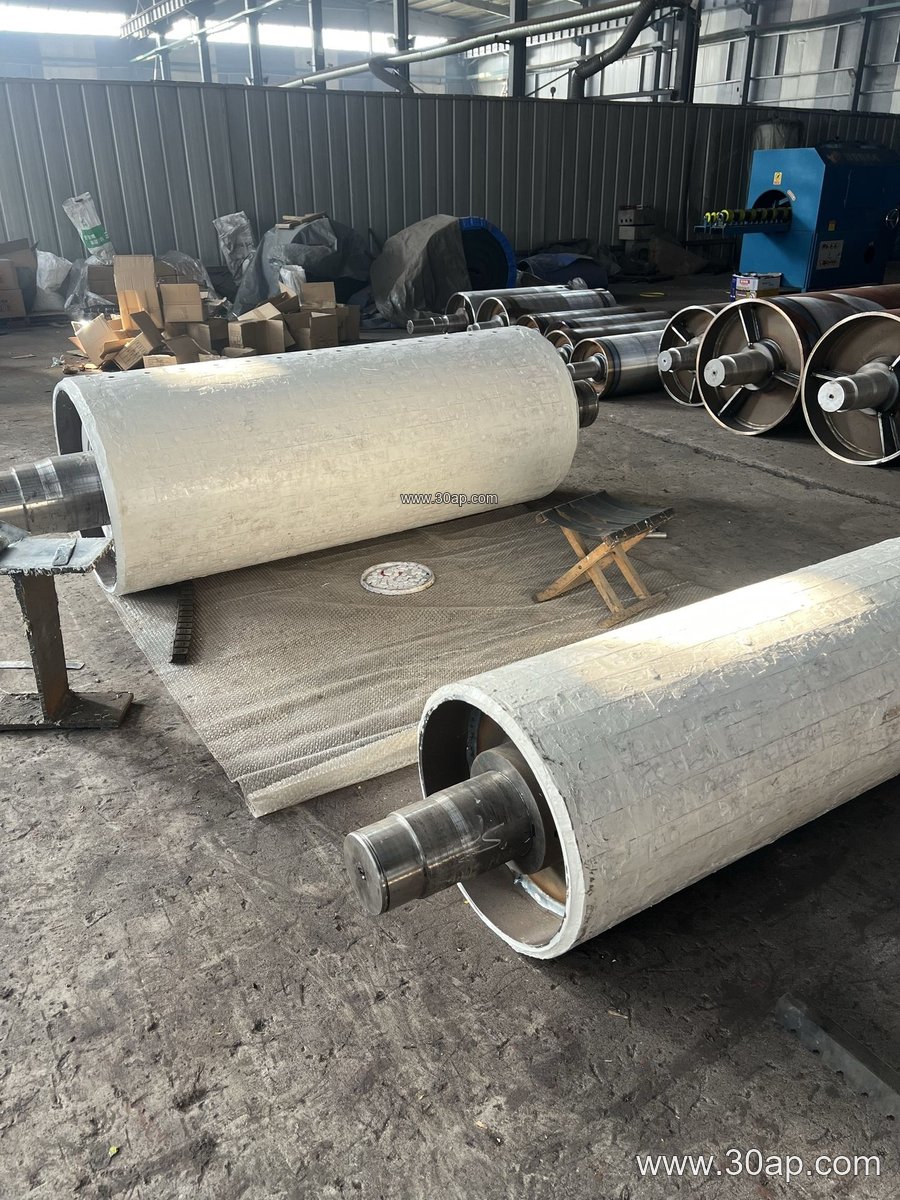
Surface patterns vary. Plain or flat rubber suits many clean applications. Diamond lagging improves grip and water drainage. Herringbone patterns are used where the belt tends to wander. Ceramic-lagged pulleys are a separate option for extremely abrasive conditions, not a replacement for the rubber version.
Common lagging thicknesses are 8, 10, 12, 15, and 20 mm. Thicker covers last longer under high tension but add weight and cost. Typical drum diameters run from Ø200 and Ø250 for small units up to Ø1000, Ø1250, and larger for heavy-duty head pulleys. Face width is usually a little wider than the belt, for example about 950 mm for a B800 belt or around 1400 mm for B1200. These are reference values; final dimensions are set by the conveyor design.
Where It Fits in the Conveyor
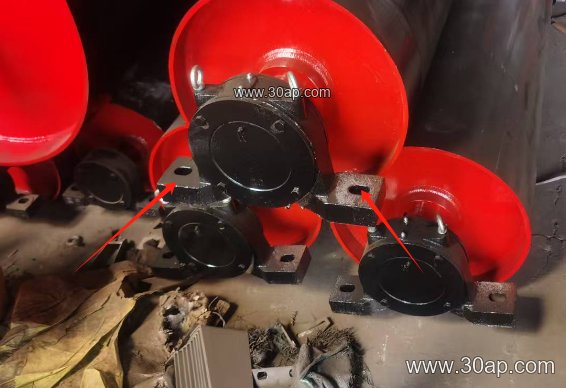
On a drive or head pulley, the lagged surface transmits torque to the belt. On a tail pulley, it helps keep the return strand tracking and reduces wear at the loading point. Bend and snub pulleys use lagging to increase wrap angle and hold tension. A take-up or tension pulley benefits from the extra grip as well. In all these roles the rubber lagged pulley works together with the conveyor belt, the idler roller set, and the conveyor bracket that carries the pulley bearing housings.
The surrounding equipment matters. A heavy-duty mining conveyor belt on an iron ore or copper ore line needs a robust lagging and a shaft sized for the torque. A food grade or oil resistant belt may need a different rubber compound. A pipe conveyor belt or a corrugated sidewall belt changes the contact geometry, so the pulley face and lagging pattern are reviewed together with the belt supplier.
Matching Pulley, Belt, and Duty
Buyers should think in terms of the whole conveyor rather than a single number. Belt width, belt tension, motor power, and the amount of carryback all influence the choice. The table below shows typical reference combinations; they are examples, not fixed rules.
- B500 belt with pulley face around 600 mm, drum Ø250 to Ø400
- B800 belt with face around 950 mm, drum Ø400 to Ø630
- B1000 belt with face around 1150 mm, drum Ø500 to Ø800
- B1200 belt with face around 1400 mm, drum Ø630 to Ø1000
- B1400 belt with face around 1600 mm, drum Ø800 to Ø1250
Shaft diameters commonly range from Ø50 to Ø200, but the correct size follows torque and bearing load, not belt width alone. A B650 pulley may use a modest shaft on a short feeder and a much larger one on a long inclined conveyor.
Conveyor belts also guide the specification. An EP conveyor belt or NN conveyor belt with a fabric core may tolerate a different lagging hardness than a steel cord conveyor belt. An abrasion resistant conveyor belt in a crusher discharge line often pairs with thicker lagging, while a heat resistant conveyor belt near a kiln needs a compound that will not soften. Flame retardant and anti-static requirements in underground coal mining affect the rubber recipe. None of this replaces the pulley manufacturer’s review of the actual duty.
Buyer Checklist
Before ordering, confirm the pulley position, the belt width and type, the drum diameter, the face width, the shaft size and bearing type, and the lagging thickness and pattern. Ask whether the lagging is cold bonded, hot vulcanized, or replaceable. Check that the pulley will fit the existing conveyor bracket and that the shaft key and coupling match. For a plant handling bulk material conveyor belts, spare lagging strips and a spare pulley can shorten downtime during a planned shutdown.
A well-specified rubber lagged pulley protects the belt, improves starting reliability, and reduces slip-related wear. The right choice comes from matching the lagging to the conveyor’s real working conditions.