What a Trough Idler Set Does on the Conveying Line
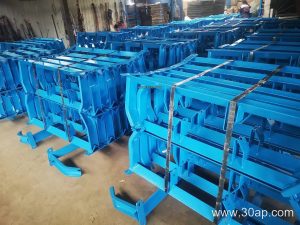
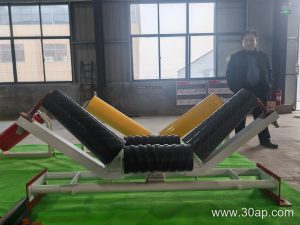
A trough idler set is the assembly that supports the carrying run of a conveyor belt and shapes it into a trough. The belt does not run flat across these stations; instead it is cupped upward so that bulk material sits in a shallow channel rather than spilling over the edges. The set usually consists of two or three idler rollers held in a frame, and the whole unit is mounted on the conveyor stringer or on a conveyor bracket. In a quarry, a cement plant or a power plant coal yard, these assemblies repeat along the entire length of the line and quietly define how well the belt tracks and how much material it can carry.
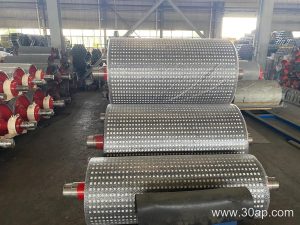
The same product is also called a troughing idler set or simply a troughing set. The name describes the duty, not the brand. It is distinct from the return idler group underneath the belt, and it is not a drive pulley, a tail pulley or a bend pulley, which are drum components at the ends and corners of the conveyor rather than belt-support rollers.
How the Assembly Is Built
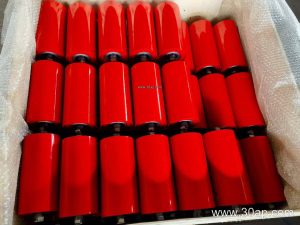
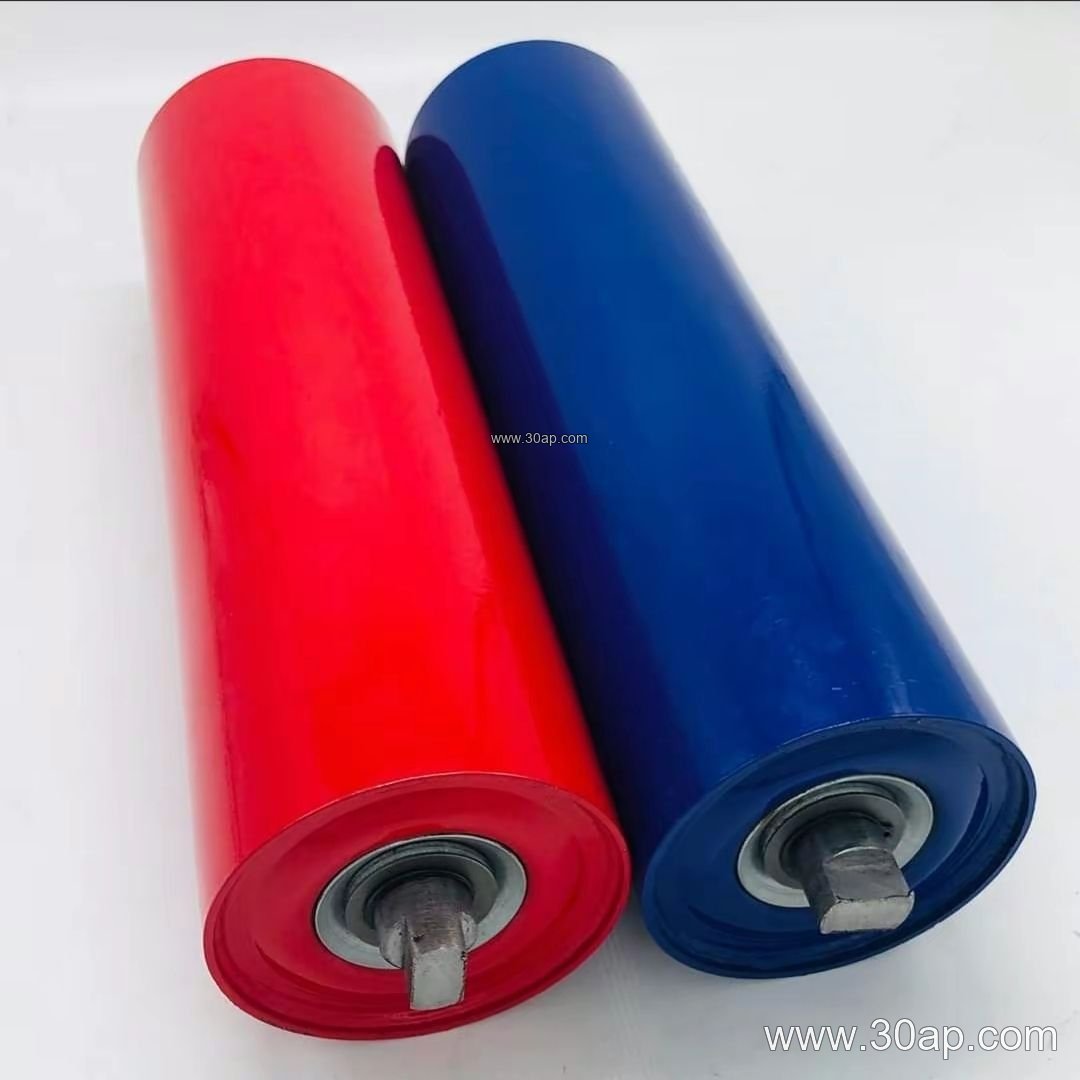
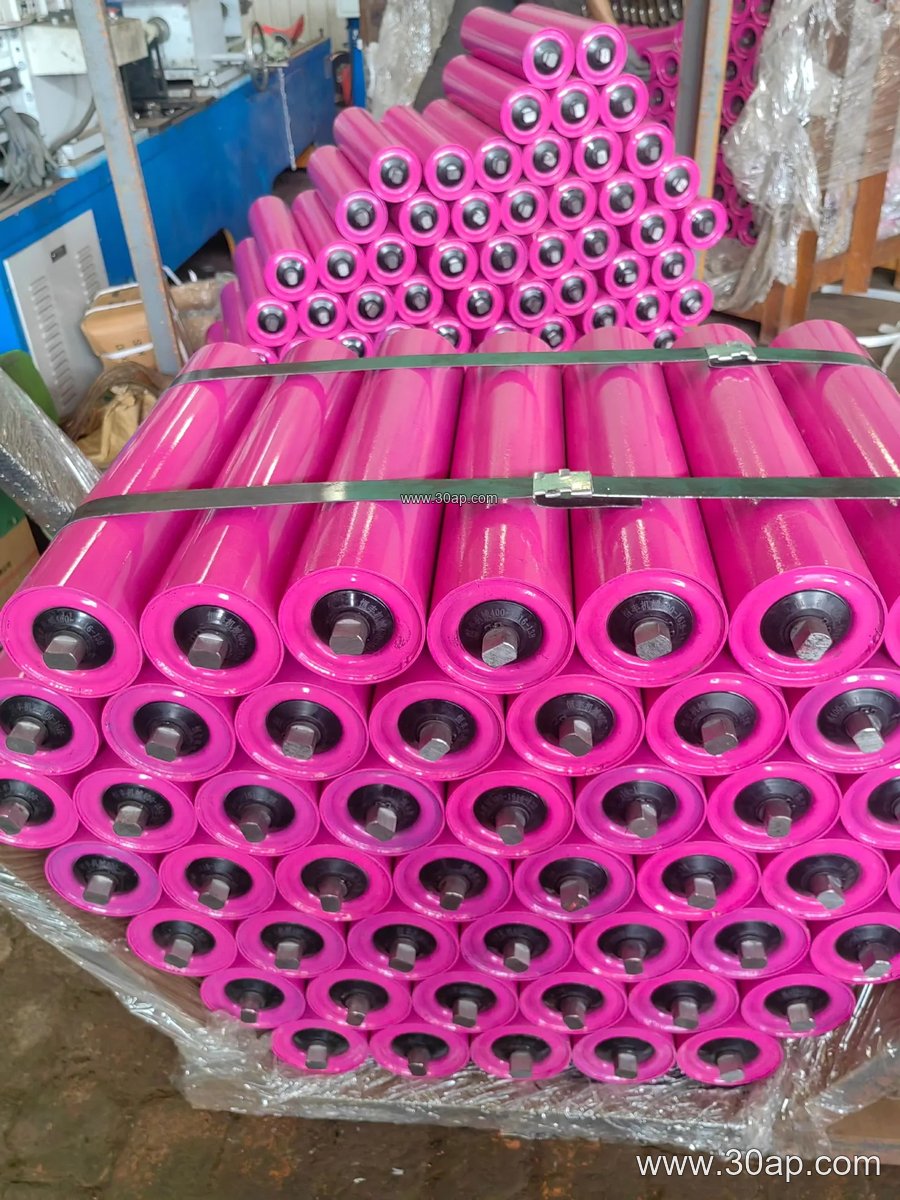
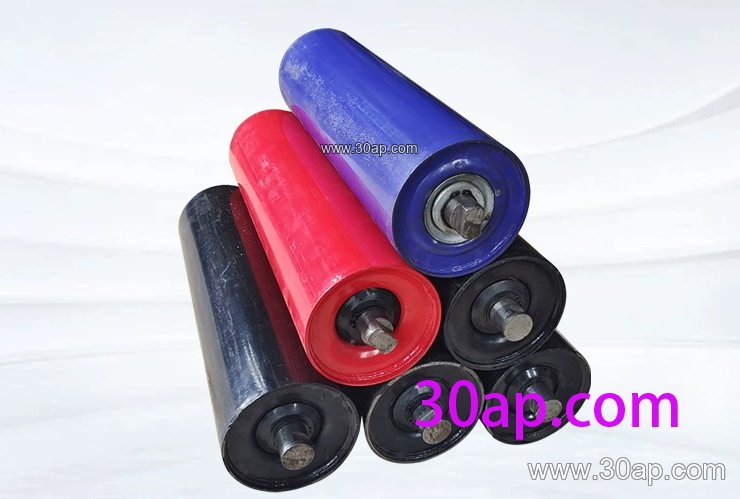
A typical set combines steel rollers, a rigid frame and sealed bearings. Each idler roller has a shell, a shaft, bearing housings and a sealing arrangement to keep dust out. Roller shells are commonly made of steel tube, and depending on the material being handled, the surface may be plain steel, nylon, ceramic or fitted with rubber rings for impact absorption.
Common roller diameters in general use include 89 mm, 108 mm, 133 mm and 159 mm, while heavier stations may use 178 mm or larger. Bearing sizes such as 6205, 6305 or 6308 appear across many designs, but the bearing is matched to the load and shaft design rather than to one fixed roller diameter. Frame angles are usually 20, 30, 35 or 45 degrees. A slight forward tilt of about 1.5 to 2 degrees is sometimes used to help the belt stay centered.
Typical Belt Widths and Roller Lengths
Roller length follows belt width, trough angle and the number of rollers in the set. The table below gives common reference values for three-roller troughing sets; side rollers and the center roller can differ, and final dimensions should always be confirmed against the conveyor design.
| Belt width | Typical roller length (three-roller set) | Common roller diameter range |
|---|---|---|
| B500 | about 200 mm | 63 to 89 mm |
| B650 | about 250 mm | 76 to 108 mm |
| B800 | about 315 mm | 89 to 133 mm |
| B1000 | about 380 mm | 108 to 159 mm |
| B1200 | about 465 mm | 108 to 159 mm |
| B1400 | about 530 mm | 133 to 178 mm |
| B1600 | about 600 mm | 133 to 194 mm |
| B1800 | about 670 mm | 159 to 194 mm |
These figures are examples, not fixed pairings. A wide belt on a lightly loaded line may use a smaller roller than the same width on a heavy-duty mining conveyor.
Where Troughing Sets Are Used
The most familiar applications are bulk material conveyors. In an iron ore or copper ore operation, the carrying run may move lumpy, abrasive rock, so the idler set needs thick shells and good sealing. In a coal mining conveyor or an underground coal mining conveyor, flame retardant and anti-static properties of the belt matter, and the troughing stations must be easy to inspect in confined spaces. Aggregate lines at a crusher discharge, sand making plants and stone crushing circuits rely on troughing sets to keep the belt profile stable under variable feed. Port ship loading conveyors and cement plant clinker lines use the same principle at larger scale.
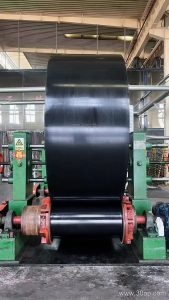
The belt itself is chosen for the duty: an abrasion resistant conveyor belt for sharp aggregate, a heat resistant conveyor belt near clinker or sinter, an oil resistant conveyor belt where lubricants or oily feedstock are present, and a flame retardant conveyor belt in underground or dusty coal service. A steel cord conveyor belt or an EP conveyor belt may run over the same kind of troughing station, but the idler load and spacing are set by the belt tension and material weight.
What Buyers Should Check
- Trough angle and belt width. Confirm that the 20, 30, 35 or 45 degree frame suits the material’s angle of repose and the belt’s ability to trough.
- Roller diameter and bearing. Match the bearing and shaft to the actual load, not just to the belt width.
- Sealing and surface. Dusty quarry or cement service benefits from effective labyrinth seals; impact zones may call for rubber ring rollers.
- Frame and bracket fit. The set must sit correctly on the conveyor bracket or stringer, with mounting dimensions that match the existing structure.
- Spacing along the line. Idler spacing is a design decision based on belt sag, material weight and belt tension, and it should be reviewed rather than copied from another conveyor.
For a reliable installation, treat the trough idler set as part of a system: belt type, pulley alignment at the drive and tail, loading conditions and maintenance access all affect how long the rollers last. A well-matched troughing set keeps the belt centered, reduces spillage and protects the belt edge, which is why it deserves attention at the selection stage rather than only at replacement time.