What a Conveyor Bracket Really Does
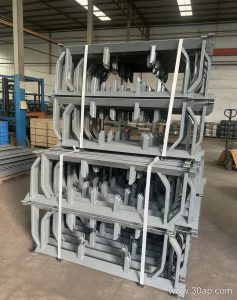
Conveyor bracket procurement is the part of a belt conveyor project where the steel that holds every idler in place gets specified, quoted, and ordered. The bracket, often called an idler frame or idler support, is the structural interface between the conveyor stringer and the rotating components. It sets the trough angle of the carrying idlers, fixes the spacing of the return rollers, and keeps the belt profile stable along the whole run. Buyers who treat it as a minor accessory usually pay for that later in misalignment, belt edge damage, and extra downtime.
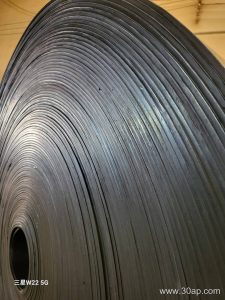
In a quarry or a cement plant, a loose or wrongly angled bracket shows up quickly as spillage and tracking problems. In a coal handling system, the same fault can wear a flame retardant conveyor belt along one edge long before the frame itself fails.
How the Bracket Is Built
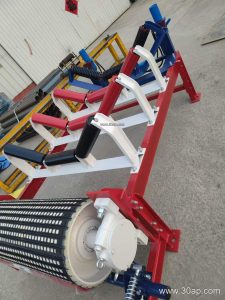
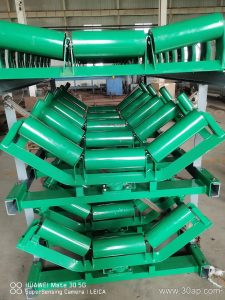
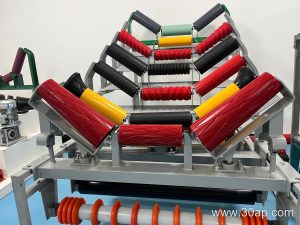
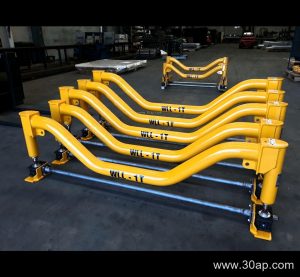
Most frames are fabricated from angle steel, channel steel, or folded steel plate, then drilled or punched for the idler shaft. A troughing bracket carries two or three carrying idlers and defines the trough angle; a return bracket holds the lower rollers, sometimes in a V shape to help center the belt. Transition brackets sit near pulleys and gradually change the belt from flat to troughed. Impact brackets under a loading point are built heavier and may accept rubber-ring impact rollers.
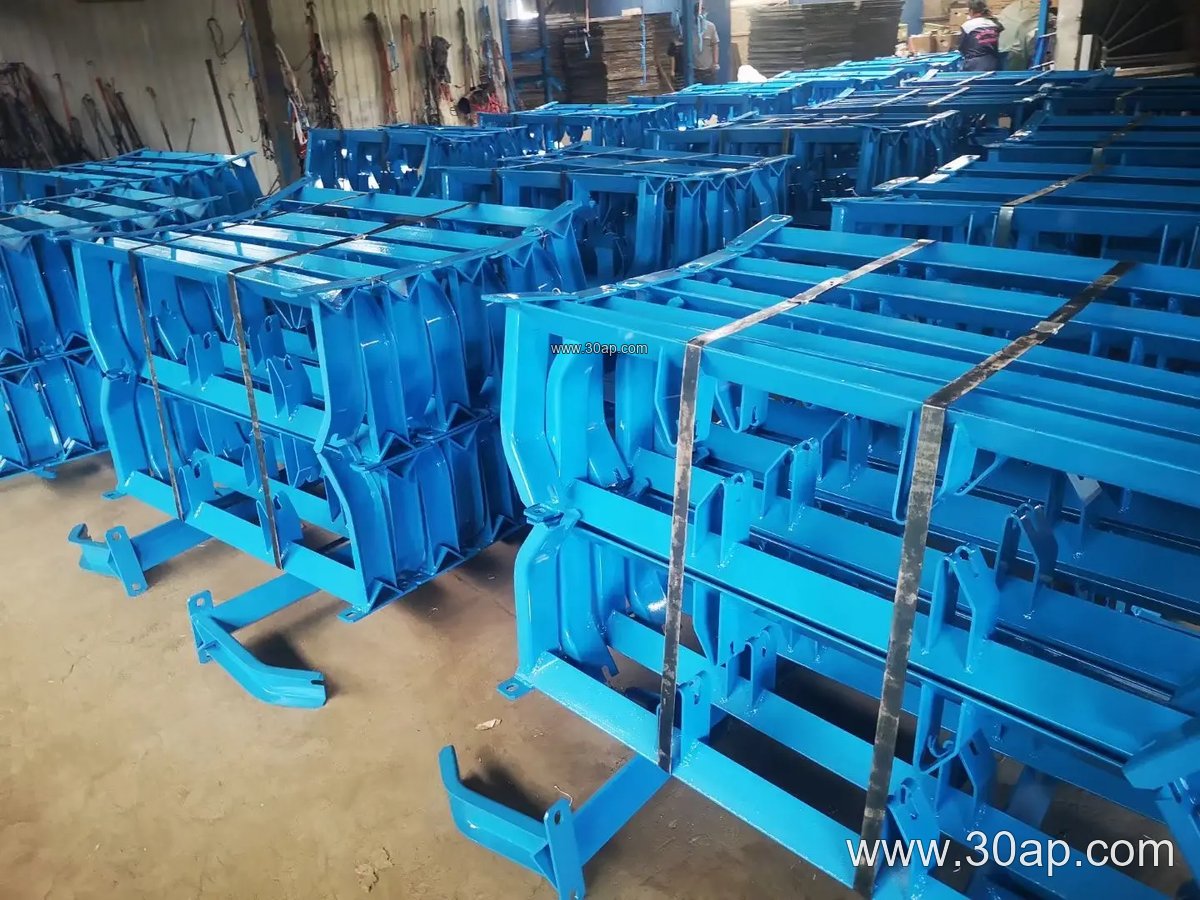
Welding quality, hole position, and galvanizing or painting matter more than the steel grade alone. A frame that is square and accurately drilled installs faster and keeps the idlers perpendicular to the belt centerline.
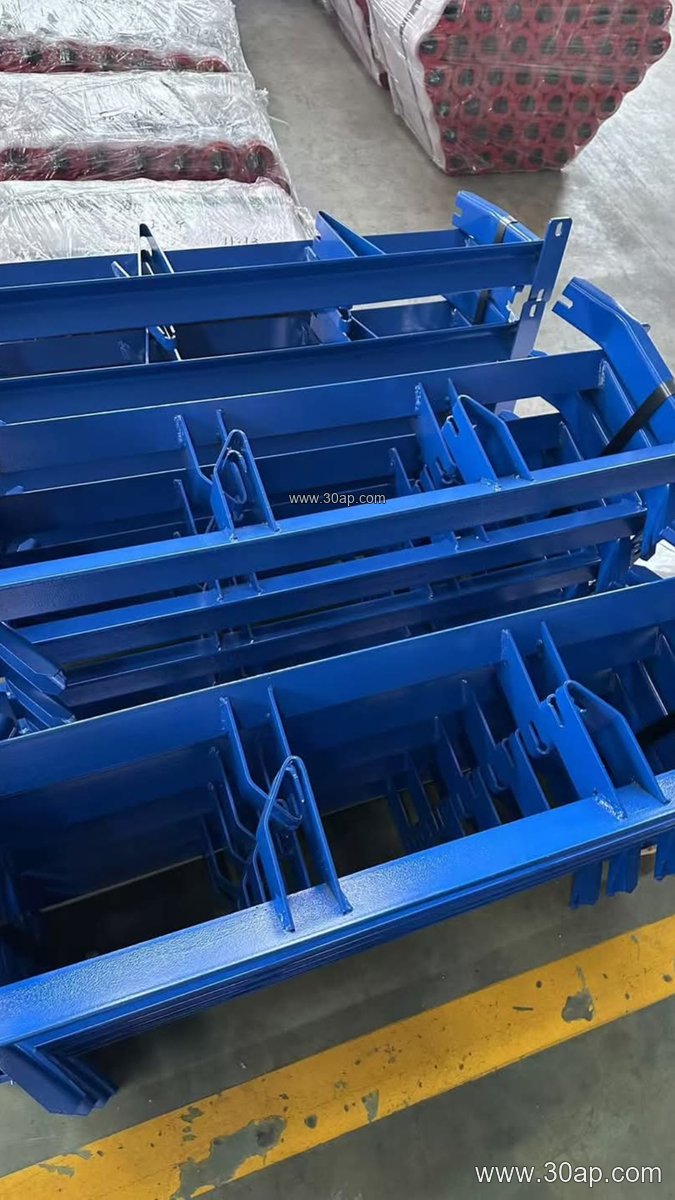
Matching Brackets to Belt Width and Roller Diameter
Frame length and mounting hole spacing follow the belt width and trough angle, so they are always determined by design rather than picked from a single table. The roller diameter must suit the frame’s mounting height and the load. Typical combinations seen in catalogues and project drawings include the following, but they are reference points, not fixed rules.
| Belt width | Common trough angle | Typical roller diameter |
|---|---|---|
| B500 | 20 to 30 degrees | Ø89 |
| B650 | 30 degrees | Ø89 to Ø108 |
| B800 | 35 degrees | Ø108 |
| B1000 | 35 to 45 degrees | Ø108 to Ø133 |
| B1200 | 35 to 45 degrees | Ø133 |
| B1400 | 35 to 45 degrees | Ø133 to Ø159 |
| B1600 | 35 to 45 degrees | Ø159 |
| B1800 to B2200 | 35 to 45 degrees | Ø159 to Ø194 |
No belt width is tied to one trough angle or one roller size. A B1200 frame may be ordered at 35 degrees with Ø133 rollers for a sand and gravel line, or at 45 degrees with the same diameter where capacity and material lump size demand a deeper trough. Adjustable frames allow the trough angle to be changed between roughly 20 and 45 degrees on site, which is useful during commissioning.
Fixed, Adjustable, and Self-Aligning Frames
Fixed brackets are simple, stiff, and inexpensive, and they suit long straight runs where the belt path is already settled. Adjustable brackets cost more but let maintenance staff correct the trough profile without cutting steel. Self-aligning or training frames carry rollers mounted on a pivoting base and are usually placed at intervals along the carrying side to correct minor tracking drift. Forward-leaning frames, with the side rollers tilted about 1.5 to 2 degrees in the direction of travel, are another option for keeping the belt centered.
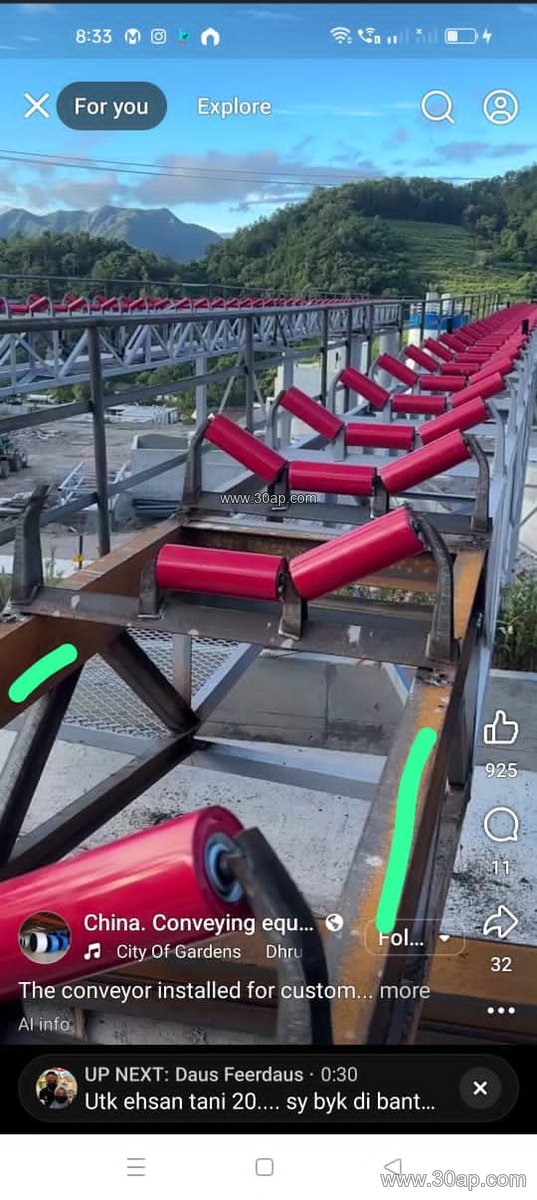
These are different frame types serving different duties, not interchangeable parts. A return bracket cannot replace a troughing bracket, and a training frame is not a substitute for proper pulley alignment.
Where the Frames Are Used
Bracket demand follows the conveyor itself. A limestone quarry needs troughing and impact frames under the crusher discharge, where a heavy-duty mining conveyor belt takes lump shock. A power plant coal yard needs return frames that tolerate dust and occasional spillage. Port ship loaders and stockyard conveyors use long runs of fixed frames with training stations at intervals. In each case the frame works together with the conveyor pulley, the idler roller, and the belt, and the specification should be read as one system.
What to Confirm Before Ordering
- Belt width, trough angle, and roller diameter for every station type on the drawing.
- Frame material and finish, including whether galvanizing is required for outdoor or wet service.
- Mounting hole spacing and bolt size, checked against the stringer or existing frame.
- Whether the position needs a fixed, adjustable, impact, or training frame.
- Quantity by station type rather than a single total, so spares land where they are needed.
A clear conveyor bracket procurement list separates carrying, return, transition, and impact frames, states the belt width and roller diameter for each, and leaves nothing to be guessed at the fabrication stage. Buyers who also order the belt and rollers in the same package can cross-check dimensions before anything is cut. For reference drawings and frame options, see www.beltconveyorparts.com conveyor bracket and confirm every dimension against the project layout.