What a Conveyor Frame Does
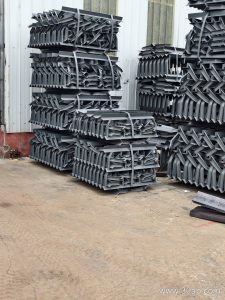
A conveyor frame is the structural spine of a belt conveyor. It carries the idler rollers that support the belt, keeps the pulleys aligned at each end, and transfers the load from the material on the belt down to the floor or steel structure. In a quarry, a cement plant, or a power plant coal yard, the frame is usually the largest fabricated steel item in the conveyor line, so its design decides how straight the belt tracks and how easily the system can be serviced.
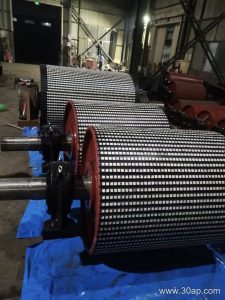
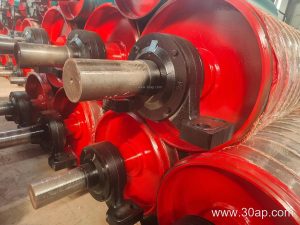
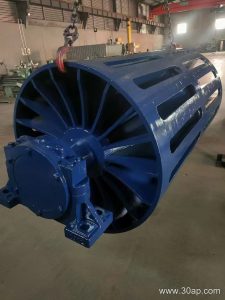
The same product is often called a belt conveyor frame or conveyor support frame. Those names describe the same assembly; they are not different frame types. Drive pulleys, tail pulleys, and bend pulleys all mount on this structure, but they are separate components with separate functions and should not be treated as interchangeable.
How the Frame Is Built
Most frames are fabricated from angle steel, channel steel, or folded steel plate. A typical stringer section is bolted or welded to cross beams, and the cross beams carry the idler brackets. Modular sections are common because they simplify transport and site assembly, especially in underground mining or tunnel muck removal where access is tight.
Key parts of the assembly usually include:
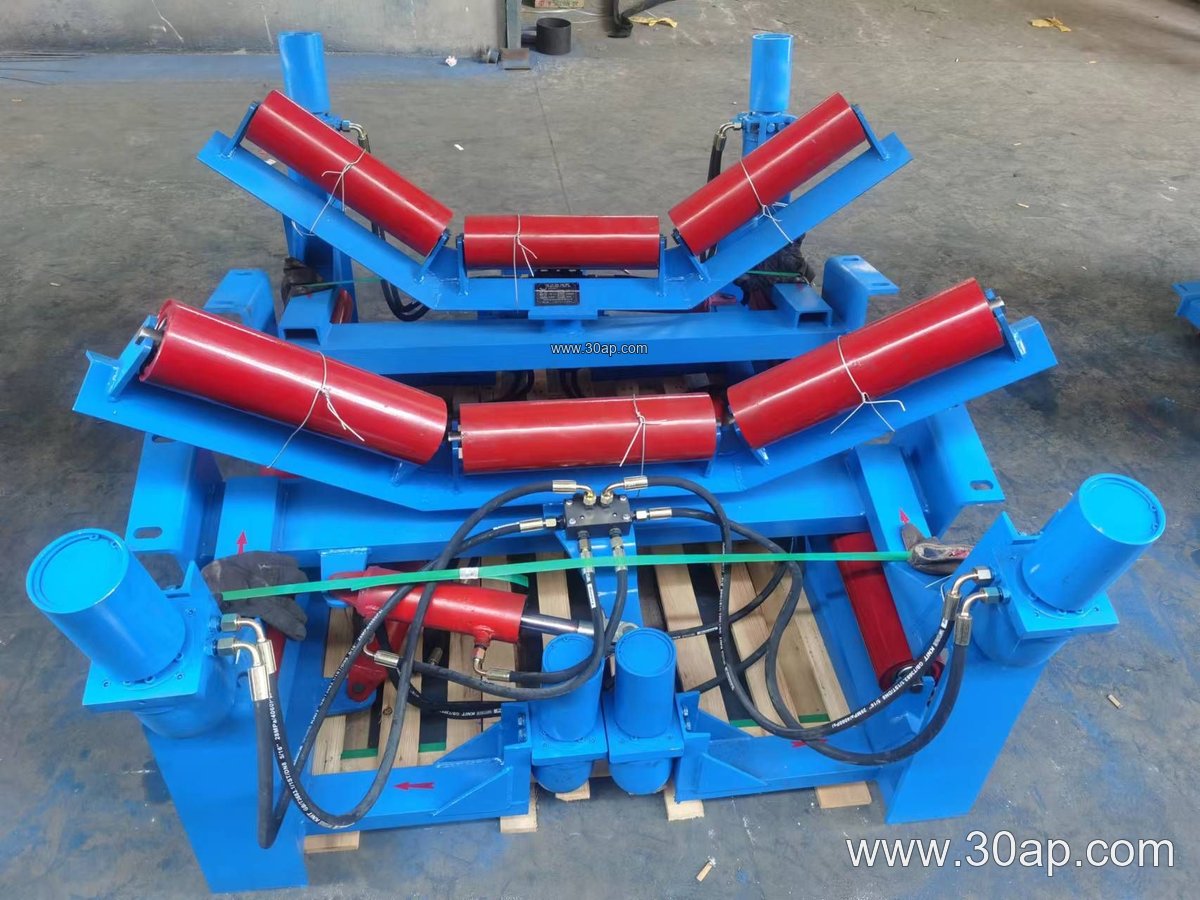
- Longitudinal stringers and cross beams forming the main load path
- Idler roller brackets for carrying and return sides
- Conveyor bracket sets for mounting troughing or flat idlers
- Support legs, bracing, and anchor plates
- Mounting points for the conveyor pulley assemblies and take-up
Welding quality matters because vibration from a heavy-duty mining conveyor belt travels straight into the frame. Bolt holes should be drilled to match the bracket spacing, and stringers should be straight enough that the belt does not drift toward one side.
Troughing Angle and Idler Arrangement
The troughing angle of the carrying idlers is set by the bracket design. Common angles are 20, 30, 35, and 45 degrees, and adjustable brackets allow the angle to be changed within that range. A 35-degree trough is common on medium-width lines, while 45 degrees may suit higher capacity where the material is free-flowing. Steeper angles are not automatically better; they can increase belt stress and make training more difficult.
Return-side idlers are often flat or V-shaped. On long overland lines, V-return brackets help keep the belt centered. Transition brackets are used near the pulleys so the belt changes from trough to flat gradually rather than abruptly.
Matching Frame Width to Belt and Roller Size
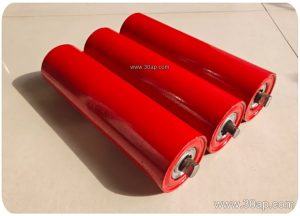
Frame width follows the belt width. Common belt widths include B500, B650, B800, B1000, B1200, B1400, B1600, B1800, B2000, and B2200. Idler roller diameters are commonly Ø89, Ø108, Ø133, Ø159, and Ø194. A frame can be designed for several combinations, for example B800 with a 35-degree trough and Ø108 rollers, or B1200 with a 45-degree trough and Ø133 rollers. These are design examples, not fixed pairings; a given belt width can work with more than one roller diameter or trough angle depending on load and speed.
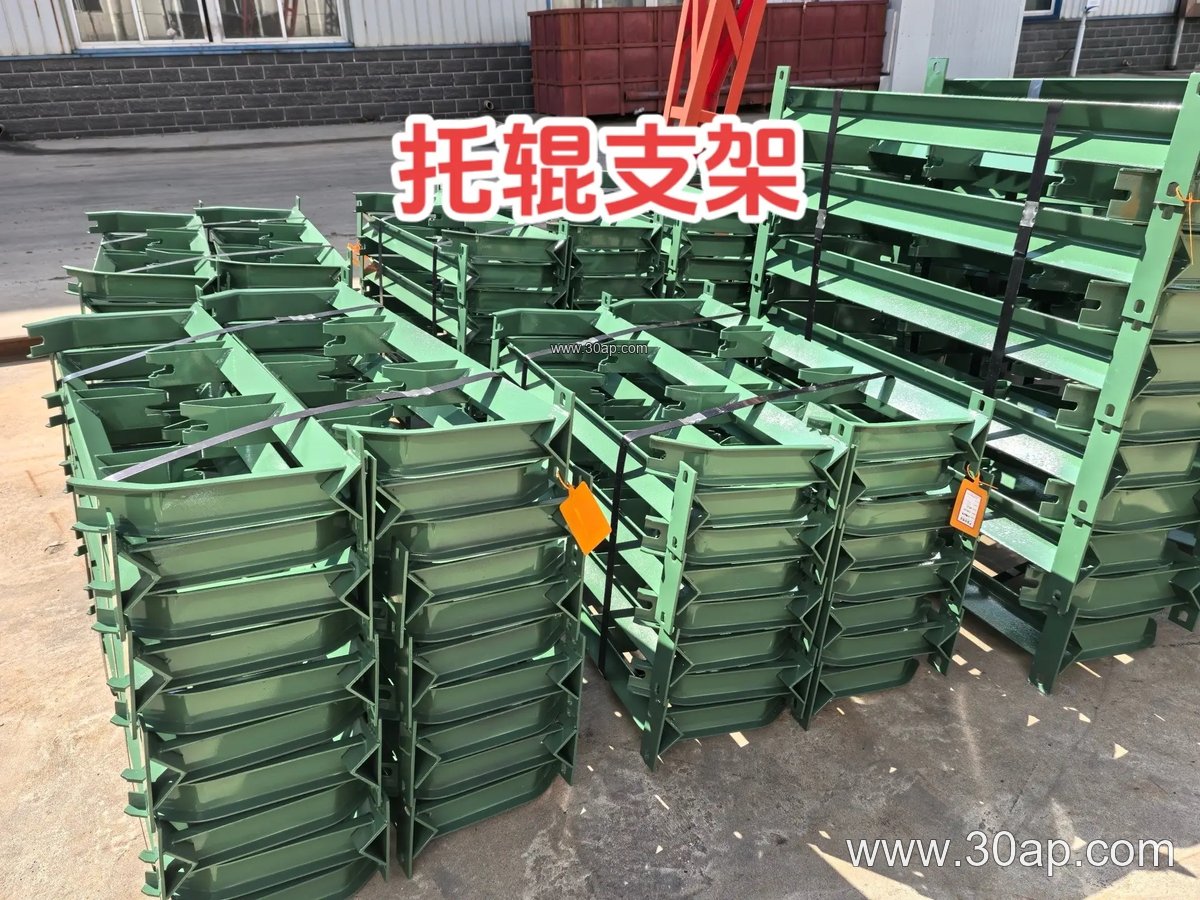
Mounting hole spacing and cross beam length change with belt width and trough angle, so they should be confirmed from the project drawing rather than assumed. On a 1500mm or 1800mm wide conveyor belt line, the frame becomes noticeably heavier and may need additional bracing.
Where Frames Are Used
Frame designs vary with the duty. In a limestone quarry or aggregate plant, a robust frame with impact brackets under the crusher discharge protects the structure from falling rock. In a coal-fired power plant, flame retardant conveyor belt and anti-static belt are common, and the frame should allow good access for cleaning spilled coal. In a cement plant, heat resistant conveyor belt may be used near the kiln area, and the frame near that section should account for thermal expansion. Ports and ship loading systems often use wide frames with heavy stringers to handle high tonnage.
Buyer Checklist
Before ordering, confirm the belt width, the required trough angle, the idler diameter, and the pulley locations. Ask for a general arrangement drawing showing bracket spacing and anchor points. Check whether the frame is fixed or adjustable and whether the structure will be bolted or welded on site. Consider the environment too: a dusty coal yard, a wet washing plant, and a hot clinker line all place different demands on the steel and on access for maintenance.
For related components, such as an EP conveyor belt, a steel cord conveyor belt, or a chevron conveyor belt, the frame supplier should know the belt type because it affects pulley diameter and take-up travel. A frame that is correctly sized for the belt and rollers will track better, wear less, and last longer.