What a Belt Conveyor Self-Aligning Idler Does
A belt conveyor self-aligning idler is a training idler designed to keep the conveyor belt centered on its path. When a belt begins to drift toward one side, the self-aligning idler responds by steering it back. This correcting action protects the belt edges, reduces spillage, and lowers the chance of costly downtime. In a quarry, coal washing plant, or cement line, a small tracking problem can grow into a major headache, so this idler plays a quiet but important role.
The same product is also called a self-aligning roller or self-training idler. It is not the same as a drive pulley, tail pulley, or bend pulley, which transmit or redirect belt motion. Those components serve different functions and cannot be swapped for a training idler.
How the Self-Aligning Idler Is Built
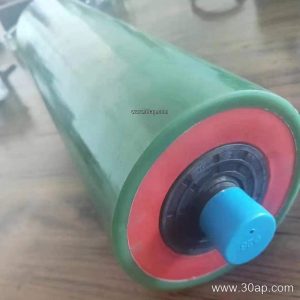
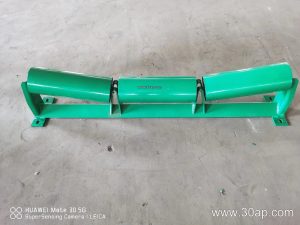
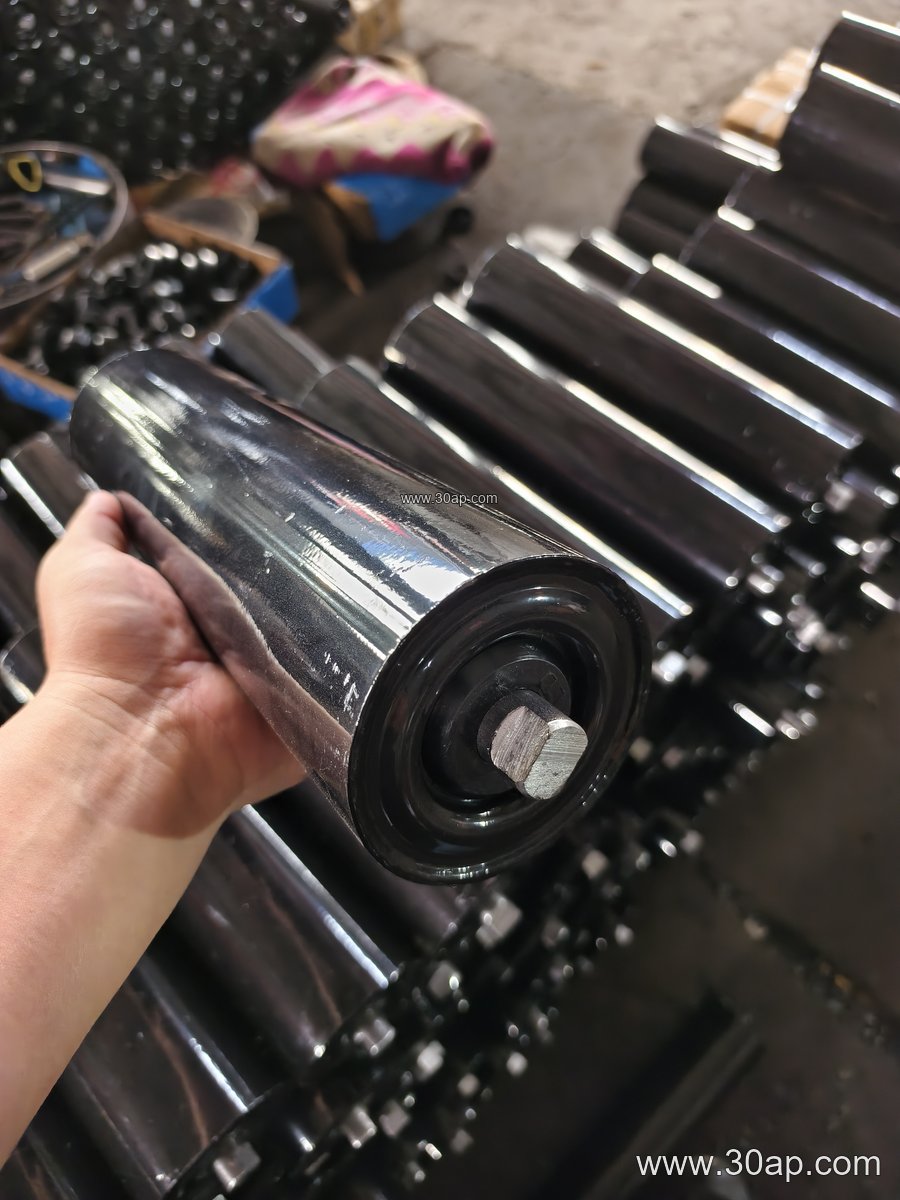
A typical self-aligning idler uses a frame that pivots or swivels, allowing the roller set to angle slightly when the belt pushes against it. The roller shell is often steel tube, and the surface may be plain steel, rubber-covered, or nylon depending on the environment. Bearings such as 6204, 6205, 6305, 6306, 6308, or 6310 are common, but the correct bearing must be matched to the roller diameter and load, not to belt width alone.
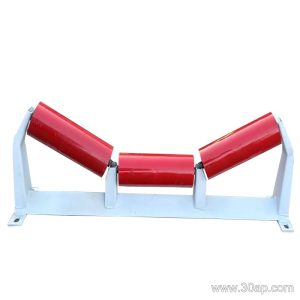
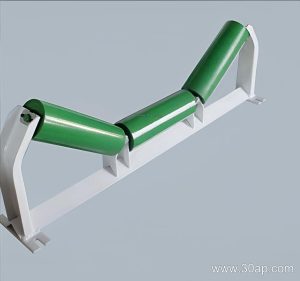
Some designs use a friction self-aligning idler, where friction between the belt and roller creates the corrective force. Others use a conical self-aligning idler with tapered rollers that guide the belt more gently. The frame is usually mounted on a conveyor bracket, and the whole assembly sits within the idler set on the carrying or return side.
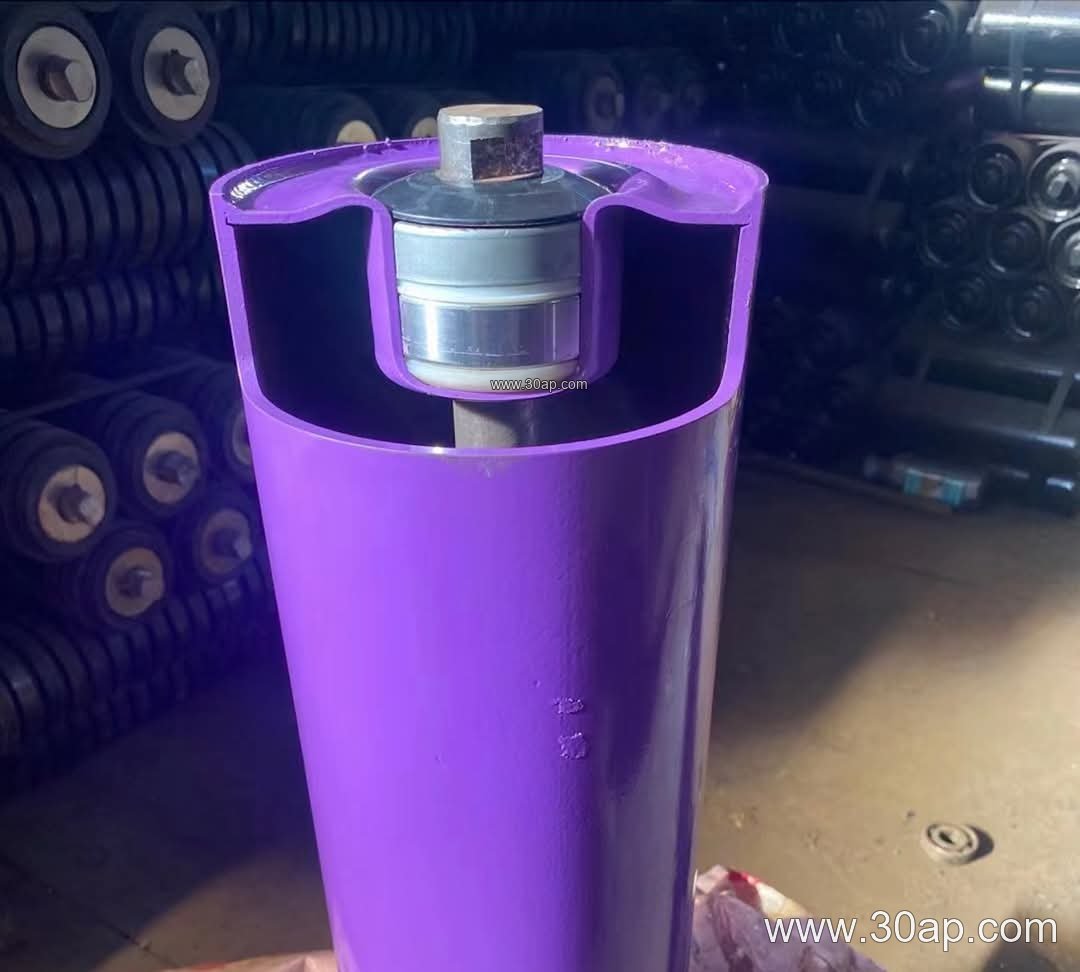
- Roller diameter options commonly include Ø63, Ø76, Ø89, Ø102, Ø108, Ø127, Ø133, Ø159, Ø178, Ø194, and Ø219 mm.
- Belt widths range from B400 and B500 up to B2200 and B2400, with many standard sizes in between.
- Trough angles of 20, 30, 35, and 45 degrees are typical for carrying idlers, while forward tilt of about 1.5 to 2 degrees is used in some training designs.
Where It Fits on the Conveyor
Self-aligning idlers are often placed at intervals along the carrying run, especially where the belt is long or where loading conditions vary. In a limestone mine or iron ore operation, the belt may be exposed to uneven material distribution, wind, or misalignment from the head or tail. A self-aligning idler on the return side can also help control belt wander before it reaches the tail pulley.
These idlers are used with many belt types, including rubber conveyor belt, EP conveyor belt, NN conveyor belt, and steel cord conveyor belt. In coal mining, a flame retardant conveyor belt or fire resistant conveyor belt is common, and the idler must work reliably in dusty, damp conditions. In a power plant or steel plant, heat resistant conveyor belt may be present, so the idler location should avoid excessive heat exposure.
Sizing and Selection Notes
Buyers should match the self-aligning idler to the belt width, trough angle, and load. Roller length varies with belt width and idler form; for example, a three-roll trough set may use roughly 200 mm rolls at B500, 315 mm at B800, 465 mm at B1200, and 600 mm at B1600. These are common examples, not fixed rules, and side rolls may differ from the center roll.
| Parameter | Common Range | Selection Reminder |
|---|---|---|
| Roller diameter | Ø63 to Ø219 mm | Match to load and belt speed |
| Belt width | B400 to B2400 | Confirm frame and bracket fit |
| Trough angle | 20° to 45° | Follow conveyor design |
| Bearing | 6204 to 6310 | Verify with roller and duty |
Do not assume that one belt width matches only one pulley diameter. The conveyor pulley, idler roller, and bracket dimensions are separate design choices. A buyer should check shaft diameter, mounting hole spacing, and seal type with the supplier rather than guessing from belt width.
Buyer Checklist
- Confirm the belt width and whether the idler is for the carrying or return side.
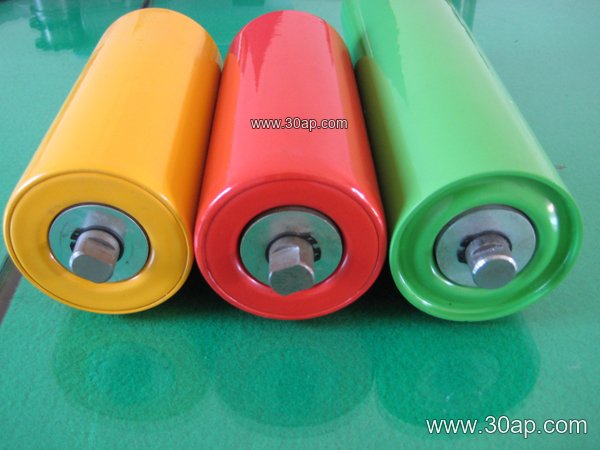
- Check the roller surface: steel, rubber ring, nylon, or ceramic may suit different conditions.
- Ask about bearing protection and sealing for dusty or wet sites.
- Review the pivot or friction mechanism to ensure it suits the belt speed and load.
- Keep spare idler rollers and brackets on hand for fast replacement.
A well-chosen self-aligning idler does not replace good conveyor design, but it adds a practical layer of belt control. For more on matching idlers with conveyor belt, idler roller, and conveyor pulley components, visit the site and review the options before ordering.