What a Rubber Disc Idler Is
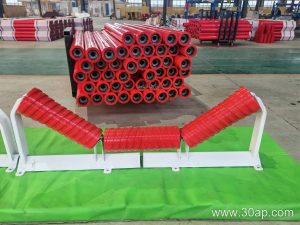
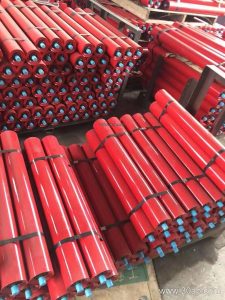
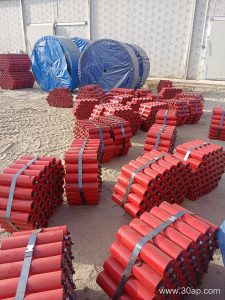
A rubber disc idler is a roller built from a steel shaft and a series of rubber discs, usually mounted between end plates or clamped onto a tube core. The discs form a resilient, slightly crowned surface that supports the conveyor belt at loading points and other zones where the belt meets falling material. In many plants it is simply called a rubber ring idler, and the two names describe the same product. It is a distinct subtype within the impact idler family, and it should not be confused with a grooved return roller or a self-aligning idler, which serve different duties on the same conveyor.
How the Roller Is Built
The basic structure is straightforward but the details matter for service life. A typical unit combines:
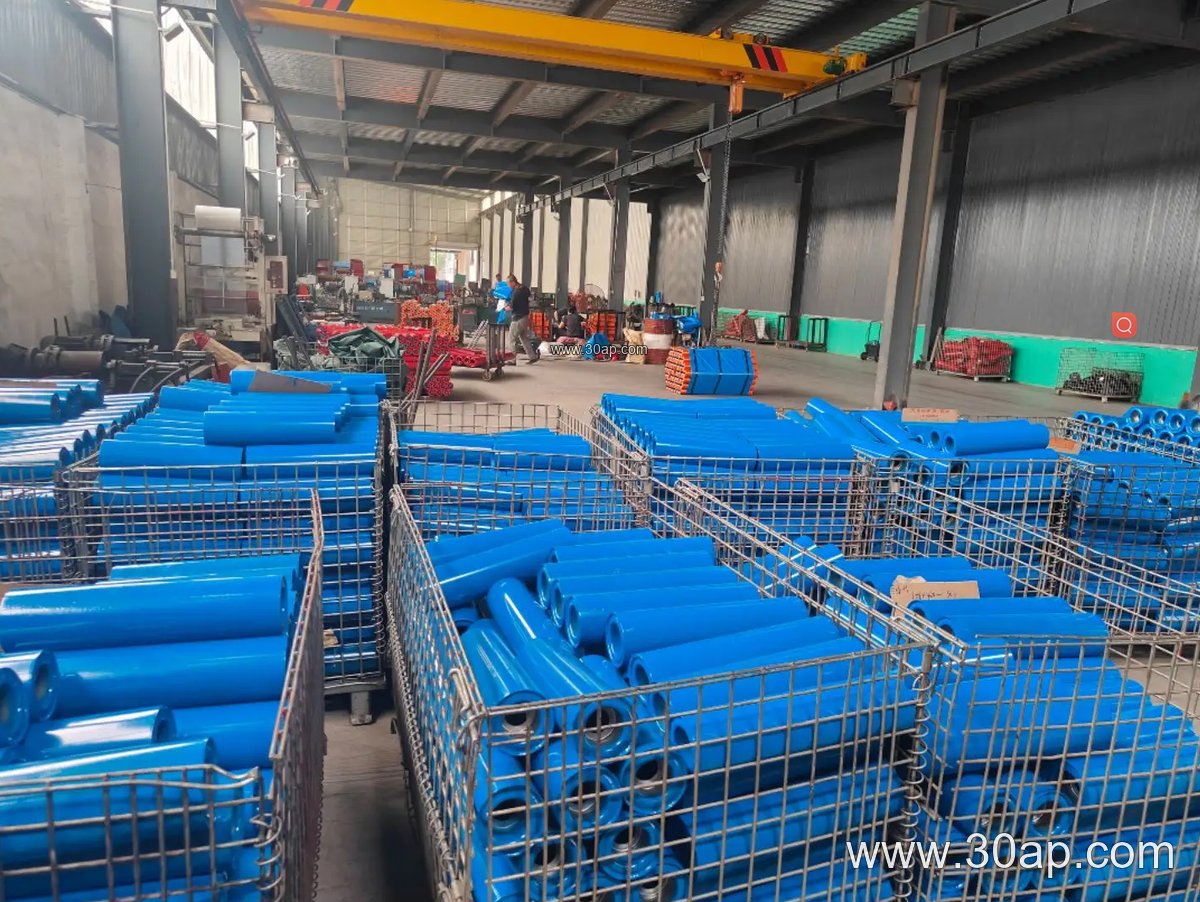
- A shaft in carbon steel, often with machined bearing seats.
- Sealed ball bearings seated in cast or pressed end housings.
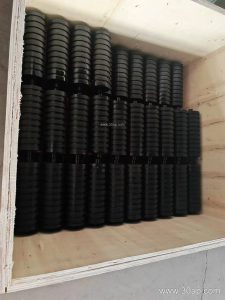
- A stack of rubber discs, moulded from abrasion-resistant rubber and separated by steel spacers.
- Labyrinth or contact seals to keep dust out, which is critical in quarry and coal handling service.
The discs absorb the energy of lumps striking the belt, so the belt cover is not the only component taking the punishment. Disc hardness, thickness and spacing are chosen according to the drop height and lump size. Common roller diameters for this product include Ø89 mm, Ø108 mm, Ø133 mm and Ø159 mm, with longer and heavier units in Ø178 mm and Ø194 mm for wide, high-tonnage lines. Bearing sizes such as 6205, 6305 or 6308 are frequently matched to the shaft and load, but a given bearing is not tied to one roller diameter.
Where It Fits on the Conveyor
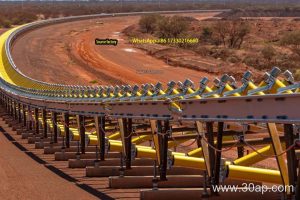
The usual position is directly under the loading chute, where a Rubber Disc Idler replaces or supplements a standard troughing idler set. In a coal mine, a crusher discharge or a transfer tower on a Coal Mining Conveyor Belt puts exactly this kind of shock load on the belt. In a sand and gravel plant, the same roller sits beneath the feed point of a Crusher Conveyor Belt, where rock fragments fall from a height. A cement plant may use it after a clinker or limestone transfer, and a power plant coal yard may fit it on the receiving section of a Power Plant Conveyor Belt.
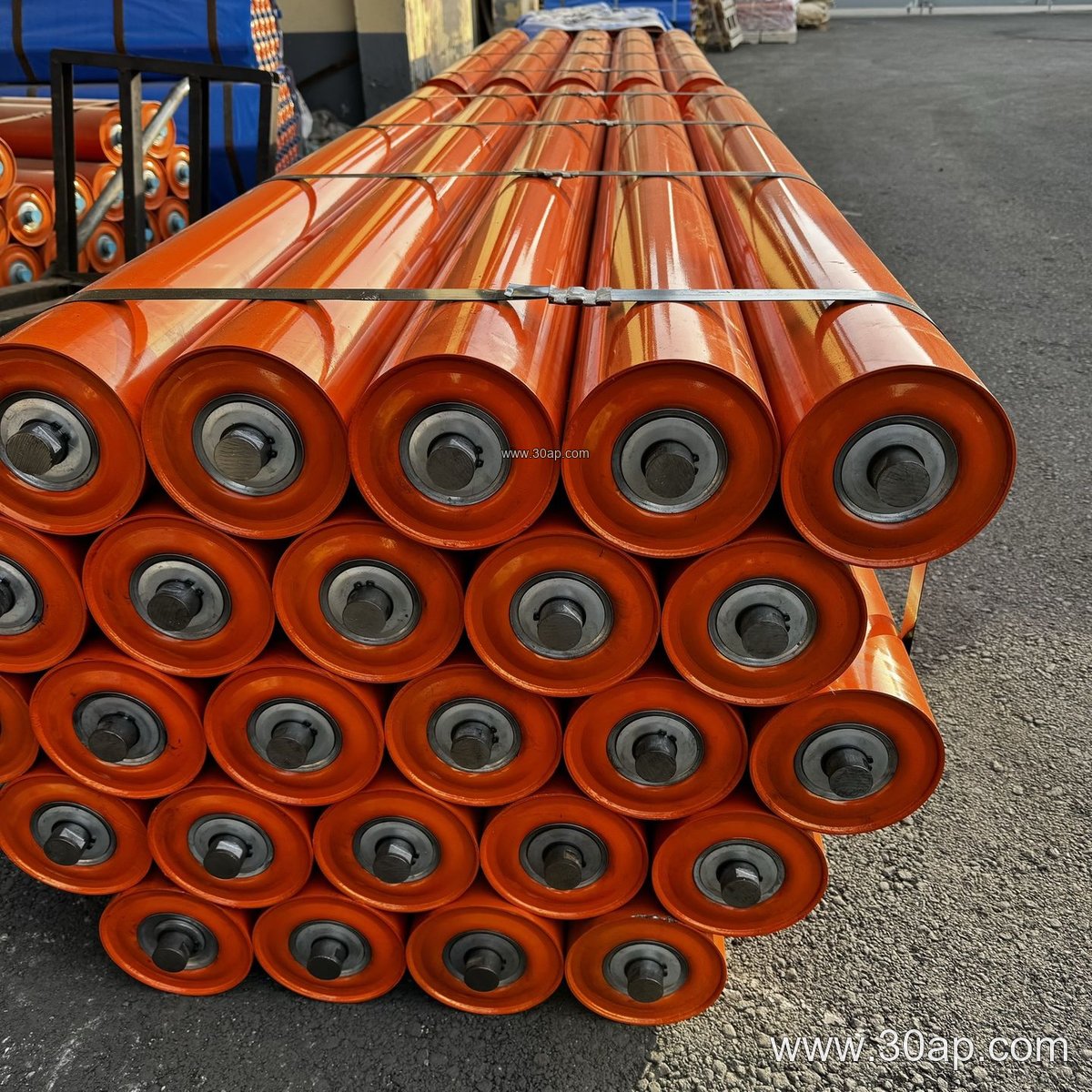
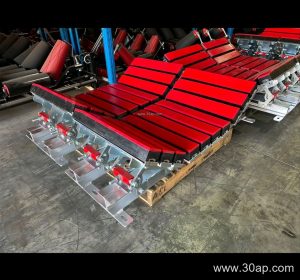
The roller is normally arranged in a two- or three-roll impact set at a trough angle of 20, 30, 35 or 45 degrees, with the centre roll taking the direct hit. Belt widths from B500 to B1400 are common, though wider belts up to B2000 also use impact stations at major transfer points. Roll length follows belt width, trough angle and frame design, so a B800 belt on a three-roll set might use centre rolls near 315 mm while a B1200 line uses roughly 465 mm; side rolls can differ.
Choosing the Right Unit
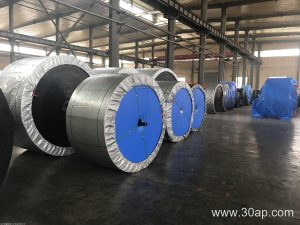
Buyers should start with the duty, not the catalogue page. Key questions include the maximum lump size, the drop height, the belt speed and the belt width. A Heavy-Duty Mining Conveyor Belt carrying large ore lumps needs thicker discs and a stronger shaft than a light aggregate line. The belt itself matters too: an Abrasion Resistant Conveyor Belt or an Impact Resistant Conveyor Belt will tolerate more direct contact, while a thin cover benefits from a softer, more compliant disc stack.
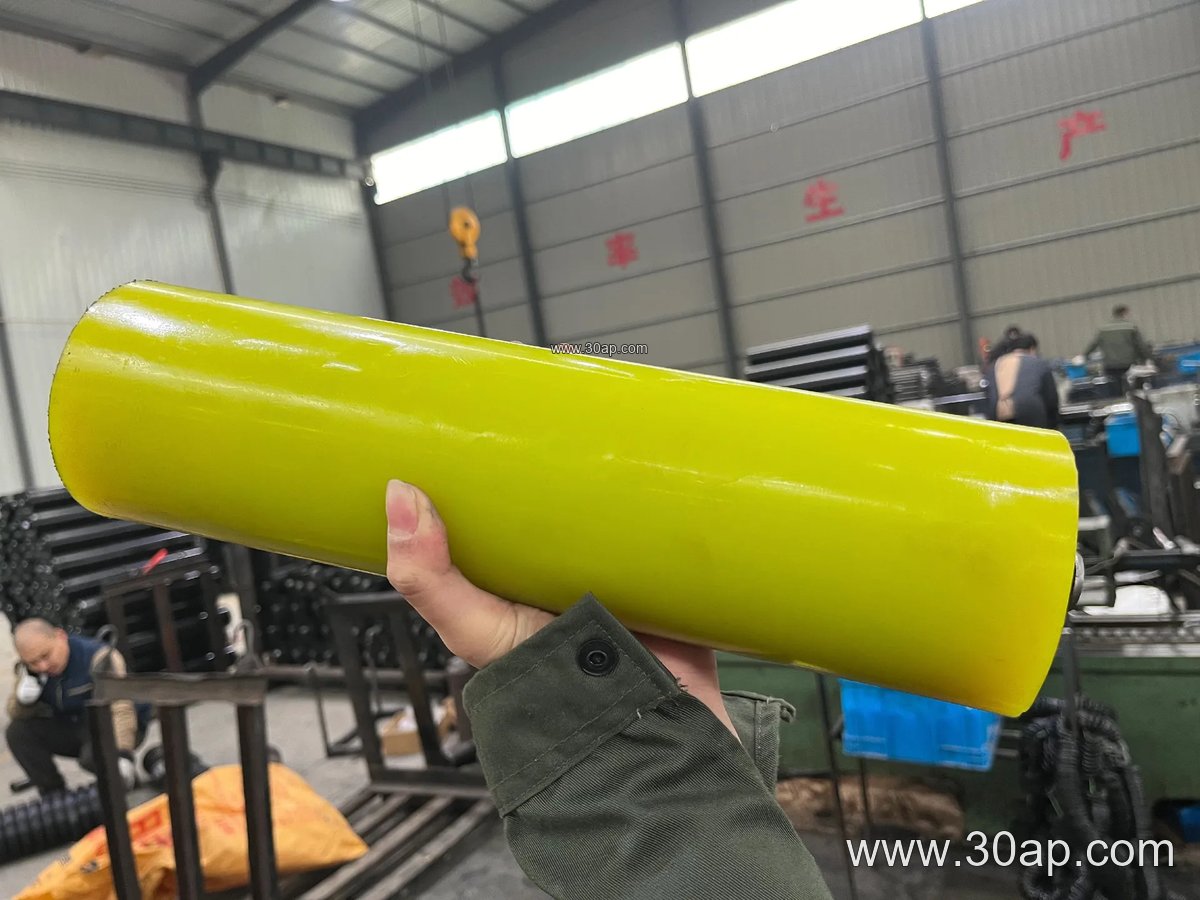
Roller diameter should be checked against the frame height and the belt sag allowed at the loading zone. Larger diameters, such as Ø159 mm or Ø178 mm, reduce rotational speed and bearing load on fast, heavy conveyors. Sealing quality is often the difference between a two-year roller and a six-month one in dusty service. Buyers should also confirm that the mounting dimensions match the existing conveyor bracket, since impact sets are usually taller than standard troughing frames and may require a different bracket height.
Maintenance and Field Notes
Rubber discs wear, crack or separate from the shaft over time, especially when the loading chute is misaligned. Inspect the impact station for uneven disc wear, loose end plates and grease loss at the seals. A seized bearing will flat-spot the belt quickly, so rotation should be checked during routine walks. Keeping the chute centred and reducing free fall with a skirted or stilling section prolongs disc life and protects the belt.
For a full conveyor review, plants often look at the whole line together, from the belt specification and the conveyor pulley to the conveyor bracket and every idler roller in between. A rubber disc idler is a small part of that system, but at the transfer point it is often the part that decides how long the belt cover lasts.