What a Conveyor Self-Aligning Idler Does
A conveyor self-aligning idler is a specialized idler roller designed to automatically correct belt misalignment on a conveyor system. Unlike standard carrying or return idlers that simply support the belt, self-aligning idlers use a pivoting or swiveling action to steer the belt back toward the center line when it starts to drift. This active correction reduces edge damage, spillage, and premature wear on the conveyor belt and related components such as the conveyor pulley and conveyor bracket.
These idlers are particularly valuable in industries where material flow is heavy and continuous—mining, coal washing, cement plants, power plant coal handling, and aggregate crushing circuits. In such environments, a misaligned belt can quickly lead to costly downtime, so a self-aligning idler acts as a simple but effective insurance policy for conveyor uptime.
How Self-Aligning Idlers Are Built
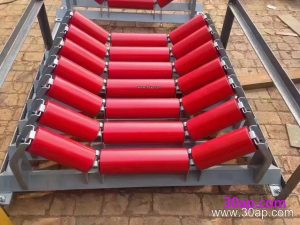
The typical design features a set of idler rollers mounted on a pivot base that allows the entire assembly to rotate slightly in the horizontal plane. When the belt contacts the idler off-center, the friction and force distribution cause the idler to angle itself, creating a steering effect that guides the belt back. Common constructions include:
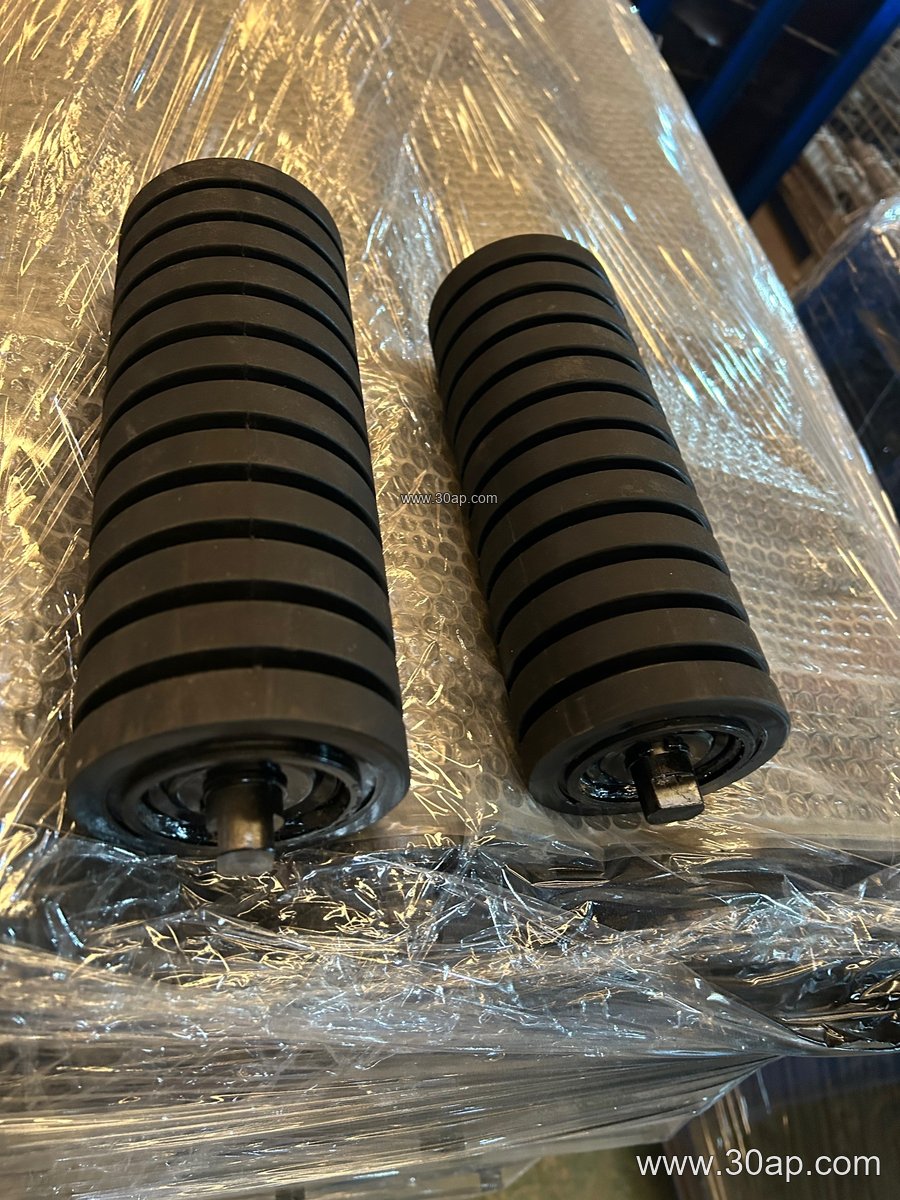
- Friction self-aligning idler: Uses the belt’s own friction to trigger the pivoting action; simple and robust.
- Tapered self-aligning idler: Rollers with tapered ends that generate a centering force; often used in pairs for stronger correction.
- Return-side self-aligning idler: Applied on the return strand to keep the belt centered before it reaches the tail pulley.
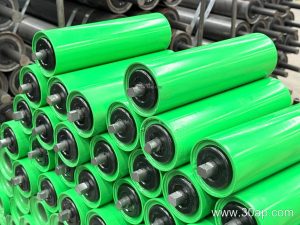
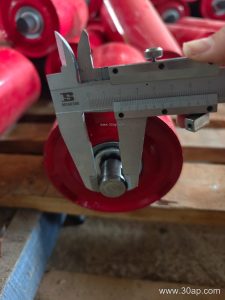
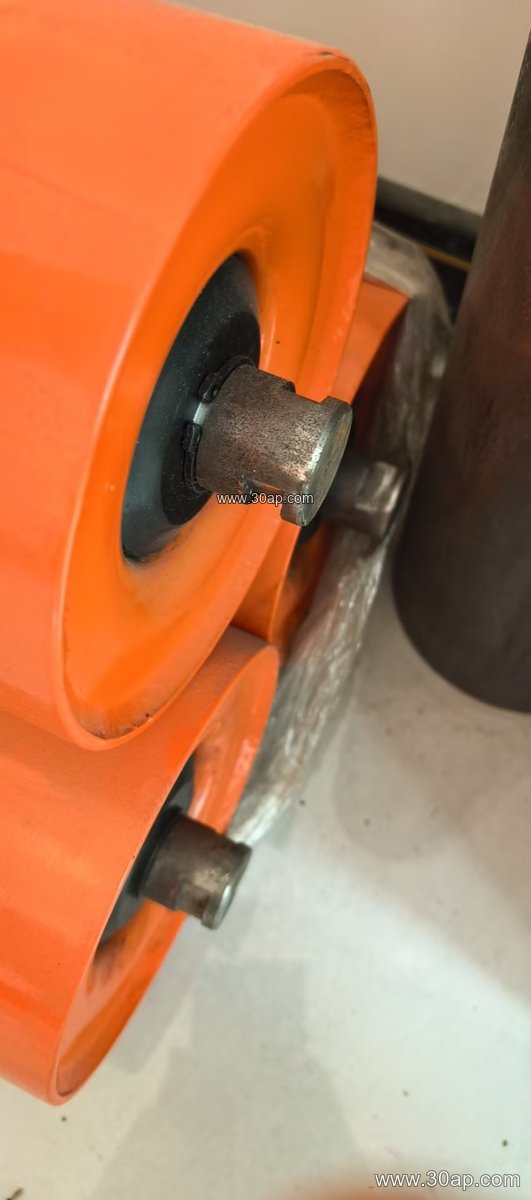
Roller diameters for self-aligning idlers commonly range from Ø89 to Ø159, with larger sizes available for high-tonnage conveyors. Bearing selections such as 6205, 6305, or 6306 are typical, but the exact bearing must match the load and speed requirements—never assume a fixed pairing with a given roller diameter. The roller surface may be plain steel, nylon, or rubber-lagged for extra grip in wet or dirty conditions.
Where Self-Aligning Idlers Fit on the Conveyor
Self-aligning idlers are usually installed at intervals along the carrying side, especially after curves, transfer points, and long straight sections where misalignment tends to develop. On the return side, they are placed before the tail pulley to ensure the belt enters the pulley squarely. They are not a substitute for proper pulley alignment—drive, tail, and bend pulleys each have distinct roles and must be aligned correctly—but they complement a well-designed conveyor system.
In a quarry or sand and gravel plant, a self-aligning idler on the main haulage conveyor can prevent the belt from rubbing against the structure, which is especially important when handling abrasive aggregate. In a coal mining operation, flame retardant conveyor belt and anti-static properties are critical, and self-aligning idlers help maintain smooth operation underground where space is tight and maintenance access is limited.
Selection and Sizing Notes
Choosing the right self-aligning idler involves matching roller diameter, belt width, and trough angle to the conveyor’s duty. Common belt widths include B500, B650, B800, B1000, B1200, and B1400, with corresponding idler lengths that vary by trough configuration. For a three-roll troughing set, typical roller lengths might be around 200 mm for B500, 315 mm for B800, and 465 mm for B1200—but these are examples only and should be confirmed against the actual conveyor design. Trough angles of 20°, 30°, 35°, and 45° are standard, and a slight forward tilt of about 1.5° to 2° is sometimes used on self-aligning idlers to enhance training effect.
Buyers should also consider the belt type in use. A heavy-duty mining conveyor belt or steel cord conveyor belt may require larger diameter idlers and heavier bearings, while a fabric core conveyor belt such as EP conveyor belt or NN conveyor belt might call for a different roller spacing. The self-aligning idler must be compatible with the conveyor bracket and frame dimensions, and the roller surface should suit the environment—rubber discs for impact zones, for instance, though that is a different idler subtype used for cushioning, not for alignment.
Maintenance and Buyer Checklist
Self-aligning idlers have no external power source, so maintenance mainly involves periodic inspection of the pivot mechanism, bearing condition, and roller wear. Seized pivots or worn bearings will reduce effectiveness, so a routine check during shutdowns is worthwhile. When ordering, specify belt width, trough angle, roller diameter, bearing type, and any special surface requirements. Avoid assuming that one idler size fits every conveyor; the correct selection depends on belt tension, material load, and environmental conditions. For reliable tracking in demanding applications, pair self-aligning idlers with quality conveyor pulleys and well-aligned conveyor brackets—and remember that no single component can compensate for a poorly designed system.