What a Ceramic Rubber-Lined Pulley Does
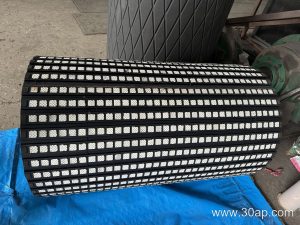
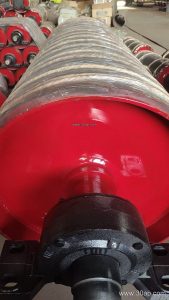
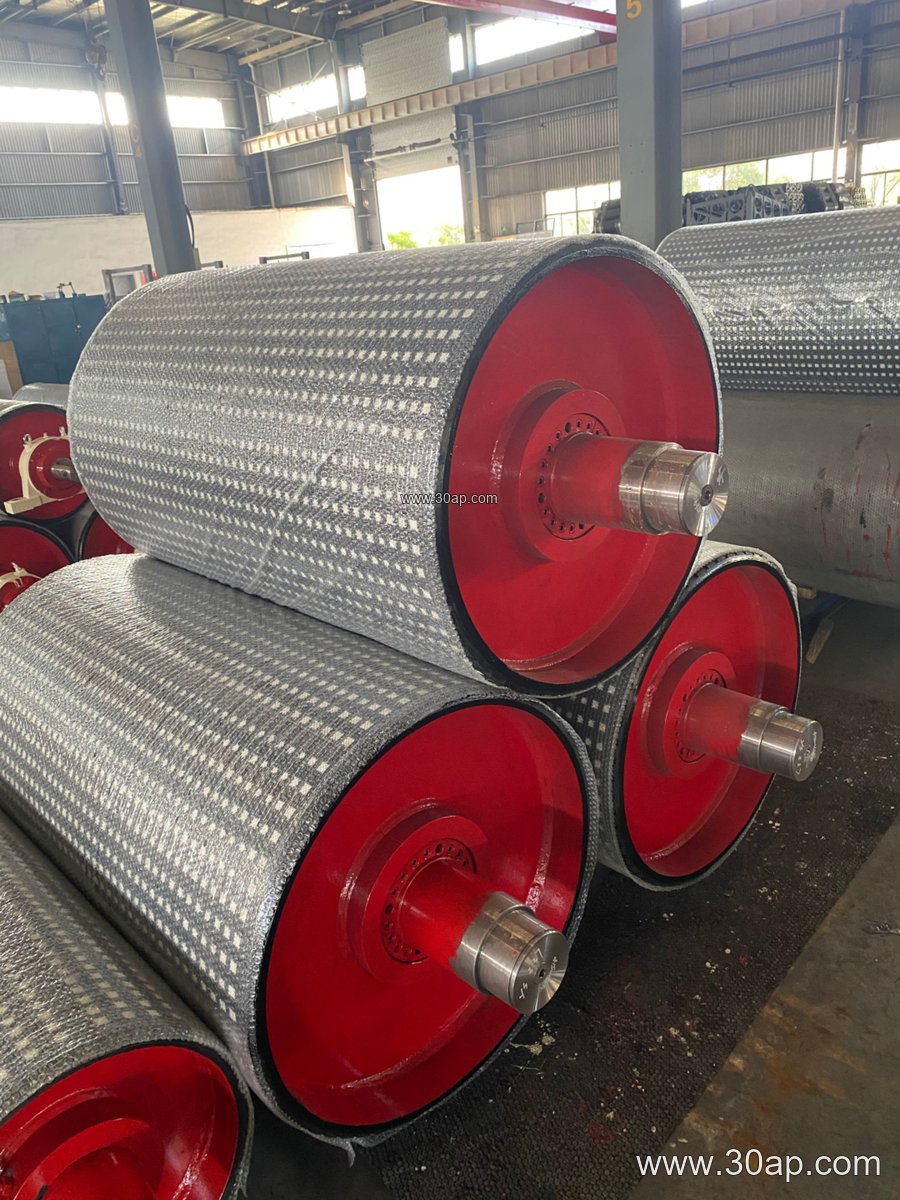
A ceramic rubber-lined pulley is a conveyor pulley whose shell is covered with rubber that holds embedded ceramic tiles. This combination gives the pulley a high-friction surface that grips the conveyor belt while resisting abrasive wear. It is often chosen for drive positions where slip and wear are constant concerns, especially in mining, cement, and power plant coal handling. The ceramic rubber-lined pulley is also known as a ceramic lagged pulley or ceramic lagging pulley, and these names refer to the same product.
Unlike a plain steel shell, the ceramic rubber-lined pulley uses the rubber to cushion impact and the ceramics to provide a hard, long-lasting contact surface. This is useful when the belt carries sharp, heavy material or when the pulley operates in dusty, wet conditions. The result is better traction and less downtime for lagging replacement.
How the Ceramic Rubber-Lined Pulley Is Built
The pulley body is usually a steel drum with welded end discs and a shaft. The lagging is applied in layers: a rubber bonding layer, then ceramic tiles set into the rubber, and sometimes a top rubber layer for extra protection. Common surface forms include diamond and herringbone patterns, but ceramic tiles are the key feature. Lagging thickness often ranges from 8 mm to 20 mm, with 10 mm, 12 mm, and 15 mm being common choices.
Ceramic tiles are typically small, hard blocks arranged in a pattern that leaves channels for water and debris to escape. This helps maintain grip in wet conditions. The rubber around the tiles absorbs shock and reduces noise. The pulley is balanced and machined so it runs true with the conveyor belt.
Where It Fits in the Conveyor System
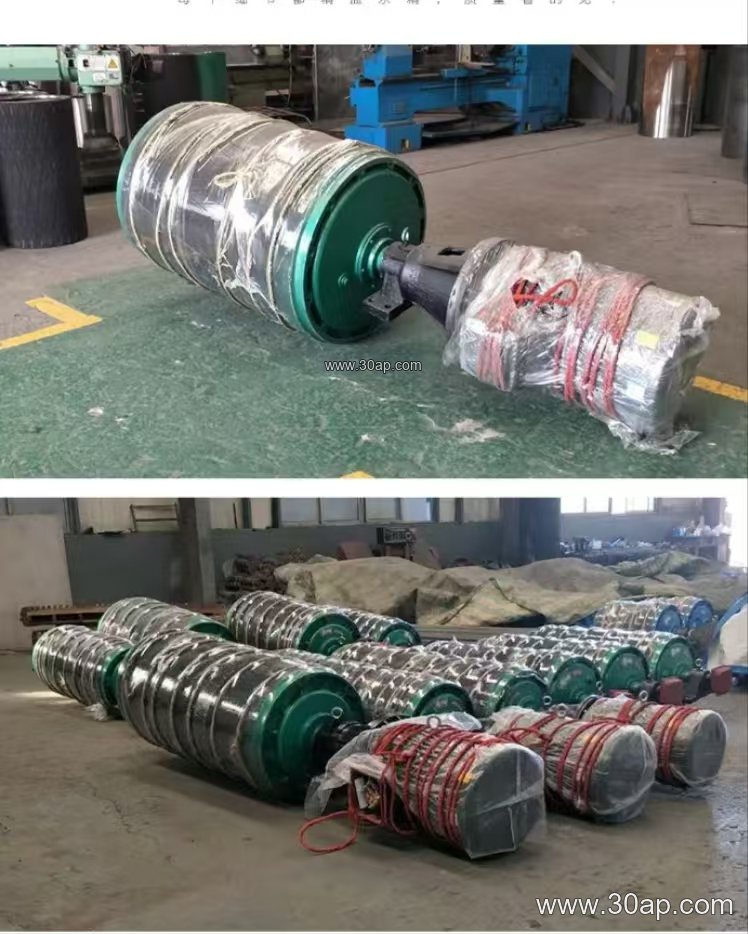
Ceramic rubber-lined pulleys are most often used as drive pulleys, where the belt must be pulled without slipping. They can also serve as tail pulleys or bend pulleys in abrasive service, but the drive position is where their grip matters most. In a typical conveyor, the drive pulley connects to the gearbox and motor, while a tail pulley at the load end and bend pulleys along the return run guide the belt. A ceramic rubber-lined pulley at the drive point helps transfer power efficiently, even when the belt is wet or dirty.
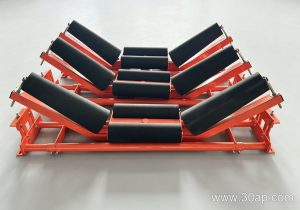
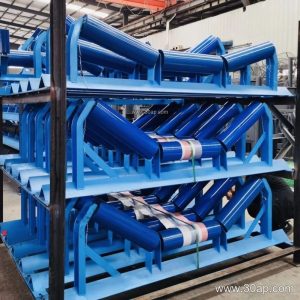
These pulleys are common in quarry and aggregate lines, coal preparation plants, cement plants, and power station coal yards. They also appear in iron ore and copper ore handling, where sharp particles quickly wear ordinary lagging. In any of these settings, the ceramic rubber-lined pulley works with the conveyor belt, idler roller, and conveyor bracket to keep material moving.
Choosing the Right Size and Lagging
Selecting a ceramic rubber-lined pulley starts with the belt width and the required diameter. The pulley face width is usually a little wider than the belt, for example about 1150 mm for a B1000 belt or about 1400 mm for a B1200 belt. Diameters commonly range from Ø200 to Ø1800, but the final choice depends on belt tension, torque, and available space. There is no fixed rule that one belt width matches only one pulley diameter.
Shaft diameter is determined by torque and load, not by belt width alone. Common shaft sizes include Ø80, Ø100, Ø120, and Ø160, but each case must be calculated. The table below shows example combinations for reference only.
| Belt Width | Pulley Face Width (approx.) | Example Diameter | Typical Lagging Thickness |
|---|---|---|---|
| B800 | 950 mm | Ø500 | 10–12 mm |
| B1000 | 1150 mm | Ø800 | 12–15 mm |
| B1200 | 1400 mm | Ø1000 | 15 mm |
| B1400 | 1600 mm | Ø1250 | 15–20 mm |
When specifying, consider the material being carried. For highly abrasive bulk material, a thicker ceramic lagging may last longer. For wet conditions, ensure the tile pattern allows drainage. Always match the pulley to the conveyor belt tension and the drive power.
Buyer Checklist
- Confirm the pulley position: drive, tail, bend, or take-up. Drive pulleys benefit most from ceramic lagging.
- Check belt width and required face width. The pulley face is usually wider than the belt.
- Review the lagging thickness and ceramic tile pattern for the material and conditions.
- Verify shaft diameter and bearing size against the actual load and torque.
- Ask for dynamic balancing and runout tolerances to ensure smooth operation with the conveyor belt.
For more information on conveyor pulleys and related components, visit our site at www.example.com/conveyor-pulley. A ceramic rubber-lined pulley can extend service life in demanding industries such as mining, cement, and power generation, where abrasive wear is a daily challenge.