What Rubber Pulley Lagging Does
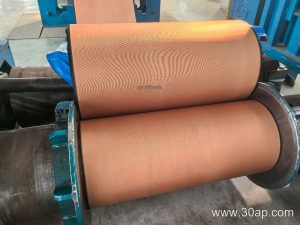
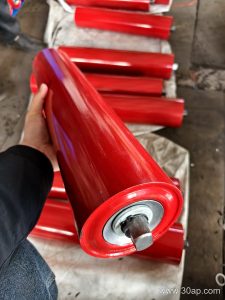
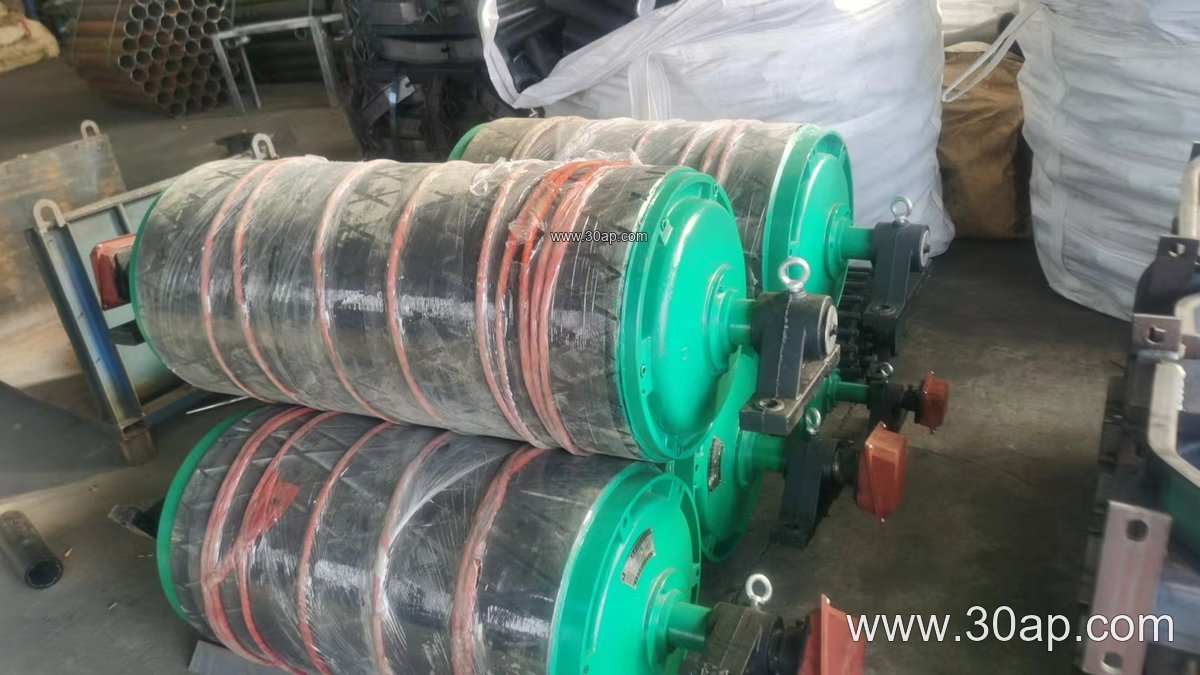
Rubber pulley lagging is the rubber layer bonded to the shell of a conveyor pulley to increase friction between the drum and the conveyor belt, protect the shell from abrasion, and improve tracking. It is used on drive pulleys, tail pulleys, bend pulleys and tension pulleys, but the job it performs differs from position to position. On a drive pulley, the lagging transmits torque; on a tail or bend pulley, it mainly guides the belt and resists wear. Because these roles are not interchangeable, the lagging specification should follow the pulley position rather than a single universal rule.
The product is also called conveyor pulley rubber lagging or drum lagging. It is a consumable wear part, not a substitute for correct pulley diameter, shaft size or belt tension.
How the Lagging Is Built
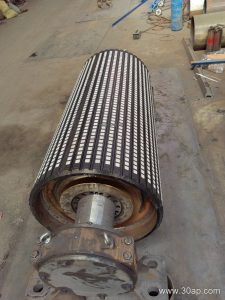
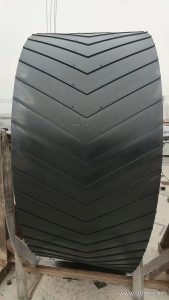
Most rubber pulley lagging consists of a rubber sheet or strip with a textured or plain working surface, supplied either as cold-bonded sheet with adhesive or as hot-vulcanized lagging applied in a workshop. Common surface forms include plain, diamond and herringbone patterns. Thickness is commonly 8, 10, 12, 15 or 20 mm, selected according to pulley diameter, belt speed and load. A thin layer suits smaller bend pulleys, while thicker lagging is often used on large drive drums in heavy-duty service.
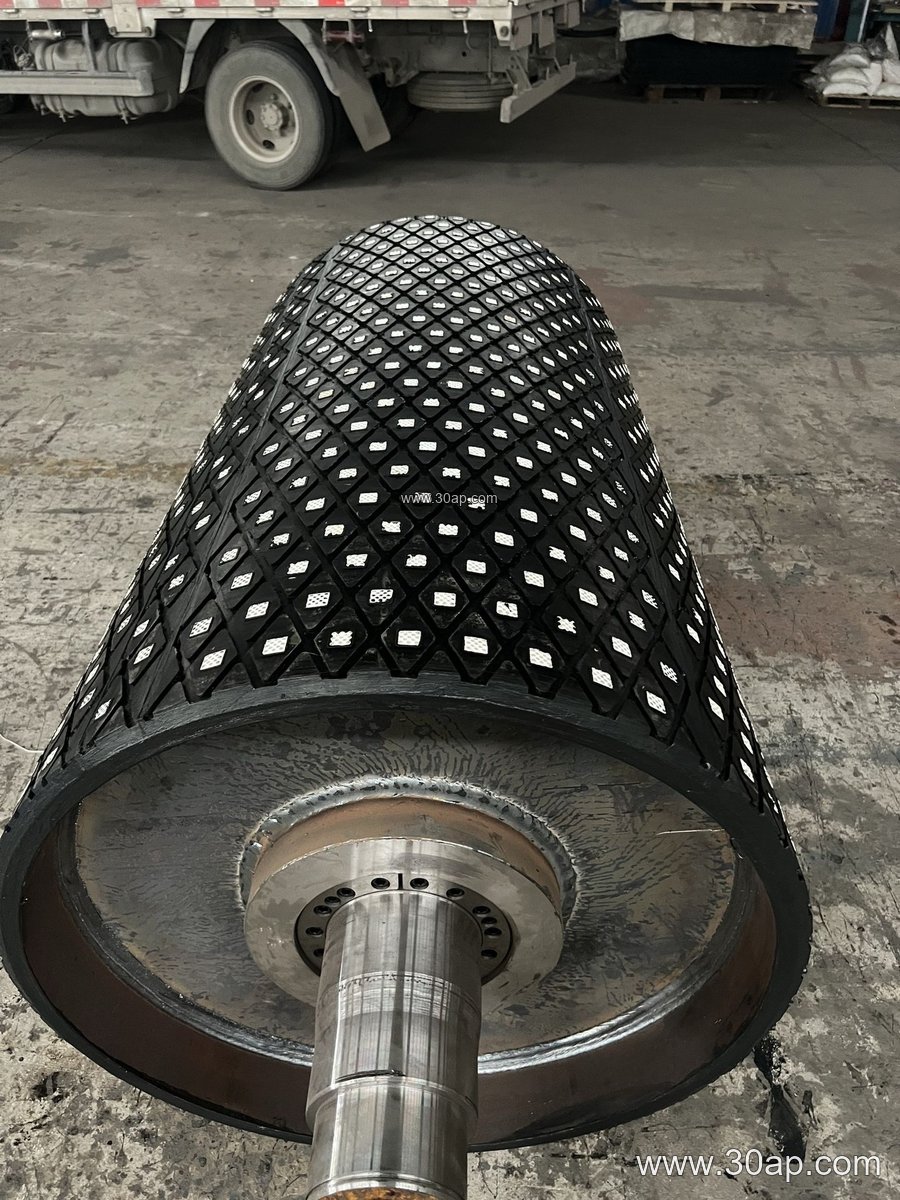
Attachment quality matters as much as the rubber compound. Hot vulcanization generally gives a stronger bond and is preferred where the pulley operates under high torque or in wet, dusty conditions. Cold-bonded lagging is easier to install on site but depends on careful surface preparation.
Where It Fits in the Conveying Line
Rubber lagging appears wherever a conveyor pulley needs grip or protection. In a quarry or aggregate line, it is common on the head pulley that discharges onto a crusher and on tail pulleys exposed to grit. In a coal handling plant or power plant coal yard, lagging helps maintain drive traction on belts carrying damp material. Cement plants use it on clinker and raw material conveyors, while port bulk terminals rely on it on long inclined belts where slip would be costly.
The lagging should be matched to the belt it runs against. A heavy abrasion resistant conveyor belt carrying sharp rock places different demands on a drum than a smooth EP conveyor belt in a sand and gravel plant. Likewise, a steel cord conveyor belt on a high-tension main line needs a drive pulley with sufficient lagging thickness and a properly sized shaft. The belt width and pulley face width must also agree: a B800 belt typically runs on a pulley with a face around 950 mm, and a B1200 belt on roughly 1400 mm, but the diameter is set by torque and belt tension, not by width alone.
Common Reference Dimensions
The values below are typical reference points, not fixed combinations. Final dimensions are determined by conveyor design.
- Belt width examples: B400, B500, B650, B800, B1000, B1200, B1400, B1600, B1800, B2000
- Pulley diameter examples: Ø200, Ø250, Ø315, Ø400, Ø500, Ø630, Ø800, Ø1000, Ø1250
- Lagging thickness: 8, 10, 12, 15, 20 mm
- Shaft diameter examples: Ø50, Ø60, Ø70, Ø80, Ø90, Ø100, Ø120, Ø140, Ø160
A B800 × Ø500 drive pulley and a B1200 × Ø1000 head pulley are both realistic configurations, but a given belt width does not dictate one diameter or one shaft size. Shaft diameter follows torque and load calculations.
Buyer Checklist
- Confirm the pulley position: drive, tail, bend, tension or snub.
- State belt width, pulley face width, shell diameter and shaft diameter.
- Choose surface pattern by slip risk and material carried.
- Specify lagging thickness and bonding method.
- Check that the belt type, such as a flame retardant conveyor belt underground or a heat resistant conveyor belt near kilns, is compatible with the rubber compound.
- Plan inspection intervals; worn or polished lagging reduces traction before it fails visibly.
Reliable lagging selection starts with the drum, not the catalogue. Matching rubber pulley lagging to the actual pulley duty keeps the conveyor belt tracking, protects the shell, and avoids unplanned stoppages in mining, cement, power and bulk handling operations.