What a Ceramic Lagged Pulley Does
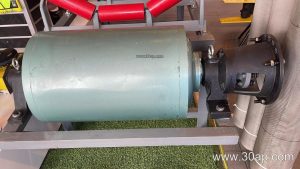
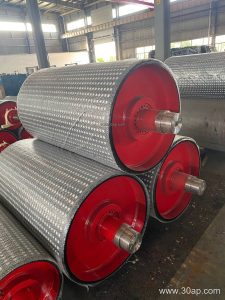
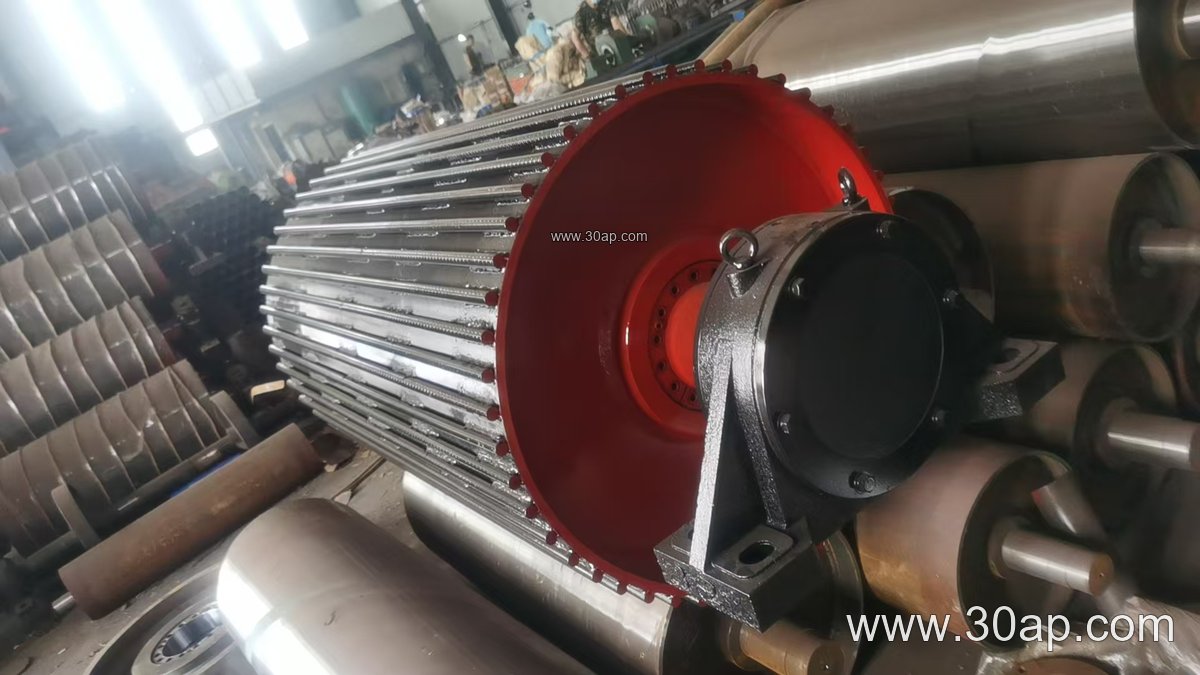
A ceramic lagged pulley is a conveyor pulley whose shell is covered with ceramic tiles bonded into a rubber backing layer. The ceramic studs sit slightly proud of the rubber, so the belt contacts hard, wear-resistant islands rather than a smooth rubber surface. This design raises the friction coefficient between pulley and belt while resisting the polishing and grooving that plain rubber lagging suffers in abrasive service. In practice, the pulley is usually a drive pulley, though the same ceramic surface can be specified on a tail pulley where slip and material build-up are concerns.
The product is also described as a ceramic rubber lagged pulley or a pulley with ceramic lagging. Those names refer to the same item. Drive, tail and bend pulleys keep their distinct roles and are not interchangeable; ceramic lagging is a surface choice applied to whichever position the design calls for.
How the Lagging Is Built
The shell is cleaned and primed, then an uncured rubber sheet is applied. Ceramic tiles, typically small squares or rectangles with raised studs, are pressed into the rubber before vulcanisation. Heat and pressure cure the bond so the tiles are embedded rather than glued on the surface. Tile spacing leaves narrow rubber channels that help water and fine dust escape from the contact zone.
- Ceramic tile with moulded studs for grip
- Rubber backing layer, commonly 8 to 20 mm thick depending on duty
- Bonded and vulcanised to the pulley shell
- Optional grooving or edge chamfer to protect the belt edge
Because the ceramic carries the load, the rubber behind it is protected from direct abrasion. That is why this surface suits conveyor pulleys handling sharp, hard or wet material where ordinary rubber lagging would wear smooth quickly.
Where It Fits in the Plant
Aggregate and quarry lines are a natural home for ceramic lagging. Crusher discharge belts carry jagged rock, and the drive pulley must keep grip even when dust and rainwater are present. Cement plants use it on clinker and limestone belts, while power plant coal handling and wash coal plants appreciate the slip resistance on wet, fine material. Iron ore and copper ore circuits also specify ceramic surfaces on heavily loaded drive pulleys.
The pulley does not work alone. Belt tension, the conveyor belt type and the condition of every idler roller along the run all affect whether the drive can transmit torque without slipping. A ceramic surface compensates for difficult conditions, but it cannot rescue a belt that is under-tensioned or a lagging that has been allowed to wear through to the shell.
Matching the Pulley to the Belt
Selection starts with the belt width and the required diameter, not with a fixed formula linking one width to one diameter. A B800 belt may run on a Ø500 drive pulley in a short, lightly loaded conveyor, while a longer run with higher tension may need Ø630 or Ø800. Heavier fabric belts such as EP200 or EP300, and steel cord belts like ST1600, generally call for larger diameters to keep bend stress within limits. Abrasion resistant conveyor belt grades and heat resistant conveyor belt grades each impose their own demands on the pulley surface and on belt tracking.
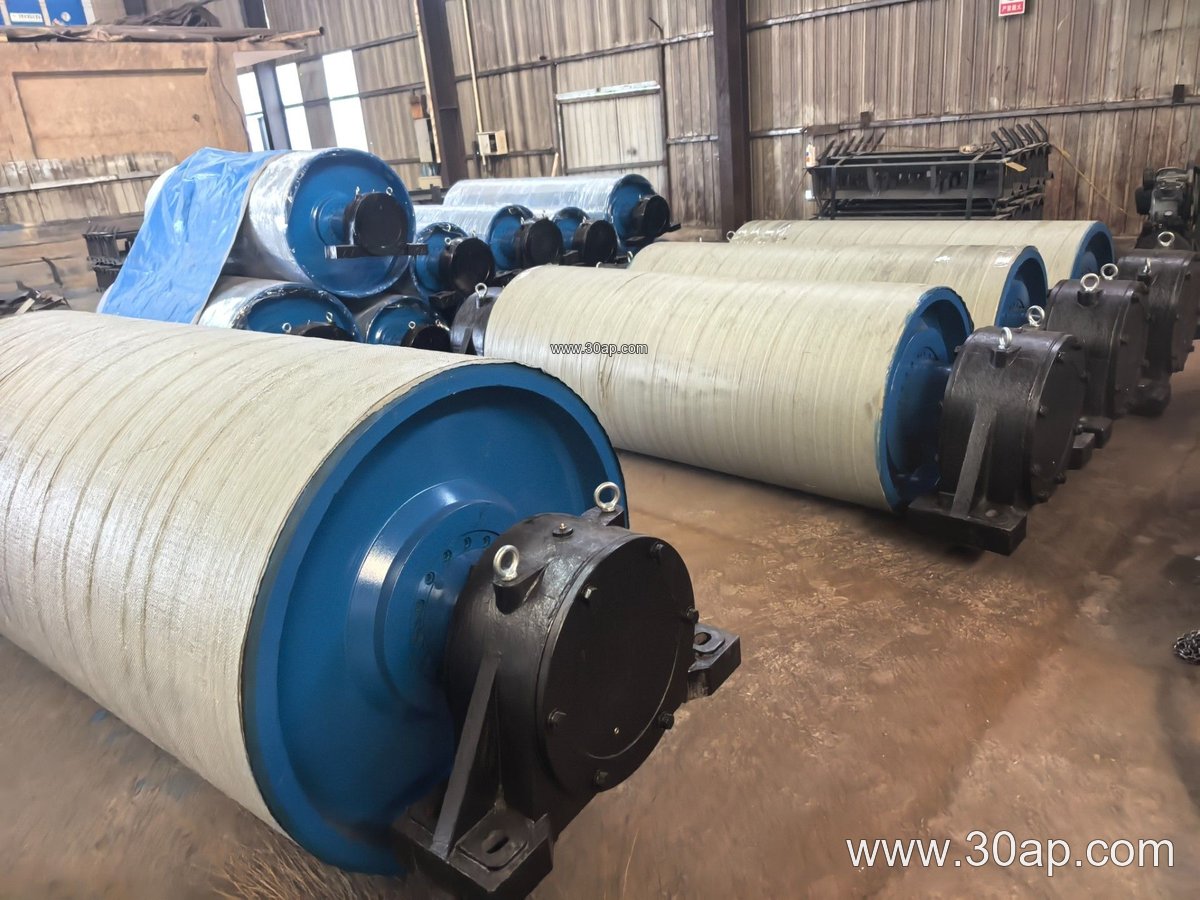
Shaft diameter is determined from torque and bearing loads, not from belt width alone. Two pulleys for the same B1200 belt can have quite different shaft sizes if their duty differs.
| Reference item | Common range |
|---|---|
| Belt width | B400 to B2400 |
| Pulley diameter | Ø200 to Ø1800 |
| Lagging thickness | 8, 10, 12, 15, 20 mm |
| Shaft diameter | Ø50 to Ø200, by design |
| Face width example | B1000 belt, about 1150 mm face |
Typical combinations such as B800 × Ø500 or B1400 × Ø800 are starting points for discussion, not universal rules. The final choice should follow the conveyor design calculation.
Buyer Checklist
Ask for the lagging thickness, tile pattern and rubber hardness, and confirm the pulley position in the drive. Check that the face width suits the belt and that the crown, if any, matches the belt tracking requirement. Confirm the shaft size and bearing arrangement against the actual load case. On site, inspect ceramic tiles for cracks or missing pieces during shutdowns, because a lost tile exposes rubber and accelerates wear. Keep the belt cleaner and the conveyor bracket alignment in good order, and the lagging will last far longer.
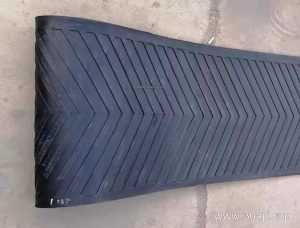
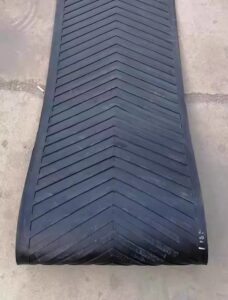
For plants running chevron conveyor belt or corrugated sidewall conveyor belt profiles, note that the pulley face and any guide structures must clear the raised pattern. This is a detail worth confirming before the order is placed, since a ceramic surface cannot be trimmed on site like plain rubber.