What a Tail Pulley Assembly Does
A tail pulley assembly is the return-end pulley group that supports and guides the conveyor belt at the back of a conveyor. It sits opposite the drive pulley and usually works with a take-up system to keep belt tension steady. In quarry, coal mining, and cement plant circuits, this assembly helps the belt track correctly after the carrying run and before it returns to the head. Unlike a drive pulley that transmits power, or a bend pulley that only changes belt direction, the tail pulley assembly is built around the return and tensioning function. It is not a substitute for either of those subtypes, and each position has its own design logic.
Construction and Key Parts
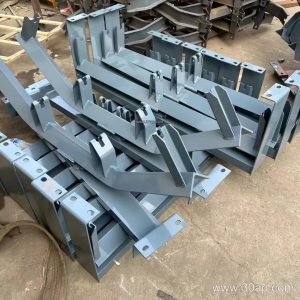
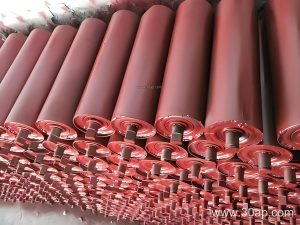
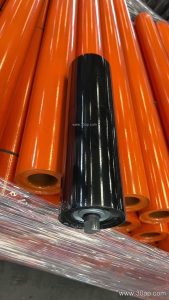
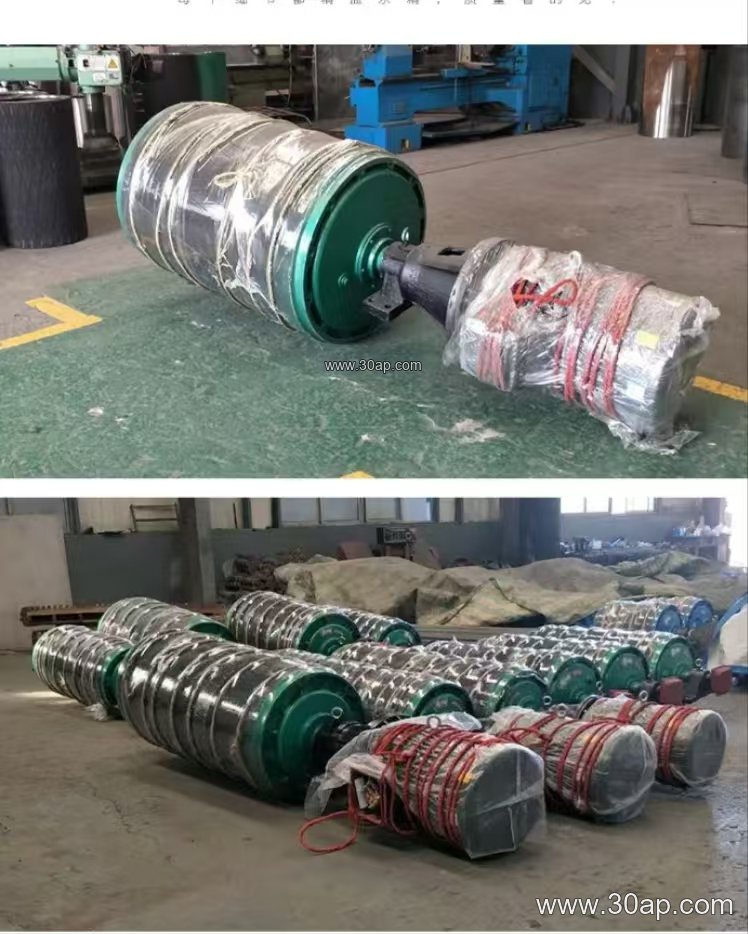
A typical tail pulley assembly includes the pulley shell, shaft, bearings, bearing housings, and a supporting frame or conveyor bracket. The shell may be plain steel or covered with rubber lagging for grip and wear protection. Common surface forms include smooth, diamond lagging, and plain rubber; lagging thickness often falls in the 8–20 mm range depending on duty. The shaft diameter is selected by torque and load, not by belt width alone. Common shaft sizes include Ø80, Ø100, Ø120, and Ø140, but final sizing depends on the conveyor design. The assembly may also include a scraper or plow to shed carryback before the belt enters the return run.
Sizing Notes for Buyers
Tail pulley diameter and face width should match the belt and the load profile. Face width is usually a little wider than the belt; for example, a B800 belt often runs on a pulley face around 950 mm, and a B1200 belt on roughly 1400 mm. Diameter choices such as Ø400, Ø500, Ø630, or Ø800 are common, but there is no fixed rule that one belt width can only use one diameter. A B1200 × Ø1000 combination may suit one project while a B800 × Ø500 works for another, depending on tension, speed, and space. The table below lists reference combinations, not mandatory matches.
| Belt Width | Typical Pulley Face | Common Diameter Range |
|---|---|---|
| B500 | ≈600 mm | Ø250–Ø400 |
| B650 | ≈750 mm | Ø315–Ø500 |
| B800 | ≈950 mm | Ø400–Ø630 |
| B1000 | ≈1150 mm | Ø500–Ø800 |
| B1200 | ≈1400 mm | Ø630–Ø1000 |
| B1400 | ≈1600 mm | Ø800–Ø1250 |
These values are for orientation only. Always confirm shaft diameter, bearing size, and lagging choice against the actual conveyor duty.
Where It Fits in the Line
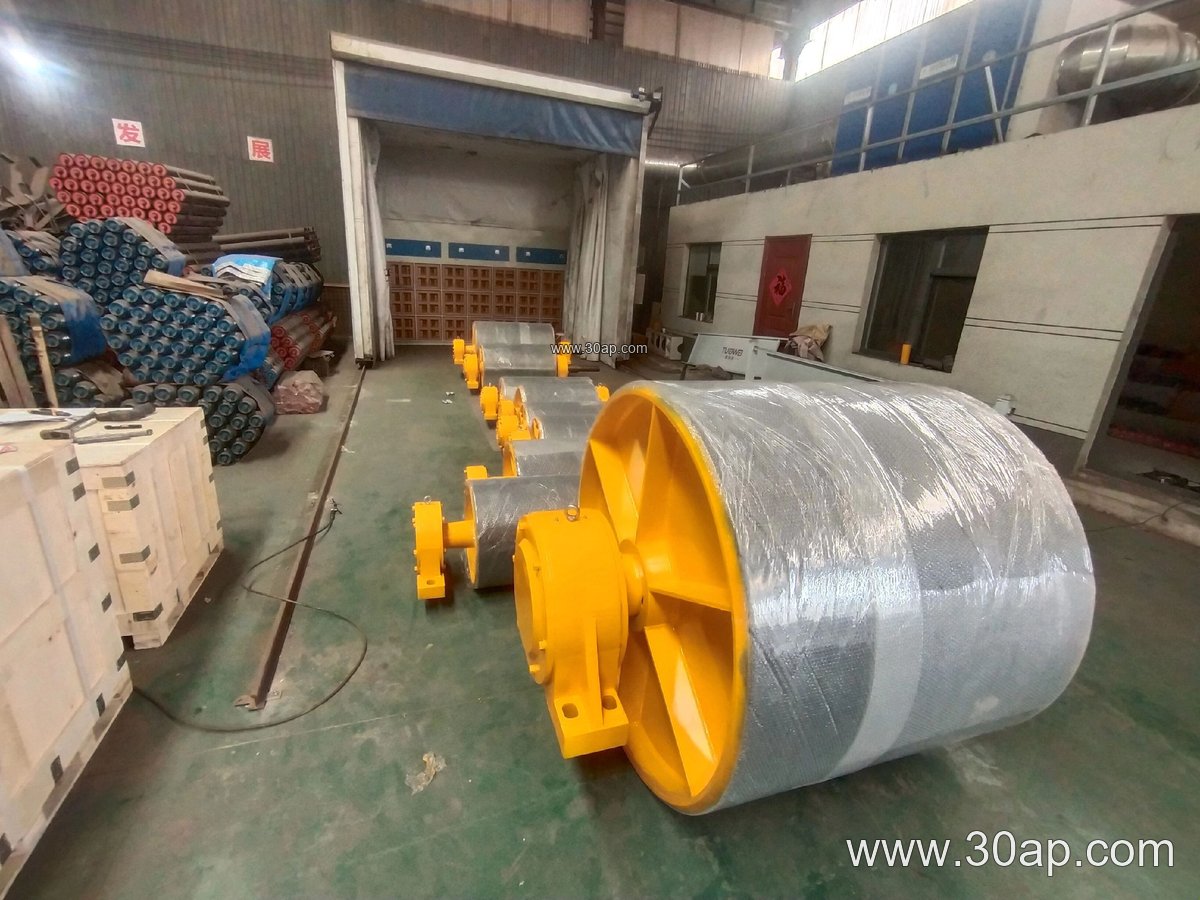
You will find tail pulley assemblies in sand and gravel plants, iron ore and copper ore handling, power plant coal conveyors, and fertilizer or grain silo systems. In a crushing and screening line, the tail pulley helps keep the belt centered after the load point. In a coal mining conveyor, a flame retardant conveyor belt may run over a lagged tail pulley to reduce slip and wear. The assembly also pairs with idler rollers and conveyor brackets to maintain alignment along the return strand. When the belt is a heavy-duty mining conveyor belt or an abrasion resistant conveyor belt, the tail pulley lagging should be chosen to match that wear profile.
Selection and Maintenance Tips
Check that the tail pulley assembly matches the belt type and tensioning method. A rubber conveyor belt and an EP conveyor belt may call for different lagging hardness and surface pattern. Keep the pulley face clean and inspect lagging for glazing or chunking. Bearing condition matters more than appearance; listen for noise and check for play during scheduled stops. If the belt mistracks, inspect the tail pulley alignment before adjusting the take-up. For harsh duty, such as a steel cord conveyor belt under high tension, confirm the shaft and bearing housing ratings with the conveyor designer. A well-matched tail pulley assembly reduces belt edge damage and extends the service life of the whole conveyor.