What a Ø127 Conveyor Idler Is
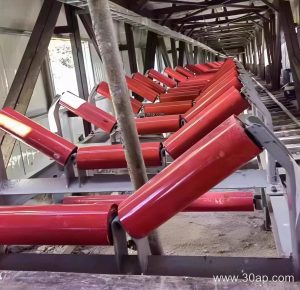
A Ø127 conveyor idler is a belt-carrying roller with a nominal shell diameter of 127 mm. It sits in a conveyor bracket frame and supports the conveyor belt on the carrying or return run. Plants handling abrasive bulk material — a quarry, a limestone mine, a cement kiln line feed, or a power plant coal yard — often move up to this diameter when belt widths and load per meter rise beyond what smaller rollers handle comfortably. In everyday language, the same item is simply called a 127 mm idler roller or a Ø127 carrying roller; all three names point to one product.
The number is a shell diameter, not a belt width. A Ø127 idler can be built for several belt widths, with roller length and frame geometry changing accordingly.
How the Roller Is Built
The typical construction is a steel tube shell with pressed end caps, a through shaft, and sealed ball bearings. Roll face options include plain steel, nylon, ceramic, and rubber rings. Rubber rings are common on impact zones below a crusher or transfer chute, where lumpy ore or aggregate drops onto the belt. Ceramic or nylon faces are chosen where sticking material or wear is a concern.
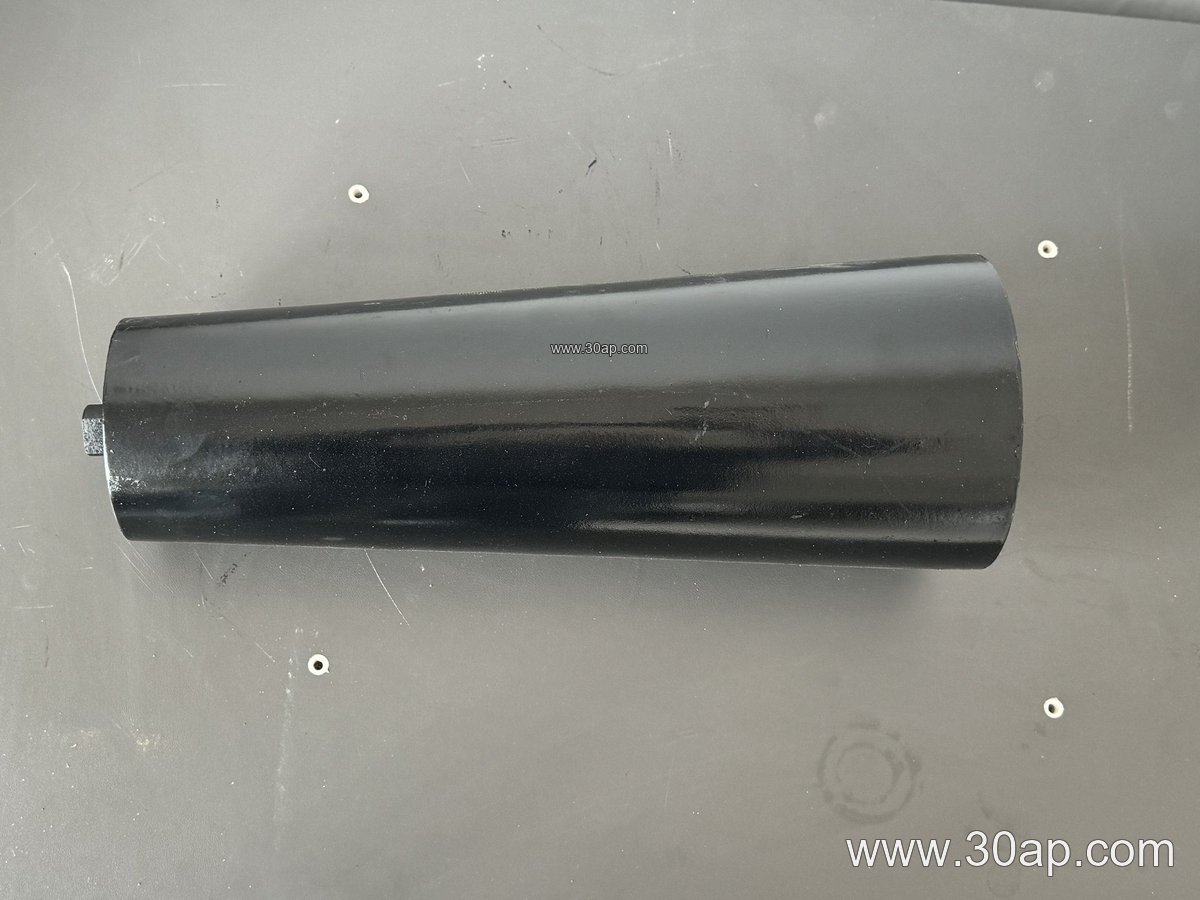
Common bearing sizes for this class of roller include 6205, 6305, 6306, and 6308. Bearing choice follows load and speed calculations, not the diameter alone, so a Ø127 shell does not have one fixed bearing or shaft size.
Where It Fits on the Conveyor
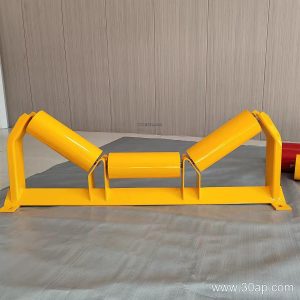
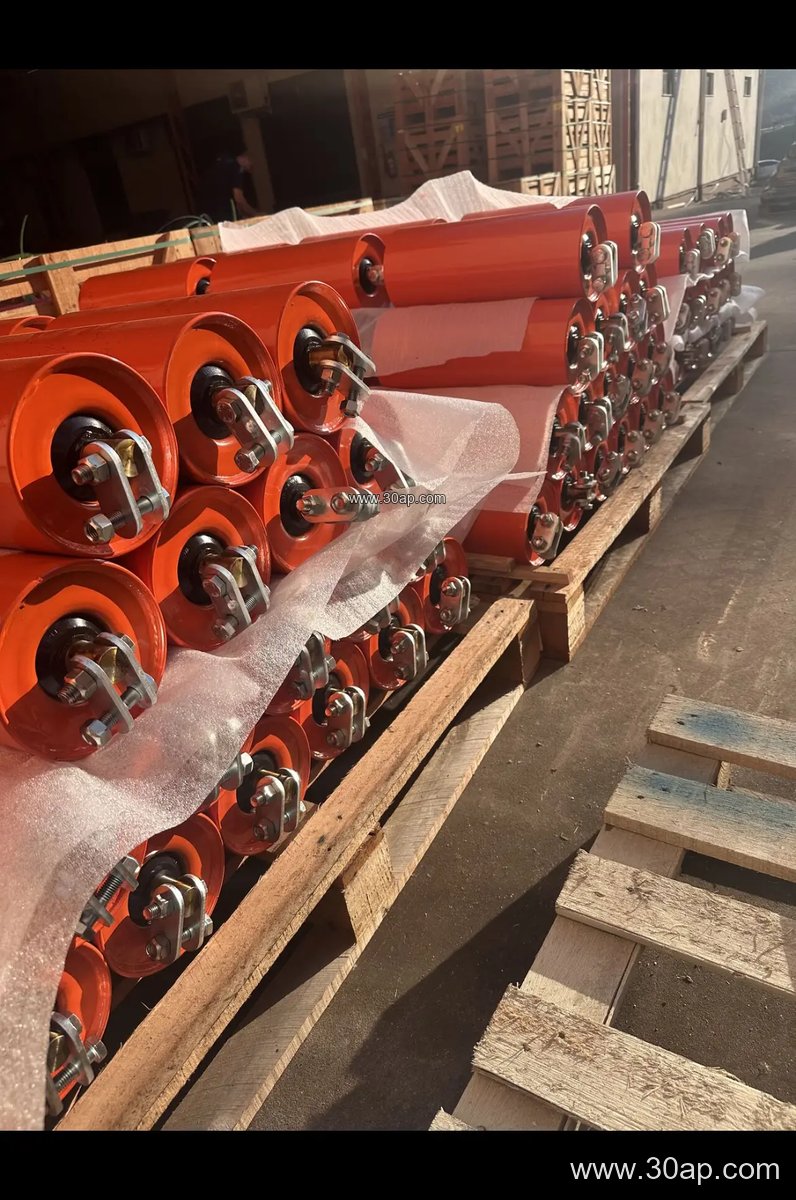
The 127 mm diameter appears most often in three-section troughing sets on the carrying side, and in return sets underneath. A three-roll trough set with 35-degree trough angle is a frequent arrangement on medium and wide belts. On the return run, the same diameter may be used in a single flat roller or in a V-return assembly that helps keep the belt centered.
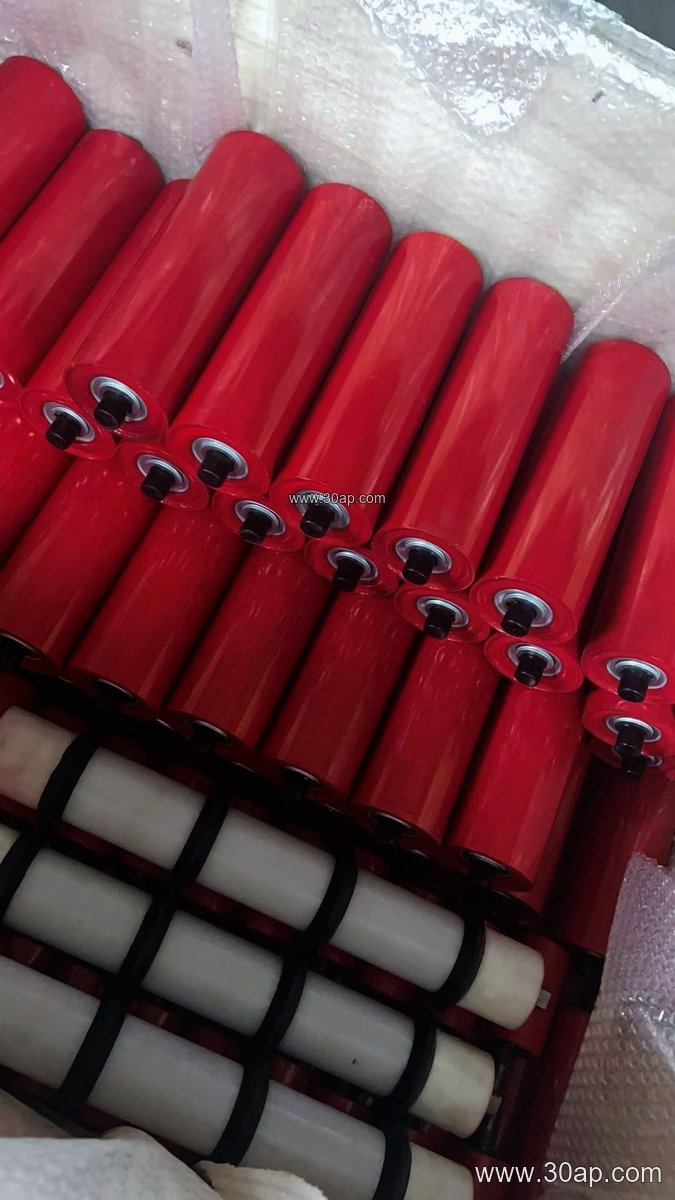
- Carrying side — three-roll troughing idlers, sometimes with 20, 30, 35, or 45 degree trough angles.
- Return side — flat return rollers or V-return rollers.
- Transition zones — idlers placed near the head and tail to ease the belt from flat to troughed profile.
- Impact areas — rubber-ring or cushion idlers under loading points.
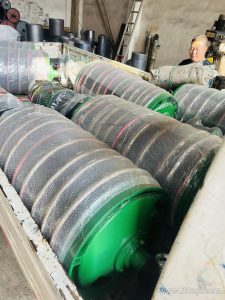
Drive pulleys, tail pulleys, and bend pulleys are separate components with their own diameters and lagging; they are not interchangeable with idlers and should be specified separately. A conveyor pulley turns the belt, while an idler roller only supports it.
Matching Roller Length to Belt Width
Roller length changes with belt width, trough angle, and roll position. The table below gives common reference lengths for the middle roll of a three-roll trough set; side rolls and frame dimensions may differ, and final values should come from the conveyor design.
| Belt width | Typical middle roll length (reference) |
|---|---|
| B500 | 200 mm |
| B650 | 250 mm |
| B800 | 315 mm |
| B1000 | 380 mm |
| B1200 | 465 mm |
| B1400 | 530 mm |
| B1600 | 600 mm |
| B1800 | 670 mm |
| B2000 | 750 mm |
These figures are examples, not fixed pairings. A Ø127 idler is not limited to one belt width, and belt width alone does not determine shaft diameter.
Choosing the Right Variant
Selection starts with the duty. A heavy-duty mining conveyor belt carrying iron ore or copper ore at high tonnage will call for robust bearings and thicker shells. A cement plant clinker line may need heat-tolerant lubrication in the idler bearings. A coal mining conveyor belt in an underground road needs flame retardant and anti-static properties in the belt itself, while the idlers must be sealed against fine dust and moisture.
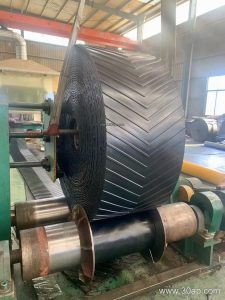
Self-aligning variants — friction, conical, or return-side training idlers — are used where the belt tends to drift. Spiral or disc return rollers help shed sticky material before it wraps the shell. For a belt with a corrugated sidewall or chevron profile, idler spacing and roll face should be checked so the cleats do not strike the rollers.
Buyer Checklist
- Confirm shell diameter, roller length, shaft end type, and frame fixing dimensions.
- State the belt width and trough angle so the correct roll lengths and bracket set are quoted.
- Describe the material — lump size, moisture, temperature, abrasiveness — to guide bearing seals and roll face.
- Ask about bearing size and sealing method rather than assuming a standard fit.
- Check that the idler supplier and the belt supplier are working from the same belt width and speed data.
For related components, buyers often source the conveyor belt, idler roller, conveyor pulley, and conveyor bracket as one package so that dimensions stay consistent across the line. Before ordering, review the layout drawing, confirm the idler spacing, and keep a small stock of spare rollers at transfer points where impact wear is highest. A correctly sized Ø127 conveyor idler, matched to belt width and load, keeps the belt tracking straight and extends service life across quarry, cement, power, and mining operations.