What a High-Speed Conveyor Idler Has to Do
A high-speed conveyor idler is a rotating support roller built to carry a moving belt at elevated belt speed without excessive vibration, heat build-up, or premature bearing failure. In a fast overland line, a ship loading system, or a power plant coal handling circuit, the idler roller spends its life spinning far faster than the belt in a slow feeder. That changes the design priorities: balance, bearing quality, seal tightness, and roller roundness matter more than raw wall thickness alone.
The high-speed idler still belongs to the same family as any troughing or return idler. It is not a drive pulley, nor a tail or bend pulley. Those are conveyor pulleys that transmit torque or redirect the belt; the idler only supports it. Keeping that distinction clear helps buyers avoid mixing roller orders with pulley orders.
Construction Details That Matter at Speed
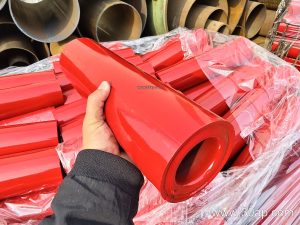
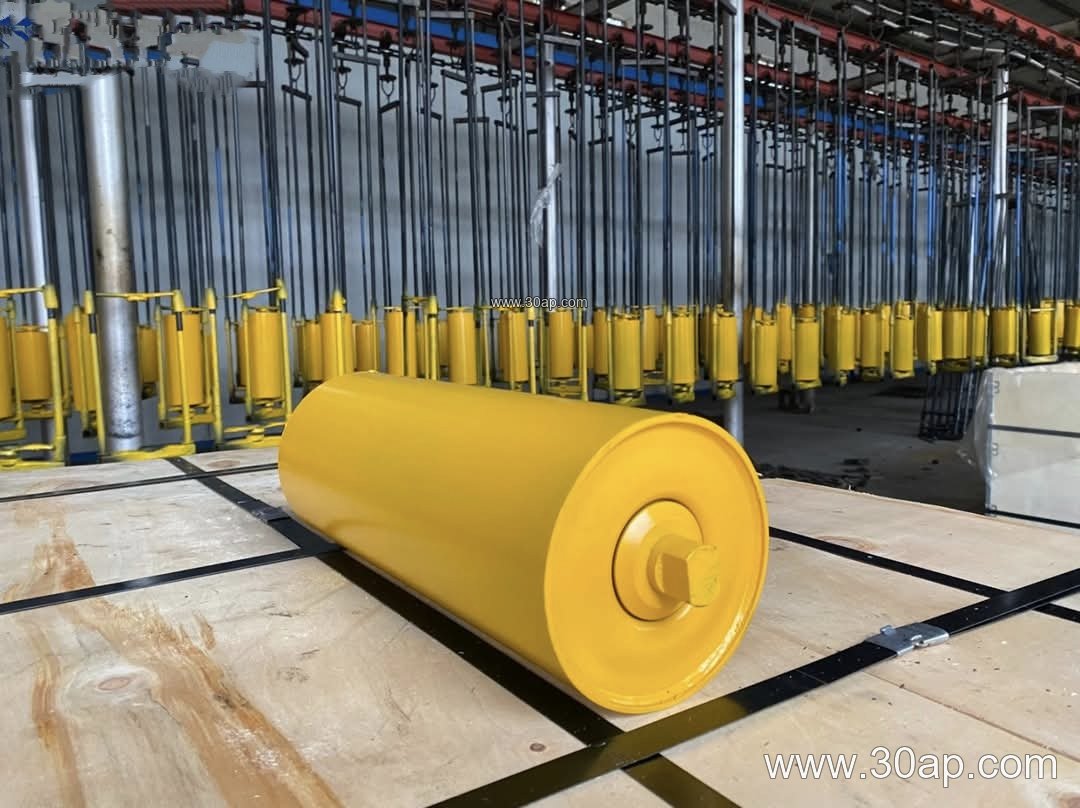
A typical unit uses a steel tube shell, pressed end caps, a through shaft, and deep-groove ball bearings. Common bearing sizes include 6204, 6205, 6305, 6306, 6308, and 6310, chosen by load and shaft design rather than by belt width alone. Roller diameters such as Ø89, Ø108, Ø127, Ø133, Ø159, and Ø178 appear across medium and heavy duty frames; larger sizes like Ø194 and Ø219 are used where load and belt width demand it.
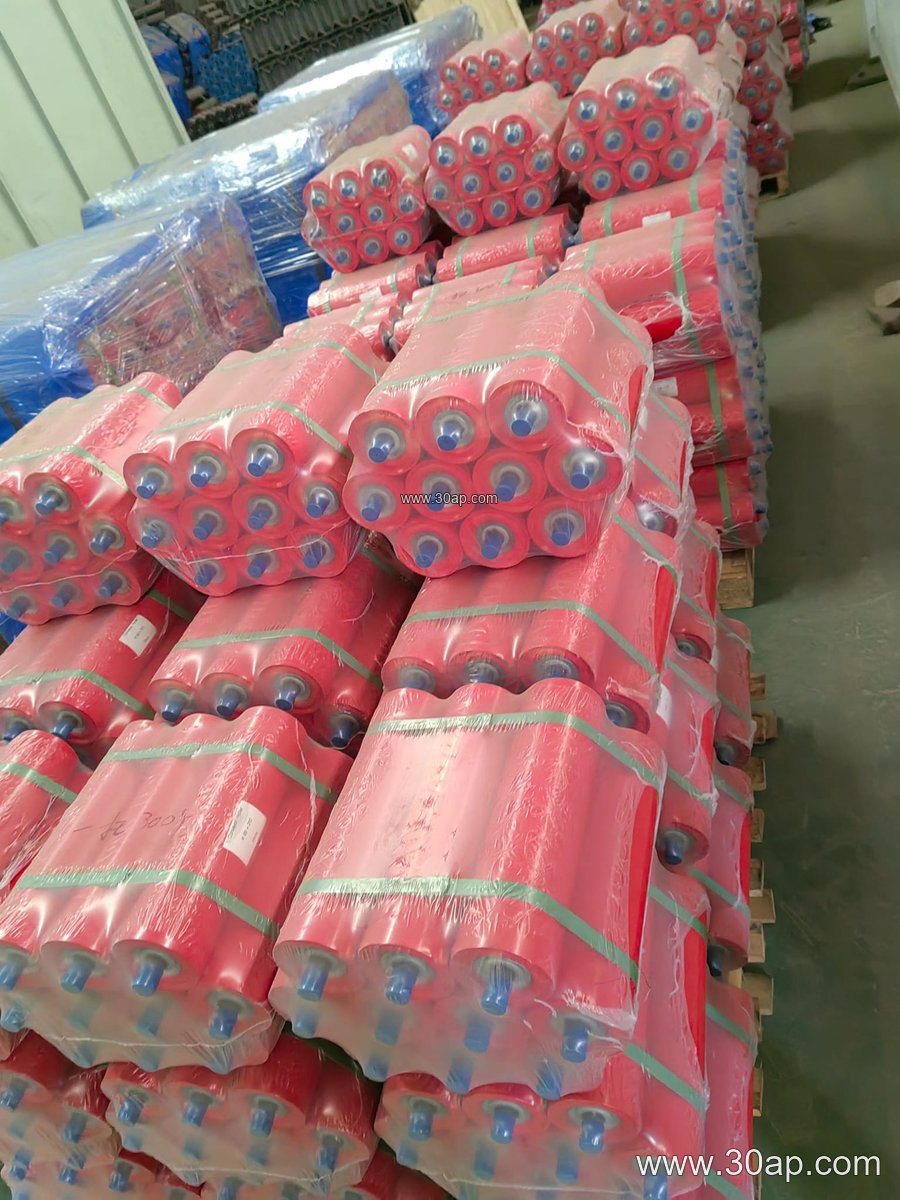
At high rotational speed, the seal is the quiet hero. Labyrinth seals with grease retention keep fine dust from a quarry or a limestone crushing line out of the bearing cavity. Shell runout should be small, and dynamic balancing becomes relevant on long spans. A nylon or ceramic roller surface may be specified where belt cover wear and material build-up are concerns, while rubber rings are more typical on impact idlers at transfer points.
Trough Geometry and Belt Interaction
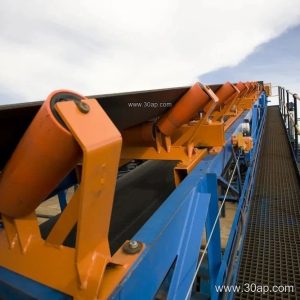
Trough angle shapes the material cross-section. A 20 degree, 30 degree, 35 degree, or 45 degree trough changes both capacity and belt stress. At high speed, a steeper trough can reduce spillage on a fast-loaded belt, but it also increases edge tension. Three-roll troughing sets are common, with roll lengths that usually follow belt width: about 200 mm for B500, 250 mm for B650, 315 mm for B800, 380 mm for B1000, 465 mm for B1200, 530 mm for B1400, 600 mm for B1600, 670 mm for B1800, and 750 mm for B2000. These are typical examples, not fixed pairings, and side rolls often differ from the centre roll.
Forward tilt of roughly 1.5 to 2 degrees is sometimes used on troughing rolls to aid belt tracking. Self-aligning idlers, including friction and tapered types, are a separate choice for lines that tend to wander.
Where Fast Belts Run
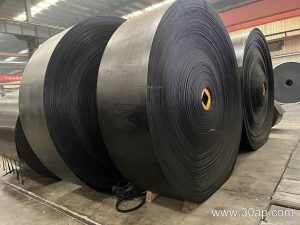
High-speed idler strings are common in port ship loading conveyors, long overland lines from a pit to a stockyard, and power plant coal handling. In a copper or iron ore concentrator, the same roller type may carry a heavy-duty mining conveyor belt at steady speed for kilometres. The belt itself is often an EP conveyor belt or a steel cord conveyor belt, and the idler must match its load and speed rather than the other way round.
Buyer Checklist
- Confirm belt speed and belt width before choosing roller diameter; do not assume one width locks to one diameter.
- State the duty: a coal mining conveyor belt in a wash plant and a quarry conveyor belt on a primary line load idlers differently.
- Ask about bearing size, seal type, and grease fill, not only shell thickness.
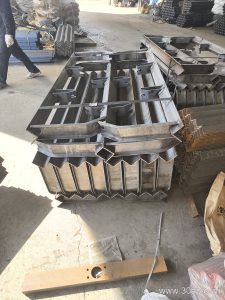
- Check that the order separates idlers from conveyor pulleys and conveyor brackets.
- For hot or oily cargo, confirm whether a heat resistant conveyor belt or oil resistant conveyor belt is used, since ambient conditions affect bearing grease life.
Well-chosen high-speed conveyor idlers keep a fast line smooth, quiet, and economical to maintain. Matching roller size, seal class, and trough geometry to the actual belt and material is the practical route to long service life.