What a Conveyor Belt Pulley Does on a Quarry Line
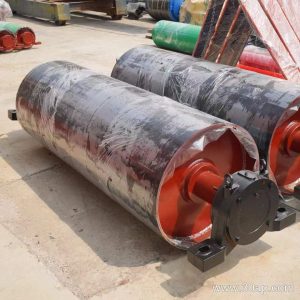
In a sand and gravel plant, the conveyor belt pulley is the component that turns the belt, sets its path, and keeps tension steady from the crusher discharge to the stockpile. It is not a single part but a family of drum-shaped units selected by position and duty. The drive pulley, often called the head pulley, transmits power from the gearbox to the belt. The tail pulley sits at the loading end and can be fixed or take up. Bend pulleys and take-up pulleys guide the belt through transitions and maintain tension. Each position has its own load profile, so a drive pulley is not a substitute for a tail or bend pulley, and the reverse is also true.
Construction and Surface Options
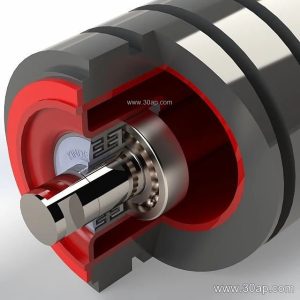
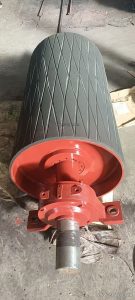
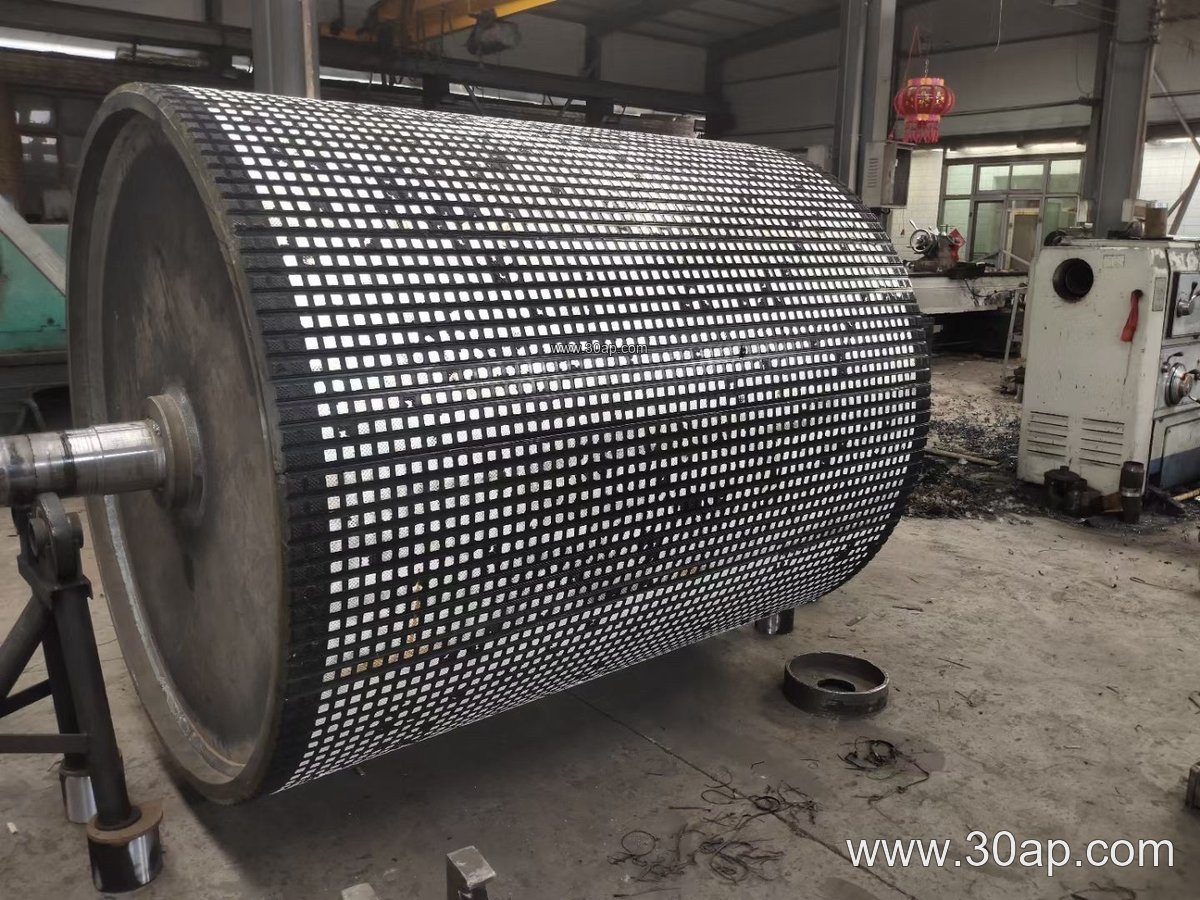
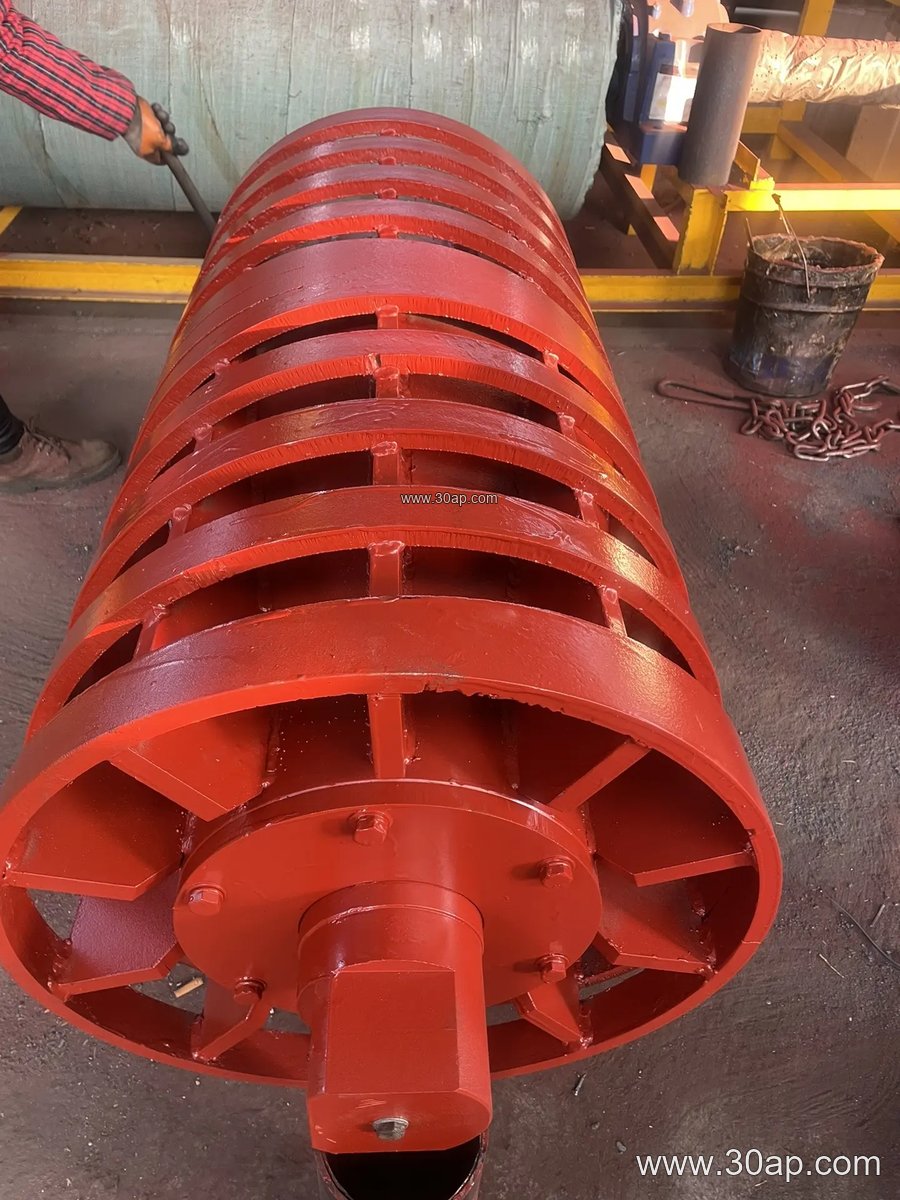
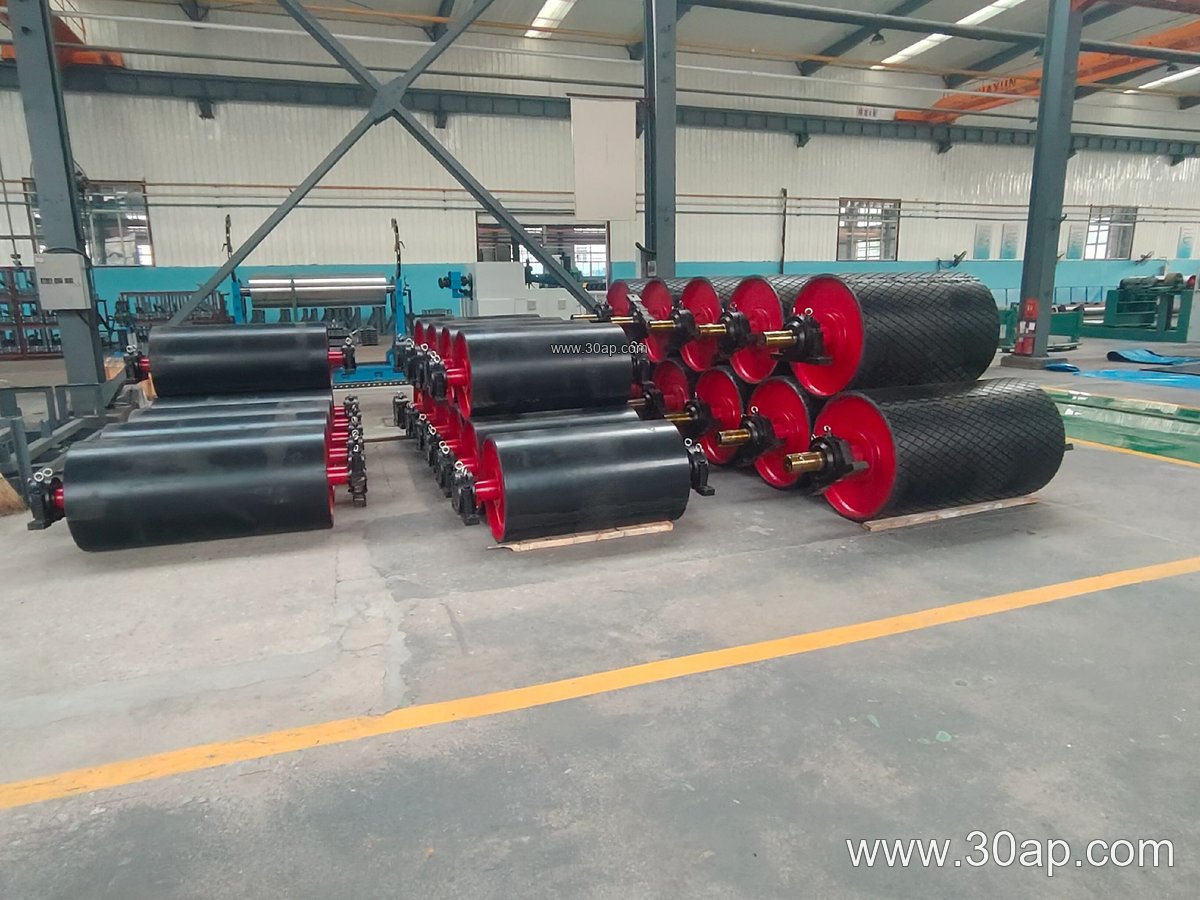
A typical conveyor pulley assembly includes a cylindrical shell, end discs, a shaft, bearing housings, and a lagging surface. Shells are usually steel, machined for balance and welded to the shaft or hub. Common surface forms are plain, cast rubber, cold-bonded rubber, hot-vulcanized rubber, diamond lagging, herringbone lagging, and ceramic lagging. Lagging thickness commonly falls in the 8, 10, 12, 15, and 20 mm range. In a quarry, diamond or ceramic lagging is often chosen for the drive pulley where wet, gritty material reduces friction. The tail and bend pulleys may run plain or with light rubber lagging to shed fines.
Matching Pulley Size to Belt Width
Pulley face width is normally wider than the belt. For reference, B400 may use about 500 mm face, B650 about 750 mm, B800 about 950 mm, B1000 about 1150 mm, B1200 about 1400 mm, B1400 about 1600 mm, and B1600 about 1800 mm. Diameter is a separate decision: common sizes include Ø200, Ø250, Ø315, Ø400, Ø500, Ø630, Ø800, Ø1000, and Ø1250. A B800 conveyor could use Ø500 for a tail pulley and Ø630 for a drive pulley, but no single diameter is mandatory for a given belt width. Shaft diameter is selected from torque and load, with common values such as Ø80, Ø100, Ø120, and Ø140; it should not be fixed from belt width alone.
Where It Fits in the Conveying System
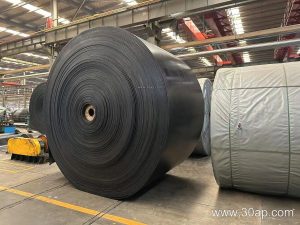
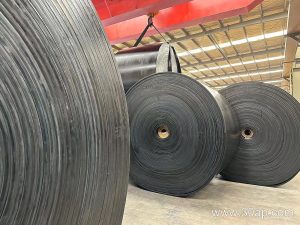
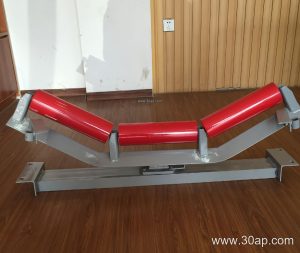
In an aggregate line, the conveyor belt pulley works with the conveyor belt, idler roller, and conveyor bracket to keep material moving. The belt itself may be a heavy-duty mining conveyor belt or an abrasion resistant conveyor belt, and the pulley lagging must suit the same conditions. A chevron conveyor belt or corrugated sidewall conveyor belt changes the belt path and may call for larger bend pulleys. In a cement plant or power plant coal yard, a flame retardant conveyor belt is common, and the pulley assembly should be selected for dusty, continuous duty. The pulley does not operate in isolation; its diameter, face width, and lagging affect belt tracking and splice life.
Buyer Checklist for Conveyor Belt Pulleys
Before ordering, confirm the pulley position: drive, tail, bend, take-up, or snub. Check belt width, belt type, and the expected load. Specify the shaft diameter and bearing type after the torque calculation, not from a catalog shortcut. State the lagging form and thickness, and whether the surface needs grooving for water drainage. For a quarry or sand making plant, ask for a pulley that matches the abrasion resistant conveyor belt and the idler roller spacing. For a port or ship loading line, consider the belt speed and the pulley balance grade. Keep a spare tail or bend pulley on site, since these are often the first to seize in wet, dusty service.
Maintenance Notes
Inspect lagging wear at the drive pulley and check for material buildup on the return side. Worn lagging reduces traction and can lead to belt slip. Check bearing seals in wash-down areas and confirm that the pulley turns freely by hand during shutdown. A small bend pulley that is overlooked can cause belt mistracking and edge damage. Record the pulley tag number, face width, diameter, and lagging type so replacement does not depend on memory. For a coal mining conveyor belt or underground coal mining conveyor belt, follow the site’s fire and antistatic requirements when selecting lagging and belt compounds.