What the Idler Does on an Iron Ore Line
An iron ore conveyor idler is the rotating support that carries the belt and the load between the head and tail of the conveyor. In a typical iron ore conveyor structure, the belt rides on a series of these rollers spaced along the frame, while a conveyor pulley at each end drives and returns the belt. The idler is a small, replaceable component, but on a heavy line it sets the tone for belt life, power draw, and how often crews have to stop the system.
Iron ore is abrasive, often damp, and heavy per cubic metre. That combination means the idler is not a place to save money. A well-built iron ore conveyor idler keeps the belt tracking, limits spillage, and protects the belt cover from unnecessary wear.
How an Iron Ore Conveyor Idler Is Built
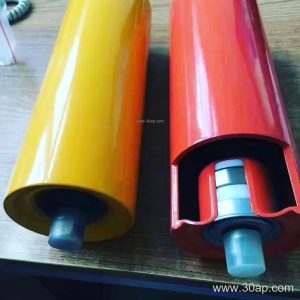
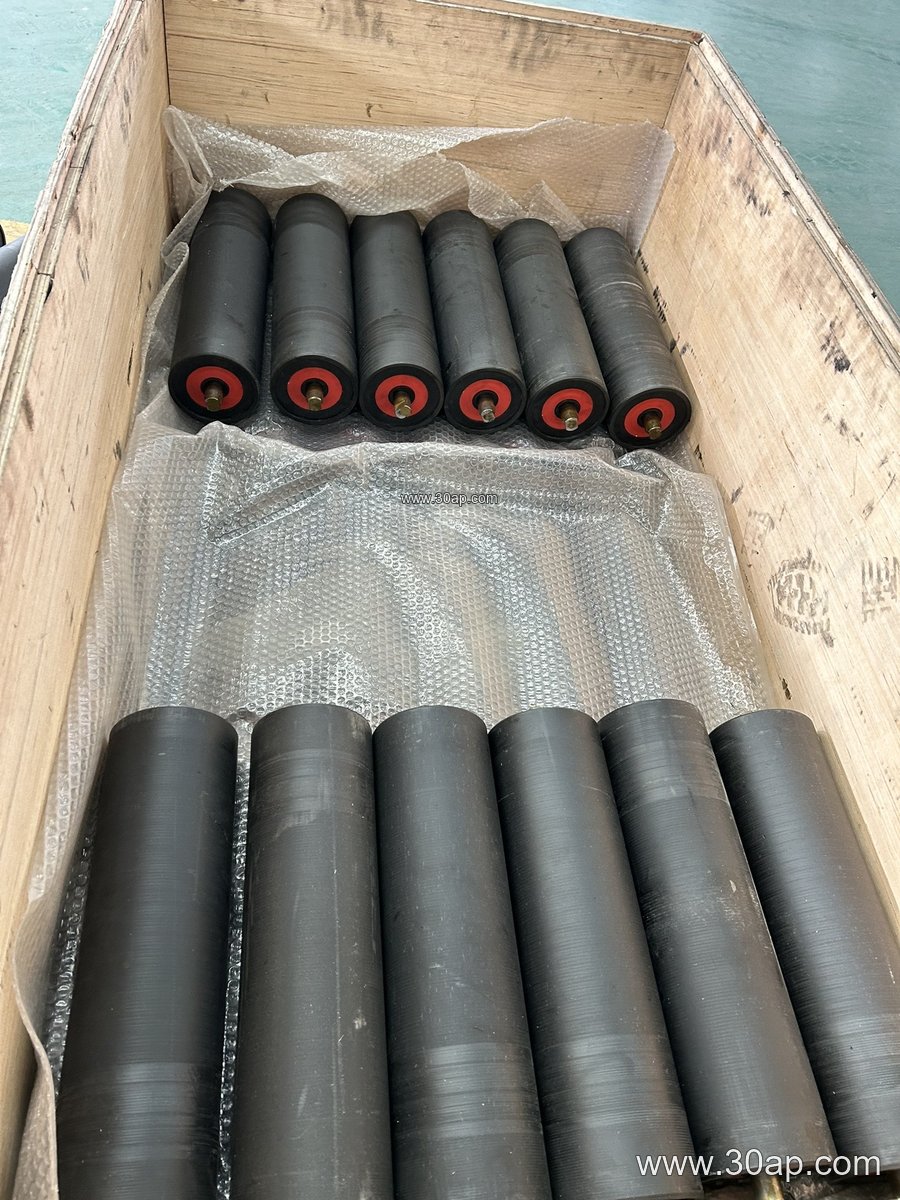
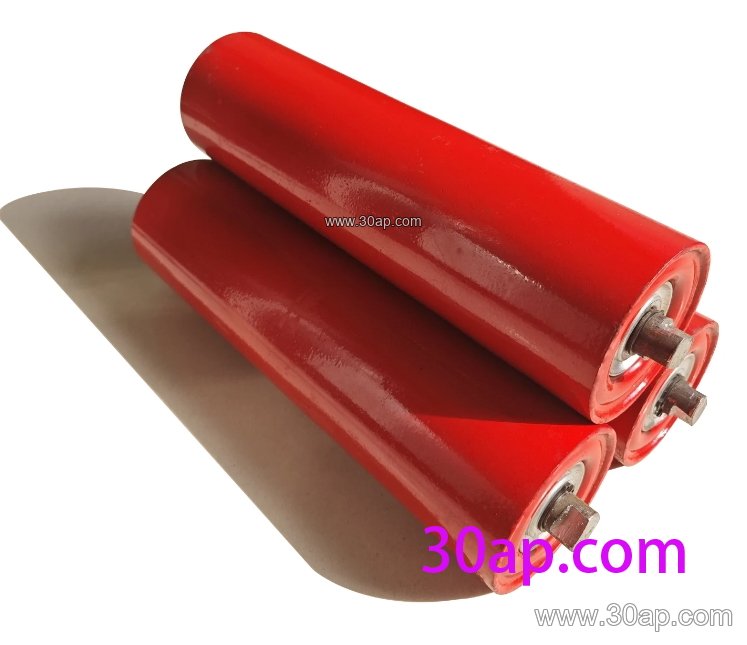
The common construction is a steel tube shell with pressed end caps, a through shaft, and sealed ball bearings. The shell is usually machined at the ends so the bearing housings sit true, which keeps runout low at speed. Seals matter as much as the tube: a multi-labyrinth seal plus a contact lip keeps fine ore dust and water out of the bearing cavity.
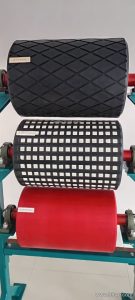
Surface options change with the duty. Plain steel suits clean running belts; rubber rings add grip and cushion at transfer points; nylon or ceramic covers are chosen where build-up or sliding wear is a concern. Common roll diameters for iron ore duty include Ø89, Ø108, Ø127, Ø133, Ø159, and Ø178 mm, with larger diameters used where belt speed and load are high.
Common Roller and Bearing Reference Data
- Roll diameters: Ø63, Ø76, Ø89, Ø102, Ø108, Ø127, Ø133, Ø159, Ø178, Ø194, Ø219 mm
- Bearing sizes often used: 6204, 6205, 6305, 6306, 6308, 6310
- Trough angles: 20°, 30°, 35°, 45°
Bearing size is matched to the shaft and load, not fixed by roll diameter alone. A Ø127 mm roller may use different bearings depending on the frame and load case, so the design drawing should always govern.
Where These Idlers Are Used
The most common home for this equipment is an iron ore conveyor that moves crushed ore from the primary crusher to the stockpile or the ship loader. In a concentrator, idlers carry the ore conveyor belt through screening and grinding circuits. At a pellet plant or sinter plant, heat and dust add another layer of difficulty, and heat resistant conveyor belt grades may be needed nearby even though the idler itself is a steel component.
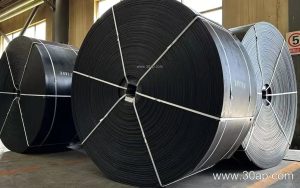
Similar duties appear in copper ore handling, gold mining conveyor lines, and quarry conveyor belts, but iron ore tends to be denser and more abrasive, so roller wall thickness and seal quality are usually specified higher. Where the belt is a steel cord conveyor belt or a heavy-duty fabric core belt such as an EP conveyor belt or NN conveyor belt, the idler spacing and load rating must match the belt tension and sag limits.
Trough, Return, and Impact Positions
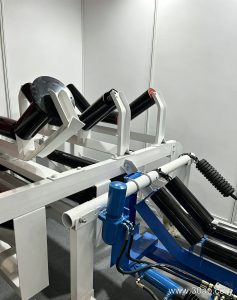
On the carrying side, three-roll troughing sets at 30° or 35° are the usual choice for iron ore because they centre the load and reduce spillage. Two-roll and single-roll sets appear on narrower belts or where space is tight. Transition idlers with gradually reducing trough angle ease the belt from flat at the pulley into the full trough profile.
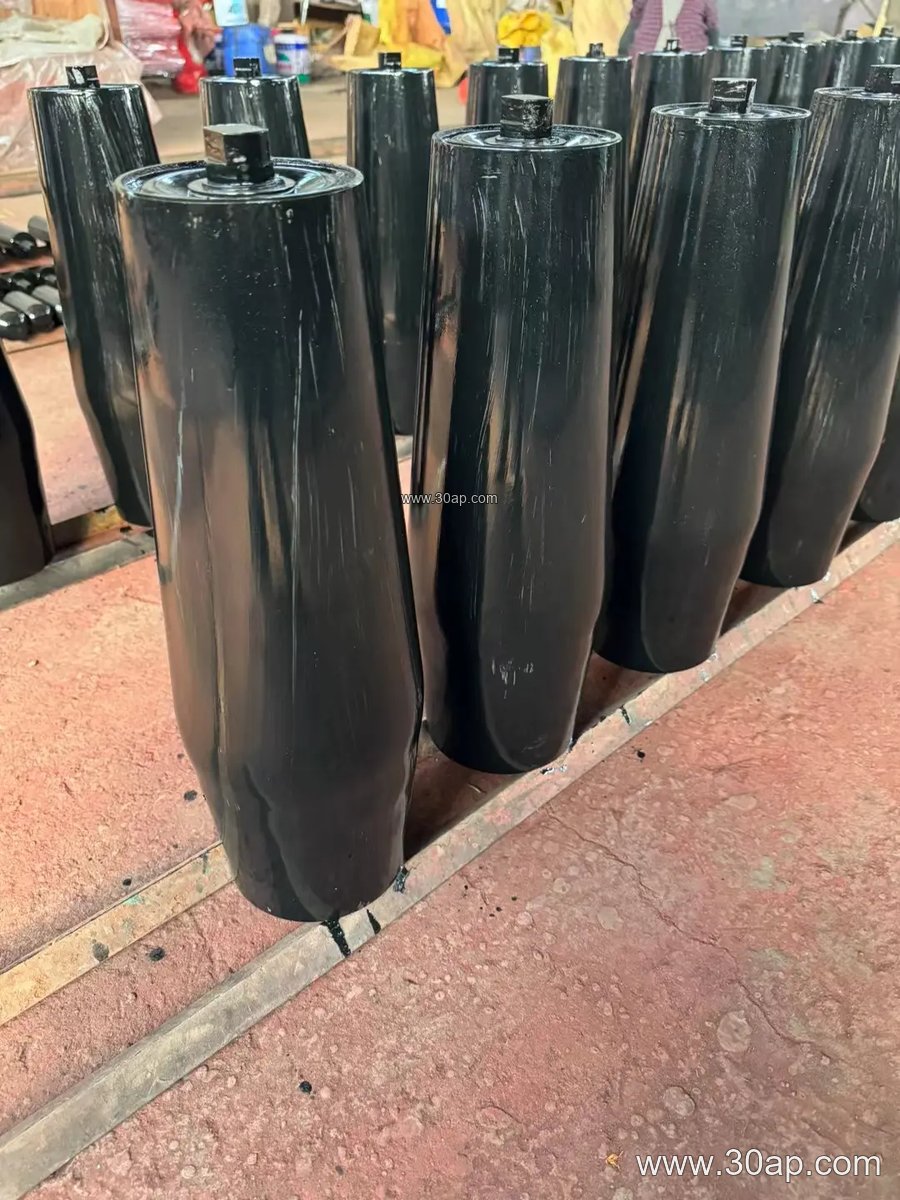
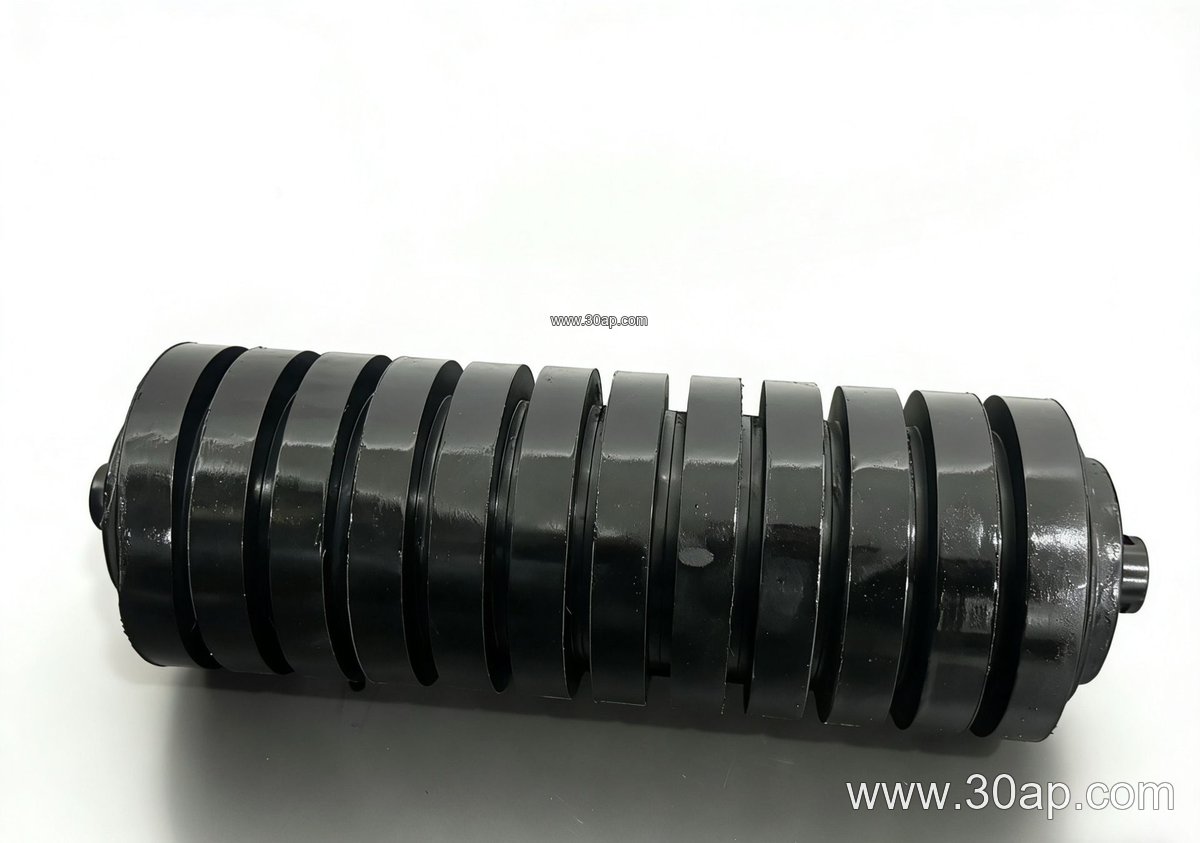
On the return side, flat return rollers or V-return sets support the belt. Impact idlers with rubber rings go under the loading point to absorb the drop of lump ore. Self-aligning idlers, including friction and taper types, help correct belt wander on long lines, and a slight forward tilt of about 1.5° to 2° is sometimes used to assist tracking.
Typical Roll Length by Belt Width
- B500: about 200 mm
- B650: about 250 mm
- B800: about 315 mm
- B1000: about 380 mm
- B1200: about 465 mm
- B1400: about 530 mm
- B1600: about 600 mm
- B1800: about 670 mm
- B2000: about 750 mm
These are common examples for three-roll troughing sets. Side rolls and centre rolls can differ, and the exact length follows belt width, trough angle, and frame design. Belt width does not dictate a single pulley diameter, and no single shaft size should be assumed from belt width alone.
What a Buyer Should Check
Ask for the shaft diameter, bearing size, seal type, tube wall thickness, and finish on the roll ends. Confirm the trough angle and roll length against the actual frame, and check whether the line needs impact, return, or self-aligning positions. For dusty iron ore, specify a seal that suits the site, and consider rubber-covered rolls at transfer points. Keep a small stock of the most common sizes so a failed roller does not stop the whole ore conveyor belt line. For matching belt, pulley, and bracket details, see the full conveyor components range at sdtuogun.com.