What a Custom Conveyor Pulley Really Means
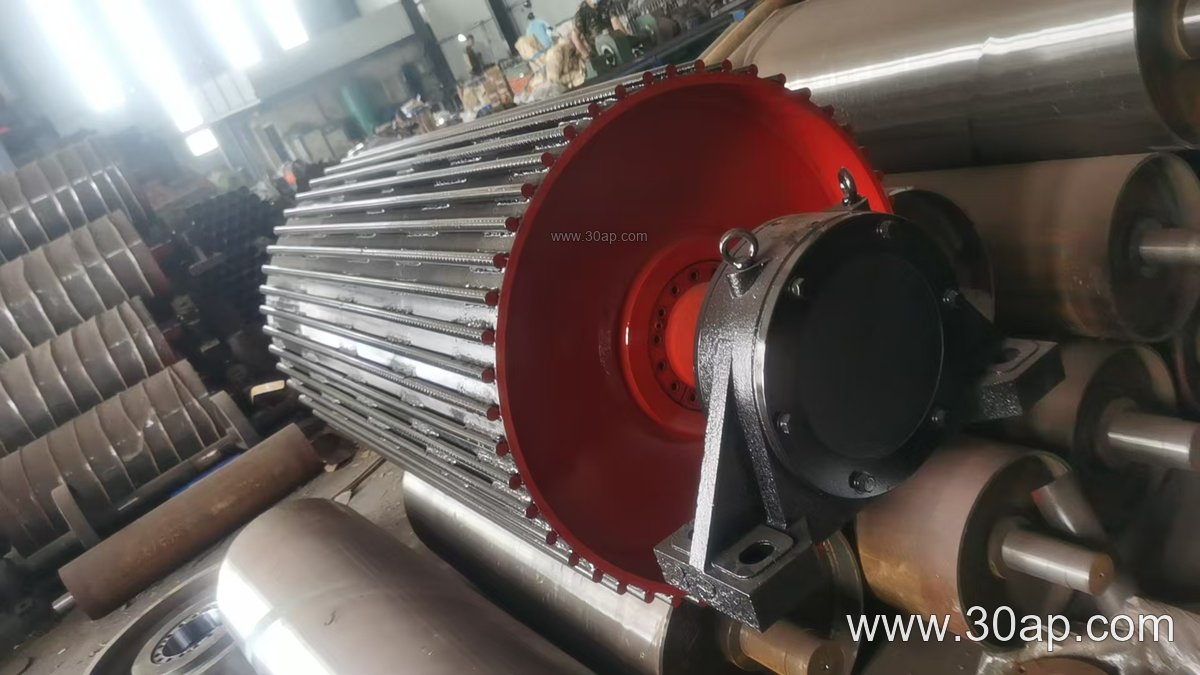
A custom conveyor pulley is a drum-shaped assembly made to order for a specific belt conveyor rather than pulled from a standard shelf list. The pulley carries the conveyor belt, transfers torque from the drive unit, and keeps the belt tracking along the frame. Because every conveyor has its own belt width, load profile, shaft loading and take-up arrangement, a made-to-order drum is often the practical choice for mines, cement plants, power station coal handling, quarries, sand and gravel lines, and port bulk terminals.
The same product is also called a made-to-order conveyor drum or bespoke belt conveyor pulley. The term covers several positions in one conveyor, but these positions are not interchangeable. A drive pulley, sometimes called the head or main pulley, transmits power. A tail pulley sits at the rear and often works with a take-up. A bend pulley changes belt direction without driving. Each has its own duty, and a bend pulley should not be ordered as a substitute for a drive unit.
How the Drum Is Put Together
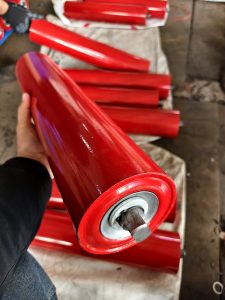
A typical unit starts with a rolled steel shell, end discs, a hub, and a through shaft. The shell may be machined and then covered with a rubber or ceramic lagging to improve grip and protect the belt. Common surface forms include plain, cold-bonded rubber, hot-vulcanized rubber, diamond lagging, herringbone lagging, ceramic lagging, and flat rubber sheet. Lagging thickness is often 8, 10, 12, 15 or 20 mm, chosen by the duty and the belt cover.
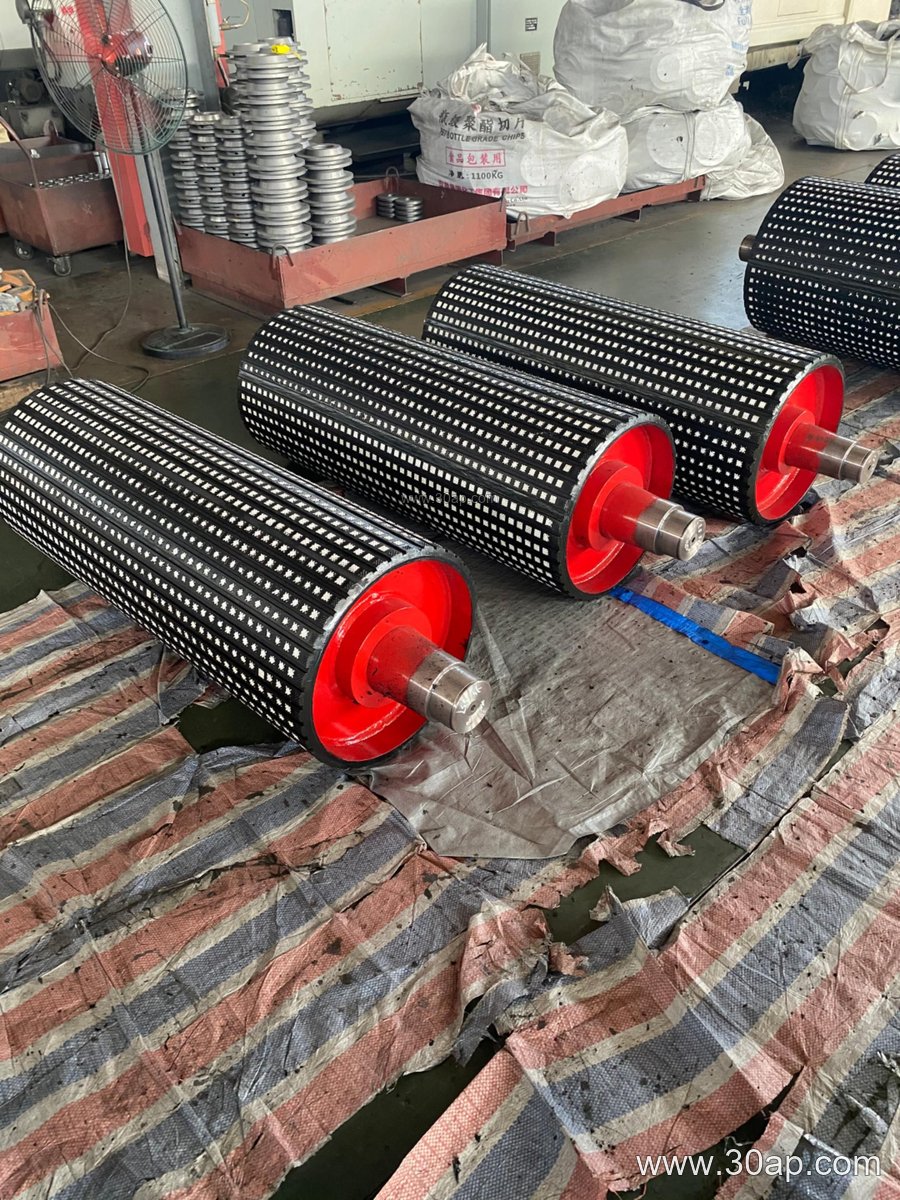
The shaft diameter is set by torque and bearing load, not by belt width alone. Common shaft sizes include Ø50, Ø60, Ø70, Ø80, Ø90, Ø100, Ø120, Ø140, Ø160, Ø180 and Ø200 mm. A designer may combine a B800 belt with a Ø500 drum on one conveyor and a Ø630 drum on another, depending on wrap angle, belt tension and space. There is no rule that one belt width can only match one drum diameter.
Common Reference Range
- Belt width: B400, B500, B650, B800, B1000, B1200, B1400, B1600, B1800, B2000
- Drum diameter: Ø200, Ø250, Ø315, Ø320, Ø400, Ø500, Ø630, Ø800, Ø1000, Ø1250
- Shell face width: usually a little wider than the belt, for example B650 around 750 mm, B1000 around 1150 mm, B1400 around 1600 mm
- Lagging: plain, diamond, herringbone, ceramic or flat rubber, 8 to 20 mm thick
Where It Fits on the Conveyor
In a coal preparation plant, a heavy-duty drive pulley at the head end pulls the loaded belt up an incline. In a limestone quarry, a tail pulley with a screw or gravity take-up keeps tension steady while a bend pulley routes the belt around an obstacle. In a power station coal yard, a wing pulley at the tail can shed sticky fines better than a plain drum, and that comparison is worth noting when material build-up is a problem. The choice of position changes the bearing housing, the shaft extension, the lagging pattern and the connection to the conveyor bracket.
The drum also has to work with the conveyor belt, the idler roller set and the frame. A poorly matched drum can cause belt mistracking, edge wear or slip at start-up, so the pulley is normally selected together with the belt specification and the take-up travel.
What a Buyer Should Check Before Ordering
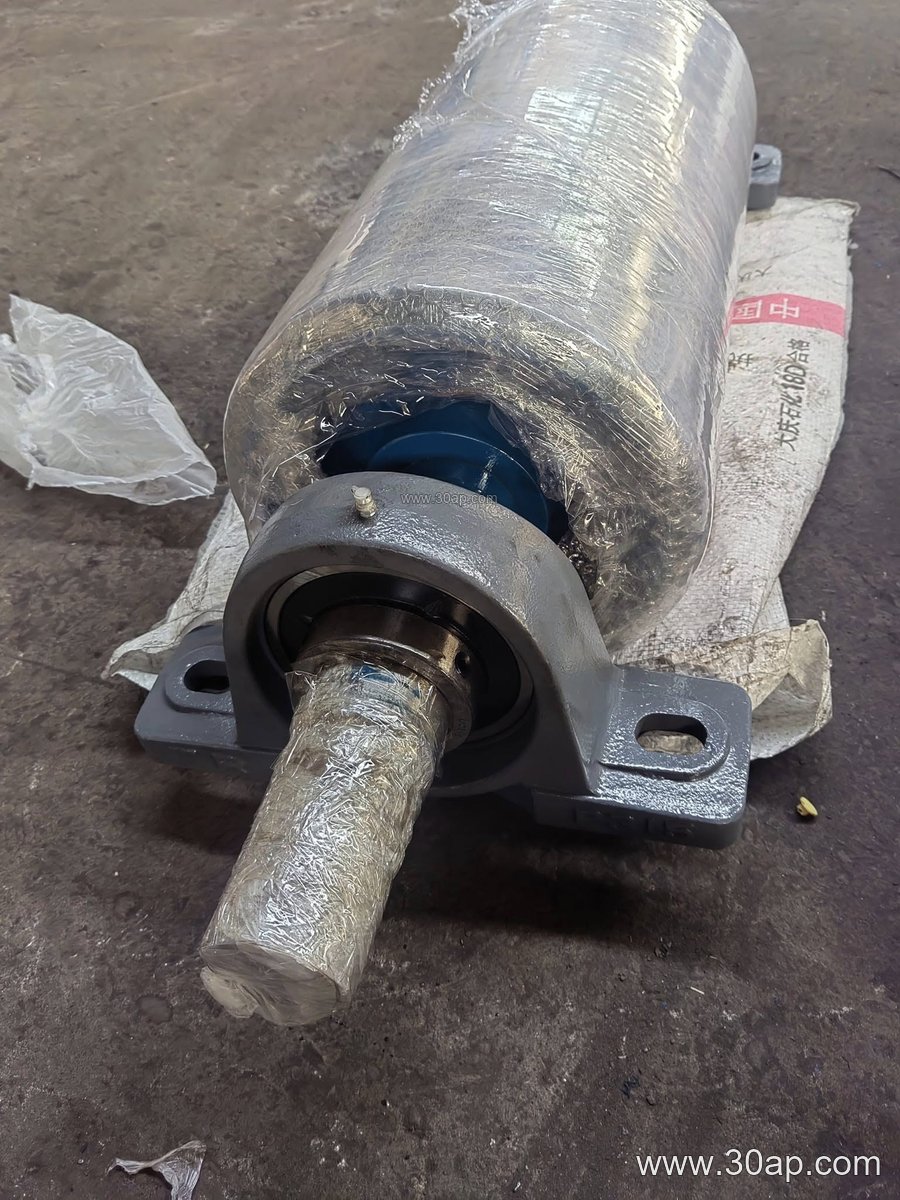
Send the belt width, the required drum diameter, the shaft diameter, the face width, the bearing centers, the lagging type and thickness, and the mounting details. State whether the unit is a drive, tail, bend, take-up or snub position, because the load case differs. Mention the material, the ambient conditions and whether the conveyor runs in a tunnel, a cement kiln area or a dusty transfer point.
Ask for the balancing grade, the keyway and coupling details, and the surface finish on the shaft where the bearing sits. For a made-to-order conveyor drum, a clear drawing and a defined interface with the conveyor bracket save rework. Treat all sizes above as reference data rather than a fixed supply promise, and let the final dimensions follow the actual torque and load calculation.