What a 315mm Diameter Conveyor Pulley Is
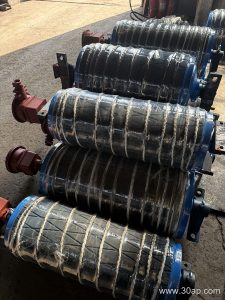
A 315mm diameter conveyor pulley is a mid-sized drum that sits at a key position in a belt conveyor system. It is often specified as a bend pulley, tail pulley, or take-up pulley where the belt must change direction or maintain tension without carrying the full drive load. The nominal Ø315 mm drum face gives a good balance between wrap angle, belt clearance, and bearing size, which makes it a common choice in aggregate plants, cement lines, and coal handling systems.
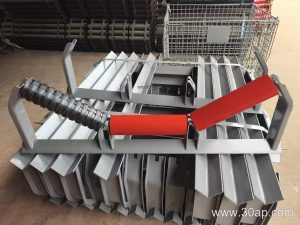
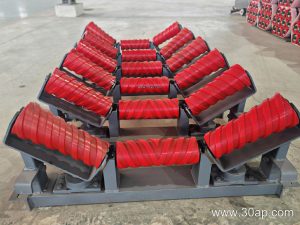
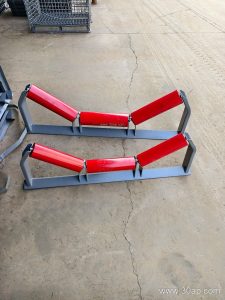
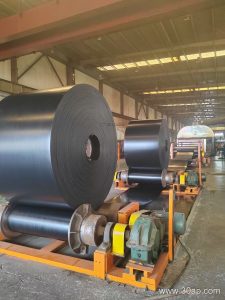
The pulley works together with the conveyor belt, idler roller, and conveyor bracket to keep the belt tracking correctly and to transfer motion or tension. It is not a drive pulley in most layouts, so its role is guidance and tension control rather than power transmission.
Construction and Surface Options
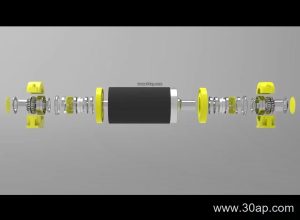
Most 315mm diameter conveyor pulleys are built with a welded steel shell, two end discs, a through shaft, and bearing housings. The shell thickness and shaft diameter are determined by the calculated load, not by belt width alone. A Ø315 mm drum may be paired with shaft diameters such as Ø80, Ø90, or Ø100 mm depending on torque and bearing selection.
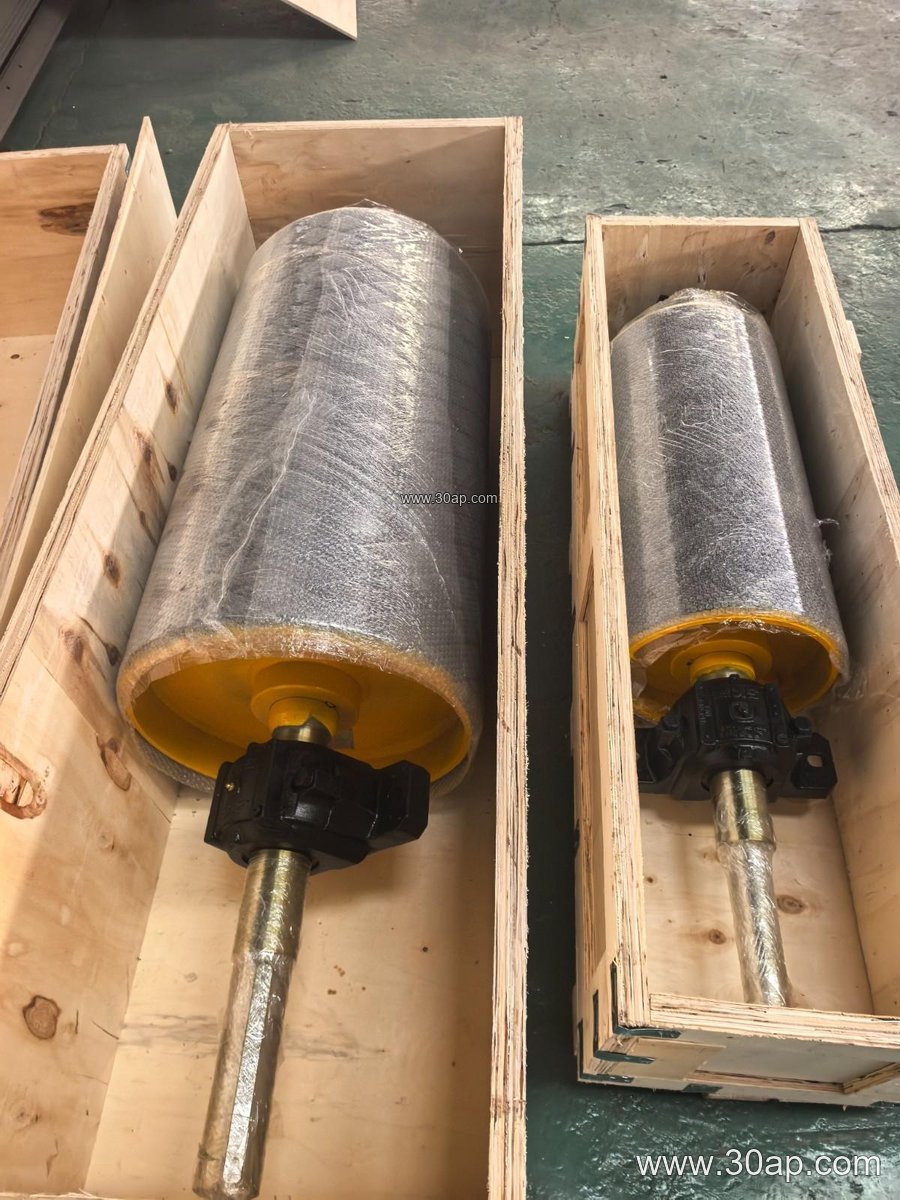
Surface treatment matters for belt life. Common options include:
- Plain finish for clean, low-tension return positions
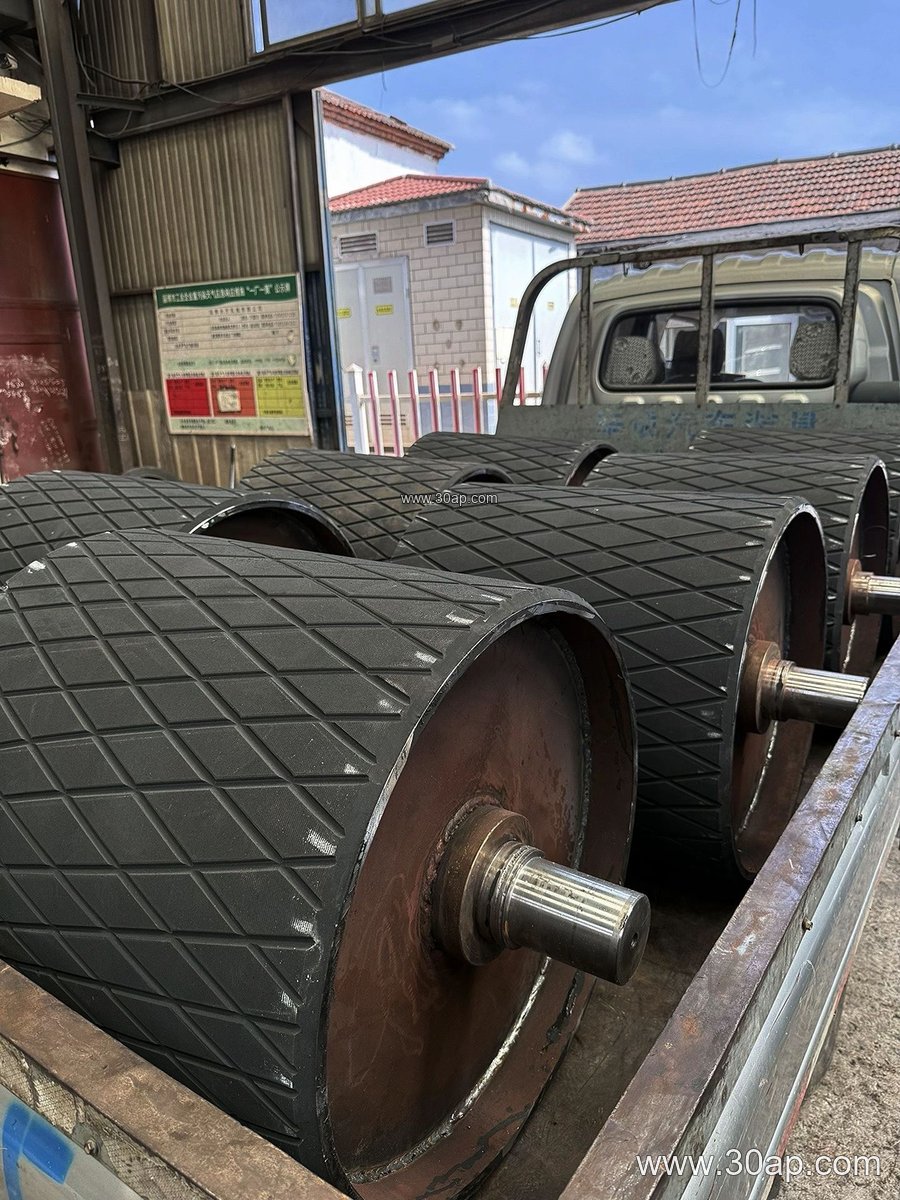
- Rubber lagging in 8, 10, 12, or 15 mm thickness to improve grip and reduce slip
- Diamond or herringbone grooving for water drainage and better tracking
- Ceramic lagging for high-wear areas in quarry and ore handling
The right surface depends on whether the pulley contacts the dirty side of the belt and on the material being carried. In a coal mining conveyor line, a rubber-lagged bend pulley helps shed fines; in a limestone quarry, ceramic lagging may last longer under abrasive dust.
Where It Fits in a Conveyor Layout
A 315mm diameter conveyor pulley is frequently used as a bend pulley at the head or tail of a medium-width conveyor, or as a take-up pulley on a gravity or screw tensioner. It can also serve as a snub pulley to increase wrap angle on the adjacent drive pulley. In these positions, the drum does not replace the drive pulley or the tail pulley; it complements them by guiding the belt through the correct path.
Typical industries include sand and gravel plants, cement clinker handling, power plant coal conveying, and fertilizer bulk lines. In a crushing and screening circuit, a Ø315 mm bend pulley often sits after the crusher conveyor belt to redirect the belt toward the next transfer point. The pulley must be matched to the belt width and the conveyor bracket dimensions so that the drum face width exceeds the belt width by a suitable margin.
Matching Diameter to Belt Width and Duty
There is no fixed rule that one belt width requires one pulley diameter. A 315mm diameter conveyor pulley can be used with several belt widths depending on belt stiffness, speed, and wrap angle. The table below shows common reference combinations, not mandatory pairings.
| Belt Width | Typical Pulley Face Width | Reference Diameter |
|---|---|---|
| B650 | About 750 mm | Ø315 mm |
| B800 | About 950 mm | Ø315 mm |
| B1000 | About 1150 mm | Ø315 mm |
| B1200 | About 1400 mm | Ø315 mm or larger |
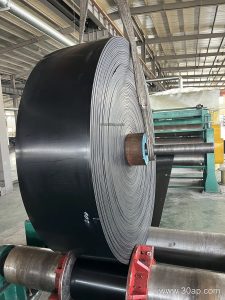
For heavier belts such as steel cord conveyor belt or high abrasion resistant conveyor belt, a larger diameter may be needed to control bending stress. For lighter EP conveyor belt or NN conveyor belt, the Ø315 mm size often works well at bend and take-up positions. Buyers should confirm the shaft diameter from the actual torque and bearing load, not from belt width alone.
Buyer Checklist
Before ordering a 315mm diameter conveyor pulley, gather the following information:
- Belt width and belt type, for example EP1000 or ST1250
- Pulley position: bend, tail, take-up, or snub
- Required lagging type and thickness
- Shaft diameter and bearing size from the conveyor design
- Mounting dimensions for the conveyor bracket
- Environmental conditions such as dust, moisture, or temperature
Also check the pulley face width against the belt width, and confirm that the lagging material suits the conveyed material. In a port bulk terminal or a cement plant, a rubber-lagged Ø315 mm pulley is often a practical choice; in a hot clinker line, heat-resistant lagging may be required. For abrasive ore, a ceramic surface can extend service life.
Finally, review the pulley drawing with the conveyor frame and idler roller positions so that the belt runs centered. A well-selected 315mm diameter conveyor pulley supports smooth belt travel and reduces wear on the conveyor belt and brackets.