What a Power Plant Conveyor Pulley Does
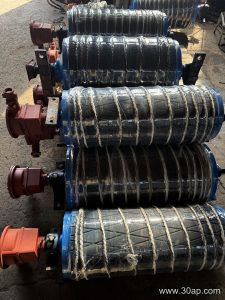
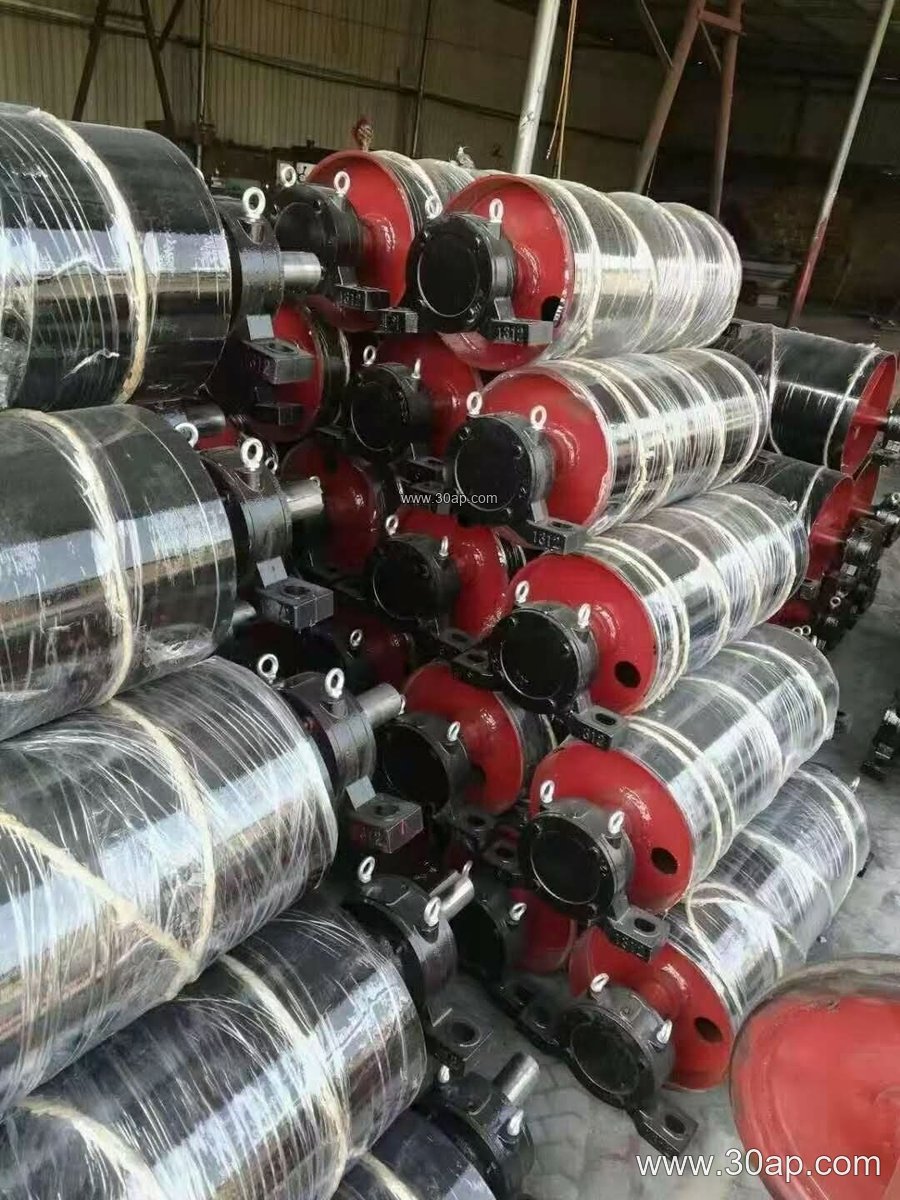
In a coal-fired or biomass power station, the coal handling system moves fuel from stockpiles or wagon tipplers to bunkers and mills. The Power Plant Conveyor Pulley is the rotating drum that transmits drive force to the conveyor belt, maintains tension, and changes belt direction. Unlike a simple idler roller, which supports the belt, this component carries the full working load and must be engineered for continuous duty in a dusty, often corrosive environment.
The same product is also called a conveyor drum or belt pulley. Within the system, drive pulleys, tail pulleys, and bend pulleys each perform distinct roles and are not interchangeable. A drive pulley, for example, is usually lagged for grip, while a tail pulley may run plain or with light lagging.
Construction and Key Components
A typical power plant conveyor pulley consists of a cylindrical shell, end discs, a shaft, and bearing housings. The shell is often made from rolled steel plate, machined for balance. Shafts are sized by torque and radial load, not by belt width alone. Common shaft diameters include Ø80, Ø100, Ø120, Ø140, and Ø160, but final selection depends on the drive power and belt tension.
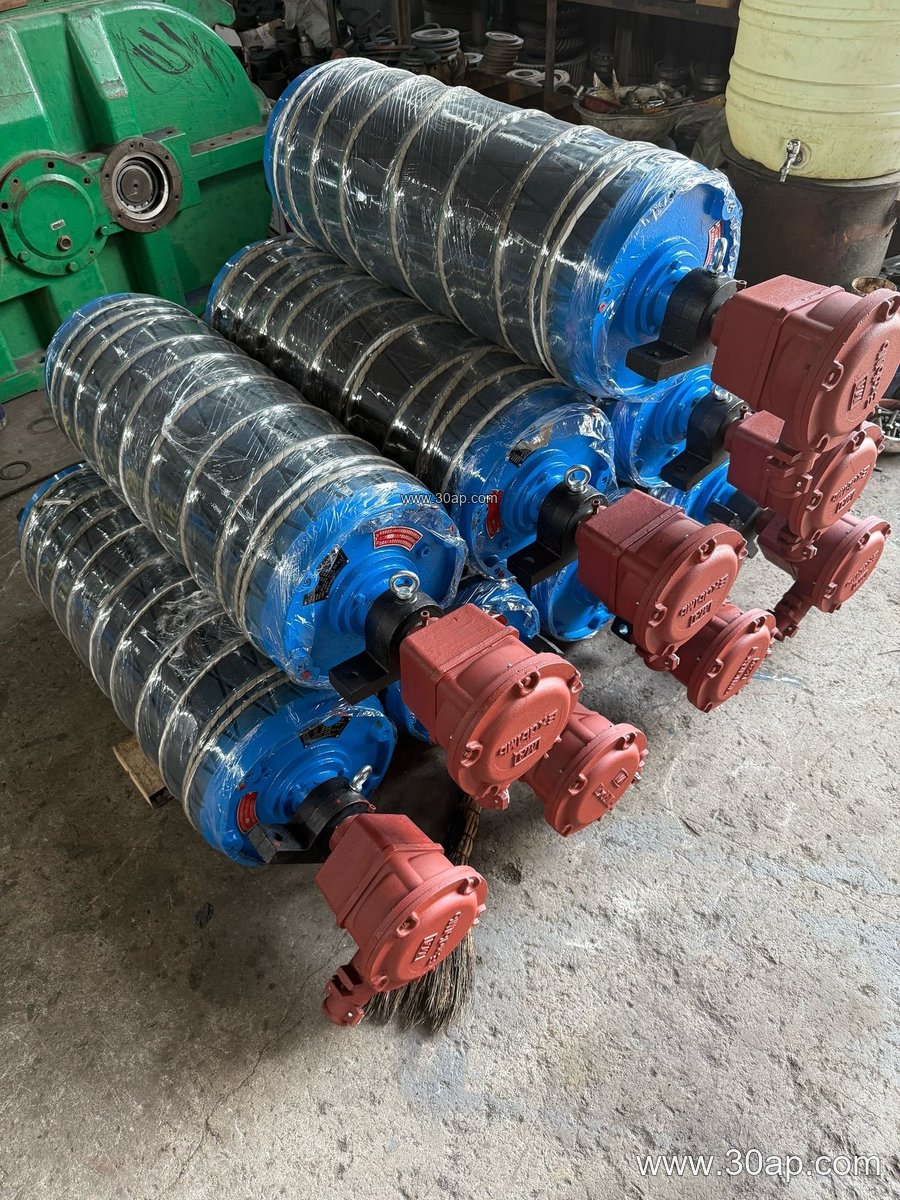
Surface treatment matters in coal dust and ash. Plain finish is used where grip is not critical. Rubber lagging—applied by cold bonding or hot vulcanizing—improves friction and protects the shell. Diamond or herringbone grooving helps shed water and fines. Ceramic lagging offers high wear resistance for high-tension drives. Lagging thickness commonly ranges from 8 mm to 20 mm, with 10 mm or 12 mm often chosen for moderate duty.
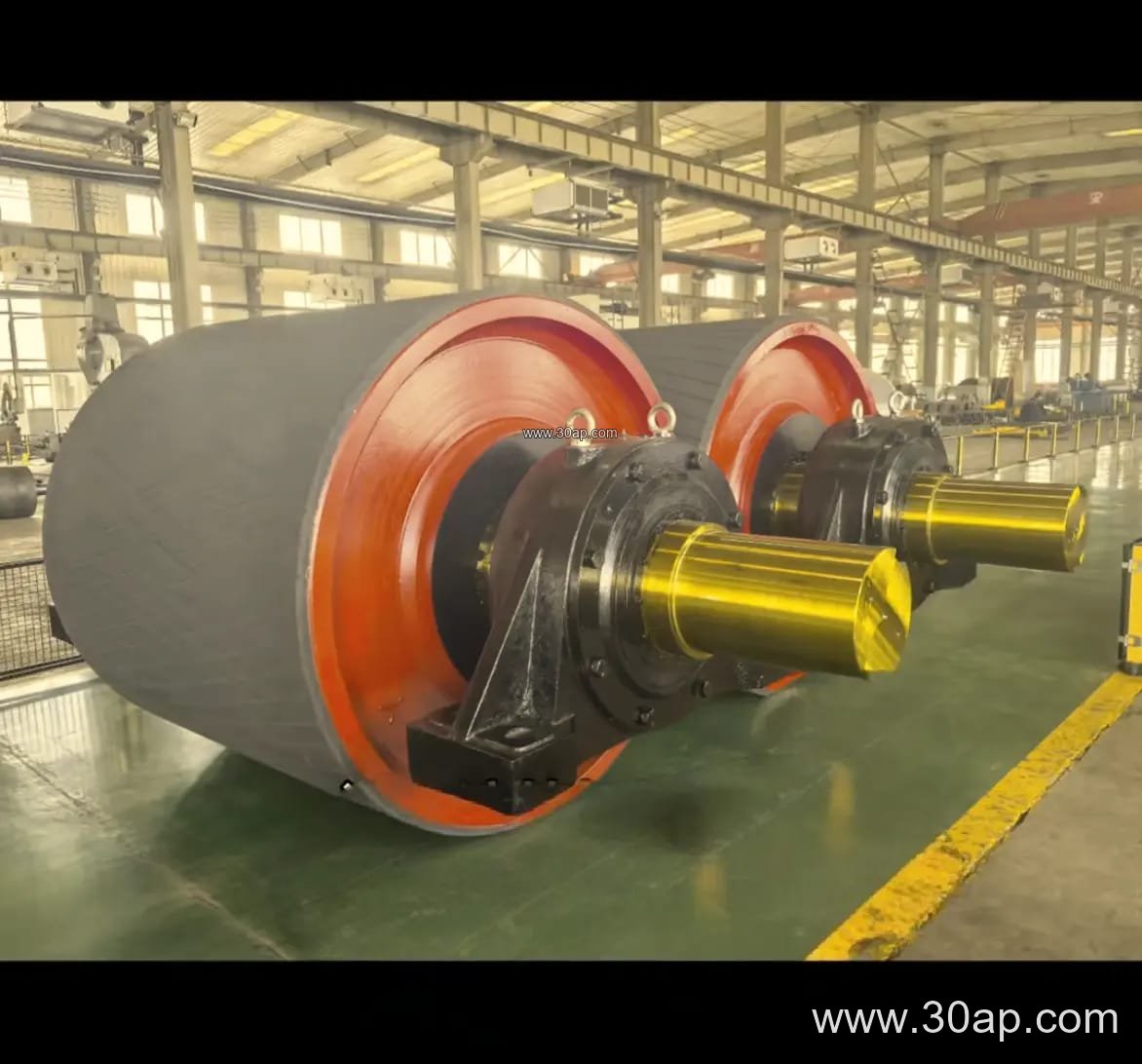
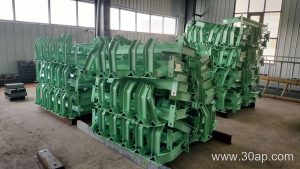
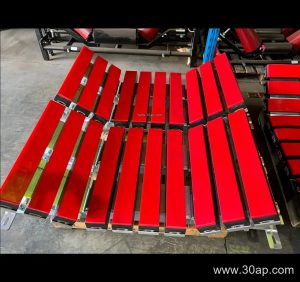
Bearing selection and sealing are critical. In power plants, pulleys often use spherical roller bearings in pillow block housings, with labyrinth seals to keep out fly ash. The conveyor bracket that supports the bearing housing must be rigid and aligned to avoid edge loading on the belt.
Where It Fits in the Coal Handling Line
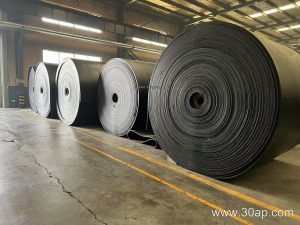
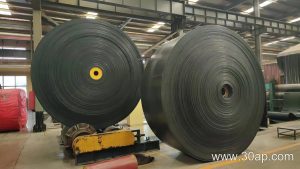
Power plant conveyor pulleys appear at several points: the head drive at the transfer tower, the tail pulley at the loading point, and bend or take-up pulleys along the return run. A common arrangement is a B1200 × Ø1000 drive pulley with 12 mm diamond lagging, paired with an EP1000 1200mm conveyor belt. For a smaller B800 line, a B800 × Ø500 tail pulley might run plain. These combinations are examples, not fixed rules—a B800 belt can be paired with different pulley diameters depending on tension and space.
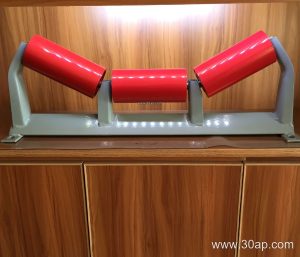
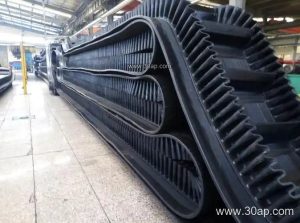
In limestone or biomass yards, abrasion and impact are higher. Here, a Power Plant Conveyor Pulley with thicker lagging and a larger shaft may be needed. The pulley works with the conveyor belt, idler roller, and conveyor bracket to keep the line running. For belts carrying coal with high moisture, grooved lagging helps prevent slip.
Matching Pulley to Belt and Duty
Belt width and pulley face width are related but not identical. The pulley face is usually wider than the belt to allow for misalignment. Common belt widths include B500, B650, B800, B1000, B1200, B1400, and B1600. Face widths are often approximately 100 mm wider than the belt, so a B1000 belt might use a 1150 mm face. The following table gives typical reference values, not mandatory sizes.
| Belt Width | Typical Pulley Face Width | Common Diameter Range |
|---|---|---|
| B500 | 600 mm | Ø250–Ø400 |
| B650 | 750 mm | Ø315–Ø500 |
| B800 | 950 mm | Ø400–Ø630 |
| B1000 | 1150 mm | Ø500–Ø800 |
| B1200 | 1400 mm | Ø630–Ø1000 |
| B1400 | 1600 mm | Ø800–Ø1250 |
| B1600 | 1800 mm | Ø1000–Ø1400 |
Do not assume a fixed shaft diameter from belt width. Shaft size is determined by the drive torque and the resulting bending load. A B1200 pulley on a long, high-tension line may need a larger shaft than a B1200 pulley on a short transfer.
Buyer Checklist for Power Plant Applications
- Confirm the pulley’s role: drive, tail, bend, or take-up. Each has different lagging and bearing needs.
- Specify belt width and required face width, allowing for travel and misalignment.
- State the conveyor belt type—for example, EP200 or Steel Cord—and the maximum belt tension.
- Choose lagging based on conditions: plain for clean, dry service; diamond or herringbone for wet or dusty coal; ceramic for high-wear drives.
- Provide shaft and bearing details, including expected radial load and speed.
- Check that the conveyor bracket and foundation bolts match the bearing housing footprint.
- Ask for dynamic balancing for larger pulleys to reduce vibration.
Regular inspection of lagging wear, shaft seals, and bearing temperature helps avoid unplanned outages. In a power plant, a seized pulley can stop coal feed to the boiler, so spare parts planning is worth the effort. A well-chosen Power Plant Conveyor Pulley, matched to the belt and the duty, supports reliable fuel handling day after day.