What Is an HDPE Idler?
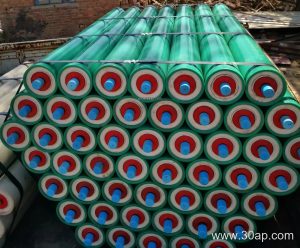
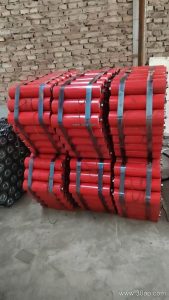
An HDPE idler is a conveyor roller whose outer shell is made from high-density polyethylene instead of steel or nylon. It is a lightweight alternative to conventional idler rollers, and it is used to support and guide the conveyor belt on the carrying and return sides of a conveyor. In bulk material handling, the idler roller is often the most numerous component, so the choice of material affects belt life, noise, and maintenance effort. The HDPE idler is particularly valued in wet, corrosive, or sticky environments where steel shells might corrode or accumulate material.
Construction and Key Components
A typical HDPE idler consists of an HDPE tube, a shaft, bearing housings, and seals. The polymer shell is resistant to many chemicals and does not rust, which makes it suitable for fertilizer plants, food processing, and other operations where washdown or moisture is common. The bearings are usually deep-groove ball bearings such as 6204, 6205, 6305, or 6306, selected according to load and speed. Seals are critical: a good labyrinth or contact seal keeps dust and water out, extending bearing life. The roller ends may be fitted with HDPE caps or end discs. Because HDPE is softer than steel, the shell can be gentler on the conveyor belt, but it also has lower load capacity and temperature resistance. It is not a replacement for heavy-duty steel rollers in high-impact or high-temperature zones.
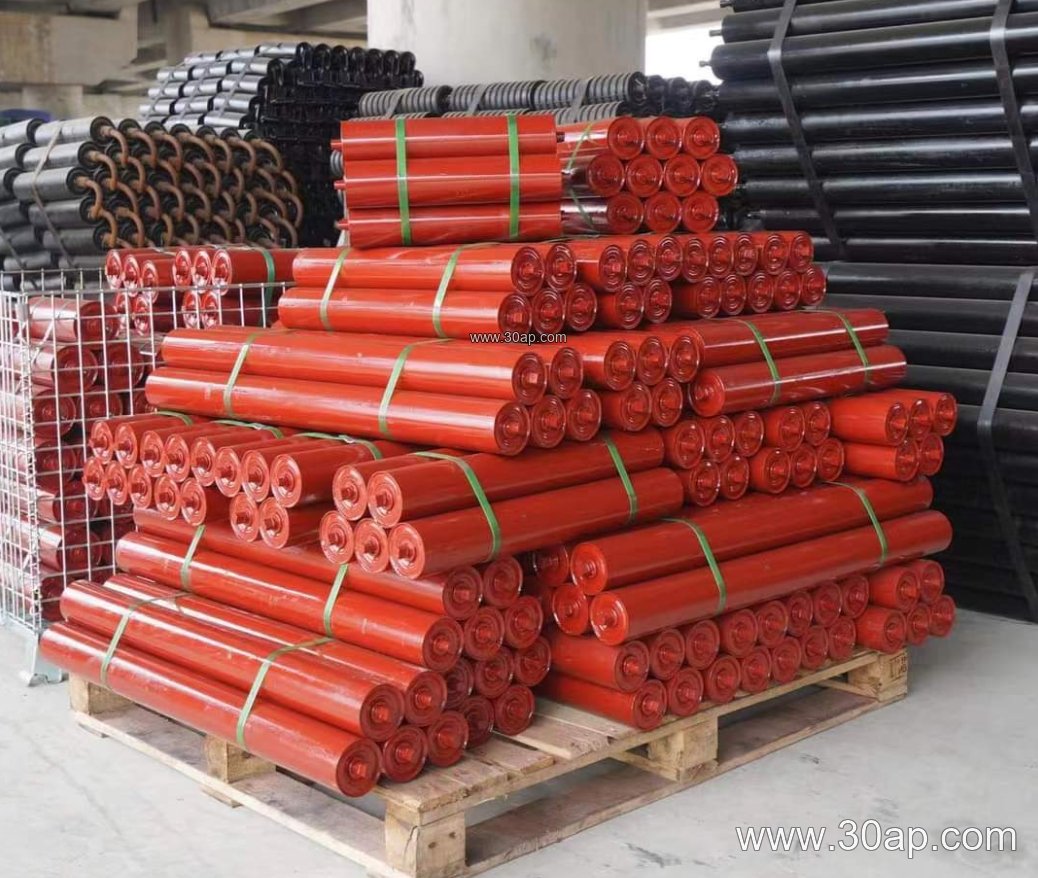
Where HDPE Idlers Fit on a Conveyor
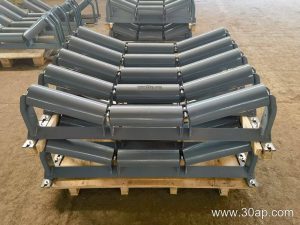
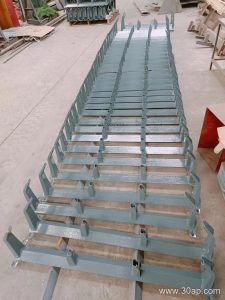
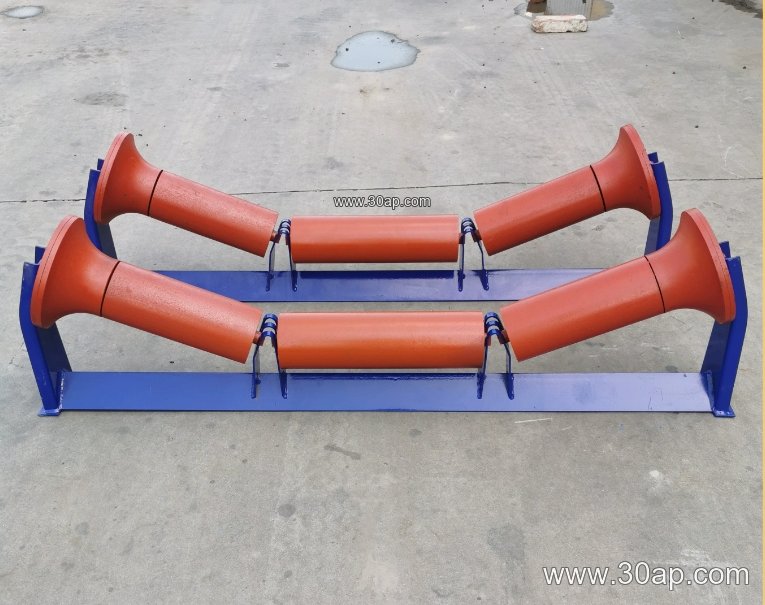
These idlers are commonly used as carrying idlers in three-roll troughing sets, as return idlers, and as training idlers in light- to medium-duty conveyors. In a three-roll troughing arrangement, the side rollers are inclined at a trough angle of 20, 30, 35, or 45 degrees, and the center roller is horizontal. For a given belt width, the roller length varies with the trough angle and the roll arrangement. For example, a three-roll troughing set on a B800 belt often uses a center roll length around 315 mm, while a B1000 belt may use about 380 mm. These are common examples, not fixed rules. The HDPE idler is less suited to primary impact zones where buffer idlers with rubber rings are needed. For comparison, a rubber-disc impact idler absorbs shock better, but it is a different subtype and should not be substituted for an HDPE carrying idler without engineering review.
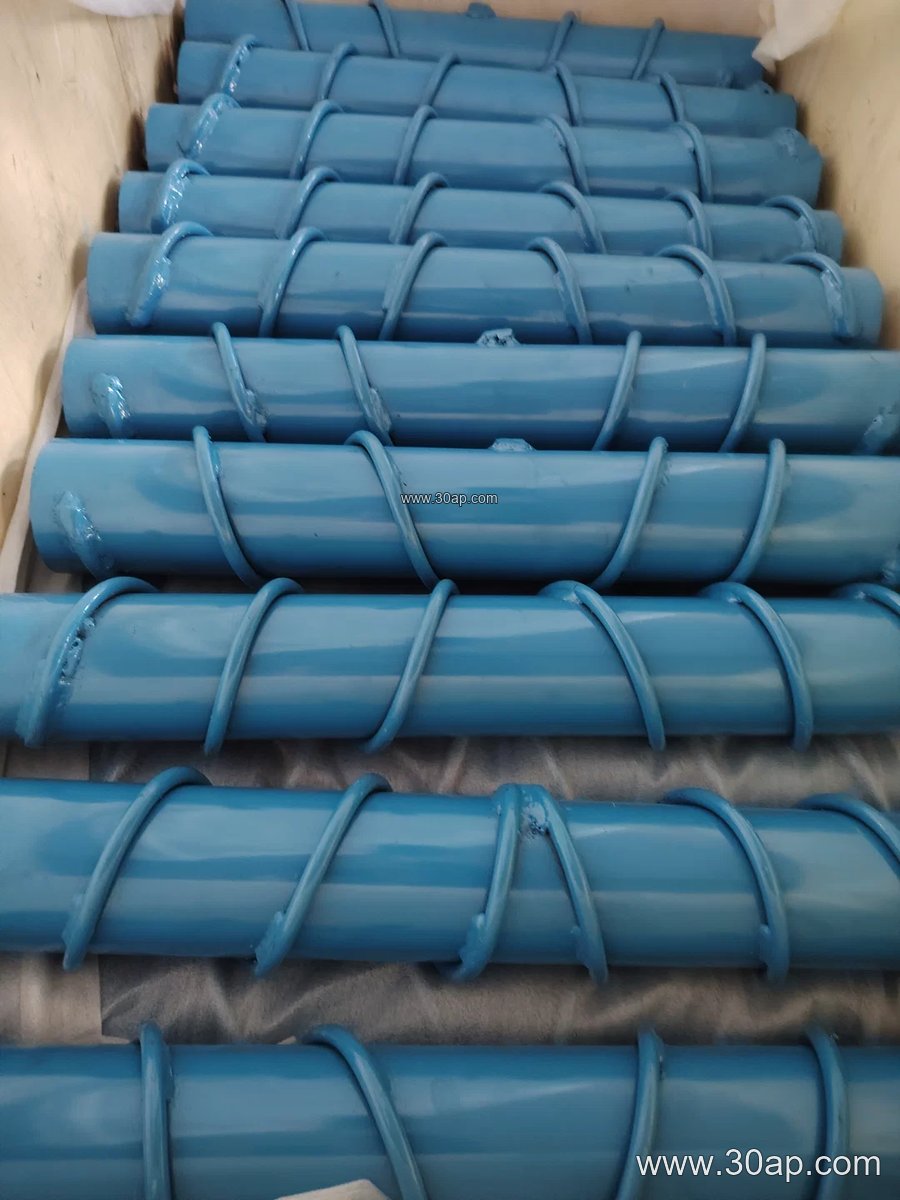
Typical Industries and Applications
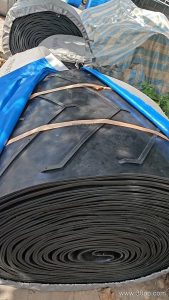
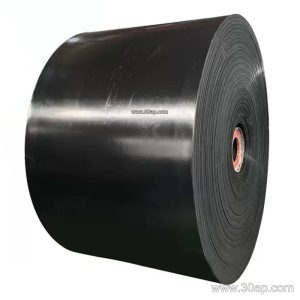
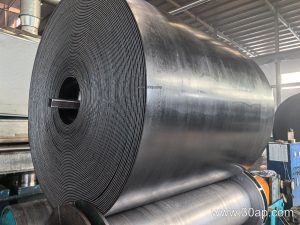
HDPE idlers are found in sand and gravel plants, cement plants, fertilizer handling, salt and potash operations, and some food-grade lines. In a quarry or aggregate line, they can be used on conveyor belts that carry crushed stone or sand, especially where dust and moisture are present. In a cement plant, they may appear on additive or clinker transport lines, but high-temperature zones call for heat-resistant solutions instead. In a fertilizer plant, the corrosion resistance of HDPE is a clear advantage. They are also used in recycling and light bulk handling. The idler roller should be matched to the conveyor belt width and speed; for instance, a 650mm or 800mm wide conveyor belt may use smaller diameter rollers, while wider belts such as 1200mm or 1400mm need larger rollers and heavier shafts. The belt itself may be an EP conveyor belt, a NN conveyor belt, or a steel cord conveyor belt depending on tension and distance. The idler does not change the belt type, but it must be compatible with the belt’s load and environmental conditions.
Selection and Sizing Notes
When choosing an HDPE idler, consider the belt width, the trough angle, the roller diameter, the shaft diameter, the bearing size, and the sealing arrangement. Common roller diameters include 63, 76, 89, 102, 108, 127, 133, 159, 178, 194, and 219 mm. A larger diameter generally gives lower rotation speed and better bearing life, but it also raises the belt line. The shaft diameter is not determined by belt width alone; it depends on the load and the idler frame design. The table below gives reference examples of common roller lengths for three-roll troughing sets; actual side roller lengths may differ.
| Belt Width | Common Roller Length (center roll, mm) | Typical Roller Diameter Range (mm) |
|---|---|---|
| B500 | 200 | 63–89 |
| B650 | 250 | 76–108 |
| B800 | 315 | 89–133 |
| B1000 | 380 | 102–159 |
| B1200 | 465 | 108–178 |
| B1400 | 530 | 127–194 |
| B1600 | 600 | 133–194 |
| B1800 | 670 | 159–219 |
| B2000 | 750 | 178–219 |
These values are indicative and should be confirmed with the idler manufacturer or conveyor designer. The bearing size is matched to the shaft and load; for example, a 6205 bearing may be used with a 25 mm shaft, but the same bearing can appear with different roller diameters. Do not assume a fixed relationship between belt width and shaft diameter.
Buyer Checklist
- Confirm the belt width and the trough angle of the existing idler set.
- Check the required roller diameter and shaft diameter against the conveyor frame and brackets.
- Specify the bearing and seal type suitable for dust, water, or chemical exposure.
- Consider the belt speed and load; HDPE idlers have lower load ratings than steel idlers.
- Verify operating temperature; HDPE softens at elevated temperatures.
- For corrosive or wet conditions, HDPE can outperform painted steel, but confirm chemical compatibility.
- Ensure that the idler roller is compatible with the conveyor belt and the conveyor pulley arrangement.
HDPE idlers offer a practical way to reduce weight and corrosion in light- to medium-duty conveyors. They are not a universal replacement for steel or impact idlers, but when applied correctly, they can lower maintenance and improve belt tracking in challenging environments. For more information on conveyor components, visit www.example.com/conveyor-idler or www.example.com/conveyor-belt.