What a Carrying Trough Idler Does
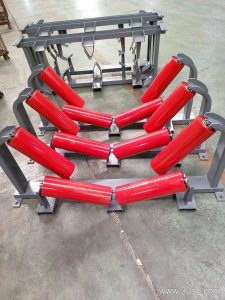
A carrying trough idler is the upper idler assembly that supports the loaded side of a conveyor belt and shapes it into a trough. The three-roll arrangement lifts the belt edges so bulk material sits in a shallow channel instead of spilling over the sides. This is the everyday workhorse of a quarry conveyor belt line, a cement plant clinker route, or a power plant coal handling system, and it is usually the most numerous component on the whole conveyor.
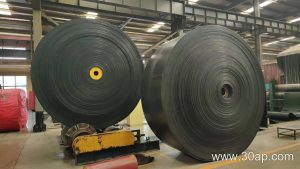
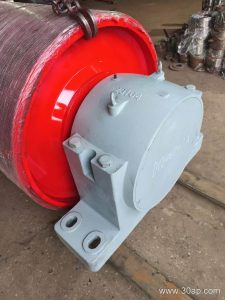
In practice, the troughing idler set works together with the conveyor belt, the conveyor pulley at the head and tail, and the conveyor bracket that fixes the assembly to the stringer. None of these parts is interchangeable with the others: a drive pulley, a tail pulley and a bend pulley each do a different job, and a carrying idler cannot replace any of them.
How the Assembly Is Built
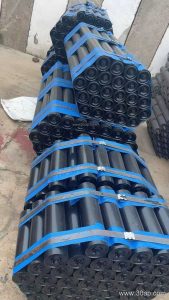
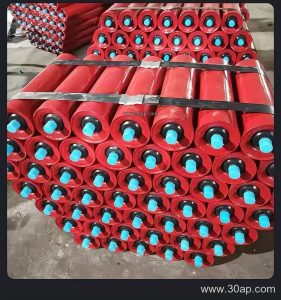
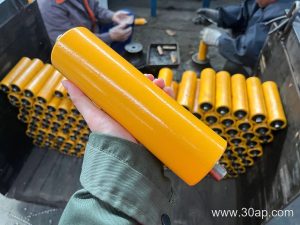
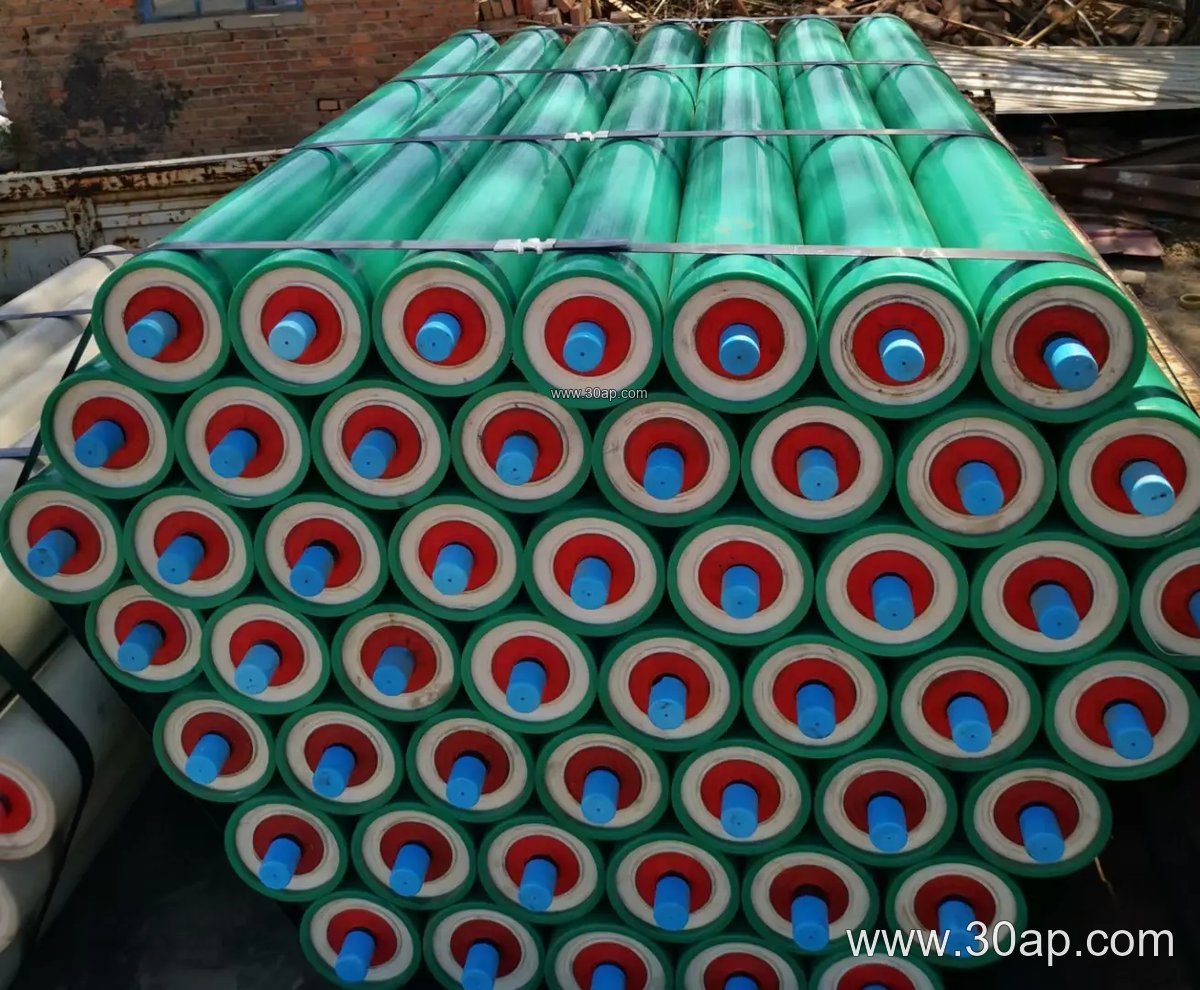
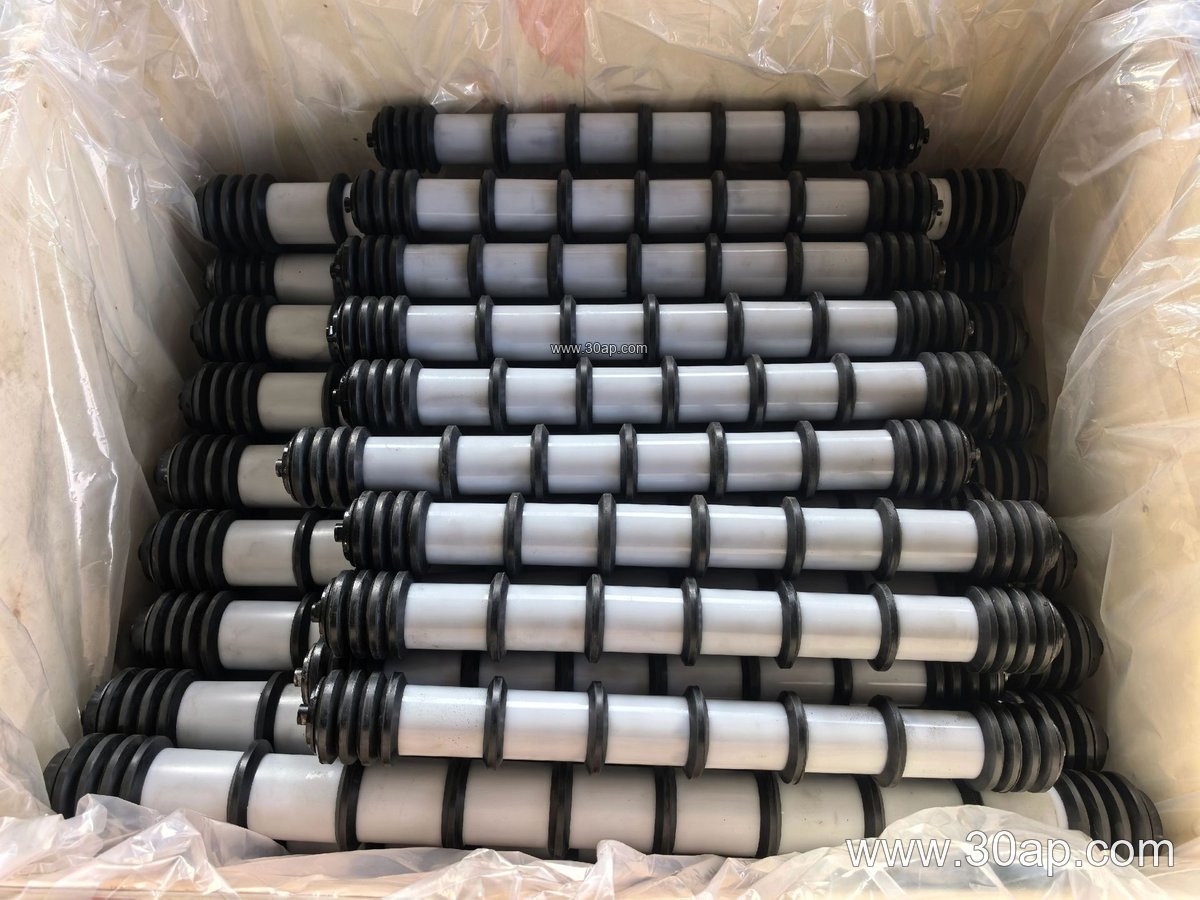
A typical unit consists of two or three idler rollers mounted in a frame at a fixed trough angle. Each roller has a steel shell, a shaft, bearing housings, and a sealing arrangement to keep dust and water away from the bearings. Roller surfaces may be plain steel, nylon, ceramic, or rubber rings where impact or build-up is a concern. The frame holds the rolls at the chosen angle, and the whole set bolts to the conveyor bracket on the stringer.
- Shell: steel tube, sometimes with a wear-resistant coating
- Bearing: common sizes include 6204, 6205, 6305, 6306, 6308 and 6310
- Seal: labyrinth or contact seal, chosen for the dust level on site
- Frame: two-roll or three-roll, fixed trough angle
Bearing size is not tied to one roller diameter, and a given belt width does not dictate a single shaft size. Those choices come from the load, the speed and the design life the conveyor engineer has in mind.
Where It Fits on the Conveyor
Carrying idlers sit on the loaded strand, spaced along the length of the conveyor. On a limestone quarry line or a sand and gravel plant, they are usually the first thing to wear because grit works into the seals. In an underground coal mining conveyor, flame retardant conveyor belt and anti-static properties matter, and the idlers must cope with damp, dusty conditions. In a steel plant or sintering plant, heat resistant conveyor belt runs over the same troughing sets, so the idler bearings need to tolerate warm surroundings.
The trough angle is a design choice. Common angles are 20, 30, 35 and 45 degrees. A deeper trough holds more material and reduces spillage on a fast belt, while a shallower angle suits wider belts and certain lump sizes. Forward tilt of about 1.5 to 2 degrees is used on some training idlers to help keep the belt centred, but this is a separate detail from the basic carrying function.
Common Sizes and Reference Data
Roller diameter and belt width are the two numbers buyers ask about first. The table below gives common reference values, not fixed rules. Side rollers and the centre roller can differ in length, and the final size is set by the conveyor design.
| Item | Common reference values |
|---|---|
| Roller diameter | Ø63, Ø76, Ø89, Ø102, Ø108, Ø127, Ø133, Ø159, Ø178, Ø194, Ø219 mm |
| Belt width | B400, B500, B650, B800, B1000, B1200, B1400, B1600, B1800, B2000, B2200, B2400 |
| Trough angle | 20°, 30°, 35°, 45° |
| Set form | single roll, two-roll, three-roll troughing |
| Roller length, three-roll example | about 200 mm at B500, 315 mm at B800, 465 mm at B1200, 600 mm at B1600, 750 mm at B2000 |
These figures are examples only. A 1200 mm wide conveyor belt can be served by more than one roller diameter, and the shaft size follows the load calculation rather than the belt width alone.
Buying Points to Check
Before ordering, confirm the belt width, the trough angle, the set form, and the roller diameter your conveyor was designed around. Ask about the sealing method if the site is dusty or wet, and about the shell material if the material is abrasive. Where impact is heavy at the loading point, impact idlers are often used for a short distance, but they are a different subtype and do not replace the standard carrying sets along the rest of the line.
Also check that the frame matches the existing conveyor bracket, and that the roller length suits the trough geometry. For long overland routes carrying ore or aggregate, small savings per idler add up over hundreds of sets, so rotation resistance and seal quality deserve attention. On a coal mining conveyor belt system, flame retardant and anti-static requirements may also apply to components near the belt.
Good maintenance is simple: watch for seized rollers, worn shells and material build-up, and replace damaged sets before they damage the belt. A carrying trough idler is a low-cost part, but a failed one can stop a whole conveyor.