What an Impact Idler Does at the Loading Point
An impact idler is a conveyor carrying idler built to absorb the force of material dropping onto the belt. At a transfer point, ore, crushed stone, or clinker can fall from a chute with enough energy to flatten an ordinary steel roller surface, crack a bearing housing, or punch through the belt cover. The impact idler sits directly under that landing zone, and its job is to take the hit so the belt and the rest of the idler set do not have to.
In a quarry, a mine, or a cement plant, the loading point is often the harshest part of the whole conveyor line. The impact idler is therefore a wear part as much as a support part, and treating it that way helps buyers plan replacements before a failure stops production.
How the Roller Is Built
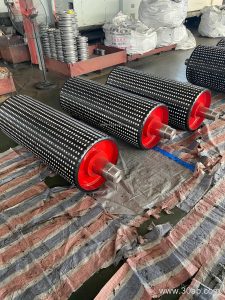
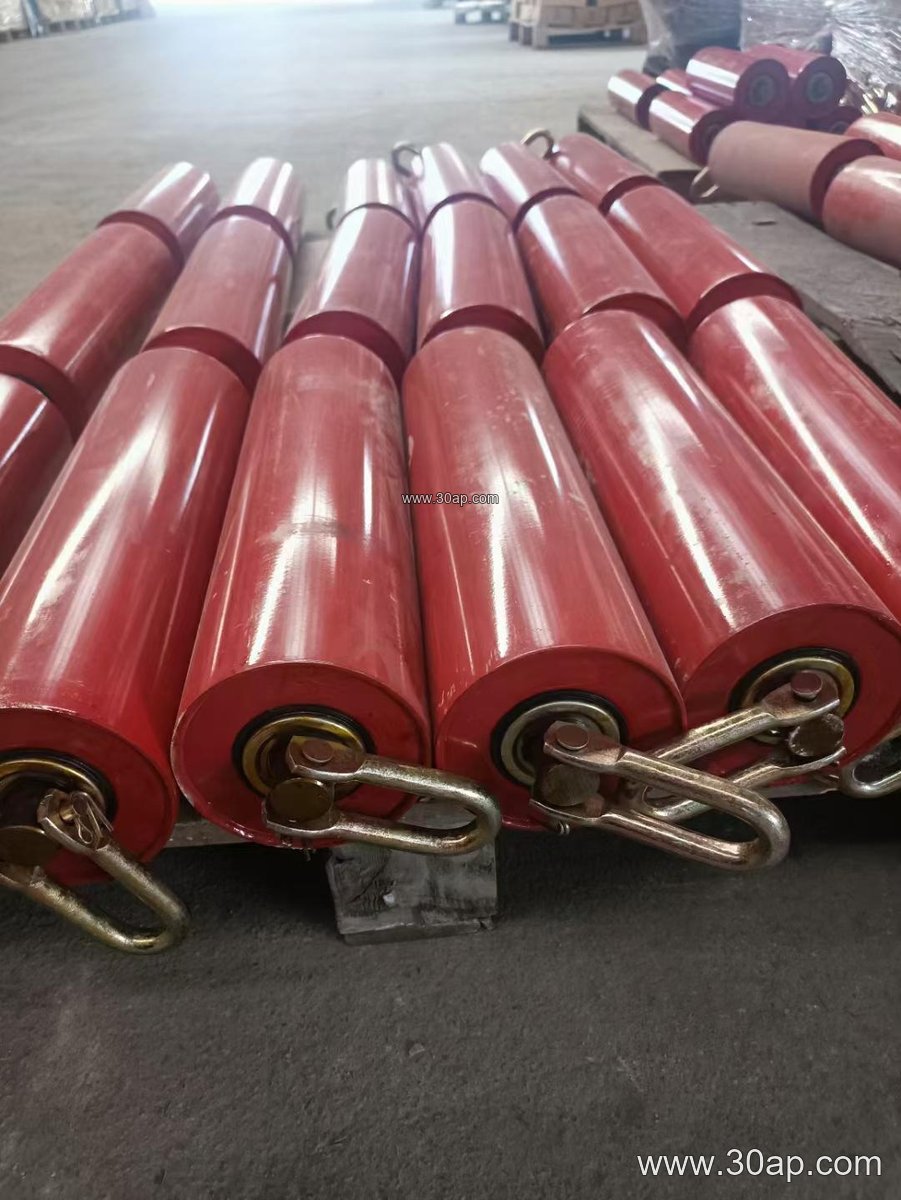
The distinguishing feature is the surface. Instead of a bare steel shell, the impact idler usually carries a ring of rubber or elastomer discs, sometimes called rubber rings, mounted along the roller body. These rings compress under a falling load and spread the force over a longer section of belt. The rings also reduce the chance of material wedging between the roller and the belt.
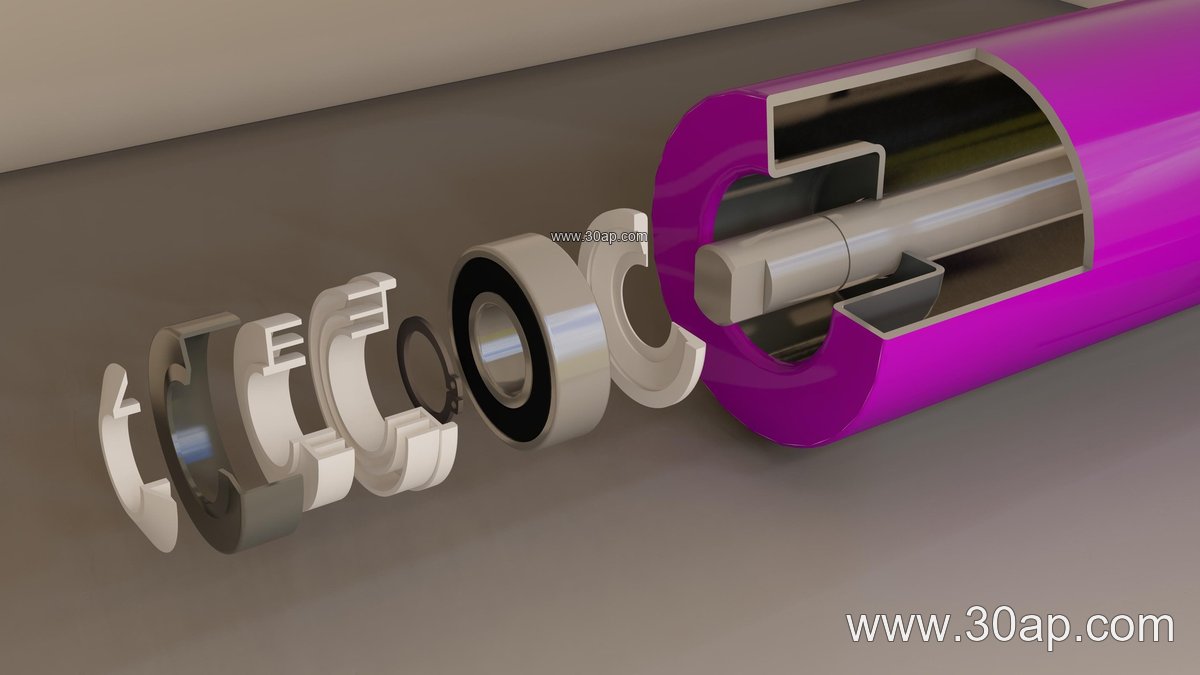
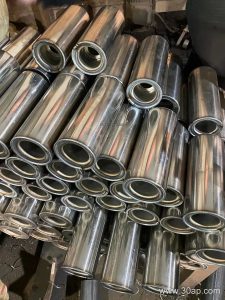
Behind the rings, the construction is similar to other carrying idlers. A steel tube shell, a shaft, and bearing housings at each end with a sealing arrangement to keep out dust and water. Bearing sizes are chosen for the load and speed of the conveyor, not by one fixed rule; common bearings on medium and heavy conveyors include 6205, 6305, 6306, 6308, and 6310. Sealing quality matters more at the loading point than almost anywhere else, because dust is generated exactly where the impact occurs.
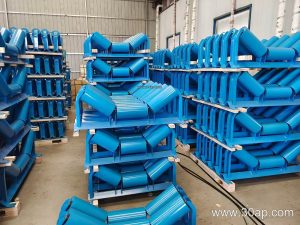
Impact idlers are normally supplied as a group, most often a three-roll troughing set, so the belt is supported in a trough shape while it receives the load. The set mounts on the conveyor bracket in the same way as a standard troughing idler, which makes retrofitting at an existing transfer point straightforward.
Where Impact Idlers Are Used
The most common locations are belt loading stations, crusher discharge points, and the first few metres after a transfer chute. Typical industries include:
- Quarries and aggregate lines, where blasted rock lands on the belt after primary crushing
- Iron ore, copper ore, and other mining operations with heavy lump material
- Coal handling in power plants and coal preparation plants
- Cement plants, where clinker and limestone drop from kiln and crusher circuits
- Ports and ship loading systems handling bulk cargo
In these settings the belt itself is usually a heavy-duty type. A high abrasion resistant conveyor belt or a thick EP conveyor belt with a reinforced cover is common, and an impact resistant conveyor belt grade may be specified where drop heights are high. A steel cord conveyor belt or a multi-ply fabric core conveyor belt can be used depending on tension and lump size. For underground coal work, a flame retardant conveyor belt or PVG conveyor belt is often required by site rules, and the idler selection should match the same duty level.
Buyers comparing idler options will find that an impact idler is not a substitute for a return idler or a self-aligning idler. A return idler supports the empty side of the belt, and a self-aligning idler controls tracking. The impact idler has one specific role: cushioning the load zone. At a drive or tail pulley, the belt is supported by the pulley itself, not by an idler, so pulley selection and idler selection are separate decisions.
Sizes and Selection Notes
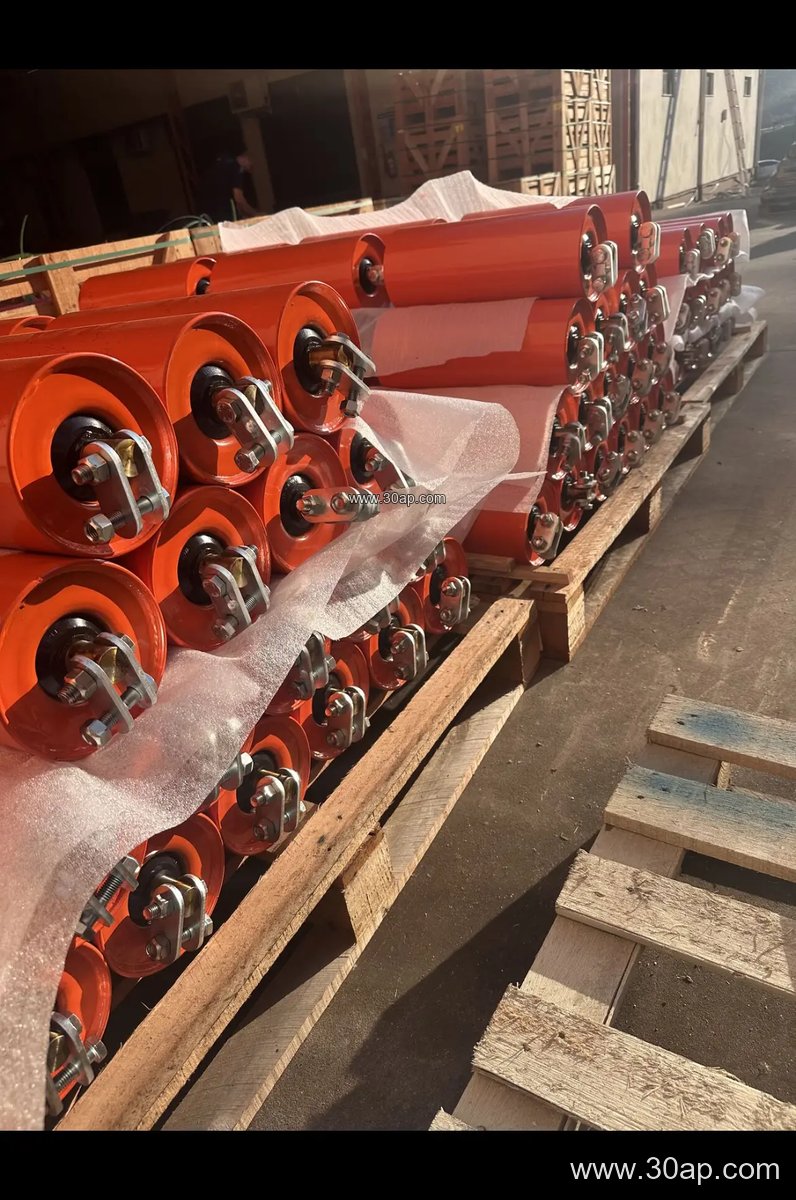
Impact idlers are matched to belt width and to the trough angle of the existing idler set. Common roller diameters for this duty include Ø89, Ø102, Ø108, Ø127, Ø133, Ø159, and larger sizes for very heavy service. Roll length varies with belt width, trough angle, and whether the set is two-roll or three-roll. The following values are common examples only and should be confirmed against the conveyor design:
| Belt width | Typical three-roll centre roll length | Common trough angles |
|---|---|---|
| B500 | about 200 mm | 20°, 30°, 35° |
| B650 | about 250 mm | 20°, 30°, 35° |
| B800 | about 315 mm | 30°, 35°, 45° |
| B1000 | about 380 mm | 30°, 35°, 45° |
| B1200 | about 465 mm | 30°, 35°, 45° |
| B1400 | about 530 mm | 30°, 35°, 45° |
| B1600 | about 600 mm | 30°, 35°, 45° |
Side rolls and centre rolls can differ in length, so these figures are not a fixed pairing with any single roller diameter. The shaft diameter should be set from the calculated load and the bracket design, not from belt width alone.
What to Check Before Ordering
Confirm the belt width, the existing trough angle, the mounting bracket dimensions, and the drop height at the loading point. Ask for the ring material and hardness, the bearing size, and the sealing arrangement. On a long conveyor, consider whether the impact zone needs two or three impact idler sets in a row rather than one, especially where lump size is large.
Maintenance is mostly inspection. Look for flattened or missing rubber rings, loose rings, and grease or dust leaking past the seals. Replacing worn rings early is cheaper than replacing a complete roller or repairing a damaged belt. For anyone sourcing conveyor components, whether an idler roller, a conveyor pulley, or a full conveyor bracket set, matching the impact idler to the actual loading conditions is the difference between a smooth transfer point and a recurring downtime problem.