What a Conveyor Belt Support Frame Does
A conveyor belt support frame is the structural backbone that holds the idler rollers in precise alignment along the carrying and return sides of a conveyor. It keeps the belt profile stable, maintains the correct trough angle, and absorbs the loads imposed by bulk materials. In a quarry, cement plant, or power station coal yard, these frames are the quiet workhorses that determine how well the belt tracks and how long the rollers last. The frame itself is often called a conveyor bracket or idler support frame, and it works together with the conveyor pulley at the head and tail to keep the whole system running smoothly.
Construction and Common Materials
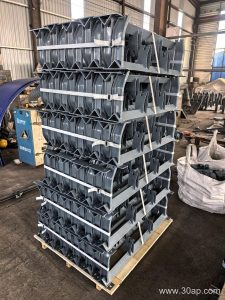
Most support frames are fabricated from angle steel, channel steel, or folded steel plate. The choice depends on load and environment: channel steel is common for heavy-duty mining conveyor belts carrying dense ore, while folded plate offers a cleaner profile for lighter aggregate conveyor belts. Frames are usually bolted to the conveyor stringers, with mounting hole spacing and beam length determined by belt width and trough angle. A typical frame includes the cross beam, idler mounting brackets, and sometimes adjustable slots for fine-tuning.
Key components include:
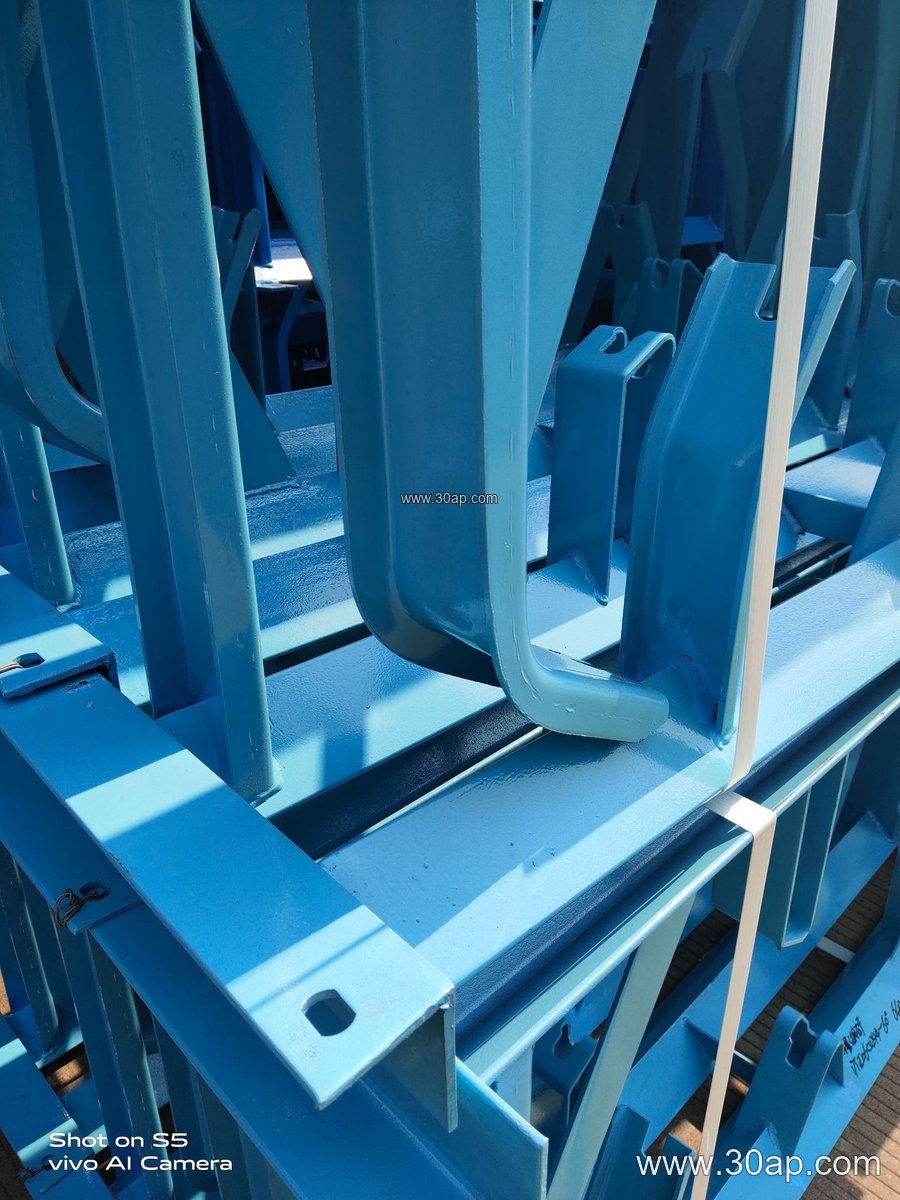
- Cross beam (angle, channel, or folded plate)
- Idler mounting brackets or seats
- Adjustable or fixed connection points
- Reinforcement gussets for impact zones
Types and Where They Fit
Support frames come in several forms, each matched to a specific position on the conveyor. Troughing frames (also called carrying frames) hold three or more idlers at a set trough angle. Transition frames ease the belt from flat to troughed profile near the pulleys. Return frames support the belt on its empty run, often with V-shaped or flat idlers. Impact frames, fitted with buffer rollers, sit under the loading point to absorb the drop of rock or ore. Self-aligning frames, combined with training idlers, help correct belt wander on long overland conveyors.
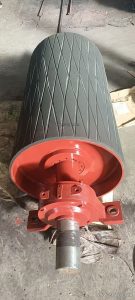
For a comparison, a bend pulley changes belt direction, while a support frame only carries the belt; the two are not interchangeable. Similarly, drive and tail pulleys serve different functions and cannot replace a frame.
Common Sizes and Configurations
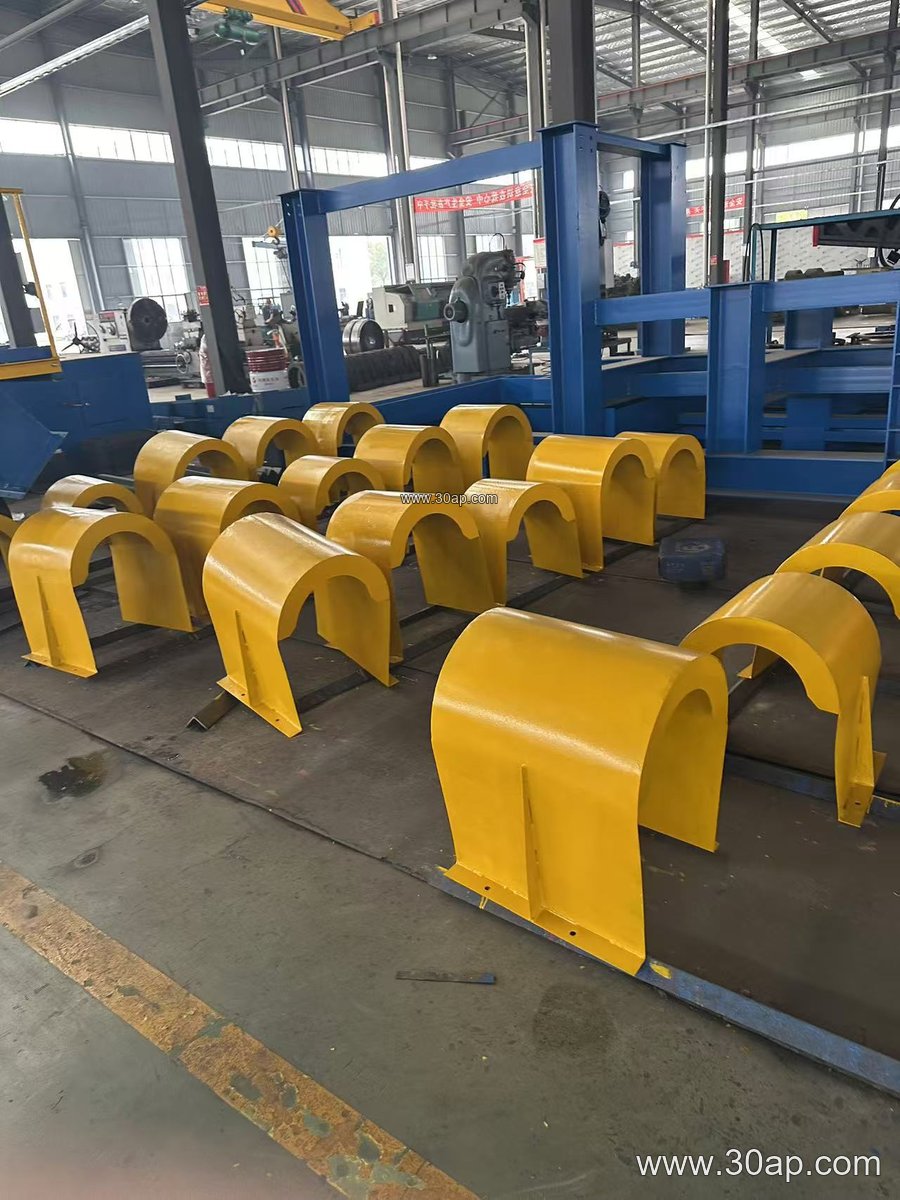
Frame dimensions follow belt width and idler diameter. The table below shows typical reference combinations; actual mounting hole spacing and beam length are determined by design.
| Belt Width | Trough Angle | Idler Diameter | Typical Frame Type |
|---|---|---|---|
| B500 | 20° | Ø89 | Troughing, return |
| B650 | 30° | Ø89 | Troughing, impact |
| B800 | 35° | Ø108 | Troughing, transition |
| B1000 | 35° | Ø108 | Troughing, return |
| B1200 | 45° | Ø133 | Troughing, impact |
| B1400 | 45° | Ø133 | Heavy-duty troughing |
| B1600 | 35° | Ø159 | Troughing, transition |
| B1800 | 45° | Ø159 | Heavy-duty troughing |
| B2000 | 35° | Ø194 | Heavy-duty troughing |
Adjustable frames allow the trough angle to be set between 20° and 45°, which is useful when a conveyor handles both fine aggregate and lumpy ore. Forward-leaning frames, typically set at about 1.5° to 2°, help keep the belt centered on the carrying side.
Application Notes for Different Industries
In a limestone quarry or sand and gravel line, frames are exposed to abrasive dust and frequent washdown, so galvanized or painted finishes are common. In a coal washing plant or underground coal mining conveyor, flame retardant conveyor belts are paired with sturdy frames that resist corrosion from moisture and fine coal. Cement plants often use heat resistant conveyor belts near kilns, where frames must tolerate high ambient temperatures without warping. Power plant coal yards and port ship loaders rely on heavy-duty frames to handle high tonnage and frequent starts and stops.
Buyer Checklist
- Confirm belt width and idler diameter before ordering; do not assume one size fits all.
- Specify trough angle and whether adjustment is needed.
- Check material and finish against the environment (abrasion, heat, moisture).
- Ask for mounting hole spacing and beam length drawings.
- Consider impact frames at transfer points and self-aligning frames on long runs.
- Verify compatibility with your existing idler roller and conveyor pulley layout.
For more information on matching frames with rubber conveyor belt, EP conveyor belt, or steel cord conveyor belt systems, consult your conveyor component supplier. At www.example.com/conveyor-belt-support-frame, you can find further guidance on frame selection and maintenance schedules for mining conveyor belt and aggregate conveyor belt installations.