What a Discharge Pulley Does at the Head of a Conveyor
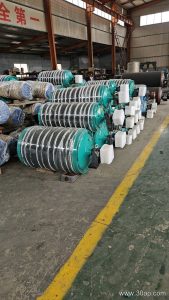
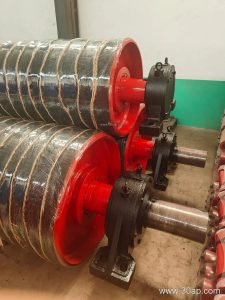
A discharge pulley is the large-diameter drum mounted at the head end of a belt conveyor, where the belt turns around and releases its load into a chute, screen, or stockpile. It is also called a head pulley or delivery pulley, and it is the point where the conveyor belt, after carrying material across the full length of the structure, finally tips forward and discharges. Because it transmits the driving torque in most head-driven arrangements, this drum combines two jobs at once: it discharges the load and it drives the belt.
In a quarry conveyor, a coal mining conveyor, or a cement plant clinker line, the discharge pulley sits in the dustiest and most heavily loaded part of the machine. Material leaves the belt directly above the drum, so wear, buildup, and belt tracking problems tend to show up here first.
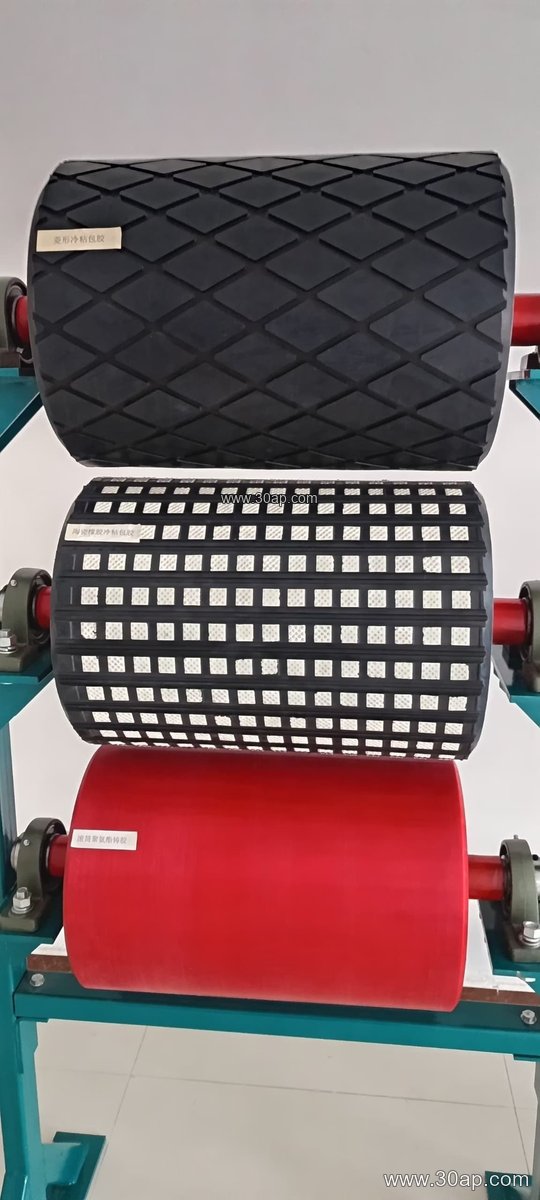
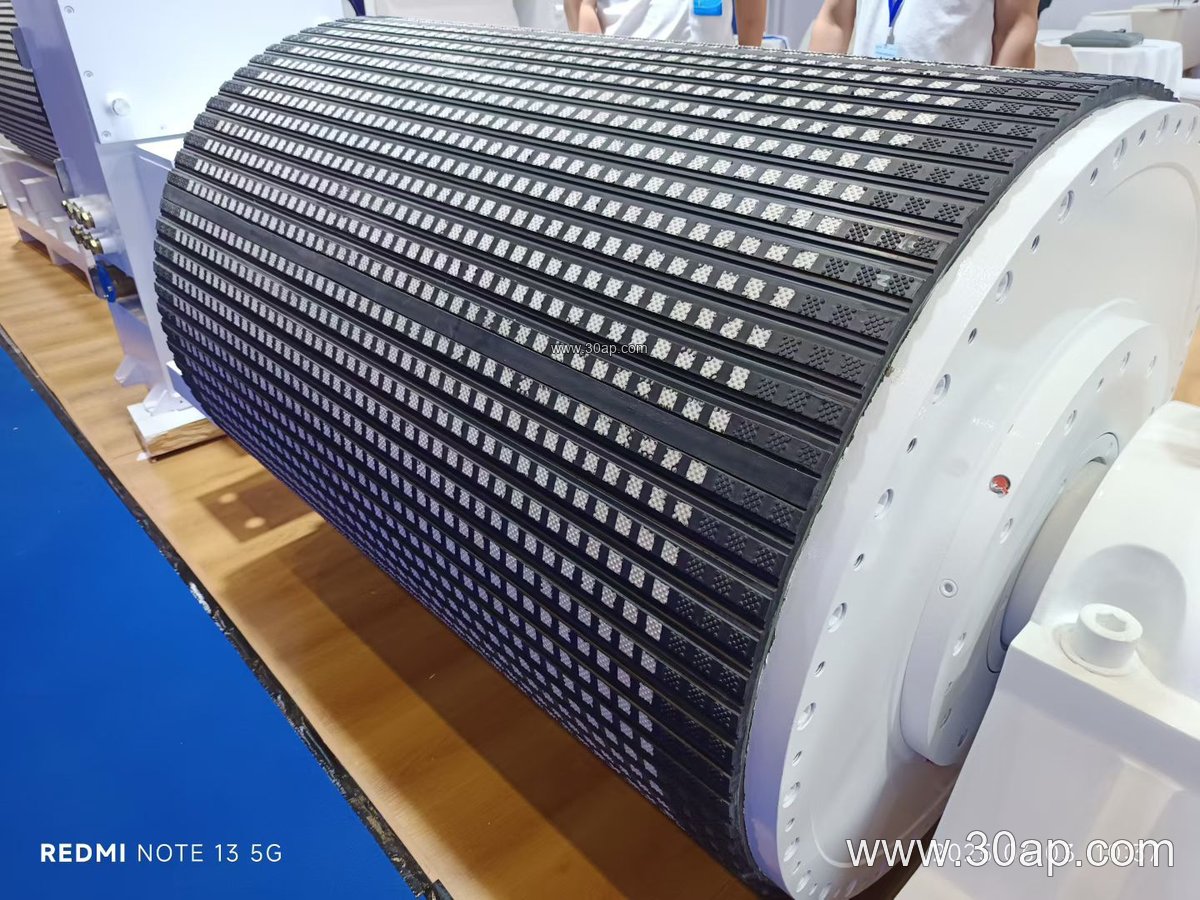
Construction and Surface Options
A typical discharge pulley is built on a welded steel shell with machined end discs and a through shaft or stub shafts. The shell is usually slightly wider than the belt to keep the belt centered. Common shell widths and diameters are given below as reference values; final dimensions are set by the conveyor design, belt tension, and torque.
Common Reference Dimensions
- Belt width to shell width: B400 around 500 mm; B650 around 750 mm; B800 around 950 mm; B1000 around 1150 mm; B1200 around 1400 mm; B1400 around 1600 mm; B1600 around 1800 mm.
- Typical diameters: Ø500, Ø630, Ø800, Ø1000, Ø1250.
- Typical shaft diameters: Ø80, Ø100, Ø120, Ø140, Ø160, Ø180. Shaft size is determined by torque and bearing load, not by belt width alone.
- Common lagging thickness: 8, 10, 12, 15, 20 mm.
The surface finish matters as much as the size. Plain shells work in clean, lightly loaded service. Rubber lagging (cold-bonded or hot-vulcanized) improves grip and cushions the belt. Diamond or herringbone grooving helps shed water and fines, which is useful in a washing plant or an underground coal mining conveyor. Ceramic lagging is chosen where abrasive rock or ore slides across the drum. A B1200 × Ø1000 discharge pulley with 12 mm diamond lagging is a typical combination for a mid-size aggregate line, though it is not a fixed rule.
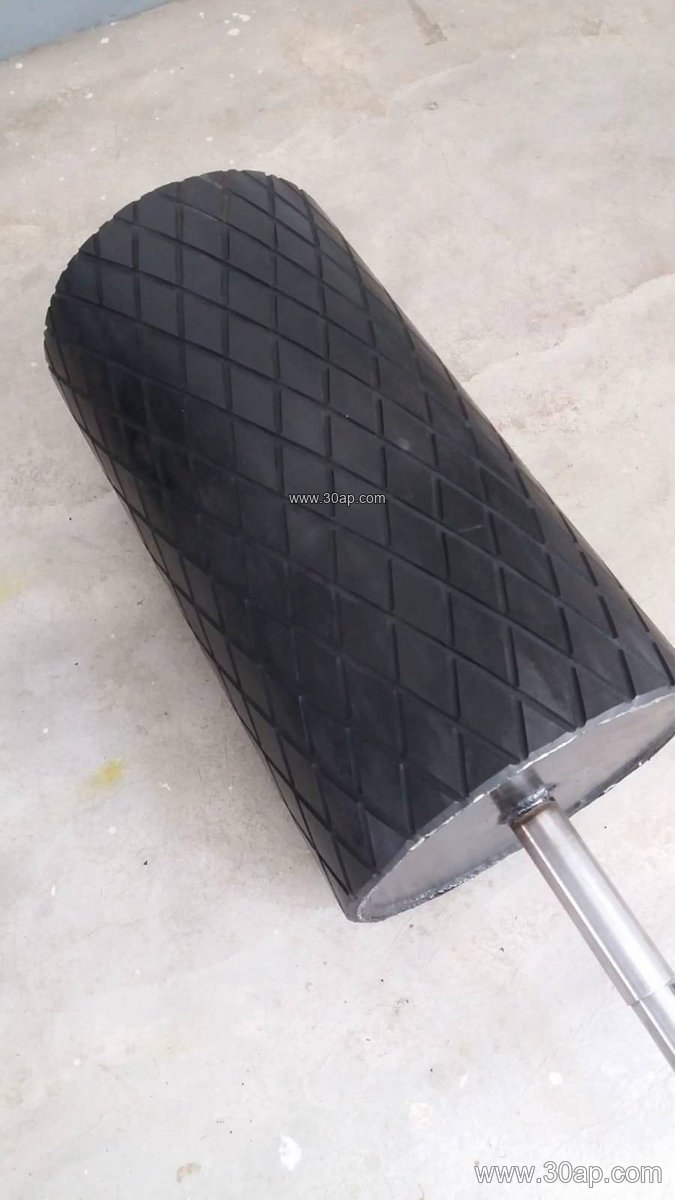
Where It Fits in the Plant
Discharge pulleys appear wherever a conveyor hands material to the next stage. In an iron ore or copper ore concentrator, the head drum discharges onto a transfer belt or a screen. At a power plant coal yard, it feeds the crusher house. In a concrete batching plant or a limestone quarry, it drops aggregate into a hopper. Sand and gravel lines, tunnel mucking conveyors, and fertilizer handling systems all rely on this drum at the transfer point.
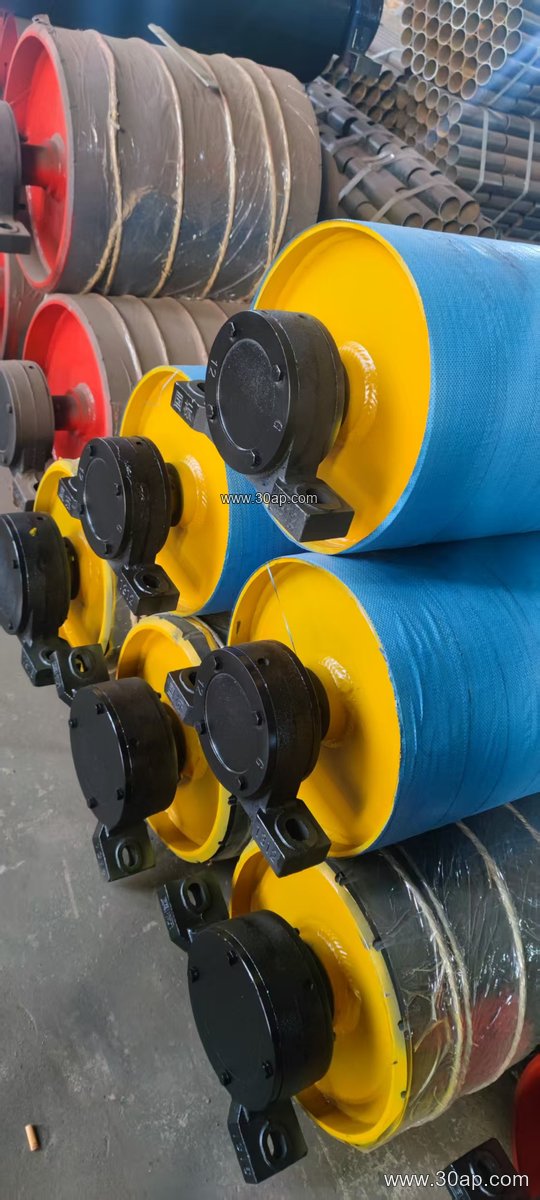
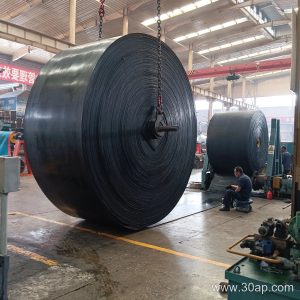
The drum must be matched to the belt it carries. A heavy-duty mining conveyor belt with steel cord reinforcement needs a larger diameter and a stronger shaft than a lightweight fabric core conveyor belt on a short transfer. Abrasion resistant conveyor belt grades and heat resistant conveyor belt grades also influence the lagging choice: hot clinker calls for heat-tolerant rubber, while sharp rock calls for thicker, tougher covers.
Drive, Tail, and Bend Pulleys Are Not the Same
It is worth separating the roles. A drive pulley applies torque; a tail pulley returns the belt at the loading end; a bend pulley changes belt direction without driving. The discharge pulley can also be the drive pulley, but the two functions should be specified separately. When replacing a drum, confirm whether the unit is a plain discharge pulley or a combined drive and discharge pulley, because the shaft, keyway, and bearing housing differ.
Buyer Checklist
- Confirm belt width, belt type (EP conveyor belt, NN conveyor belt, or steel cord), and operating tension.
- State the required diameter and lagging type, including groove pattern and thickness.
- Provide shaft diameter, bearing centers, and coupling details, or the drawing of the existing unit.
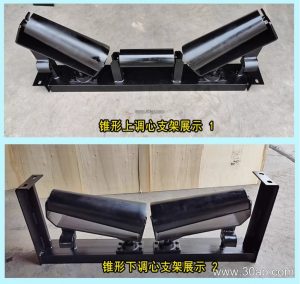
- Check the conveyor bracket and bearing housing dimensions so the new drum fits without modification.
- Inspect idler roller alignment and belt tracking before blaming the drum for off-center running.
- Plan periodic lagging inspection, since wear at the discharge point is normal and gradual.
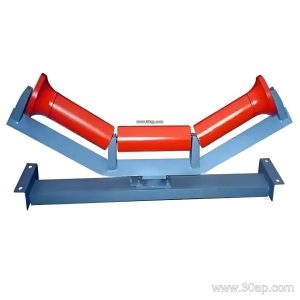
For plant engineers sourcing replacement parts, matching the discharge pulley to the conveyor belt specification and to the surrounding conveyor bracket and idler roller set is the surest way to avoid premature belt wear and spillage at the transfer point.