What a Q235 Conveyor Bracket Does on the Line
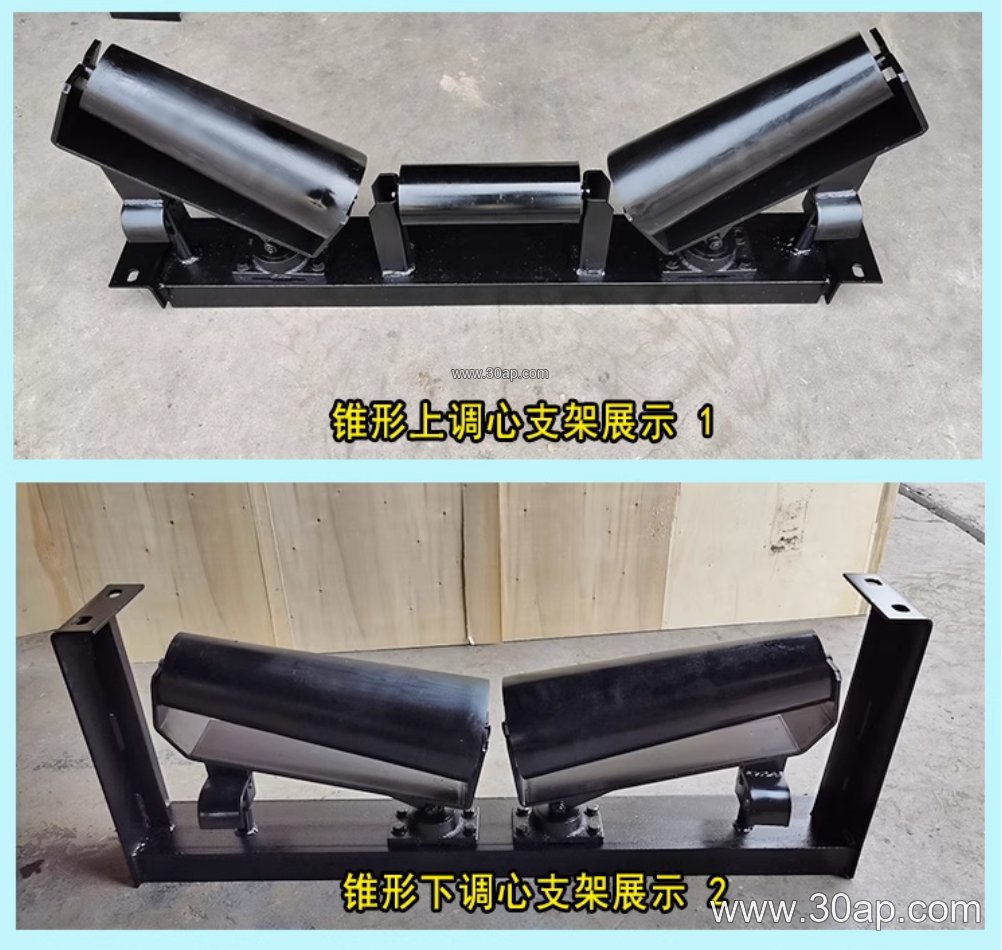
A Q235 conveyor bracket is the structural interface between a conveyor frame and the rollers that carry or return the conveyor belt. In practice, it is a fabricated steel support — often called a Q235 conveyor roller bracket or Q235 idler bracket — that holds the idler roller at the correct position, height and angle so the belt tracks smoothly from loading point to discharge. Because Q235 is a common low-carbon structural steel, the bracket is easy to cut, bend, weld and drill, which keeps fabrication straightforward for both standard and custom conveyor frames.
The bracket does not move the belt by itself. Its job is to keep the idler roller square to the belt path, spread load across the frame, and allow quick replacement of worn rollers during maintenance shifts.
How the Bracket Is Built
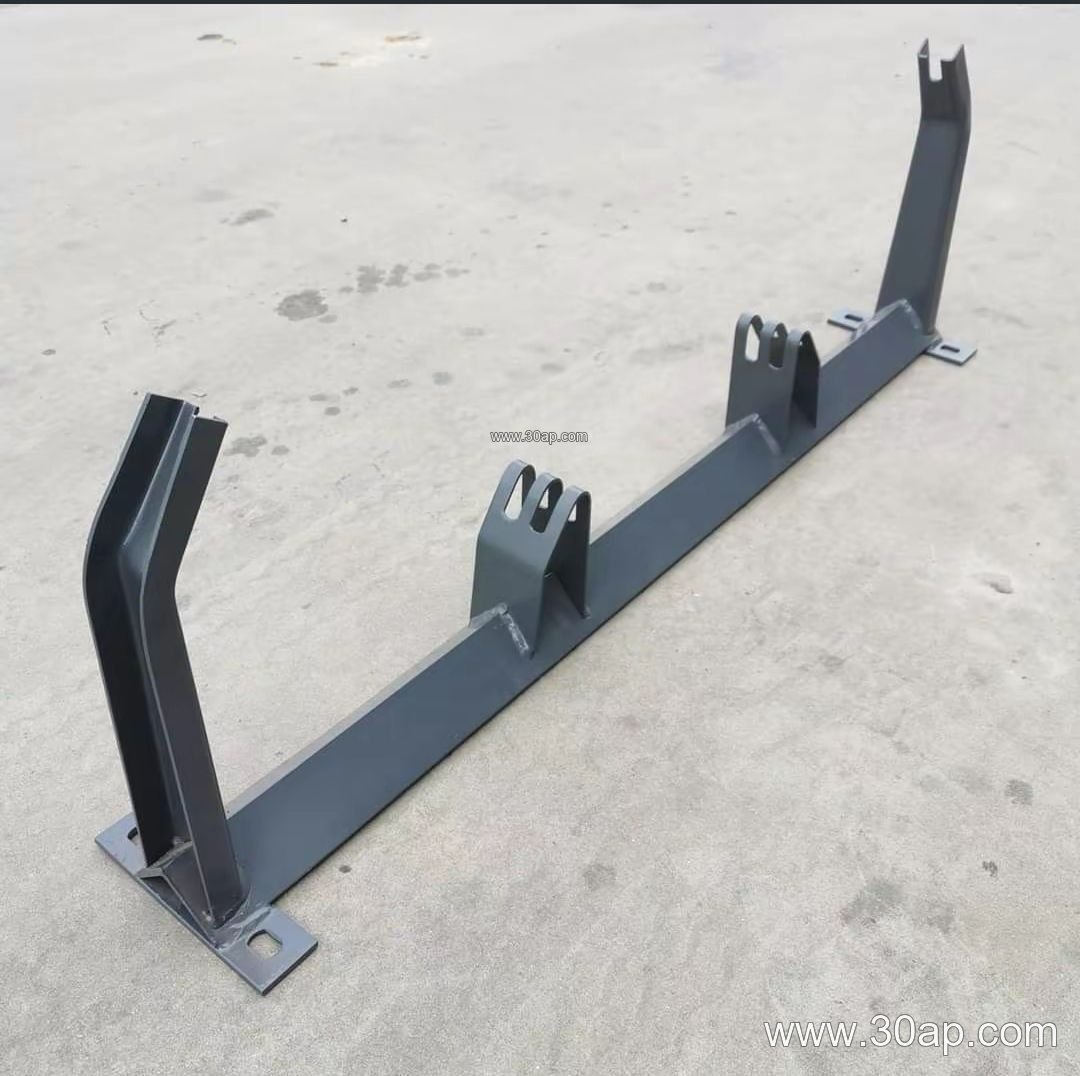
Most Q235 conveyor brackets are made from angle steel, channel steel or folded steel plate. The choice depends on the load and the mounting method:
- Angle steel brackets suit lighter troughing and return positions where bolting to the frame is simple.
- Channel steel brackets give a stiffer section for wider belts and heavier material loads.
- Folded plate brackets allow formed seats and slots that locate the roller shaft without extra welding.
Fixing details matter as much as the steel grade. Slotted holes let fitters align the bracket after the frame is installed, while welded gussets resist vibration on drives and transfer points. A well-made bracket keeps the roller axis perpendicular to the belt centreline and holds the specified trough angle without sagging under load.
Common Types and Where They Sit
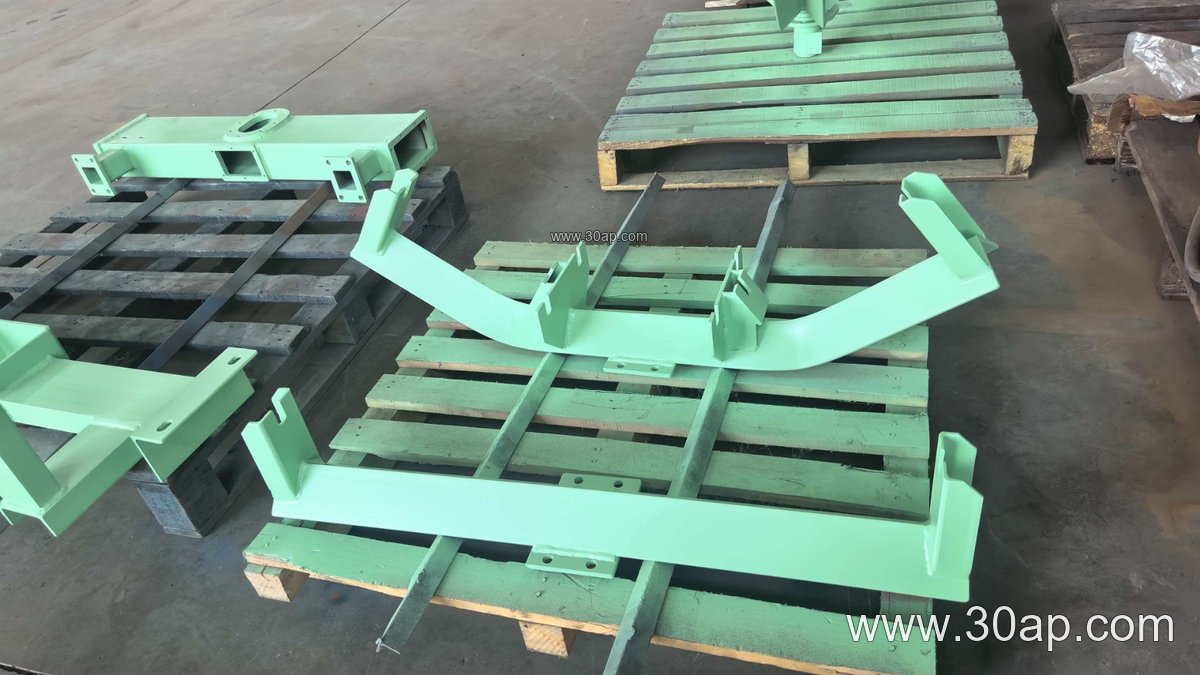
The bracket family covers several positions along a conveyor. Troughing brackets carry the loaded side of the belt, return brackets support the empty side, and transition or impact brackets handle the change from flat to troughed profile or the shock at a loading chute. Adjustable brackets allow the trough angle to be set on site, which is useful when a conveyor handles several material types.
| Bracket Position | Typical Role | Notes |
|---|---|---|
| Troughing bracket (upper) | Supports the carrying side of the conveyor belt | Holds 20°, 30°, 35° or 45° trough angles depending on design |
| Return bracket (lower) | Supports the empty return belt | Flat or V-return forms are common |
| Transition bracket | Gradual change from flat to troughed profile | Reduces belt stress near pulleys |
| Impact bracket | Absorbs shock at the loading point | Often paired with cushion rollers |
| Adjustable bracket | On-site angle setting | Useful for mixed material duties |
Self-aligning and forward-leaning brackets are separate designs used for belt training; they are not substitutes for a standard troughing bracket, and each is selected for its own job.
Matching Bracket, Belt Width and Roller Diameter
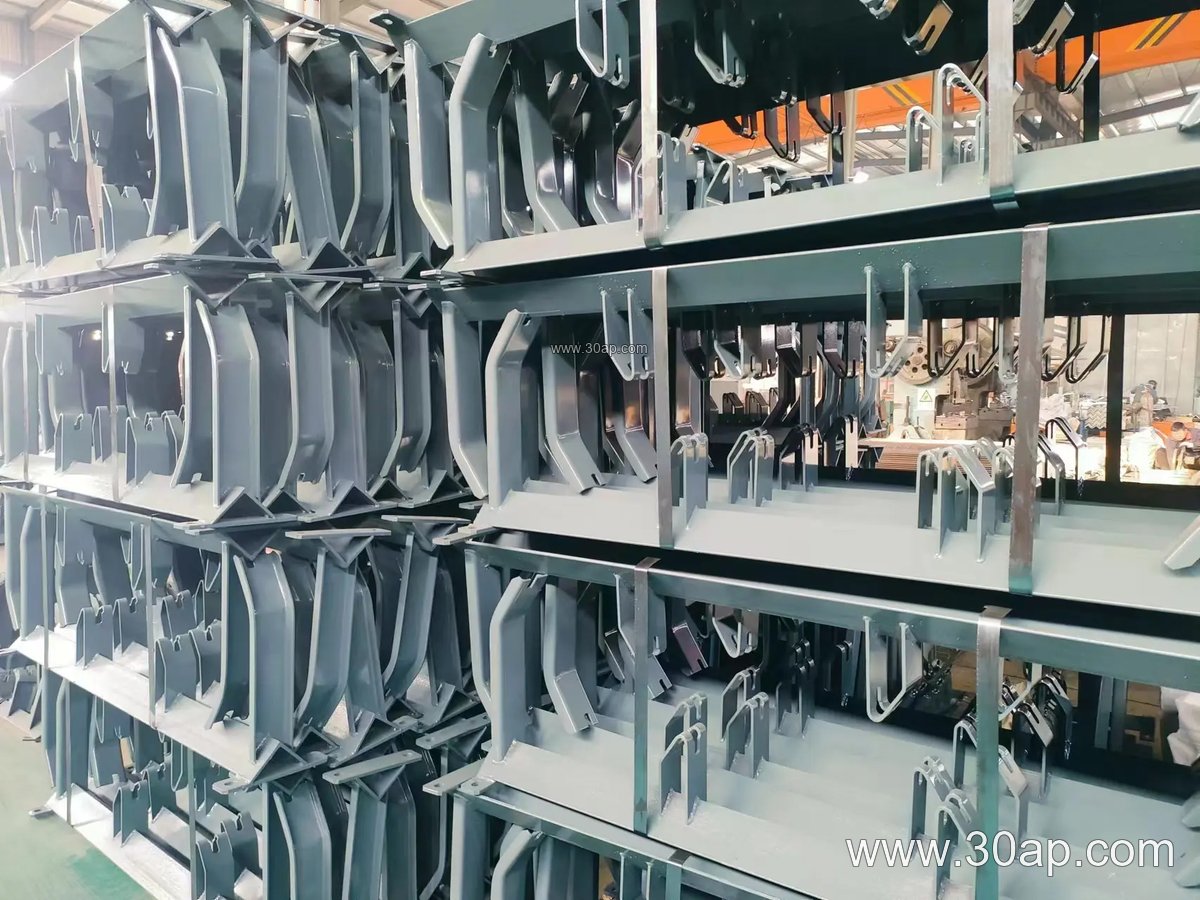
Bracket dimensions follow the belt width and the roller diameter, not the other way round. A B800 conveyor with a 35° trough and Ø108 rollers needs a different bracket span and mounting hole pattern from a B1200 line running 45° and Ø133 rollers. Common belt widths run from B500 through B2000 and beyond, and roller diameters such as Ø89, Ø108, Ø133, Ø159 and Ø194 appear across bulk handling duties. These are reference ranges, not fixed pairings — the final match is set by the conveyor design, belt speed and material load.
| Belt Width | Common Trough Angle | Typical Roller Diameter | Bracket Consideration |
|---|---|---|---|
| B500–B650 | 20°–30° | Ø89 | Light angle-steel bracket |
| B800–B1000 | 30°–35° | Ø108 | Channel or folded plate seat |
| B1200–B1400 | 35°–45° | Ø133 | Stiffer section, wider span |
| B1600–B2000 | 35°–45° | Ø159–Ø194 | Heavy-duty fabricated bracket |
Installation hole spacing and crossbeam length change with belt width and trough angle, so a bracket should be ordered against the frame drawing rather than assumed from belt width alone.
Where These Brackets Are Used
Q235 conveyor brackets appear wherever a belt conveyor carries bulk material. In a limestone quarry or sand and gravel line, troughing brackets hold the carrying rollers through dusty, abrasive duty. In a coal preparation plant or a power station coal yard, return brackets and impact brackets keep the belt stable at transfer towers. Cement plants, steel sintering lines and fertilizer plants use the same bracket family on clinker, ore and granulate conveyors, while grain silos favour lighter brackets with easy-clean frames.
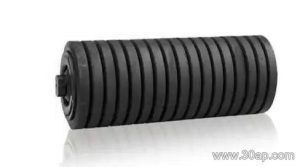
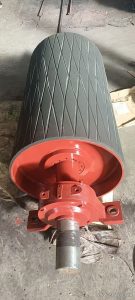
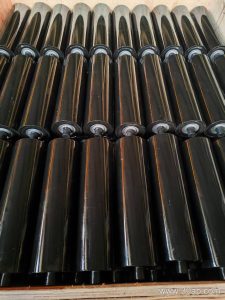
The bracket works alongside the conveyor belt, idler roller and conveyor pulley, so it must suit the frame style and the maintenance routine of the whole conveyor.
Buyer Checklist
- Confirm belt width, trough angle and roller diameter before choosing a bracket size.
- Check the mounting method — bolted, welded or clamped — against the existing frame.
- Ask for the hole pattern and crossbeam length, not just the steel grade.
- Decide between fixed and adjustable brackets based on material variation and on-site setup.
- For high-impact loading zones, specify impact brackets with cushion rollers rather than standard troughing brackets.
- Keep spare brackets and rollers of the same pattern for faster maintenance stops.
A Q235 conveyor bracket is a small part of the conveyor cost, but it controls roller alignment, belt tracking and the speed of routine maintenance. Matching it correctly to the frame and roller set is what keeps the line running.