What a Metallurgical Conveyor Pulley Does
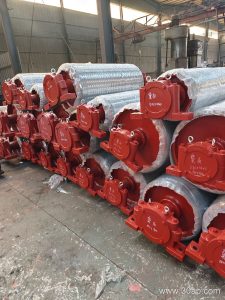
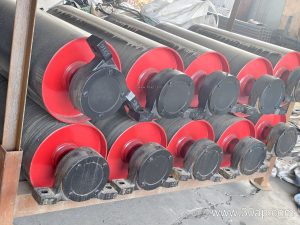
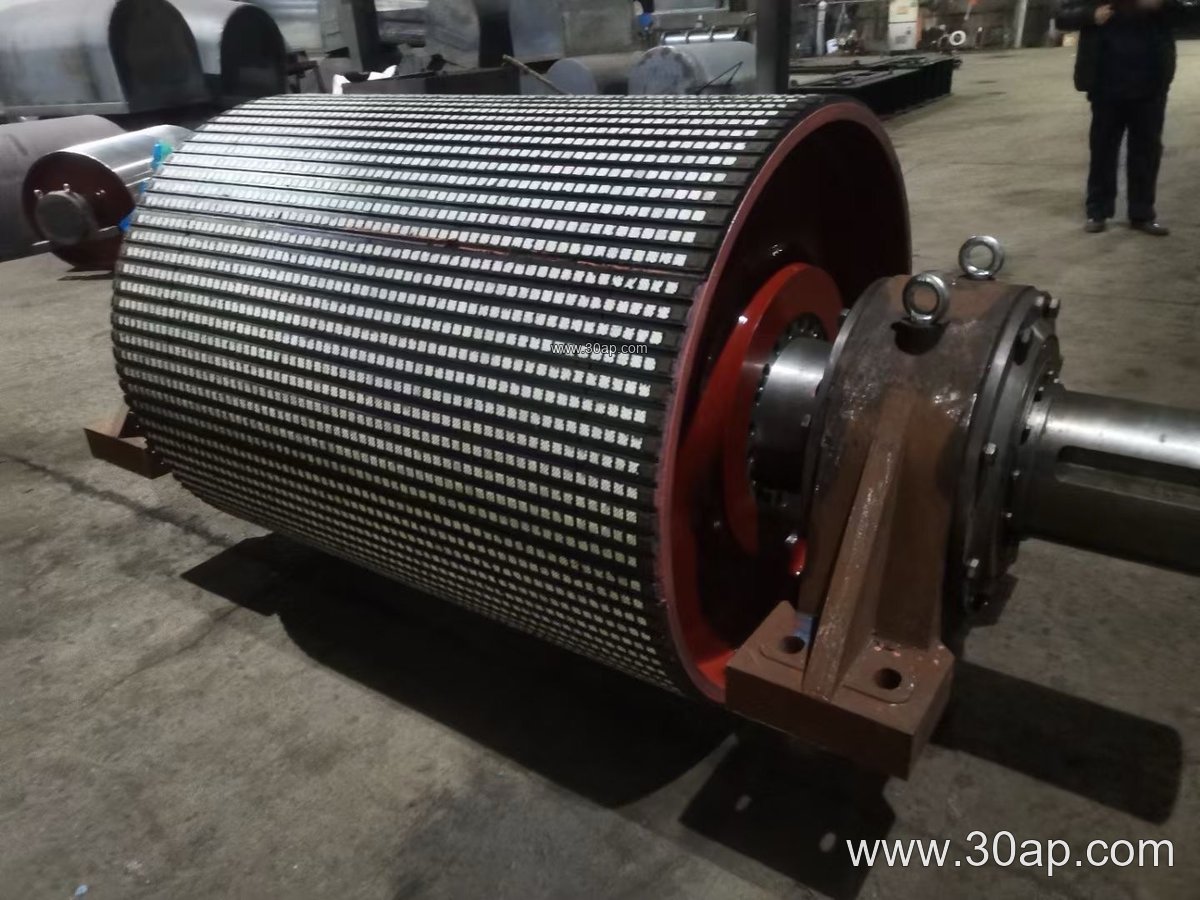
A metallurgical conveyor pulley is the drum that transmits motion and tension to the belt in plants handling ore, sinter, coke, clinker, and other abrasive or hot bulk materials. In a steel plant or sinter line the pulley often works close to heat, dust, and heavy loads, so the drum, shaft, bearing housing, and lagging are built as a matched assembly rather than a simple cylinder. The same component is also called a metallurgical conveyor drum, and that equivalent name appears in plant drawings and maintenance manuals.
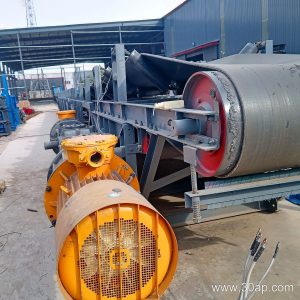
The pulley is not a driver by default. Its role depends on where it sits in the conveyor: the drive or head pulley pulls the belt, the tail pulley returns it, and bend or snub pulleys guide it around corners and increase wrap angle. These positions are not interchangeable, and a bend pulley cannot replace a drive pulley in a design review.
Construction and Surface Options
Most units use a welded steel shell with dished or flat end discs, a through shaft or stub shafts, and self-aligning bearing housings mounted on conveyor brackets. Shell thickness and shaft diameter are chosen from belt tension, torque, and load, not from belt width alone. A common range of shaft diameters includes Ø80, Ø100, Ø120, Ø140, Ø160, and Ø180 mm, while shell diameters often fall between Ø400 and Ø1250 mm depending on duty.
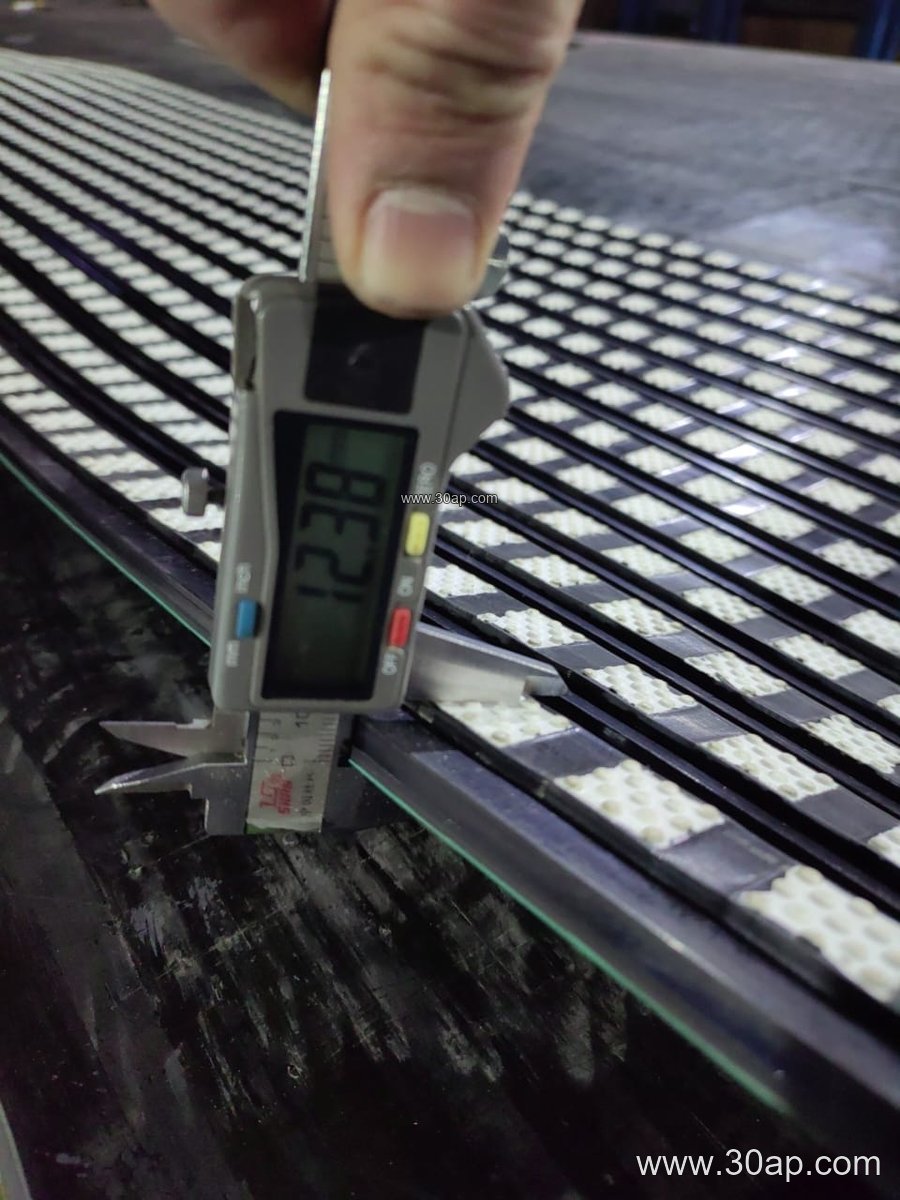
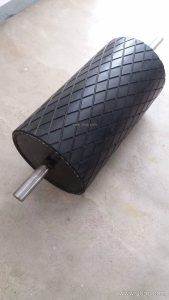
Lagging protects the shell and improves grip. Plain, cold-bonded rubber, hot-vulcanized rubber, diamond groove, herringbone, and ceramic lagging are all used, with cover thickness commonly 8, 10, 12, 15, or 20 mm. In sinter and coke areas, heat-resistant rubber grades are preferred; in wet ore and slurry zones, ceramic or grooved lagging helps shed water and fines.
Typical Reference Dimensions
The table below shows common combinations. These are reference values for discussion, not fixed rules.
| Belt width | Approx. face width | Example shell diameter |
|---|---|---|
| B800 | about 950 mm | Ø500 mm |
| B1000 | about 1150 mm | Ø630 mm |
| B1200 | about 1400 mm | Ø1000 mm |
| B1400 | about 1600 mm | Ø800 mm |
| B1600 | about 1800 mm | Ø1000 mm |
A B1200 × Ø1000 or B800 × Ø500 arrangement is common, but one belt width does not dictate one diameter. The final choice follows belt tension and the space available at the transfer point.
Where It Fits in the Plant
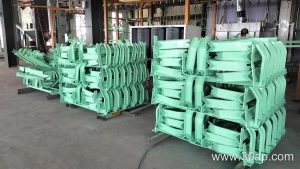
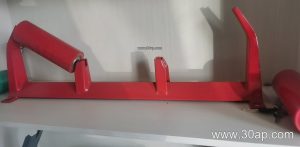
In a sinter plant, a metallurgical conveyor pulley at the head end discharges hot sinter onto a screen or cooler, so lagging and bearing seals must tolerate radiant heat and fine dust. In a coal preparation plant or a cement clinker line, the same drum handles abrasive material at high tonnage, and the pulley works together with the conveyor belt, idler roller sets, and conveyor bracket frames to keep tracking stable. Port bulk terminals and quarry conveyor lines also use similar drums, but the metallurgical versions usually carry heavier shafts and thicker shells for continuous duty.
Belt selection and pulley selection are linked. A heavy-duty mining conveyor belt or a steel cord conveyor belt needs a larger pulley diameter to limit bending stress in the carcass, while a multi-ply fabric core belt may run on a smaller drum. Where the belt is a heat resistant conveyor belt or a flame retardant conveyor belt for underground coal mining, the pulley lagging should be chosen to match the same fire and heat requirements.
Buyer Checklist
- Confirm the pulley position: drive, tail, bend, snub, or take-up. Each has a different load case.
- Provide actual belt tension, belt speed, and material temperature, not just belt width.
- State lagging type and thickness, for example 12 mm diamond rubber or 15 mm ceramic.
- Check shaft diameter and bearing size against the torque and radial load.
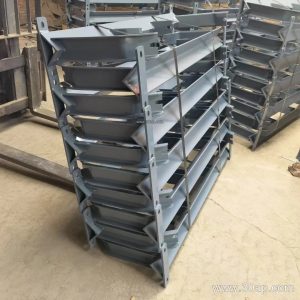
- Confirm face width, bearing center distance, and mounting bolt pattern on the conveyor bracket.
- For hot or abrasive service, ask for the shell material and the welding and balancing standard used.
Maintenance is mostly about bearings and lagging. Grease intervals, seal condition, and lagging wear should be checked during scheduled shutdowns, and a worn drum should be re-lagged rather than run until the shell is exposed. Matching the pulley to the belt, the idler roller layout, and the conveyor bracket structure keeps the whole line running quietly in a steel mill, a cement plant, or a coal handling system.