What a Heavy-Duty Trough Idler Set Does
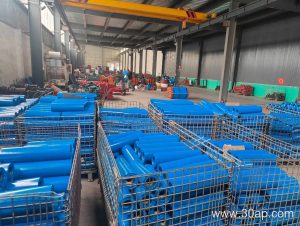
A heavy-duty trough idler set is the assembly of rolls and frame that supports the loaded side of a conveyor belt and shapes it into a trough. The angled rolls keep bulk material centered, reduce spillage, and spread the load so the belt runs smoothly between the tail pulley and the drive pulley. In a quarry, a limestone mine, or a cement plant, this component carries the daily punishment of sharp rock, grit, and constant motion.
The natural product name for the same assembly is a heavy-duty troughing idler set. Both terms describe the same item; they are not interchangeable with a return idler or a conveyor pulley, which perform different jobs on the same conveyor.
How the Set Is Built
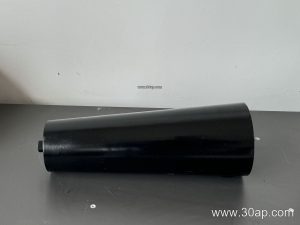
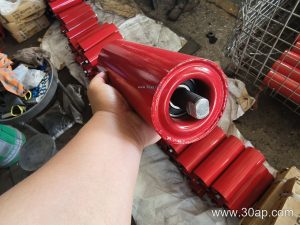
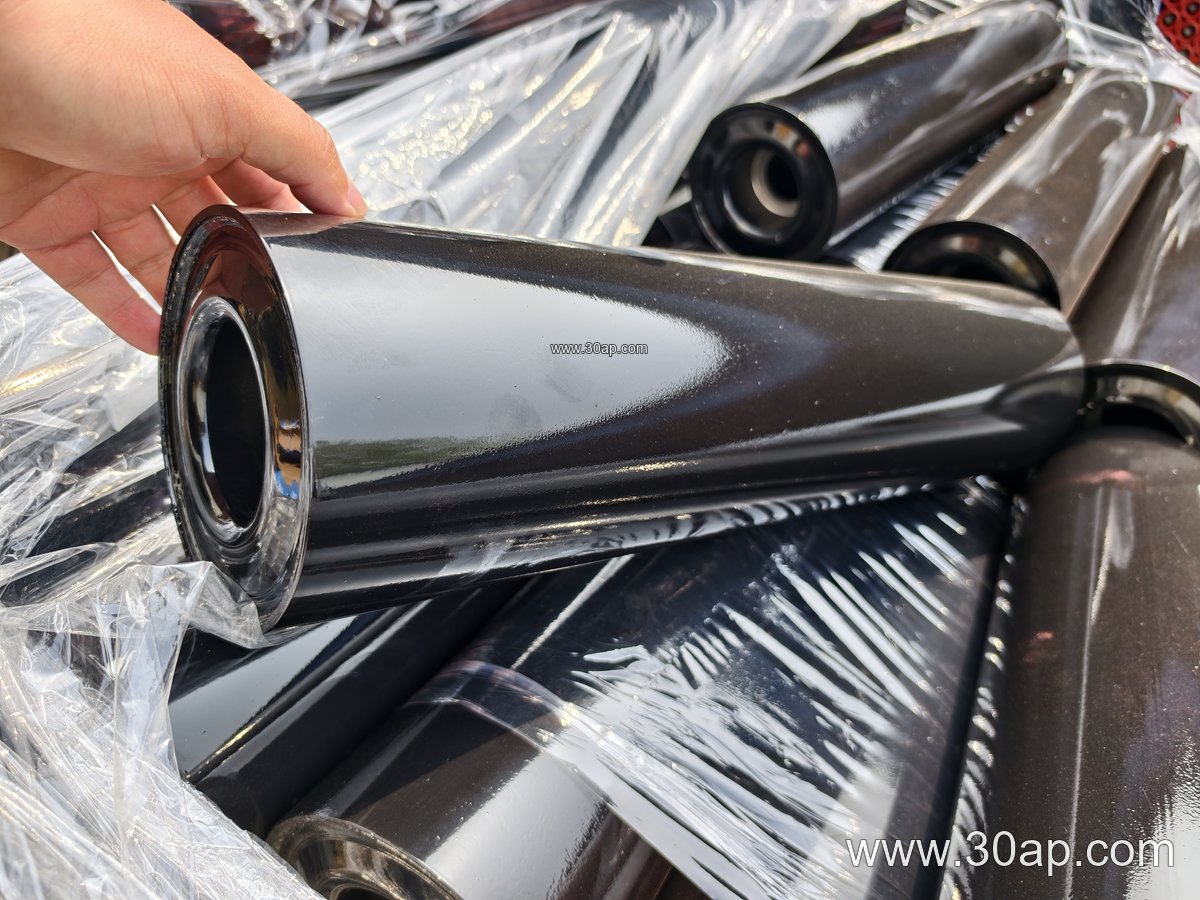
Most troughing sets use three rolls arranged at a trough angle, typically 20, 30, 35, or 45 degrees. The rolls usually run on steel tubes, with nylon, ceramic, or rubber-covered surfaces available for different wear conditions. Bearings such as 6205, 6305, 6306, or 6308 are common, matched to the roll diameter and load rather than to belt width alone. Seals and grease retention matter as much as tube thickness, because fine dust from a crusher line or a coal yard will find any weak point.
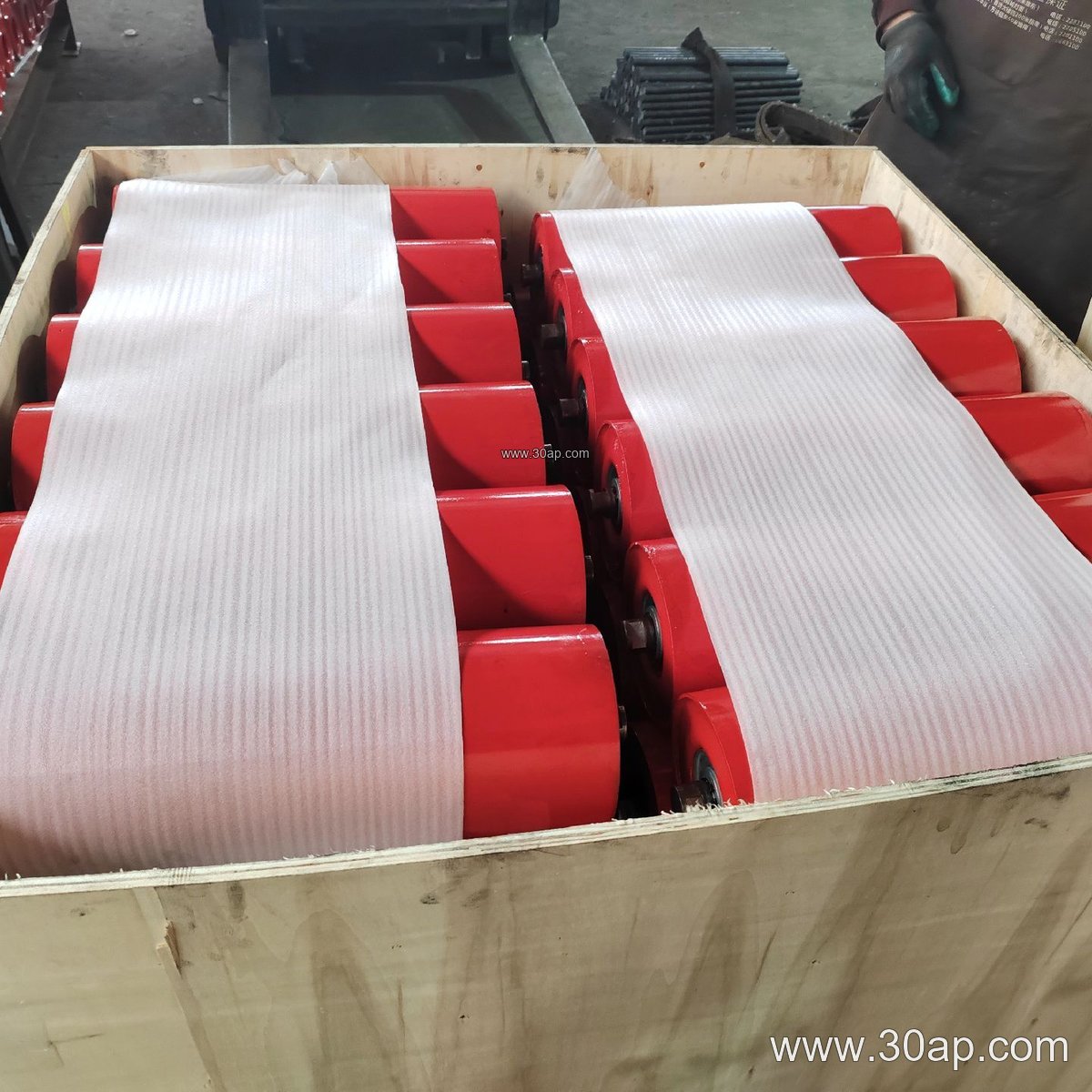
Roll diameters commonly range from Ø89 to Ø194, and larger sizes may appear on very wide or heavily loaded lines. A heavy-duty set normally uses thicker tubes, reinforced end caps, and a stronger conveyor bracket than a light-duty version.
Where It Fits on the Conveyor
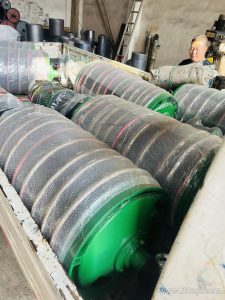
The trough idler set belongs on the carrying run. It is not a drive pulley, tail pulley, or bend pulley, and it should not be swapped for a return roller or a self-aligning idler unless the layout calls for it. On a long overland line at a port, or a short transfer belt in a sand and gravel plant, the set is repeated at regular spacing to keep the belt profile stable.
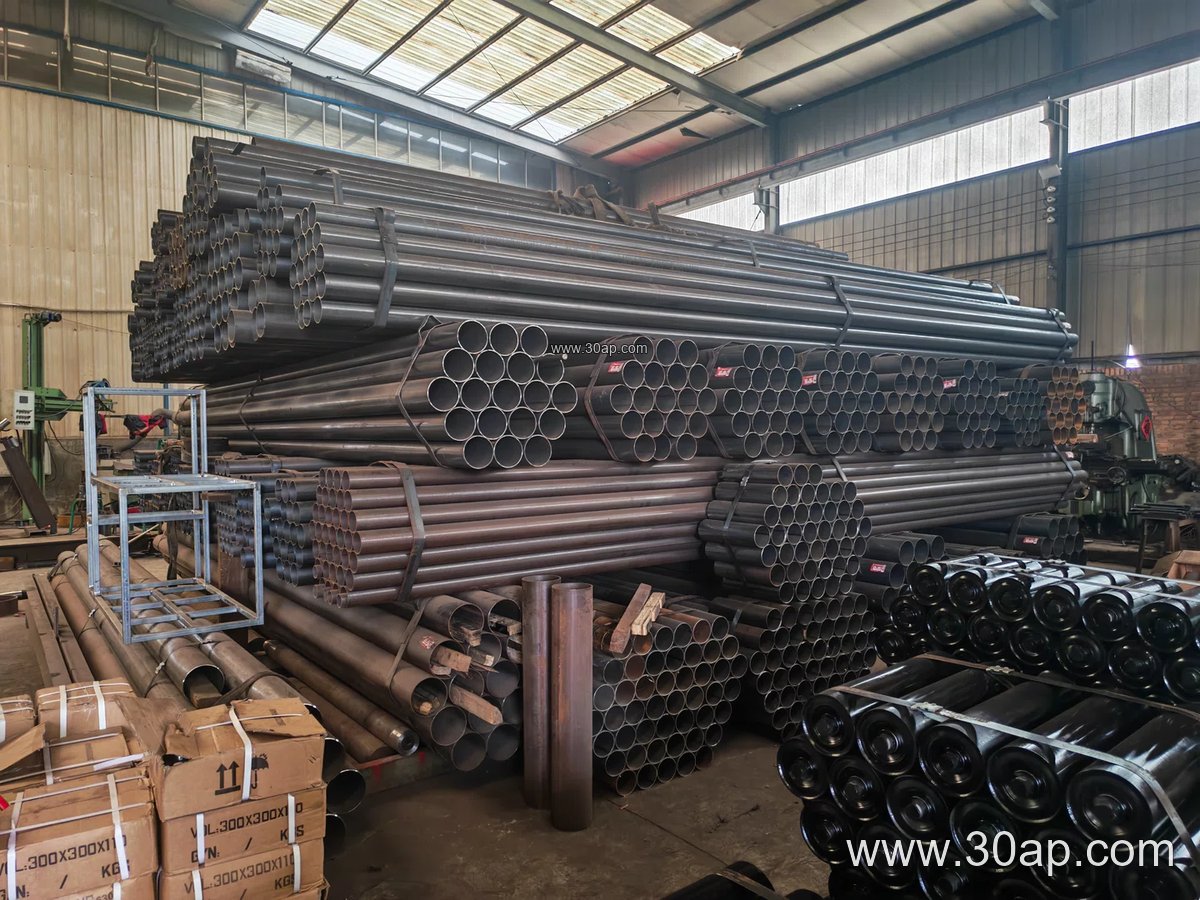
Heavy-duty trough sets are common in iron ore and copper ore handling, power plant coal conveying, sinter plants, and aggregate crushing circuits. They also suit tunnel spoil removal and fertilizer or grain terminals where dust and continuous operation are normal.
Common Reference Dimensions
The figures below are typical examples, not fixed pairings. Roll length changes with belt width, trough angle, and set design, and the side rolls may differ from the center roll.
| Belt width | Typical roll length (three-roll set) | Common roll diameter |
|---|---|---|
| B500 | about 200 mm | Ø89 to Ø108 |
| B650 | about 250 mm | Ø89 to Ø108 |
| B800 | about 315 mm | Ø102 to Ø127 |
| B1000 | about 380 mm | Ø108 to Ø133 |
| B1200 | about 465 mm | Ø127 to Ø159 |
| B1400 | about 530 mm | Ø133 to Ø159 |
| B1600 | about 600 mm | Ø133 to Ø178 |
| B1800 | about 670 mm | Ø159 to Ø194 |
Belt widths from B400 up to B2400 exist across the market, but any specific combination should be confirmed against the conveyor design. A wider belt does not automatically dictate one shaft size, and a given roll diameter can serve more than one belt width.
Matching the Set to the Belt and the Job
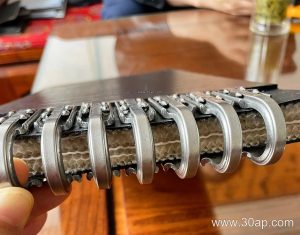
The idler set works with the conveyor belt, so the belt type affects the choice. An abrasion resistant conveyor belt on a rock line, a flame retardant conveyor belt in a coal mine, or a heat resistant conveyor belt near a kiln discharge all place different demands on roll surfaces and bearings. A steel cord conveyor belt on a high-tension trunk line may call for heavier frames and closer spacing than an EP conveyor belt on a short transfer.
Buyers should check the trough angle, roll diameter, bearing size, seal type, and frame finish together. Ask how the rolls are balanced, how the seals handle fine dust, and whether the bracket fits the existing stringer. For a mining conveyor belt or a quarry conveyor belt, impact at the loading point is often better handled by a buffer idler set; the trough set is the standard carrying support, not the impact solution.
Installation and Maintenance Notes
- Align the set square to the belt centerline so the belt does not drift.
- Check roll rotation by hand during inspections; a seized roll will wear the belt cover quickly.
- Keep grease points clean and follow the supplier schedule rather than a fixed interval for every site.
- Replace worn rolls in matched groups where possible to keep the trough profile even.
A well-chosen heavy-duty trough idler set is a quiet, long-running part of the conveyor, and it is usually cheaper to maintain than the belt it supports. For more on belts, rollers, and pulleys, seetuogunandshushongdai.