What a Heavy-Load Conveyor Idler Really Does
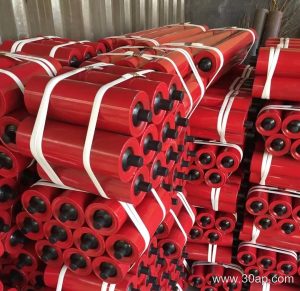
A heavy-load conveyor idler is the rotating support that carries a loaded conveyor belt along the carrying side of a bulk handling system. In practice, the product is often called a heavy-duty carrying idler or a heavy-load troughing roller. It sits under the belt, spins on its shaft, and takes the weight of ore, coal, clinker, aggregate, or cement while keeping the belt in a stable trough shape. On a long overland line or a short transfer in a crushing circuit, this component has to do more than rotate — it must resist impact, dust, and continuous load without seizing.
The difference between a standard roller and a heavy-load conveyor idler is usually a matter of wall thickness, bearing capacity, seal quality, and shaft support. In a quarry or a copper ore concentrator, a seized roller can rub through a belt in a short time, so the load rating and sealing detail matter as much as the purchase price.
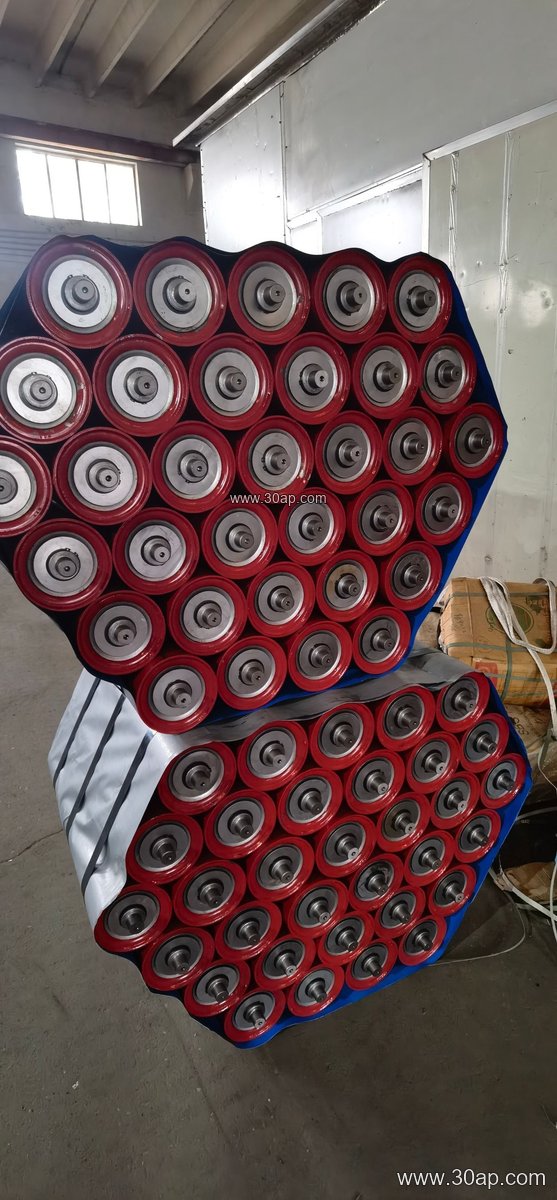
How the Roller Is Put Together
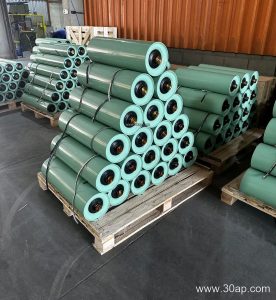
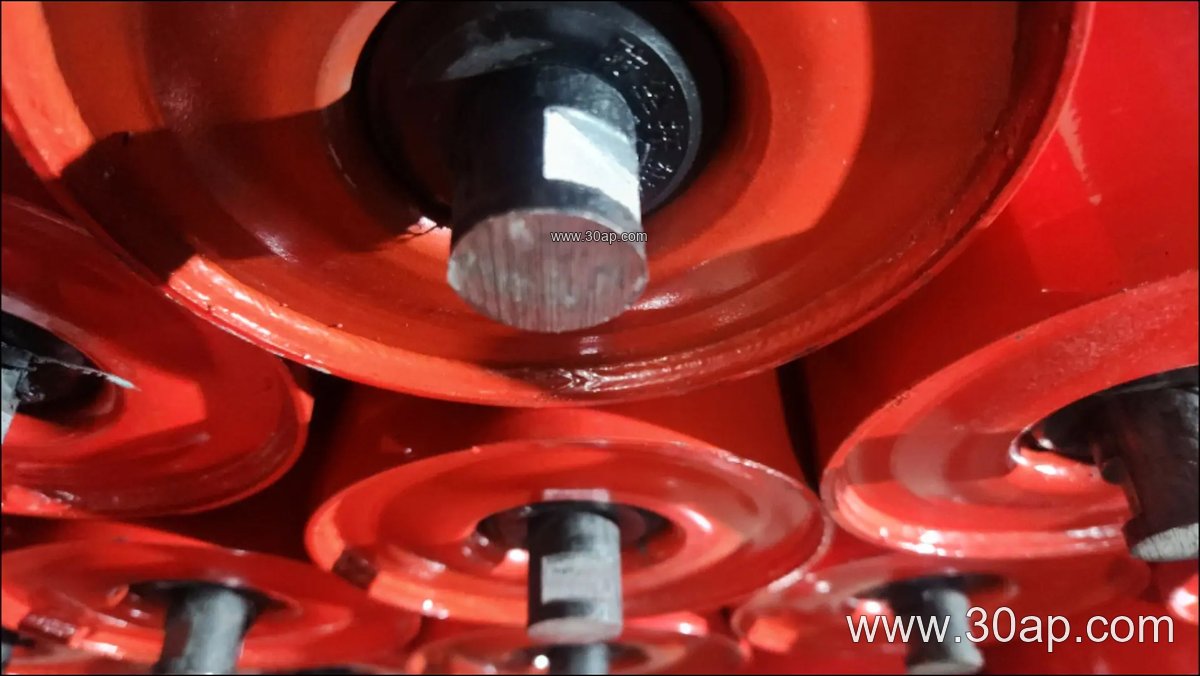
Most heavy-load conveyor idlers share a common architecture. A steel tube forms the roller shell, with end caps pressed or welded at each end. Inside, a bearing housing holds a deep-groove ball bearing, and a shaft runs through the assembly. The seal arrangement is the part buyers often overlook: a labyrinth seal, a felt or rubber lip, and grease retention all decide how long the roller survives in a dusty cement plant or a wet coal preparation plant.
Roller surfaces vary. Plain steel tubes are common for general bulk material. Rubber rings are used on impact idlers at transfer points where lump size is large. Nylon or ceramic covers appear where sticking and wear are concerns. Bearing sizes are selected by load and speed rather than by belt width alone; common bearings include 6205, 6305, 6306, and 6308, but no single bearing is tied to one roller diameter.
Where Heavy-Load Idlers Are Used
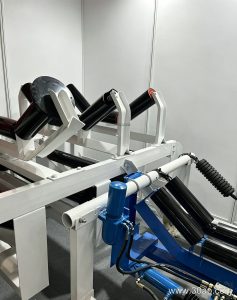
These rollers appear wherever the belt carries dense or abrasive material. Typical locations include iron ore and copper ore handling, limestone quarries, coal washing plants, cement plants, power plant coal yards, and port ship-loading systems. A heavy-duty mining conveyor belt running at high tonnage puts steady radial load on every idler, and the troughing angle affects how the load is distributed across the roller set.
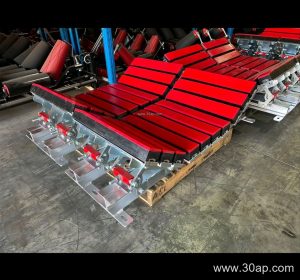
In a crushing and screening line, impact idlers with rubber rings are often placed below the feed point, while standard heavy-load troughing idlers carry the material further along. On the return side, a V-shaped return idler or a flat return roller keeps the belt tracking and reduces spillage. These are different positions and different designs, and they should not be confused with drive pulleys, tail pulleys, or bend pulleys, which transmit and redirect belt tension rather than support the load.
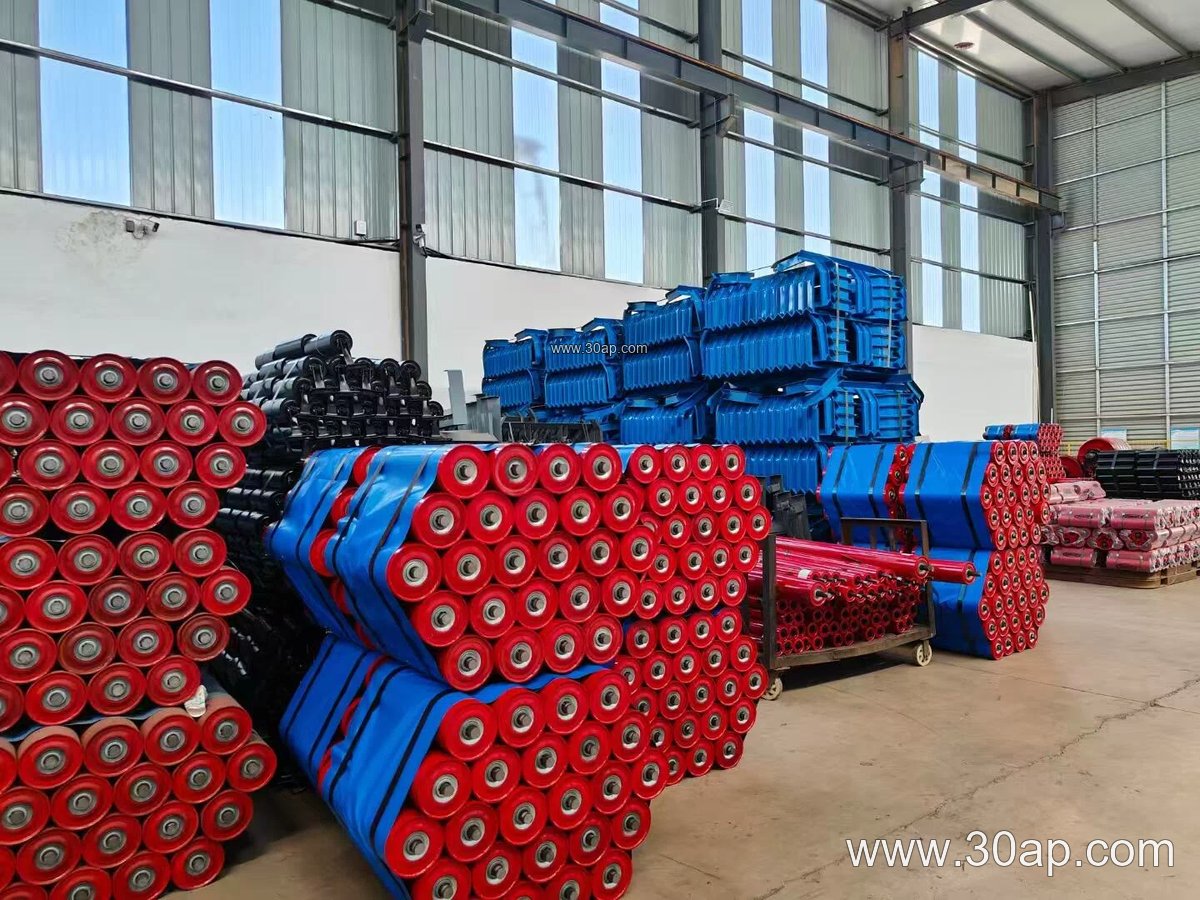
Common Dimensions and Configurations
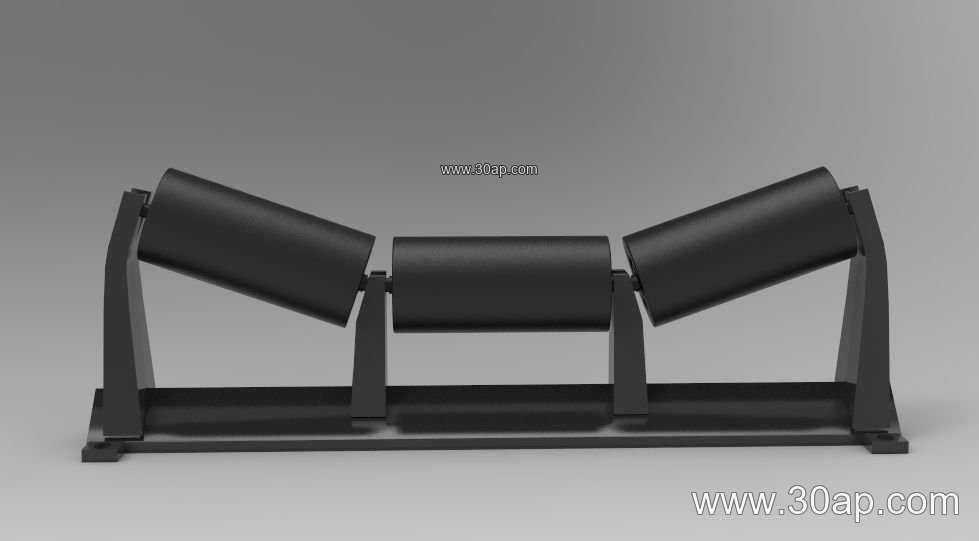
Roller diameter and belt width are selected together with belt tension, material density, and idler spacing. The table below gives common reference values, not fixed pairings.
| Parameter | Common reference values |
|---|---|
| Roller diameter | Ø89, Ø102, Ø108, Ø127, Ø133, Ø159, Ø178, Ø194, Ø219 |
| Belt width | B500, B650, B800, B1000, B1200, B1400, B1600, B1800, B2000 |
| Trough angle | 20°, 30°, 35°, 45° |
| Idler set | single roll, two-roll, three-roll troughing |
| Roller surface | steel tube, nylon, ceramic, rubber ring |
| Bearing | 6204, 6205, 6305, 6306, 6308, 6310 |
Roller length changes with belt width, trough angle, and set type. As a common example, a three-roll troughing set for B800 may use a roll length near 315 mm, while B1200 may use about 465 mm and B1600 about 600 mm. Side rolls and center rolls can differ, so these figures are design references only. A 1200mm wide conveyor belt does not automatically dictate one pulley diameter, and shaft size must be calculated from actual load.
What Buyers Should Check Before Ordering
- Confirm the belt width, trough angle, and whether the station is carrying, impact, or return.
- Match roller diameter and bearing class to the actual load and belt speed, not to a catalog habit.
- Ask about seal type and grease life for dusty or wet conditions.
- Check shaft end fitting and frame compatibility with the existing conveyor bracket.
- Consider the belt itself: an abrasion resistant conveyor belt or a heat resistant conveyor belt may call for different idler spacing and roller surface.
For a coal mining conveyor belt or an underground mining conveyor belt, flame retardant and anti-static properties belong to the belt specification, while the idler must still handle load and dust. In a cement plant or a power plant, fine dust ingress is often the real cause of failure, so seal quality deserves as much attention as tube thickness.
Maintenance and Replacement Notes
Inspect rollers for seized bearings, uneven wear, and build-up of material on the shell. A worn idler increases belt friction and can damage the conveyor belt cover. Keep spare rollers in the common diameters used on the line, and record the position of impact and return stations so replacements match the original design. For heavy-load service, a planned replacement interval based on running hours is usually more economical than reacting to a failed roller after it has scored the belt.
Whether the system moves gold ore, clinker, or fertilizer, the heavy-load conveyor idler is a small component with a large effect on belt life and energy use. Selecting it with the same care as the conveyor pulley and belt pays back in uptime.