What a Conveyor Bend Pulley Does
A conveyor bend pulley is a direction-changing roller that guides the conveyor belt along its return path without driving it. It sits where the belt must turn, usually near a take-up or transition zone, and its job is to keep the belt tracking smoothly while preserving wrap angle on the pulleys that do the real work. Unlike a drive pulley, which transmits torque, or a tail pulley, which redirects the belt at the loading end, the bend pulley carries relatively light tension and simply steers the belt. In practice, it is often paired with a take-up pulley to build and hold belt tension.
Because it is a passive component, the bend pulley is frequently overlooked during design reviews. That is a mistake. A poorly sized or badly aligned bend pulley can cause edge wear, misalignment and premature belt fatigue in installations ranging from a quarry conveyor line to a power plant coal handling system.
Construction and Surface Options
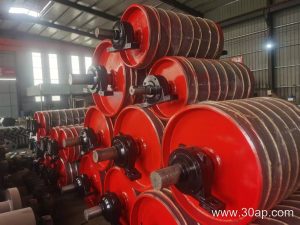
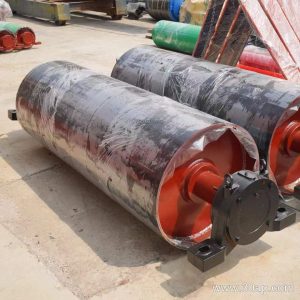
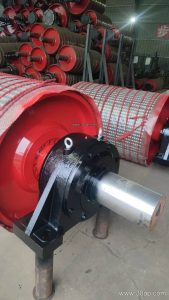
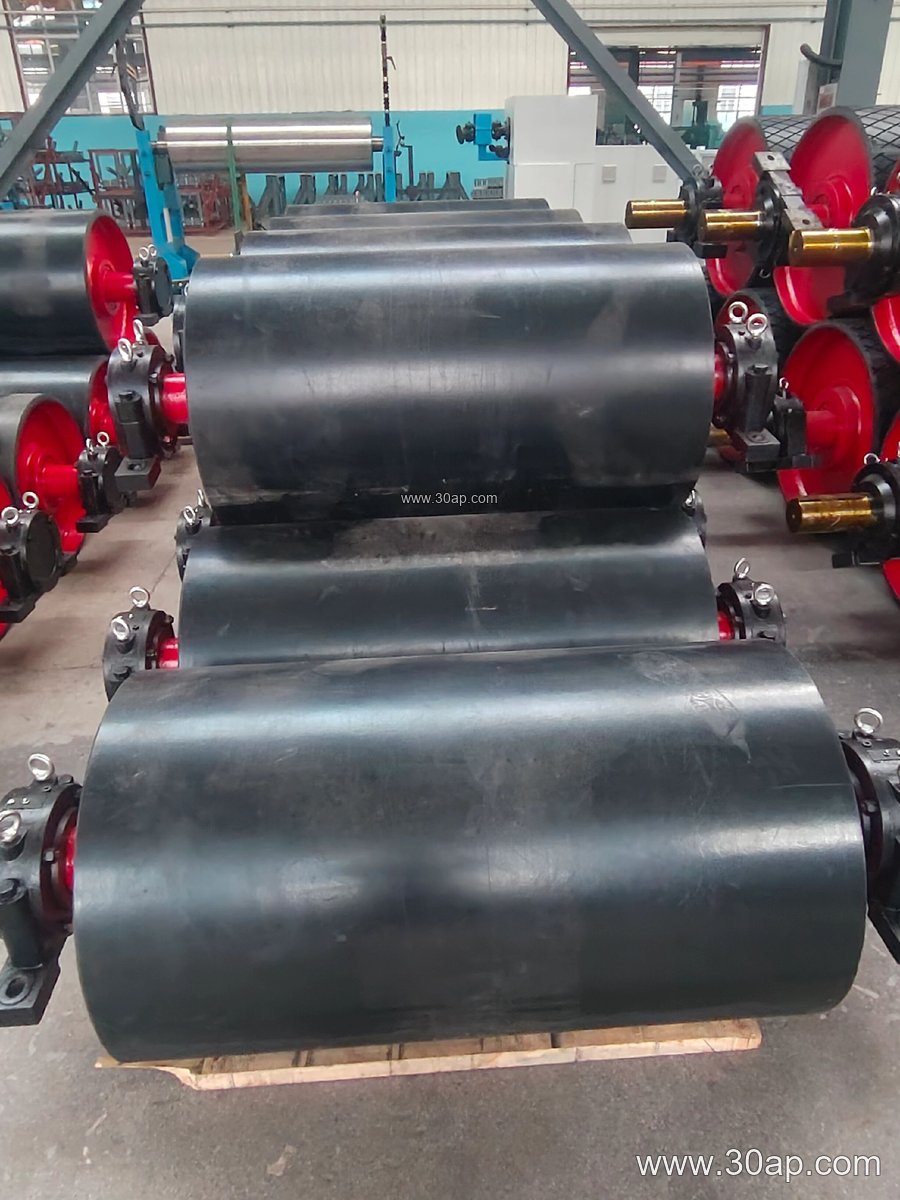
The pulley body is typically a welded steel drum with end discs and a through shaft, machined for concentricity. Bearing housings are bolted to a frame or to a conveyor bracket, and the shaft is keyed or locked to the shell. Standard diameters in common use include Ø200, Ø250, Ø315, Ø400, Ø500, Ø630 and Ø800, with larger sizes such as Ø1000 or Ø1250 chosen when belt stiffness or wrap angle demands it.
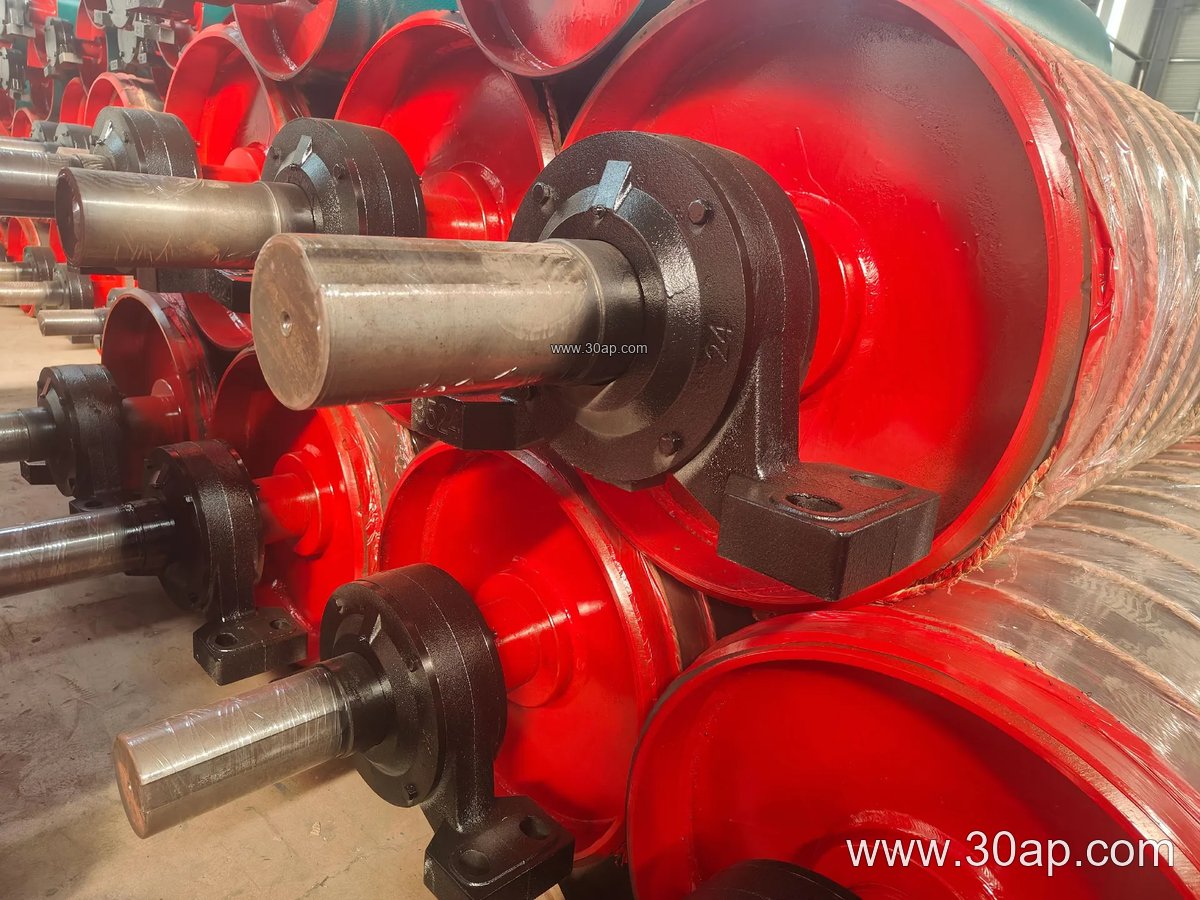
Surface treatment depends on the duty. A plain, smooth face is adequate for light return-side guiding. Where slip or belt wander is a concern, lagging is added: cold-bonded rubber, hot-vulcanized rubber, diamond pattern or herringbone pattern. Lagging thickness is commonly 8, 10, 12, 15 or 20 mm. For abrasive conditions in a limestone mine or aggregate plant, ceramic lagging may be specified. Face width is normally slightly greater than the belt width—for example, a B800 belt generally matches a pulley face of about 950 mm, and a B1200 belt a face of roughly 1400 mm.
| Belt width | Typical pulley face width |
|---|---|
| B400 | about 500 mm |
| B650 | about 750 mm |
| B1000 | about 1150 mm |
| B1400 | about 1600 mm |
| B1800 | about 2000 mm |
Shaft diameter is determined by torque and radial load, not by belt width alone. Common shaft sizes run from Ø50 to Ø200, and a bend pulley carrying modest tension may use a much smaller shaft than a drive pulley on the same conveyor.
Where It Fits in the Belt Path
Bend pulleys appear in several positions. A return-side bend pulley turns the belt back toward the tail after discharge. A snub or pressure pulley increases wrap angle on a drive pulley, improving traction. A take-up bend pulley works with a gravity or screw tensioner to maintain belt slack. In a cement plant clinker line or a port bulk terminal, these small rollers quietly determine how evenly the belt runs.
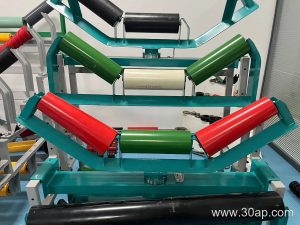
They also interact closely with other components. The belt must be compatible with the pulley face, the conveyor idler roller set must support the belt between pulleys, and the conveyor bracket must hold alignment within tolerance. A bend pulley matched to a heavy-duty mining conveyor belt or a steel cord conveyor belt will generally be larger in diameter than one serving a lightweight fabric core belt, because thicker, stiffer belts resist bending.
Selection Notes for Buyers
- Confirm the belt path geometry and required wrap angle before choosing a diameter.
- Match face width to belt width with a small margin, and verify lagging type against material conditions.
- Check shaft size against actual radial load, not against a rule of thumb tied to belt width.
- Specify bearing type and sealing for dusty or wet environments such as a wash plant or underground coal mining conveyor.
- Plan for field alignment; a bend pulley that is out of square will wear belt edges quickly.
For abrasive ore duties, an abrasion resistant conveyor belt and a ceramic-lagged bend pulley make a sensible pairing. For hot material in a sinter or cement application, a heat resistant conveyor belt should be matched with a pulley that can tolerate radiant heat. Buyers comparing a bend pulley with a drive or tail pulley should remember these are different components with different load profiles and should not be substituted for one another.
Maintenance and Long-Term Reliability
Inspect lagging for wear, check bearing temperature and listen for unusual noise. Re-grease according to the bearing schedule and verify that the pulley remains square to the belt centerline. On a quarry conveyor or a coal mining conveyor belt system, a worn bend pulley often shows up first as belt mistracking rather than as an obvious pulley failure. Replacing lagging early is usually cheaper than replacing the belt.
Keep spare bearings and, where possible, a spare bend pulley on site. The component is simple, but its condition directly affects belt life and the efficiency of the whole conveyor.