What a Heavy-Duty Conveyor Bracket Does
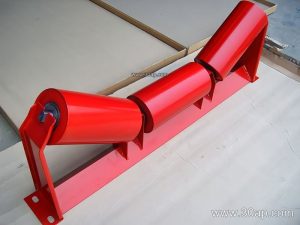
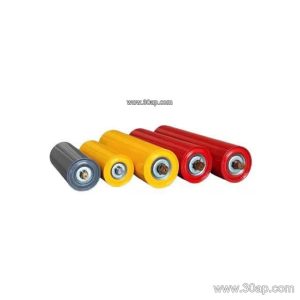
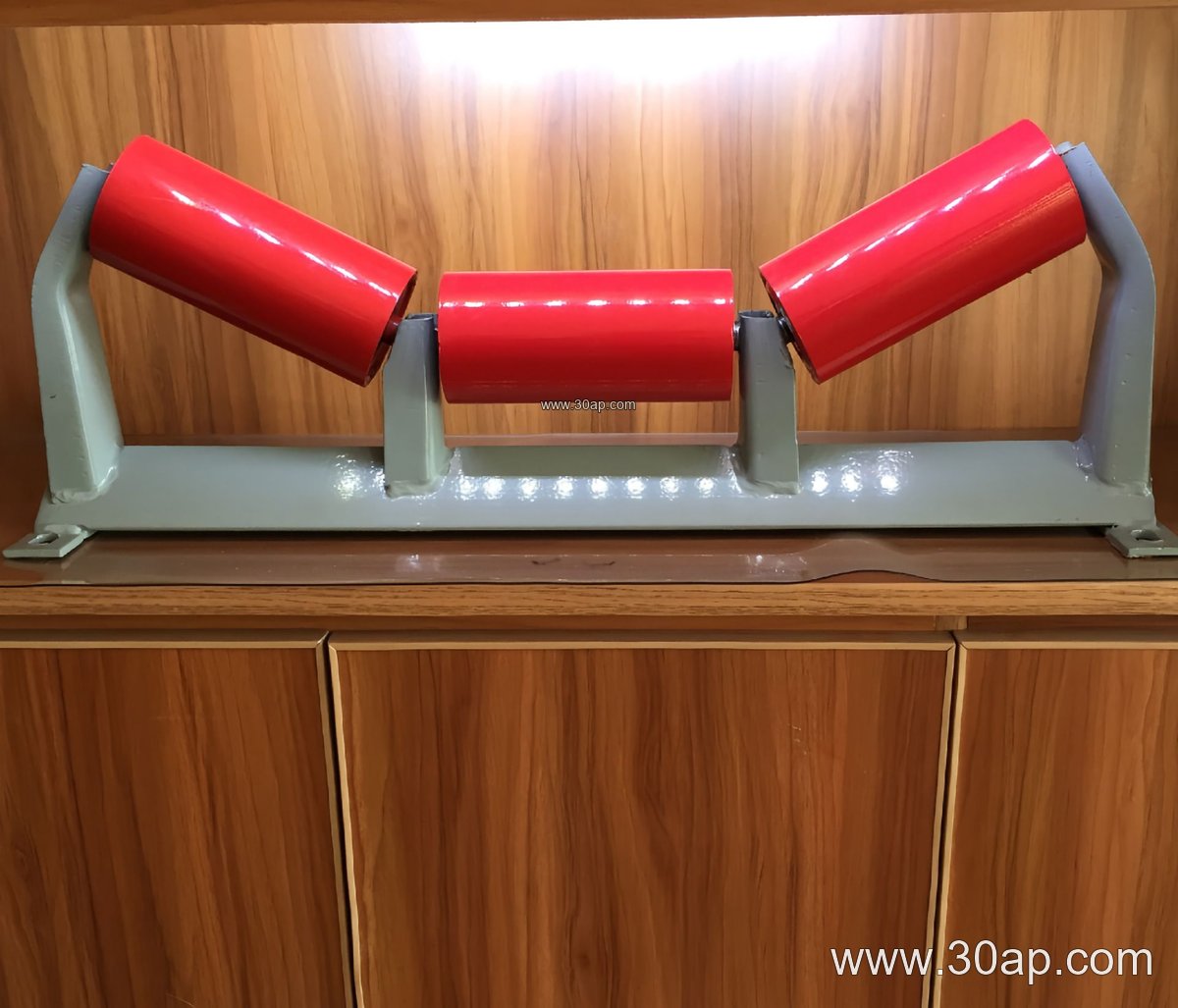
A heavy-duty conveyor bracket is the structural support that holds the idler roller in place and keeps the conveyor belt tracking at the intended trough angle. On a busy quarry line or a coal preparation plant, the bracket carries a large share of the load and must resist vibration, dust, and occasional impact. The same product is often called a heavy-duty conveyor support bracket or a heavy-duty idler bracket, and those are accurate names for the same item.
The bracket is not just a piece of steel. Its geometry sets the trough profile, its mounting holes locate the rollers, and its stiffness influences how evenly the belt sits across its full width. For a system moving abrasive aggregate, a poorly chosen bracket can shorten roller life and cause edge damage on the belt.
How the Bracket Is Built
Most heavy-duty designs are fabricated from angle steel, channel steel, or folded steel plate. The frame is welded or bolted into a rigid shape that will not flex under load, and the roller seats are positioned to match the selected trough angle. Common trough angles include 20, 30, 35, and 45 degrees, while a small forward tilt of about 1.5 to 2 degrees is used in some self-training designs.
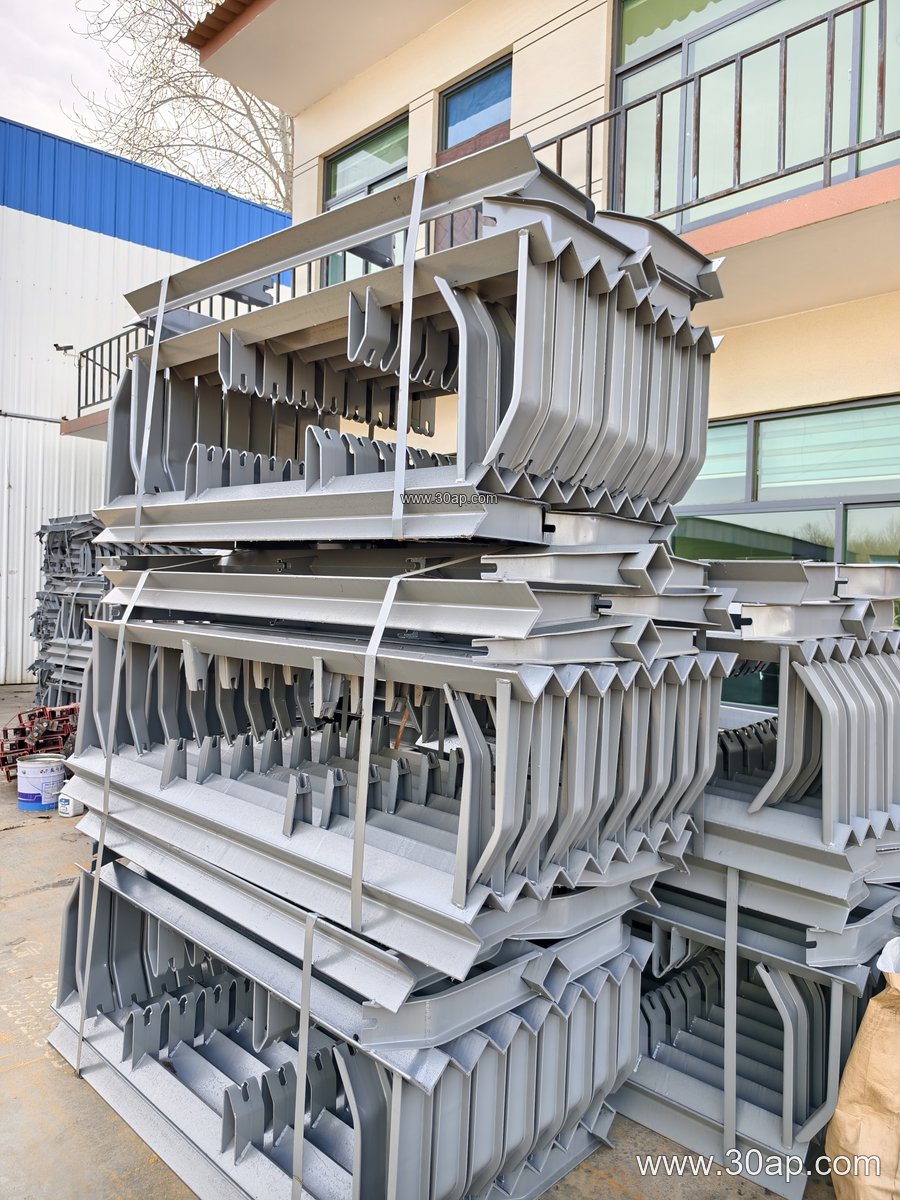
Because a heavy-duty bracket works with the rollers rather than on its own, buyers usually match it to the belt width and roller diameter at the same time. Typical belt widths range from B500 through B800, B1000, B1200, B1400, B1600, B1800, B2000, and up to B2200, and common roller diameters include Ø89, Ø108, Ø133, Ø159, and Ø194. Some practical pairings seen in the field are shown below; these are examples, not fixed rules.
| Belt width | Trough angle | Roller diameter | Typical duty |
|---|---|---|---|
| B650 | 30 degrees | Ø89 | Light aggregate lines |
| B800 | 35 degrees | Ø108 | General bulk handling |
| B1000 | 35 degrees | Ø133 | Sand and gravel plants |
| B1200 | 45 degrees | Ø133 | Heavy ore transport |
| B1400 | 35 degrees | Ø159 | Coal handling, cement |
| B1600 | 45 degrees | Ø159 | High-capacity crushing circuits |
| B1800 | 35 degrees | Ø194 | Large port and mine conveyors |
A single belt width can work with more than one trough angle or roller diameter, so the bracket, roller, and belt should be selected together. The mounting hole spacing and crossbeam length usually follow the belt width and trough angle and are confirmed at the design stage.
Where These Brackets Are Used
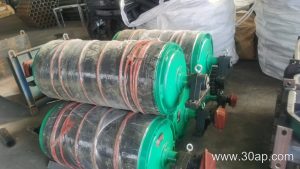
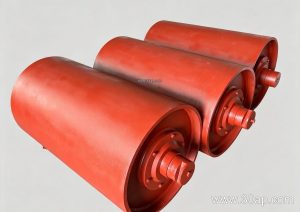
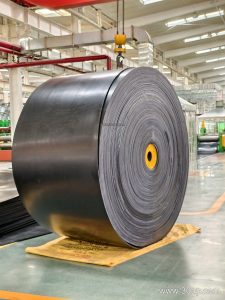
Heavy-duty brackets are common in crushing and screening plants, where a crusher conveyor takes lumpy feed and the belt needs steady support. They also appear in cement plants on raw material and clinker lines, and in power plant coal handling systems that run for long shifts. In each case the bracket works alongside the conveyor belt, the conveyor pulley at the drive and tail, and the idler roller sets that carry the load.
Abrasion resistant conveyor belt and flame retardant conveyor belt grades are often used in these locations, and the bracket must keep the belt supported so that its covers wear evenly. On inclined sections, a chevron conveyor belt or a corrugated sidewall conveyor belt may be running, and the bracket layout still needs to follow the belt path without pinching the edges.
Fixed, Adjustable, and Training Variants
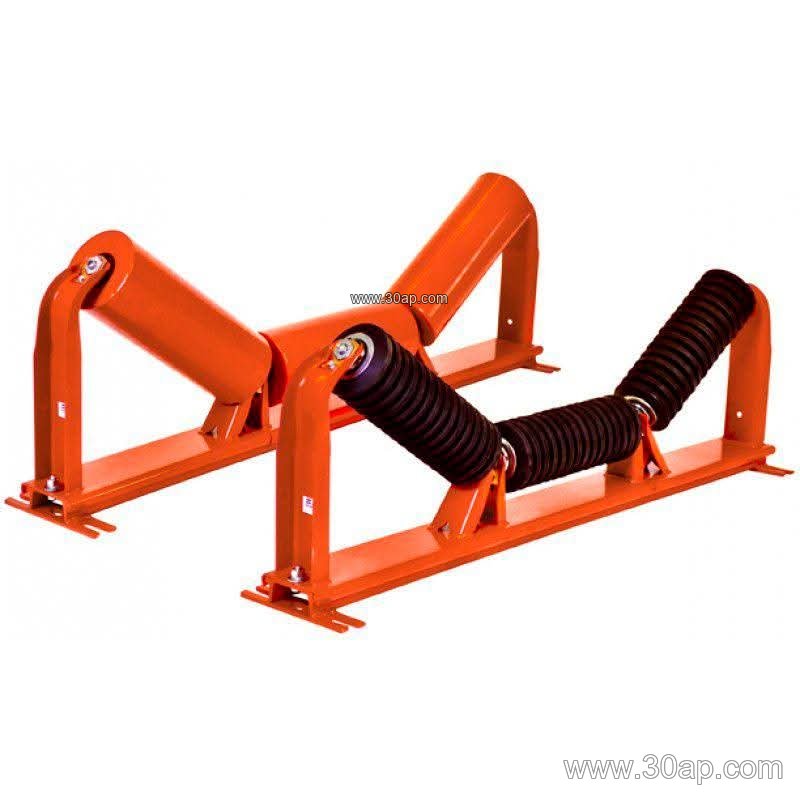
A fixed bracket holds one trough angle for the life of the installation, which suits lines where the material and belt are stable. An adjustable bracket lets maintenance teams change the trough angle to reduce spillage or improve belt contact after a change in material. Training variants, including forward-tilt and self-aligning designs, are used where the belt tends to wander. These are related brackets, not replacements for the main support bracket; each has its own place along the conveyor.
Impact zones near a crusher discharge often use a cushion bracket with rubber or spring elements, while the return side may use a V-type or flat return bracket. Selecting the right mix keeps the whole conveyor balanced.
Buyer Checklist
- Confirm belt width, trough angle, and roller diameter as a set, not separately.
- Check the material and thickness of the frame for the expected load and dust level.
- Ask how mounting holes and crossbeam length are set for your layout.
- Match the bracket finish to the environment, especially in wash plants and ports.
- Plan inspection access so rollers can be changed without removing the belt.
For a complete conveyor package, the heavy-duty conveyor bracket should be reviewed together with the idler roller selection, the conveyor pulley arrangement, and the belt grade. More details on related components such as conveyor belt, idler roller, and conveyor pulley are available on the site, and buyers are welcome to confirm sizes and options before ordering.