What an Impact Resistant Idler Does at the Loading Point
An impact resistant idler is a heavy-duty carrying roller placed where material first lands on the conveyor belt. Instead of a rigid steel shell taking the full force of falling rock, ore, or clinker, this idler absorbs and spreads the shock. In a quarry, a copper mine, or a cement plant, the difference between a standard carrying roller and a properly specified impact resistant idler often shows up within weeks of start-up, as belt covers and roller shells either survive the drop zone or begin to fail.
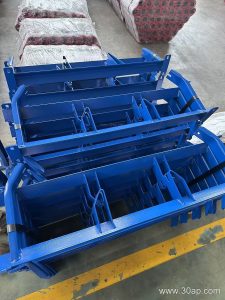
Also called a buffer idler or shock-absorbing roller, this component is normally installed as a short group of rollers directly under the loading chute. Its job is not to replace the troughing idlers along the whole line; it protects the belt at the point of maximum stress. Read together with the conveyor belt specification and the loading height, it forms part of the belt protection system at the transfer point.
Construction Features That Absorb Shock
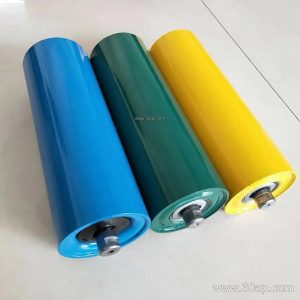
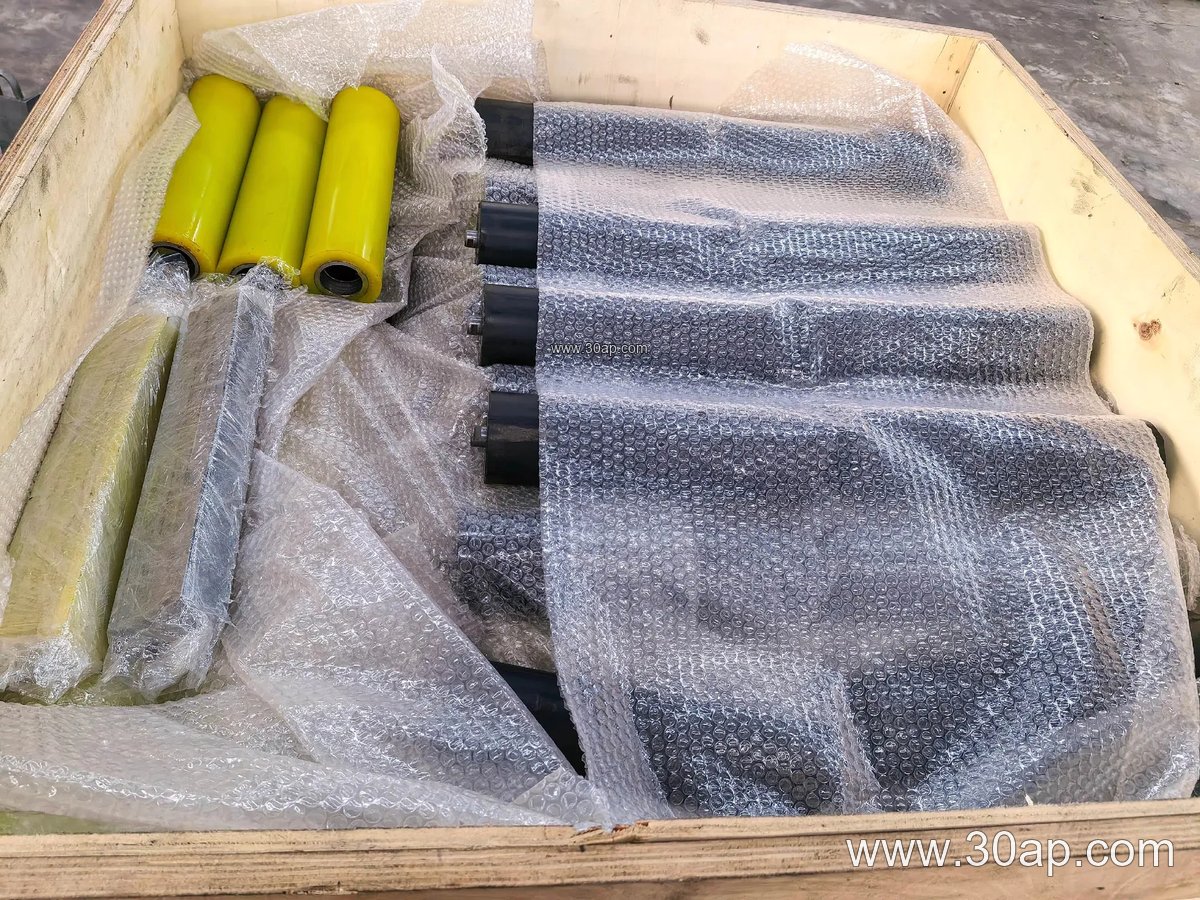
The impact resistant idler usually combines a reinforced roller body with a resilient outer surface. Common designs use rubber rings, rubber discs, or a heavy rubber sleeve mounted on a steel shell. The rubber deforms under impact and recovers, reducing peak force on the belt carcass and on the roller bearings.
- Rubber ring buffer idler — multiple rubber rings spaced along the shell, a common choice where lump size varies.
- Rubber disc impact roller — discs with gaps that allow fines to pass and reduce build-up.
- Sleeved impact roller — a continuous rubber sleeve for smoother contact and easier cleaning.
The shaft, bearing housing, and end seals are typically heavier than those of a standard carrying idler. Bearing sizes such as 6205, 6305, 6306, or 6308 are common depending on roller diameter and load, but no single bearing is tied to one roller diameter. Sealing matters as much as thickness: in a wash plant or a dusty crushing circuit, grit entering the bearing is a frequent cause of seizure.
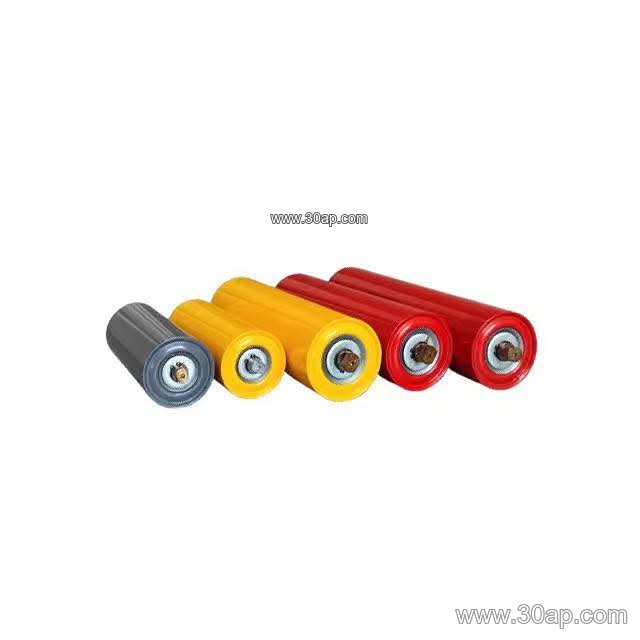
Roller diameters for this duty often fall in the range of Ø89, Ø108, Ø127, Ø133, Ø159, or Ø178 mm. Larger diameters are used where lumps are heavy and the drop height is significant. These are reference values only; final selection follows the conveyor design.
Where Impact Idlers Are Used
The most common location is under the transfer chute of a crusher conveyor belt or a quarry conveyor belt. In a limestone mine, run-of-mine rock may fall more than a metre onto the belt; in a coal handling plant, the drop is gentler but the tonnage is continuous. Other typical positions include:
- Receiving points after primary and secondary crushing
- Transfer towers on bulk material conveyor belts in port and ship loading systems
- Feed points in aggregate and sand making plants
- Bunker and silo discharge conveyors in power plant coal handling
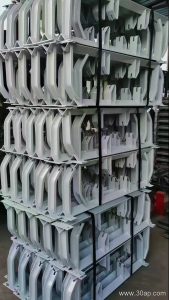
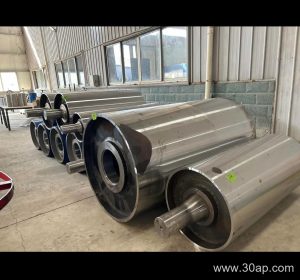
In these positions the impact resistant idler works alongside the troughing idlers, return rollers, and the conveyor pulley at the head or tail. Drive pulleys, tail pulleys, and bend pulleys are separate components with separate duties; an impact roller never substitutes for any of them. The same applies to the conveyor bracket and frame, which must be strong enough to carry the added weight of a buffer roller group.
Sizing and Matching to the Belt Line
Selection starts with belt width, trough angle, and the roller group form. Impact idlers are usually supplied as two- or three-roller troughing sets, with trough angles of 20, 30, 35, or 45 degrees. Belt widths from B500 to B2000 are common in buffer applications, and wider lines exist where the conveyor is designed for high capacity.
| Belt width | Typical carrying idler length (three-roll set, reference) | Notes |
|---|---|---|
| B500 | about 200 mm | side and centre rolls may differ |
| B650 | about 250 mm | light to medium duty |
| B800 | about 315 mm | common in aggregate lines |
| B1000 | about 380 mm | crusher discharge |
| B1200 | about 465 mm | mine and port duty |
| B1400 | about 530 mm | heavy lump handling |
| B1600 | about 600 mm | large transfer points |
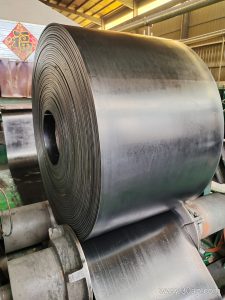
These lengths are common examples, not fixed pairings; the roll length follows belt width, trough angle, and frame design. The belt itself also affects choice. A steel cord conveyor belt tolerates point loading differently from a multi-ply fabric core conveyor belt, and an abrasion resistant conveyor belt cover may still be cut through by a sharp lump if the buffer zone is too short.
Buyer Checklist Before Ordering
- Confirm lump size, drop height, and throughput at the loading point.
- State belt width, trough angle, and the number of rollers in the group.
- Give roller diameter and shaft end dimensions required by the frame.
- Specify the surface form: rubber ring, rubber disc, or sleeve.
- Match bearing and seal class to dust and moisture conditions.
- Check that the buffer group is long enough to cover the full impact zone.
For harsh duty, buyers in iron ore, gold mining, and sinter plants often pair impact idlers with a heavy-duty mining conveyor belt and a flame retardant conveyor belt where underground regulations apply. Maintenance is simple: inspect rubber wear, check for flat spots, and confirm that rollers turn freely. Replacing worn rings before the steel shell contacts the belt is far cheaper than replacing a damaged belt.